

Myrmecina striata
- Scientific Name
- Myrmecina striata
- Tribe
- Crematogastrini
- Subfamily
- Myrmicinae
- Author
- Emery, 1889
- Distribution
- Found in 3 countries
Myrmecina striata Overview
Myrmecina striata is an ant species of the genus Myrmecina. It is primarily documented in 3 countries , including China, Lao People's Democratic Republic, Thailand. Detailed taxonomic data and occurrence records can be further explored via authoritative databases such as AntWeb or the Global Biodiversity Information Facility (GBIF).
Myrmecina striata
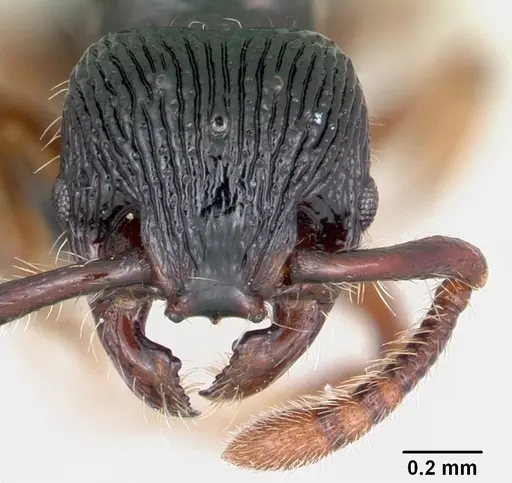
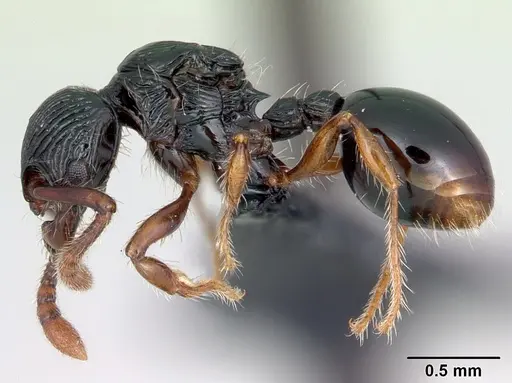
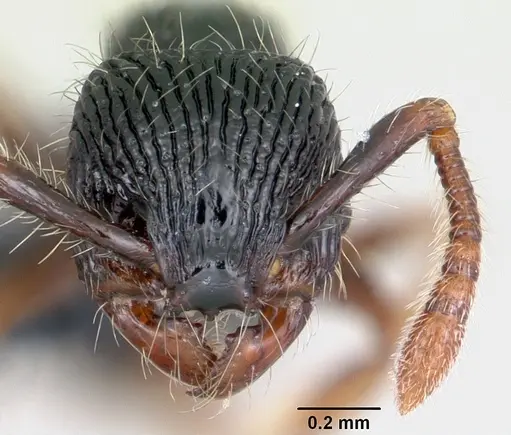
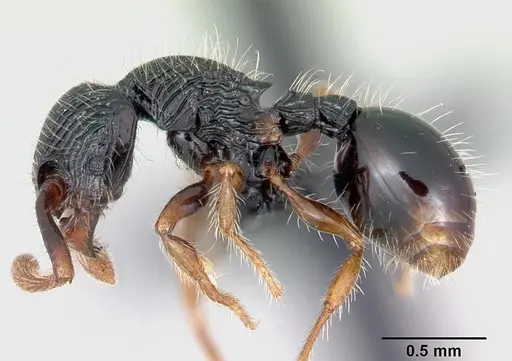
Myrmecina striata is a tiny myrmicine ant native to South and Southeast Asia. Workers measure about 3.75mm and have a distinctive appearance: their body is mainly black with reddish-yellow mandibles, antennae, legs, and the tip of the abdomen. The head and mesosoma are covered with coarse longitudinal striations (grooves), while the abdomen is smooth and shiny. They have propodeal spines pointing backward and slightly upward, and a rounded, barrel-shaped petiole without a distinct node. This species is found in India, Myanmar, Sri Lanka, and southern China, where it lives in broadleaf forests and rainforests, typically in leaf litter, soil, rotten wood, or under stones [1][2][3]. The biology of this species remains poorly studied, but like other Myrmecina ants, they form very small colonies of around 30-50 workers and forage on the ground surface [3]. In Sri Lanka, they are critically endangered, found only in the wet zone [4][5].
Quick Summary
- Difficulty: Unknown, likely Easy to Medium
- Origin & Habitat: India, Myanmar, Sri Lanka, and southern China. Found in broadleaf forest and rainforest habitats, typically in leaf litter samples, soil, rotten wood, under moss, or under stones at elevations around 1,770m [3][6][7].
- Colony Type: Colony structure is unconfirmed, no research documents queen number. Based on genus patterns, likely single-queen colonies. Colonies are very small, typically 30-50 workers [3].
- Size & Growth:
- Queen: Undocumented in available research, estimated 4-5mm based on genus patterns
- Worker: 3.75mm [1]
- Colony: Typically 30-50 workers in established colonies [3]
- Growth: Unknown, likely slow to moderate based on small colony size
- Development: Unconfirmed, estimated 6-10 weeks based on related Myrmicinae species (No direct development data exists for this species. Estimates based on genus-level patterns for small Myrmicinae ants.)
- Antkeeping:
- Temperature: Aim for roughly 22-26°C, they come from subtropical to tropical forests in India, Sri Lanka, and southern China where temperatures stay warm year-round. A gentle gradient allows them to choose their preferred spot.
- Humidity: Keep substrate moderately moist, they live in leaf litter and forest floor habitats where conditions stay damp but not waterlogged. Provide a moisture gradient so they can self-regulate.
- Diapause: Unlikely to need true hibernation given their tropical/subtropical distribution. May reduce activity during cooler months but probably no extended diapause period.
- Nesting: In captivity, test tubes work well for founding colonies. For established colonies, a naturalistic setup with moist substrate, leaf litter, and small hiding spots mimics their natural leaf litter environment. They prefer tight, enclosed spaces scaled to their tiny size.
- Behavior: These are tiny, ground-dwelling ants that forage on the soil surface. They are not aggressive and likely avoid confrontation given their small size. Workers search for small prey and honeydew. Escape prevention is critical, at 3.75mm, they can slip through tiny gaps, so use fine mesh and tight-fitting lids. They are docile and unlikely to sting humans.
- Common Issues: escape prevention is critical, their tiny size means they can squeeze through the smallest gaps, small colony size means they develop slowly and may appear stagnant, wild-caught colonies may have parasites that are difficult to treat in captivity, overfeeding can foul their small nest spaces, they are critically endangered in Sri Lanka, ensure any colony is legally and ethically sourced
Housing and Nest Setup
For founding colonies, a simple test tube setup works well. Myrmecina striata is tiny, only 3.75mm workers, so the water reservoir should be appropriately sized. They naturally nest in leaf litter, soil, rotten wood, and under stones, so a naturalistic setup with moist substrate and small hiding spots is ideal. You can use a small plastic container or acrylic nest with chambers scaled to their tiny size. Avoid tall, open spaces, they prefer tight, enclosed areas. A layer of damp soil or plaster as substrate with some leaf litter on top mimics their natural forest floor habitat. Because they are so small, escape prevention must be excellent, use fine mesh on any ventilation holes and ensure lids fit tightly. [3][1]
Feeding and Diet
Based on genus patterns, Myrmecina striata is likely an omnivore that forages for small prey and honeydew. Offer small live prey like fruit flies, pinhead crickets, or small mealworms. They probably also accept sugar sources, a drop of sugar water or honey water can be offered occasionally. Given their tiny size, prey items should be appropriately small. Feed small amounts of protein 2-3 times per week, and remove any uneaten prey to prevent mold. Their small colony size means they don't need large quantities of food. Observe what they accept and adjust accordingly. [3]
Temperature and Seasonal Care
Keep them at roughly 22-26°C, mimicking their native subtropical to tropical forest environment in India, Sri Lanka, and southern China. Room temperature in most homes should fall within this range. If needed, a small heating cable on one side of the nest can provide a gentle warmth gradient. Avoid temperature extremes, sudden drops or prolonged cold will stress them. Given their distribution, they likely do not require a true hibernation period. They may reduce activity during cooler months, but this is not a proper diapause. Maintain stable, warm conditions year-round. [7][3]
Behavior and Colony Dynamics
Myrmecina striata forms very small colonies, typically just 30-50 workers when mature [3]. This is much smaller than many common ant species, so don't expect large, bustling colonies. Workers forage on the ground surface, searching for small prey and likely honeydew from aphids or scale insects. They are not aggressive and will flee rather than fight when threatened. Their small size means they are vulnerable in captivity, avoid housing them with larger ant species if you have a community setup. They are ground-dwelling and do not climb well, which actually makes escape prevention somewhat easier than for arboreal species, though their small size still requires fine mesh barriers.
Legal and Ethical Considerations
This species is critically endangered in Sri Lanka according to the National Red List 2012 [4]. If you are obtaining colonies from the wild, ensure they are legally and ethically sourced. In many countries where this species occurs, collecting native ants may require permits or may be restricted, especially for endangered species. Captive-bred colonies are preferable to wild-caught specimens when available. If you do keep this species, you are helping to preserve a poorly understood ant that faces real conservation challenges in parts of its range.
Frequently Asked Questions
How long does it take for Myrmecina striata to produce first workers?
The exact development timeline is unconfirmed for this species. Based on related Myrmicinae patterns, expect roughly 6-10 weeks from egg to first worker at optimal temperature (around 24°C). Their small colony size means growth will seem slow compared to larger ant species.
What do Myrmecina striata ants eat?
Based on genus patterns, they likely accept small live prey (fruit flies, small crickets) and sugar sources. Offer appropriately-sized protein prey 2-3 times weekly and a drop of sugar water or honey water occasionally. Remove uneaten food to prevent mold.
Can I keep multiple Myrmecina striata queens together?
Colony structure is unconfirmed, no research documents whether they are single-queen or multi-queen colonies. Based on typical Myrmecina patterns, they are likely monogyne (single queen). Combining unrelated queens is not recommended as it has not been studied.
Do Myrmecina striata ants sting?
They are tiny ants (3.75mm) and not known to be aggressive. While most ants have stingers, these are too small to penetrate human skin effectively. They are docile and will flee rather than fight.
Are Myrmecina striata good for beginners?
Difficulty level is uncertain since this species has not been commonly kept in captivity. Their small size and small colony size make them somewhat challenging, they require careful attention to escape prevention and appropriate feeding. Their critically endangered status also means they may be difficult to legally obtain. Consider starting with more common species unless you have specific interest in this ant.
What temperature do Myrmecina striata need?
Aim for 22-26°C based on their subtropical/tropical distribution in India, Sri Lanka, and southern China. Room temperature in most homes should work. If needed, a small heating cable on part of the nest can provide warmth.
Do Myrmecina striata need hibernation?
Unlikely to need true hibernation given their tropical/subtropical distribution. They may reduce activity in cooler months but probably do not require an extended diapause period. Maintain stable, warm conditions year-round.
How big do Myrmecina striata colonies get?
Colonies remain very small, typically only 30-50 workers even in mature colonies [3]. This is much smaller than most common ant species. Do not expect large, impressive colonies.
When should I move Myrmecina striata to a formicarium?
Keep them in a test tube or small container for the founding stage. Once the colony reaches 20-30 workers and you see they are active and healthy, you can move them to a small naturalistic setup. Their tiny size means standard formicarium chambers may be too large, they prefer tight spaces.
Why are my Myrmecina striata dying?
Common issues include: escape through tiny gaps (use fine mesh), improper humidity (too dry or too wet), temperature stress (too cold), or parasites from wild-caught colonies. Their small size makes them vulnerable, ensure all parameters are stable. If wild-caught, parasites are a common cause of colony failure.
References

This caresheet is licensed under CC BY-SA 4.0 .
CASENT0070294
View on AntWeb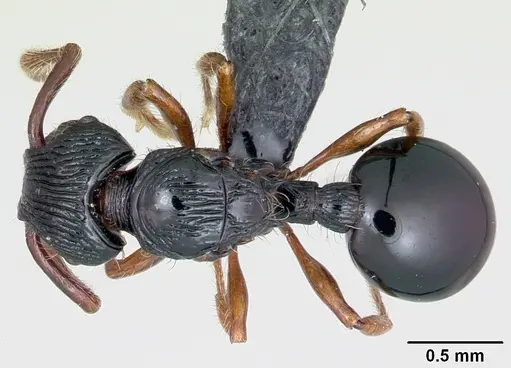
CASENT0070295
View on AntWeb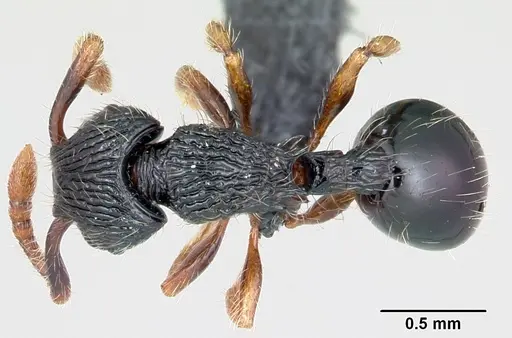
Literature
Loading...Loading products...