

Myrmecina nipponica
- Scientific Name
- Myrmecina nipponica
- Tribe
- Crematogastrini
- Subfamily
- Myrmicinae
- Author
- Wheeler, 1906
- Distribution
- Found in 2 countries
Myrmecina nipponica Overview
Myrmecina nipponica is an ant species of the genus Myrmecina. It is primarily documented in 2 countries , including Japan, Korea, Republic of. Detailed taxonomic data and occurrence records can be further explored via authoritative databases such as AntWeb or the Global Biodiversity Information Facility (GBIF).
Myrmecina nipponica
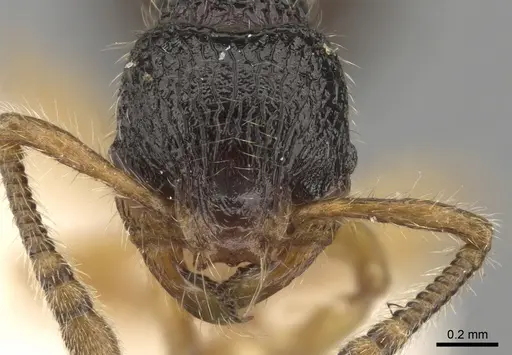
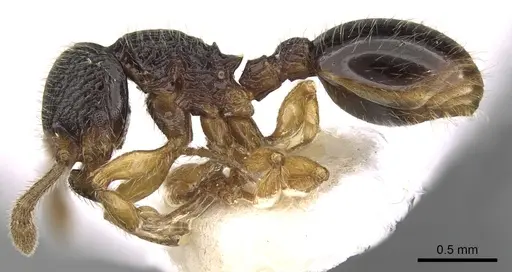
Myrmecina nipponica is a tiny ant species native to East Asia, found across Japan, the Korean Peninsula, and Russia's Far East. Workers measure just 3-4mm with a dark body and reddish-brown petiole, and they inhabit forest floors where they nest in soil, under stones, or in decaying wood. This species stands out for its remarkable queen polymorphism, some colonies produce normal winged queens while others produce wingless intermorphic queens that can found new colonies by budding. Colonies are small, typically containing 20-40 workers, making them one of the more compact ant species you can keep.
Quick Summary
- Difficulty: Medium
- Origin & Habitat: Cool-temperate woodlands of Japan, Korean Peninsula, and Russia's Far East (Amur, Khabarovsk, Primorye, Kuril Islands). Nests in soil, fallen twigs, or under stones on forest floor, typically under mosses or grass roots at 2-15cm depth [1][2].
- Colony Type: Facultatively polygynous with unique queen polymorphism. Colonies can have either winged queens or wingless intermorphic queens (ergatoid reproductives). Queenright colonies produce alate queens, queenless colonies produce intermorphics. Some populations (Manazuru) reproduce via thelytokous parthenogenesis, no males needed [3][4].
- Colony: Optionally polygyne
- Founding: Claustral
- Size & Growth:
- Queen: Alate queens: 3.84mm body length [4]. Intermorphic queens: 3.50mm body length [4].
- Worker: 3-4mm body length [5][1].
- Colony: Typically 20-40 workers, range 11-103 workers per colony [3][2].
- Growth: Slow, founding queens take 3.5-7 months to produce first workers [3].
- Development: 3.5-7 months at room temperature (queen F1 took ~4.5 months from egg to worker) [3]. (Development is slow compared to many ants. Queens seal themselves in during founding (claustral). Thelytokous populations can produce workers without mating.)
- Antkeeping:
- Temperature: Keep at room temperature (18-24°C). Found in cool-temperate regions, so they don't need high heat. A gentle gradient is fine but not required, they do well at typical room temperature [2].
- Humidity: Keep substrate moderately moist. In nature they nest under mosses and grass roots in forest floor soil. The nest area should be damp but not waterlogged, with some drier areas available [2][1].
- Diapause: Yes, this species is adapted to temperate climates with cold winters. Provide a winter rest period at 5-10°C for 2-3 months. Intermorphic queens are produced more frequently at lower temperatures [4].
- Nesting: Small colonies need small nests. Test tubes work well for founding colonies. For established colonies, a small acrylic or Y-tong nest with tight chambers scaled to their tiny size. They prefer nesting in soil or moist substrate with some cover. Avoid large open spaces, these are tiny ants [6][1].
- Behavior: These ants are docile and less aggressive compared to many Myrmicinae. They are not known to sting and pose no danger to keepers. Workers are small but can squeeze through tiny gaps, use fine mesh for escape prevention. They use pheromone trails during nest relocation and make collective decisions through quorum voting. Colonies are calm and go about their business quietly, a good observation species [2][7].
- Common Issues: slow growth can frustrate beginners, founding colonies take months to establish, tiny size means escapes are likely without fine mesh barriers, specialized diet on oribatid mites may be difficult to replicate in captivity, small colony size means less activity to observe, thelytokous populations have no males, breeding requires obtaining mated queens or established colonies
Housing and Nest Setup
Myrmecina nipponica is a tiny ant, so your setup must be scaled accordingly. Test tubes work perfectly for founding colonies, fill one-third with water, plug with cotton, and the queen will seal herself in. For established colonies, use a small acrylic nest or Y-tong with chambers sized for their small body. They prefer dark, humid conditions and will nest in the moist substrate area. Avoid large formicariums, these ants feel secure in compact spaces. A small outworld for feeding is sufficient. Use fine mesh (at least 0.5mm) for any barriers because workers are tiny and can slip through standard ant farm barriers [6][1].
Feeding and Diet
This species is a specialized predator on oribatid mites (hard-bodied soil mites) in the wild, a unique dietary specialization among ants [8]. In captivity, you'll need to approximate this. Offer small live prey like springtails, tiny isopods, or fruit flies. They will also scavenge on small arthropod pieces. Sugar water or honey can be offered occasionally but protein from small prey is essential. Feed small prey items 2-3 times per week. Remove uneaten prey after 24 hours to prevent mold. Don't expect them to accept large prey, their tiny mandibles are designed for mites [3][8].
Temperature and Seasonal Care
Keep these ants at typical room temperature (18-24°C). They come from cool-temperate regions of Japan and don't require heating. During summer, room temperature is fine, in winter, a cool basement or unheated room works well. They benefit from a winter rest period, reduce temperature to 5-10°C for 2-3 months to simulate natural conditions. This cold period may influence caste production (more intermorphics at lower temperatures) [4]. Don't let them freeze, but cold tolerance is part of their natural biology. Monitor colony activity, if workers cluster together, the colony is comfortable [4][2].
Understanding Their Unique Colony Structure
What makes Myrmecina nipponica fascinating is its queen polymorphism, some colonies produce normal winged queens while others produce wingless intermorphic queens. This isn't a case of ergatoid queens replacing a dead queen, instead, entire colonies can be 'queenless' (headed by intermorphics) and produce only more intermorphics. The two types rarely coexist in the same colony. Intermorphic queens are only 55% the size of winged queens and cannot fly, they disperse by budding instead. Some populations (like Manazuru in Japan) reproduce entirely through thelytokous parthenogenesis, females produce females without males! When keeping this species, you may get either type of colony [4][3][5].
Behavior and Observation
These are docile, non-aggressive ants that make excellent observation subjects. Workers use pheromone trails during nest relocation and make collective decisions through quorum voting, when scouts find a new nest site, they recruit others until about one-third of the colony agrees on the location. They prefer dark nests over light ones. Colonies are small (typically under 50 workers) but active in their foraging. They are not defensive and won't bite or sting. The main observation interest is their decision-making process during colony relocation and their unique caste system [7][9].
Frequently Asked Questions
How long does it take for Myrmecina nipponica to produce first workers?
From egg to first worker takes approximately 3.5-7 months. One documented queen took about 4.5 months from egg lay to worker emergence. This is slower than many common ant species, so patience is required [3].
Can I keep multiple queens together in one colony?
This species can be polygynous (multiple queens) in some populations, but colonies are typically functionally monogynous with one reproductive female. Combining unrelated foundress queens is not recommended as aggression may occur. If you obtain a polygynous colony, keep the queens together, they typically tolerate each other [10][4].
What do Myrmecina nipponica eat?
They are specialized predators on oribatid mites (hard-bodied soil mites). In captivity, offer small live prey like springtails, tiny isopods, or fruit flies. They will also scavenge on small arthropod pieces. Occasional sugar water or honey can be offered but protein from small live prey is essential for colony health [3][8].
Do Myrmecina nipponica ants sting?
No, these ants are not known to sting. They are docile and pose no danger to keepers. Their small size and gentle temperament make them safe to handle, though you should avoid handling them directly due to their tiny stature and the stress it causes [2].
How big do Myrmecina nipponica colonies get?
Colonies are small, typically 20-40 workers, with maximum around 100 workers. This is a petite species, not a prolific one. Don't expect massive colonies like you would get with Lasius or Camponotus. The small colony size is part of their natural biology [3][2].
Do they need hibernation or winter rest?
Yes, they benefit from a winter rest period. Being a temperate species from Japan, they expect cold winters. Reduce temperature to 5-10°C for 2-3 months during winter. This rest period may also influence caste production, lower temperatures tend to produce more intermorphic queens [4].
Why are my ants producing wingless queens?
Your colony may be a 'queenless' colony headed by an intermorphic queen (wingless reproductive). This is normal for this species, some colonies produce only intermorphics instead of winged queens. If the colony lost its queen and has an intermorphic replacement, or if it was founded by an intermorphic queen, you'll get more intermorphics. This is not a problem, intermorphics are fully functional reproductives [4][5].
Are Myrmecina nipponica good for beginners?
They are moderate difficulty, not the easiest but not the hardest. The main challenges are their slow growth (months to first workers), specialized diet (need small live prey), and tiny size (escape prevention is critical). They are fascinating to keep due to their unique queen polymorphism but require patience. If you want a rewarding challenge, they are excellent [3][2].
When should I move them from a test tube to a formicarium?
Wait until the colony has at least 15-20 workers and the test tube is becoming crowded. For this small species, even a small acrylic nest is fine, don't oversize the housing. They prefer tight, dark spaces. Moving too soon can stress the colony. Watch for workers exploring beyond the cotton barrier as a sign they're outgrowing the setup [3].
My colony has no males - is this normal?
Yes, this is normal for some populations. The Manazuru population in Japan reproduces entirely through thelytokous parthenogenesis, females produce females without males. If your colony came from this region or a similar population, no males is expected. Even in sexual populations, males may be rare. This doesn't indicate a problem with your colony [3][11].
References

This caresheet is licensed under CC BY-SA 4.0 .
CASENT0281804
View on AntWeb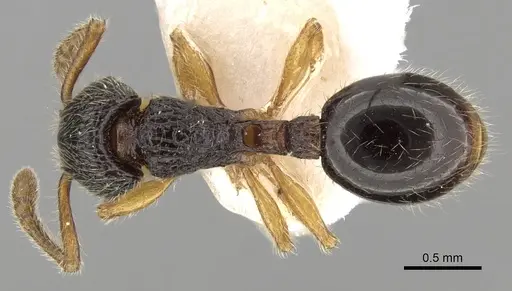
Literature
Loading...Loading products...