

Myrmecina inaequala
- Scientific Name
- Myrmecina inaequala
- Tribe
- Crematogastrini
- Subfamily
- Myrmicinae
- Author
- Shattuck, 2009
- Distribution
- Found in 1 countries
Myrmecina inaequala Overview
Myrmecina inaequala is an ant species of the genus Myrmecina. It is primarily documented in 1 countries , including Australia. Detailed taxonomic data and occurrence records can be further explored via authoritative databases such as AntWeb or the Global Biodiversity Information Facility (GBIF).
Myrmecina inaequala
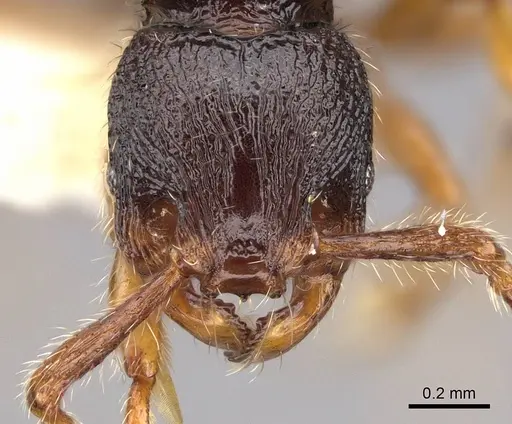
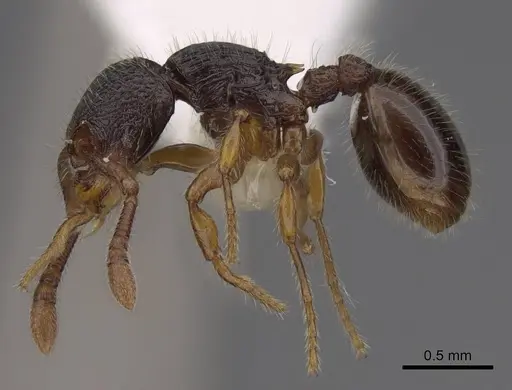
Myrmecina inaequala is a tiny Australian ant species, with workers measuring just 0.6-0.8mm in length [1]. They have a distinctive appearance: dark brown-black body with yellow-red antennae, mandibles, and legs. Their most notable feature is the series of longitudinal ridges (carinae) running along the top of their mesosoma, and they have relatively long propodeal spines at the rear of their body [1]. This is the most widespread Myrmecina species in Australia, found across multiple habitat types from Eucalyptus forests to rainforests [1][2].
What makes these ants fascinating is their specialized diet. Unlike most ants that will eat almost anything, Myrmecina species are predators specialized on oribatid mites, tiny soil mites that other ants struggle to tackle. Their larvae have exceptionally small heads, an adaptation that lets them feed on the partially opened bodies of these mites [2]. This specialized feeding means they need live prey in captivity, making them a more challenging but rewarding species to keep.
Quick Summary
- Difficulty: Medium
- Origin & Habitat: Australia, found in Eucalyptus forests, mesophyll vine forests, Picabean palm forests, wet sclerophyll, and rainforest. Most commonly encountered in leaf litter samples or occasionally in rotten logs [1][2]. Elevation range 200-800m in the Eungella region of Queensland [3].
- Colony Type: Colony structure is unconfirmed. Based on related Myrmecina species, they likely form small colonies with a single queen. Colonies in the genus are typically small, with workers nesting in soil, under rocks, in twigs, or in rotting wood [2].
- Size & Growth:
- Queen: Unknown, not described in original species description [1]
- Worker: 0.6-0.8mm (HL 0.63-0.79mm, HW 0.62-0.78mm, WL 0.79-0.93mm) [1]
- Colony: Likely small, Myrmecina colonies are typically modest in size, likely under 100 workers based on genus patterns [2]
- Growth: Slow, small colony size and specialized diet suggest slow development
- Development: Unknown, no direct development data exists. Based on similar tiny Myrmicinae and their specialized diet, estimate 8-12 weeks at optimal temperature. This is an educated guess rather than confirmed data. (Development is likely slow given their small size and predatory lifestyle. Expect patience required during founding.)
- Antkeeping:
- Temperature: Keep around 22-26°C. As an Australian species from Queensland rainforests and wet forests, they prefer warm, humid conditions. A heating cable on one side of the nest creates a suitable gradient
- Humidity: High humidity required, these are forest floor ants from damp habitats. Keep the nest substrate consistently moist but not waterlogged. Mist occasionally and provide a water tube. The substrate should feel damp to the touch
- Diapause: Likely yes, Australian temperate ants typically require a winter rest period. Reduce temperature to 15-18°C for 2-3 months during winter. This is inferred from their geographic origin rather than directly studied.
- Nesting: Naturalistic setup works best, they nest in leaf litter, soil, under stones, and in rotting wood in the wild [2]. A Y-tong or acrylic nest with fine, moist substrate mimics their natural environment. Because they are tiny, they need tight chambers and excellent escape prevention. A layer of moist coco fiber or soil in an outworld-connected nest works well.
- Behavior: These ants are very small and shy. They are not aggressive and rarely sting, their tiny size means they cannot penetrate human skin effectively. Workers forage slowly through leaf litter and soil, hunting for small prey. Because of their minute size, escape prevention is critical, they can squeeze through the tiniest gaps. They are predacious on oribatid mites in the wild, so they need live small prey in captivity [2]. They are not escape artists in terms of climbing, but their small size means they will find any gap.
- Common Issues: escape prevention is critical, they are tiny enough to squeeze through standard mesh, specialized diet means they may refuse standard ant foods, live small prey is essential, slow growth tests keeper patience during founding stage, high humidity needs can lead to mold if ventilation is poor, small colony size means any losses have bigger impact
Nest Preferences and Housing
In the wild, Myrmecina inaequala nests in soil with or without coverings, between rocks, in twigs on the ground, or in rotten wood [2]. They are leaf litter specialists, found most commonly in litter samples from forested areas. This means they prefer a naturalistic setup that mimics the forest floor environment.
For captivity, a Y-tong nest or acrylic nest with a chamber filled with moist substrate works well. Use coco fiber, soil, or a mix that holds moisture well. Because they are tiny, the chambers should be relatively small and tight. Connect the nest to an outworld where you can offer food. Escape prevention is critical, these ants are minute and will find any gap larger than about 0.3mm. Use fine mesh on all openings and apply fluon to the rim of the outworld.
Keep the nest area humid but ensure some ventilation to prevent mold. A water tube attached to the nest helps maintain humidity. The substrate should be moist but not soggy, if you see standing water, you've gone too far.
Feeding and Diet
This is the most important aspect of keeping Myrmecina inaequala. These ants are specialized predators on oribatid mites, tiny soil mites that are difficult for larger ants to tackle [2]. Their larvae have exceptionally small heads, an adaptation for feeding on the partially opened bodies of these mites [2].
In captivity, you must provide live small prey. The best options are springtails (folsomia), tiny soil mites, or very small fruit fly larvae. Offer prey at least twice a week, removing any uneaten remains after 24 hours. While they may occasionally accept honey or sugar water, this should not be their primary food, they are predators first and foremost.
Do not rely on standard ant foods like mealworms or crickets, these are too large for such tiny ants. If springtails aren't available, you can culture your own or purchase them from reptile suppliers. Some keepers have had success with freshly hatched pinhead crickets cut into tiny pieces, but live small prey gives the best results.
Temperature and Seasonal Care
As an Australian species from Queensland and northern New South Wales, Myrmecina inaequala prefers warm, stable temperatures. Keep the nest area around 22-26°C. You can use a heating cable placed on top of the nest (never under it, as this causes excessive drying) to create a gentle temperature gradient. This allows the ants to regulate their own temperature by moving between warmer and cooler areas.
During the Australian winter (roughly June-August in the southern hemisphere), you should reduce temperatures to simulate their natural seasonal cycle. A diapause period at 15-18°C for 2-3 months is recommended. During this time, reduce feeding to once weekly and minimize disturbance. This helps maintain colony health long-term.
Monitor your colony's activity, if workers are consistently clustered near the heated area, increase temperature slightly. If they avoid the heated side, reduce heat. Every colony has slightly different preferences. [1][2]
Behavior and Temperament
Myrmecina inaequala is a shy, non-aggressive species. Workers are small and slow-moving, foraging through leaf litter and soil in search of prey. They are not territorial in an aggressive sense and will typically flee from threats rather than engage.
Their sting is not effective against humans due to their tiny size, you are unlikely to feel it even if they try. This makes them a safe species to keep even in households with children, though the escape risk from their small size is the main concern.
Because they are so small, they are not good climbers on smooth surfaces, but they will readily walk across fabric or paper. Always use fluon or similar barriers on the outworld rim, and check all connections between nest and outworld for gaps.
Workers are most active during the evening and night, though they will forage during the day if food is available. They do not have dramatic behaviors like army ants or weaver ants, they are quiet, secretive ants that go about their business of hunting tiny prey. [2]
Frequently Asked Questions
How long does it take for Myrmecina inaequala to produce first workers?
The exact timeline is unknown, but based on similar tiny Myrmicinae, expect 8-12 weeks from egg to first worker at optimal temperature (around 24°C). These ants grow slowly, and founding colonies require patience. Do not expect rapid growth, small colony size and specialized diet mean development takes time.
What do Myrmecina inaequala eat?
They are specialized predators on oribatid mites. In captivity, you must feed them live small prey, springtails are ideal, or tiny fruit fly larvae. They may accept honey occasionally but do not rely on sugar sources. Standard ant foods like mealworms are too large for these tiny ants.
Can I keep Myrmecina inaequala in a test tube?
A test tube setup can work for founding colonies, but you will need to transfer them to a more naturalistic setup as the colony grows. Test tubes dry out quickly, so you need to monitor humidity closely. A small acrylic nest or Y-tong with moist substrate is better long-term.
Do Myrmecina inaequala ants sting?
They have a stinger but it is too small to effectively penetrate human skin. These ants are not a stinging threat to keepers. Their main defense is hiding and fleeing rather than aggression.
How big do Myrmecina inaequala colonies get?
Based on genus patterns, colonies likely remain small, probably under 100 workers even at maturity. This is a small, secretive ant species, not a rapid reproducer. Expect a modest colony size even after several years.
Are Myrmecina inaequala good for beginners?
They are intermediate in difficulty. The specialized diet (requiring live prey) and tiny size (requiring excellent escape prevention) make them more challenging than species like Lasius or Camponotus. However, they are not aggressive and do not require complex setups. If you can culture springtails, they make interesting pets.
Do Myrmecina inaequala need hibernation?
Yes, a winter rest period is recommended. Reduce temperatures to 15-18°C for 2-3 months, typically during winter. Reduce feeding during this period and minimize disturbance. This simulates their natural seasonal cycle in Australia.
Why are my Myrmecina inaequala dying?
Common causes include: escape (they are tiny and will find any gap), starvation (they need live prey, not dried food), too dry conditions (they need humidity), or mold from poor ventilation. Check your escape prevention first, lost ants are the most common problem. Also ensure you are offering appropriate live prey.
When should I move Myrmecina inaequala to a formicarium?
Wait until the colony has at least 20-30 workers and you see the founding chamber becoming cramped or dirty. For these small ants, a small acrylic nest or Y-tong works well. Do not rush the transfer, test tubes work fine for founding colonies.
Can I keep multiple queens together?
This has not been studied for this specific species. Based on genus patterns, they are likely monogyne (single queen). Combining unrelated queens is not recommended as it has not been documented and could result in fighting.
References

This caresheet is licensed under CC BY-SA 4.0 .
CASENT0922968
View on AntWeb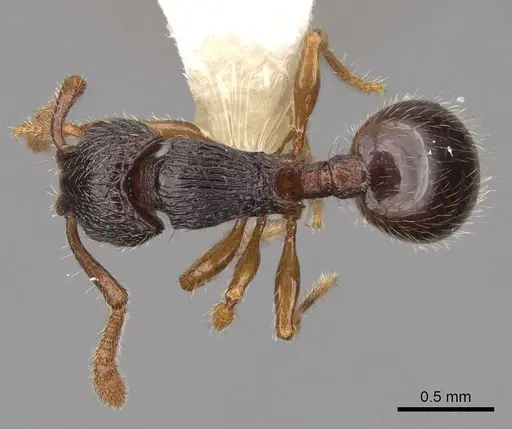
Literature
Loading...Loading products...