

Myrmecina harrisoni
- Scientific Name
- Myrmecina harrisoni
- Tribe
- Crematogastrini
- Subfamily
- Myrmicinae
- Author
- Brown, 1967
- Distribution
- Found in 1 countries
Myrmecina harrisoni Overview
Myrmecina harrisoni is an ant species of the genus Myrmecina. It is primarily documented in 1 countries , including Mexico. Detailed taxonomic data and occurrence records can be further explored via authoritative databases such as AntWeb or the Global Biodiversity Information Facility (GBIF).
Myrmecina harrisoni
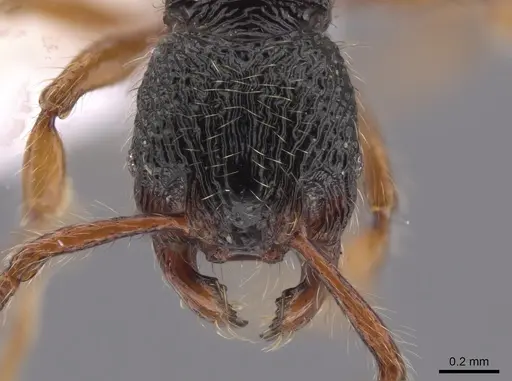
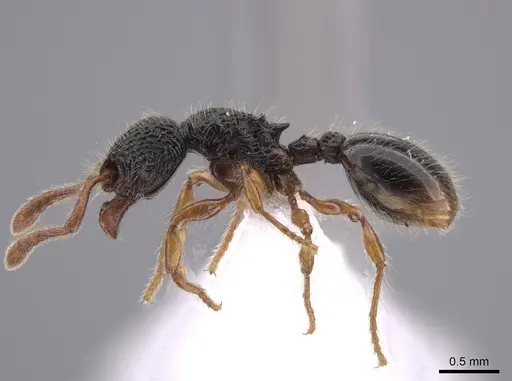
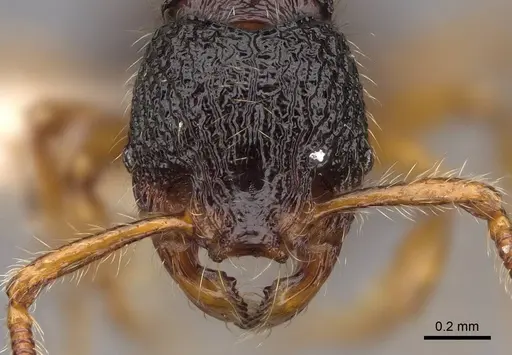
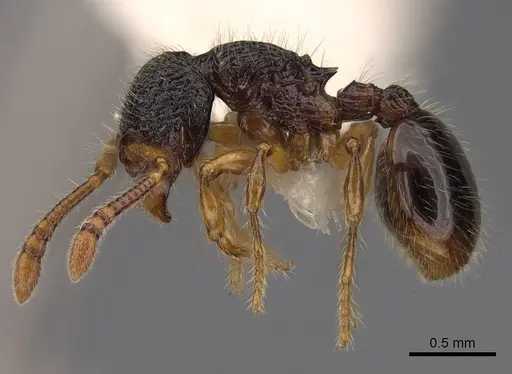
Myrmecina harrisoni is a tiny ant species measuring just 3.4-3.5mm in total length [1]. Workers are mostly black with reddish-brown mouthparts, coxae, and the lower parts of their petiole and postpetiole, while their antennae and legs are a dull yellowish color [1]. This species has distinctive coarse sculpture on its head and alitrunk, with thick costulae (ridge-like structures) and nearly smooth, shining spaces between them [1].
This species was discovered in the northernmost true wet tropical forest in the Western Hemisphere, living in rotten logs at an elevation of about 1070 meters in the Sierra Guatemala mountains of southern Tamaulipas, Mexico [1]. The region features wet mountain forest dominated by oaks, Liquidambar, and Podocarpus trees [1]. Only the worker caste has been documented, making this a poorly studied species in terms of colony structure and reproduction.
Quick Summary
- Difficulty: Medium
- Origin & Habitat: Native to the Sierra Guatemala mountains in southern Tamaulipas, Mexico, where it nests in rotten logs within wet mountain forest dominated by oaks, Liquidambar, and Podocarpus at approximately 1070m altitude [1][2][3].
- Colony Type: Unknown, only worker caste has been documented. Colony structure (single-queen or multi-queen) has not been studied.
- Size & Growth:
- Queen: Unknown, only workers have been described [1]
- Worker: 3.4-3.5mm total length [1]
- Colony: Unknown, no colony size data available
- Growth: Unknown
- Development: Unknown, development has not been studied for this species (Based on typical Myrmecina patterns, expect 6-10 weeks at optimal temperature, but this is an estimate)
- Antkeeping:
- Temperature: Keep at moderate temperatures around 20-24°C. The highland Mexican habitat suggests they prefer cooler conditions than tropical species. A heating cable on one side of the nest creates a suitable gradient.
- Humidity: High humidity is essential, they come from wet mountain forest environments. Keep the nest substrate consistently moist but not waterlogged. Provide a water tube as a humidity source.
- Diapause: Likely required. Based on the temperate location in the Sierra Guatemala mountains at 1070m elevation, expect a winter rest period of 2-3 months at reduced temperatures (around 10-15°C).
- Nesting: Provide a moist, wood-based nest such as a Y-tong (AAC) nest or a naturalistic setup with rotten wood pieces. They naturally nest in rotting logs, so substrate that holds moisture well is essential.
- Behavior: This is a very small, cryptic ant species that is not aggressive and rarely ventures far from its nest. Workers are slow-moving and forage primarily within the nest material or on nearby surfaces. Escape prevention is critical due to their tiny 3.4mm size, they can squeeze through standard test tube barriers. They are not known to sting and pose no danger to keepers.
- Common Issues: escape prevention is critical due to their very small size, use fine mesh and tight-fitting lids, high humidity requirements can lead to mold problems if ventilation is poor, slow growth and lack of documented care information makes successful keeping challenging, winter diapause is likely required but specific requirements are unknown, limited availability, this species is rarely kept in captivity
Natural History and Distribution
Myrmecina harrisoni is endemic to the Sierra Guatemala mountains in southern Tamaulipas, Mexico, specifically found at Rancho del Cielo above the village of Gomez Farias [1]. This region represents the northernmost extent of true wet tropical forest in the Western Hemisphere. The species was discovered living in rotten logs within wet mountain forest at approximately 1070 meters elevation, an environment dominated by oak, Liquidambar, and Podocarpus trees [1]. The species was described by William L. Brown Jr. in 1967 and named in memory of Francis Harrison, the proprietor of Rancho del Cielo who was murdered shortly after the collection of these specimens [1]. Only the worker caste has been documented, making this one of the lesser-known Myrmecina species.
Housing and Nest Setup
Because these ants naturally nest in rotting logs within humid forest environments, you should provide a moist, wood-based captive habitat. A Y-tong (AAC) formicarium works well, or you can create a naturalistic setup with pieces of damp rotting wood embedded in moist soil. The key is maintaining consistently high humidity without creating stagnant conditions. Use a water tube connected to the nest to provide a humidity source, and consider placing the setup on a layer of moist substrate. Because workers are only 3.4mm long, escape prevention must be excellent, use fine mesh and ensure all connections are sealed tightly. Avoid tall, open outworlds as these tiny ants prefer enclosed spaces.
Temperature and Seasonal Care
Based on their highland Mexican habitat at 1070m elevation, Myrmecina harrisoni likely prefers moderate temperatures in the range of 20-24°C. The mountainous environment suggests they experience cooler conditions than lowland tropical species. A heating cable placed on one side of the nest can create a temperature gradient, allowing ants to self-regulate by moving between warmer and cooler areas. Given the temperate nature of their habitat, a winter diapause period is likely necessary, plan for 2-3 months at reduced temperatures around 10-15°C during the winter months. This species is not well-documented in captivity, so observe colony behavior and adjust temperatures accordingly. [1]
Feeding and Nutrition
While specific dietary studies do not exist for this species, Myrmecina ants are typically omnivorous, feeding on small insects, honeydew, and nectar. For such tiny workers, offer very small prey items such as fruit flies, pinhead crickets, or small mealworm pieces. Sugar water or honey diluted with water can be offered occasionally. Feed small amounts 2-3 times per week and remove any uneaten food after 24 hours to prevent mold. Given their small size and cryptic nature, they may be shy foragers, place food near nest entrances and observe carefully.
Challenges and Considerations
Myrmecina harrisoni is an extremely rare species in the antkeeping hobby, with very limited documented care information. The primary challenges include obtaining a colony (they are not commonly available), maintaining the high humidity they require without causing mold problems, and providing appropriate winter conditions. Their tiny size also makes them prone to escaping through standard barriers. This species is best suited for experienced antkeepers who enjoy working with rare species and can adapt their care approach based on observed colony behavior. There is significant room for keepers to contribute to our understanding of this species through careful observation and documentation.
Frequently Asked Questions
How long does it take for Myrmecina harrisoni to produce first workers?
The egg-to-worker development time is unknown, this species has not been studied in captivity. Based on typical Myrmecina patterns, expect approximately 6-10 weeks at optimal temperature, but this is an estimate.
What temperature do Myrmecina harrisoni ants need?
Keep them at moderate temperatures around 20-24°C. The highland Mexican habitat suggests they prefer cooler conditions than tropical species. A gentle temperature gradient allows the colony to self-regulate.
Do Myrmecina harrisoni ants sting?
No, these tiny ants do not pose any stinging threat to keepers. They are completely harmless.
Can I keep Myrmecina harrisoni in a test tube setup?
Yes, a test tube setup can work if it includes a water reservoir to maintain humidity. However, due to their tiny 3.4mm size, escape prevention must be excellent, use cotton plugs carefully and consider additional barriers.
Do Myrmecina harrisoni need hibernation?
Likely yes. Based on their location in the Sierra Guatemala mountains at 1070m elevation, a winter diapause period of 2-3 months at reduced temperatures (around 10-15°C) is probably necessary.
How big do Myrmecina harrisoni colonies get?
Colony size is unknown, this species has not been studied in captivity and only the worker caste has been documented.
Are Myrmecina harrisoni good for beginners?
No, this species is not recommended for beginners. It is rarely kept in captivity, has no documented care information, and requires specific humidity and temperature conditions that can be challenging to maintain.
What do Myrmecina harrisoni eat?
Based on typical Myrmecina diet, they likely accept small insects, honeydew, and sugar sources. Offer tiny prey items like fruit flies or small mealworm pieces, along with occasional sugar water or diluted honey.
Where is Myrmecina harrisoni found?
This species is endemic to the Sierra Guatemala mountains in southern Tamaulipas, Mexico, specifically at Rancho del Cielo above Gomez Farias at approximately 1070m elevation.
How do I set up a nest for Myrmecina harrisoni?
Provide a moist, wood-based nest such as a Y-tong formicarium or a naturalistic setup with damp rotting wood. High humidity is essential, they naturally nest in rotten logs within wet mountain forest.
References

This caresheet is licensed under CC BY-SA 4.0 .
CASENT0653673
View on AntWeb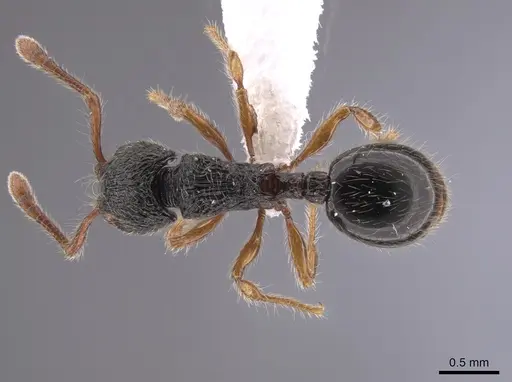
CASENT0922957
View on AntWeb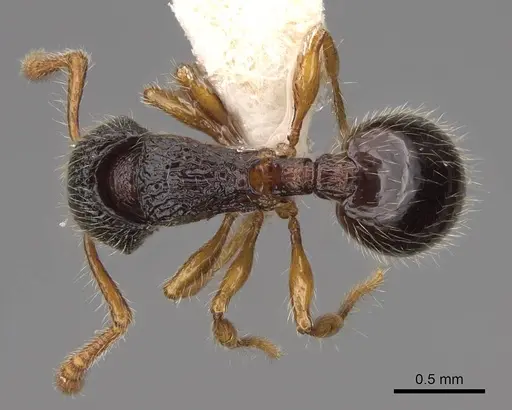
Literature
Loading...Loading products...