

Myrmecina flava
- Scientific Name
- Myrmecina flava
- Tribe
- Crematogastrini
- Subfamily
- Myrmicinae
- Author
- Terayama, 1985
- Distribution
- Found in 1 countries
Myrmecina flava Overview
Myrmecina flava is an ant species of the genus Myrmecina. It is primarily documented in 1 countries , including Japan. Detailed taxonomic data and occurrence records can be further explored via authoritative databases such as AntWeb or the Global Biodiversity Information Facility (GBIF).
Myrmecina flava
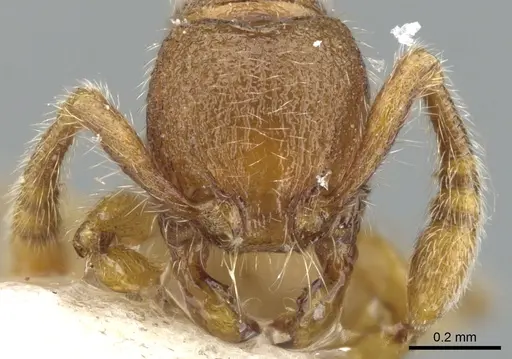
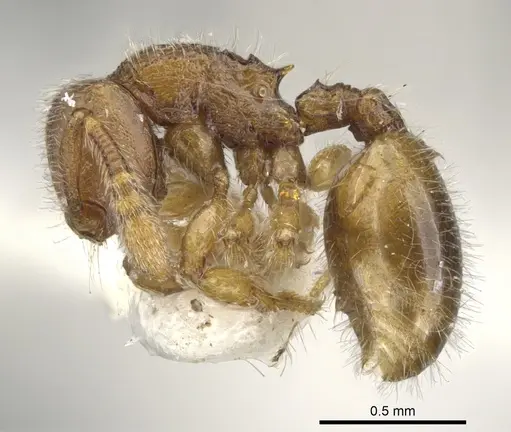
Myrmecina flava is a tiny, bright yellow ant species native to East Asia, specifically Japan and the Korean Peninsula. Workers measure just 2.5mm and are easily recognized by their distinctive yellow to yellowish-brown coloration with a darker gaster, and their unique antennal structure featuring a semibulbous lamella covering the articulation condyle [1]. This species is considered rare in the ant-keeping hobby and is seldom encountered even in its native range, with most specimens collected through sifting leaf litter in forested areas [2]. What makes Myrmecina flava particularly fascinating is its specialized diet, it is the first ant species documented to be a specialized predator of oribatid mites (hard-bodied soil mites), representing a unique feeding strategy among ants [3][4].
Quick Summary
- Difficulty: Medium
- Origin & Habitat: Native to Japan (Honshu, Shikoku, Kyushu) and the Korean Peninsula. Found in soil, leaf litter, rotten wood, under stones, and moss in forested areas [5][1].
- Colony Type: Colony structure is unconfirmed. Based on related Myrmecina species, likely single-queen colonies with small colony sizes of 30-50 workers on average [5].
- Size & Growth:
- Queen: Estimated 4-5mm based on genus patterns (queens typically 1.5-2x worker size)
- Worker: 2.5mm [1]
- Colony: Small colonies, typically 30-50 workers [5]
- Growth: Slow, small colony size and specialized diet suggest slow growth
- Development: Estimated 8-12 weeks based on genus patterns for small Myrmicinae (Development timeline is not directly studied, estimates based on typical Myrmecina genus patterns at room temperature)
- Antkeeping:
- Temperature: Keep at room temperature, roughly 20-24°C. No specific thermal studies exist for this species, but related Myrmecina species thrive in moderate conditions. A gentle gradient is recommended.
- Humidity: Keep substrate moderately moist. This species naturally inhabits forest floor environments with leaf litter and rotting wood, so aim for damp but not waterlogged conditions. Provide a moisture gradient so ants can choose their preferred humidity.
- Diapause: Unknown, no specific studies on overwintering requirements. Given its Japanese distribution, a cool period during winter months is likely beneficial.
- Nesting: Use a naturalistic setup with soil or a plaster/acrylic nest with small chambers. Their tiny size and soil-nesting behavior means they do well in compact, humid environments. A test tube with soil substrate can work for founding colonies.
- Behavior: These ants are very small and docile. They are specialized predators on oribatid mites, which is unusual among ants, they are not generalist feeders [3][4]. Workers are slow-moving and not aggressive. Escape prevention is critical due to their tiny 2.5mm size, they can easily slip through standard mesh barriers. They prefer to forage in leaf litter and soil environments.
- Common Issues: escape prevention is critical due to their very small 2.5mm size, standard mesh may not contain them, specialized diet means they may refuse standard ant foods, live oribatid mites or similar small prey is essential, small colony size makes them vulnerable to disturbance, handle minimally, rare in the hobby and difficult to acquire, wild collection is challenging due to low nest density, slow growth and small final colony size may frustrate keepers expecting large colonies
Housing and Nest Setup
Myrmecina flava requires a small, humid enclosure scaled to their tiny 2.5mm worker size. For founding colonies, a test tube setup with moist cotton works well. As the colony grows, transfer to a small naturalistic setup with soil substrate or a compact acrylic/plaster formicarium with small chambers. The key is maintaining humidity while allowing for some dry areas so ants can self-regulate. These ants nest in soil, leaf litter, and under stones in the wild, so a substrate depth of 2-3cm is sufficient. Avoid tall, open spaces, they prefer tight, confined spaces. Because of their minute size, ensure all connections and barriers are truly escape-proof, even standard fluon barriers may need reinforcement with fine mesh. [5][1]
Feeding and Diet - The Specialized Mite Hunter
This is the most critical aspect of keeping Myrmecina flava. They are specialized predators of oribatid mites, the first documented case of acarophagy (mite-eating) among ants [3][4]. This means they cannot survive on typical ant foods like sugar water or generic protein sources alone. You must culture or obtain small oribatid mites as their primary food. Other small soil micro-arthropods may be accepted experimentally, but success is uncertain. Do not rely on sugar sources, while some Myrmecina species may occasionally tend aphids for honeydew, this species appears strictly predatory. Feed small live mites every few days, removing uneaten prey to prevent mold. The challenge of maintaining a live mite culture is the main difficulty with this species.
Temperature and Humidity
Keep Myrmecina flava at room temperature, roughly 20-24°C. No specific thermal studies exist for this species, but its distribution across central Japan suggests it adapts to moderate temperatures. A slight thermal gradient allows workers to choose their preferred temperature. Humidity is more critical, these ants inhabit damp forest floor environments. Keep the nest substrate consistently moist but not waterlogged. The substrate should feel damp to the touch. Allow some drying between waterings, but never let it fully dry out. A humidity range of 60-80% is appropriate. Good ventilation is essential to prevent mold while maintaining humidity.
Colony Dynamics and Growth
Myrmecina flava colonies remain small throughout their life, typically reaching only 30-50 workers in natural populations [5]. This is much smaller than most commonly kept ant species. Nest density in the wild is very low, only 0.07 nests per square meter in one study [6]. Growth is slow, and colonies do not produce massive numbers of workers. This means keepers should not expect the rapid expansion seen in species like Lasius or Camponotus. The small colony size also means these ants are sensitive to disturbance, minimize nest inspections and avoid moving colonies unless necessary. Queens are likely claustral (seal themselves in to raise first workers), but this behavior has not been directly documented for this species.
Behavior and Temperament
These are docile, non-aggressive ants. Workers are slow-moving and spend most of their time foraging in leaf litter and soil. They do not defend their nests aggressively and pose no threat to keepers. Their tiny size and specialized diet mean they are not escape artists in the traditional sense, they simply wander slowly rather than running. However, escape prevention is still critical because they can squeeze through the tiniest gaps. They do not sting and cannot penetrate human skin. Their most interesting behavior is their specialized predation on oribatid mites, workers hunt these hard-bodied mites in the soil substrate, using their unique antennal structure to locate prey. [3][1]
Seasonal Care and Overwintering
The overwintering requirements of Myrmecina flava are not documented in scientific literature. However, given its distribution across Japan and the Korean Peninsula, it likely experiences cold winters and would benefit from a cool period. During winter months (roughly November to March in the Northern Hemisphere), reduce temperature to around 10-15°C. Keep the nest slightly cooler but not cold, and reduce feeding frequency. Do not allow the nest to freeze. If your room temperature stays above 18°C year-round, a slight reduction during winter months is still beneficial. Monitor colony activity, if workers become less active, temperatures are appropriate.
Frequently Asked Questions
Can I keep Myrmecina flava in a test tube?
Yes, test tubes work well for founding colonies. Use a test tube with a small water reservoir and keep it humid. However, due to their tiny 2.5mm size, ensure the cotton plug is tightly packed and consider adding a small barrier like fluon at the entrance. Transfer to a larger setup once the colony reaches 15-20 workers.
What do Myrmecina flava eat?
They are specialized predators of oribatid mites, this is the first ant species documented to specialize in eating these hard-bodied mites [3][4]. You must culture or obtain live oribatid mites as their primary food. Standard ant foods like sugar water, mealworms, or honey are likely not accepted. This specialized diet is the biggest challenge in keeping this species.
How long until first workers in Myrmecina flava?
The exact development timeline is not documented. Based on typical Myrmecina genus patterns for small Myrmicinae, expect roughly 8-12 weeks from egg to first worker at room temperature (20-24°C). Growth is slow, and colonies remain small throughout their life, typically maxing out at 30-50 workers.
Are Myrmecina flava good for beginners?
No, this species is not recommended for beginners. The biggest challenge is their specialized diet requiring live oribatid mites, which are difficult to culture and obtain. Additionally, their tiny size makes escape prevention challenging, and their small colony size means slow progress. This species is best suited for experienced antkeepers interested in specialized predators.
Do Myrmecina flava ants sting?
No, these ants are completely harmless to humans. At 2.5mm, they are too small to sting or bite effectively. They are docile and non-aggressive. The main concern is keeping them contained due to their tiny size.
How big do Myrmecina flava colonies get?
Colonies remain small, typically reaching only 30-50 workers in natural populations [5]. Even in captivity, do not expect large colonies. This is one of the smallest colony sizes among ant species commonly discussed in ant-keeping.
Can I keep multiple queens together?
Not recommended. The colony structure of Myrmecina flava has not been studied, and combining unrelated queens of this species has not been documented. Based on related species, they likely form single-queen colonies. Do not attempt pleometrosis (multiple queen founding) without specific knowledge of this species' behavior.
Why are my Myrmecina flava dying?
The most likely cause is diet, if they are not accepting standard ant foods, they are starving. They require live oribatid mites [3]. Other common issues include: escape through tiny gaps, mold from overwatering, disturbance from excessive nest inspections, and temperatures that are too dry or too cold. Ensure proper humidity and a proper food source.
Do Myrmecina flava need hibernation?
Unknown, no specific studies exist. However, given their distribution in Japan and Korea, a cool period during winter is likely beneficial. Reduce temperatures to around 10-15°C for 2-3 months during winter if your colony is active year-round.
When to move to a formicarium?
Move from test tube to a larger setup once the colony reaches 15-20 workers. Use a small naturalistic setup or compact acrylic nest with small chambers scaled to their tiny size. Ensure high humidity and escape-proof connections.
References

This caresheet is licensed under CC BY-SA 4.0 .
CASENT0901732
View on AntWeb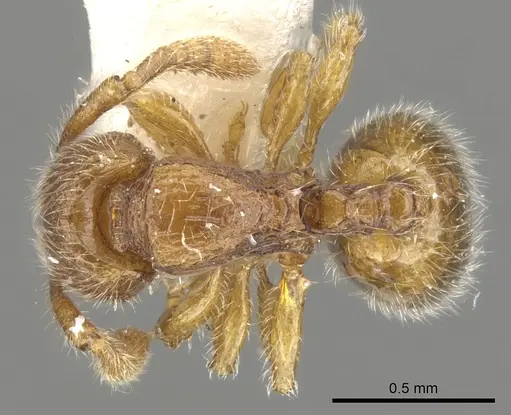
Literature
Loading...Loading products...