

Myrmecina cacabau
- Scientific Name
- Myrmecina cacabau
- Tribe
- Crematogastrini
- Subfamily
- Myrmicinae
- Author
- Mann, 1921
- Distribution
- Found in 1 countries
Myrmecina cacabau Overview
Myrmecina cacabau is an ant species of the genus Myrmecina. It is primarily documented in 1 countries , including Fiji. Detailed taxonomic data and occurrence records can be further explored via authoritative databases such as AntWeb or the Global Biodiversity Information Facility (GBIF).
Myrmecina cacabau
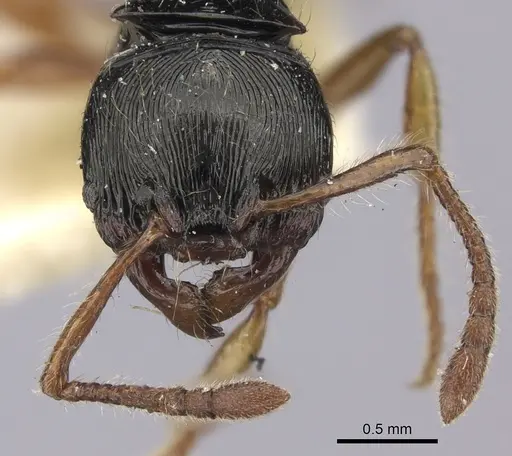
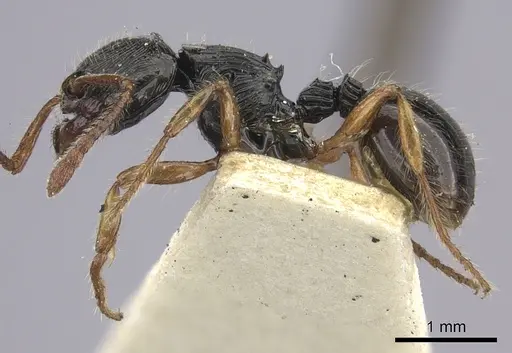
Myrmecina cacabau is an extremely rare ant species endemic to the islands of Fiji, specifically Viti Levu. These are tiny ants, workers of related Myrmecina species typically measure 2-4mm, though the exact measurements for this species have not been documented. The genus Myrmecina is known for their compact, chunky bodies with distinctive antennae that lack a hair girdle on the third segment [1]. This species was originally described in 1921 by Mann as Myrmecina cacabau before being reclassified [2].
What makes M. cacabau particularly interesting is its unusual nesting behavior, the single known worker was collected from a tree trunk, suggesting arboreal nesting, while other specimens were found in forest litter, indicating they also forage on the ground [2]. This flexibility is rare among ants and suggests they may adapt well to different nest setups in captivity. However, this species has never been documented in captive antkeeping, and most of what we know comes from fewer than ten specimens collected over nearly a century.
Quick Summary
- Difficulty: Expert
- Origin & Habitat: Endemic to Fiji, specifically Viti Levu island. Found in forest litter at Nadarivatu in the central highlands [2][3]. The original specimen was collected from a tree trunk, suggesting arboreal nesting habits, while others were collected from leaf litter indicating ground-foraging behavior [2]. Fiji has a tropical climate with year-round warmth and high humidity.
- Colony Type: Unknown, colony structure (single queen vs multiple queens) has not been documented. Only a handful of specimens have ever been collected [2].
- Size & Growth:
- Queen: Unknown, no documented queen measurements. Related Myrmecina species have queens around 4-6mm. Estimated based on genus patterns.
- Worker: Unknown, not measured in original description. Based on genus Myrmecina patterns, likely 2-4mm [4].
- Colony: Unknown, no colony size data exists. Related species typically form small colonies of dozens to low hundreds of workers.
- Growth: Unknown, no development data exists for this species.
- Development: Unknown, no direct measurements. Based on typical Myrmecina patterns and tropical location, estimate 6-10 weeks at warm temperatures. This is a rough estimate only. (No species-specific development data exists. All timing is inferred from genus patterns and should be treated as uncertain.)
- Antkeeping:
- Temperature: Keep warm, around 24-28°C. This species comes from tropical Fiji where temperatures stay consistently warm year-round. A gentle heat gradient allows workers to regulate their temperature preference.
- Humidity: High humidity required, aim for 70-85%. These ants live in Fiji's humid forest environment. Keep the nest substrate consistently moist but not waterlogged. Provide a water tube for drinking access.
- Diapause: No, Fiji has no winter, so this species has no evolutionary need for hibernation. Keep them at stable warm temperatures year-round.
- Nesting: Flexible based on available evidence. The original specimen was found on a tree trunk (arboreal), while others were in leaf litter (ground-dwelling). A naturalistic setup with both vertical surfaces and ground space works well. Y-tong nests or plaster nests with moisture chambers are suitable captive options.
- Behavior: Completely unstudied in captivity, no behavioral observations exist for this species. Based on related Myrmecina species, they are likely docile and non-aggressive. Workers are tiny, so escape prevention must be excellent regardless of their temperament. They probably form small, quiet colonies that are not particularly active or visible. Expect them to be shy and reclusive.
- Common Issues: no captive husbandry information exists, this species has never been kept by antkeepers, only a handful of specimens have ever been collected, making wild colony acquisition extremely unlikely, no information on what they eat, diet must be inferred from genus patterns, temperature and humidity requirements are estimates only, may be difficult to distinguish from other Myrmecina species if mislabeled
Why Myrmecina cacabau Is So Rare in Collections
This species represents one of the least-known ants in the hobby, and possibly in all of antkeeping. Since its original description in 1921,fewer than ten specimens have ever been collected. The original worker was found on a tree trunk by Mann, but extensive surveys in the same area decades later failed to find any additional workers [2]. This species was considered extremely rare even in its native Fiji, with Taylor noting in 1980 that it had been 'rediscovered' after being lost to science for decades [2].
For antkeepers, this means M. cacabau is essentially unavailable in the hobby. There are no documented captive colonies, no breeding programs, and no established care protocols. Even if you somehow obtained a queen, there would be no guidance on how to raise her. This caresheet exists primarily for completeness and to document what we know, not as a recommendation to keep this species. Related Myrmecina species are occasionally available and would be a better choice for keepers interested in this genus.
Natural History and What We Know
Myrmecina cacabau is known only from Viti Levu, the largest island in Fiji. The type locality is Nadarivatu, a highland area in the central part of the island [2]. The original specimen was collected from a tree trunk, which led researchers to suspect arboreal nesting. However, two workers collected from forest litter samples by G. Kuschel in the same area suggest they also forage on the ground [2].
Two male specimens believed to belong to this species were collected in malaise traps from Viti Levu, providing the only information about potential reproductive behavior [2]. No queens have ever been documented. The species is considered endemic to Fiji, meaning it is found nowhere else in the world [3]. The ant fauna of Fiji is unusual in the Pacific because it has relatively few native species compared to other Pacific islands, making each endemic species particularly significant [2].
Inferred Care Requirements
Since no captive data exists, all care recommendations must be inferred from the species' origin and genus patterns. Fiji maintains temperatures around 24-30°C year-round with high humidity from tropical rainfall. Your colony should be kept warm (24-28°C) with high humidity (70-85%). A naturalistic terrarium-style setup would best replicate their forest floor and arboreal microhabitats.
For feeding, Myrmecina species are typically omnivorous, feeding on small insects, honeydew, and nectar. Offer small live prey like fruit flies or pinhead crickets, along with sugar water or honey. Since these ants are tiny, prey items should be appropriately sized. Keep the nest substrate consistently moist but provide some drier areas for the ants to self-regulate.
The most important consideration is that this species has never been kept in captivity. Any attempt to keep M. cacabau would be entirely experimental with no established protocols to follow. If you're interested in Myrmecina, consider more commonly available related species instead.
Related Species and the Genus Myrmecina
The genus Myrmecina contains around 100 species distributed primarily in Asia, Australia, and the Pacific region [4]. They are small, often reddish or brownish ants with distinctive antennae that have a reduced number of segments. The third antennal segment lacking a hair girdle is a key identification feature used in taxonomic keys [1].
In Fiji, at least one other Myrmecina species exists (referred to as Myrmecina sp. FJ01 in the literature), which was found nesting directly in soil, different from the arboreal/ground foraging pattern of M. cacabau [2]. This suggests the genus occupies multiple ecological niches even within the limited range of Fiji. For antkeepers, this flexibility is encouraging as it suggests Myrmecina ants can adapt to various captive conditions, though it also means species-specific care requirements may vary.
Frequently Asked Questions
Can I keep Myrmecina cacabau in captivity?
No, this species has never been documented in the antkeeping hobby and is extremely rare in the wild. There are no captive colonies, no established care protocols, and likely no legal way to obtain a queen. Even if you found one, there would be no guidance on how to successfully raise a colony.
Where does Myrmecina cacabau live?
Only on Viti Levu, Fiji. It is endemic to this single island, found specifically in the Nadarivatu area in the central highlands [2][3].
What do Myrmecina cacabau ants eat?
Unknown for this specific species. Based on genus patterns, they likely eat small insects, honeydew from aphids, and nectar. Feed small live prey appropriately sized for tiny ants, along with sugar water or honey.
How big do Myrmecina cacabau colonies get?
Unknown, no colony size data exists. Based on related Myrmecina species, they likely form small colonies of dozens to low hundreds of workers.
Do Myrmecina cacabau ants sting?
Unknown, no documented observations exist. Most Myrmecina species are too small to penetrate human skin effectively. They are not considered significant stingers in the antkeeping hobby.
What temperature do Myrmecina cacabau ants need?
Estimated 24-28°C based on their tropical Fiji origin. This is an inference only, no captive observations exist to confirm their exact requirements.
Do Myrmecina cacabau need hibernation?
No, Fiji has no winter, so this species has no evolutionary adaptation to cold temperatures or diapause. Keep them at warm temperatures year-round.
How long does it take for Myrmecina cacabau to develop from egg to worker?
Unknown, no development data exists for this species. Based on typical Myrmecina patterns and their tropical origin, a rough estimate would be 6-10 weeks at warm temperatures, but this is entirely speculative.
Is Myrmecina cacabau aggressive?
Unknown, no behavioral observations exist. Based on related Myrmecina species, they are likely docile and non-aggressive. However, without any captive data, this cannot be confirmed.
Can I keep multiple Myrmecina cacabau queens together?
Unknown, colony structure has never been documented for this species. No information exists on whether they are single-queen or multi-queen colonies.
References

This caresheet is licensed under CC BY-SA 4.0 .
CASENT0260381
View on AntWeb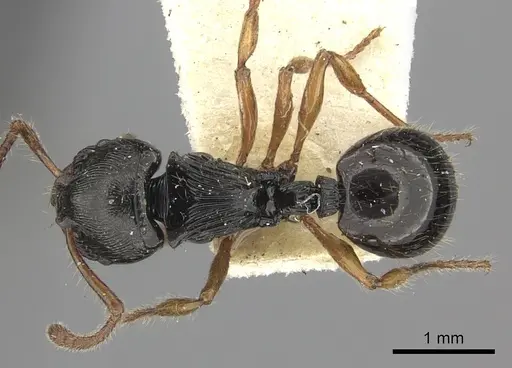
Literature
Loading...Loading products...