

Myrmecina australis
- Scientific Name
- Myrmecina australis
- Tribe
- Crematogastrini
- Subfamily
- Myrmicinae
- Author
- Wheeler & Wheeler, 1973
- Distribution
- Found in 1 countries
Myrmecina australis Overview
Myrmecina australis is an ant species of the genus Myrmecina. It is primarily documented in 1 countries , including Australia. Detailed taxonomic data and occurrence records can be further explored via authoritative databases such as AntWeb or the Global Biodiversity Information Facility (GBIF).
Myrmecina australis
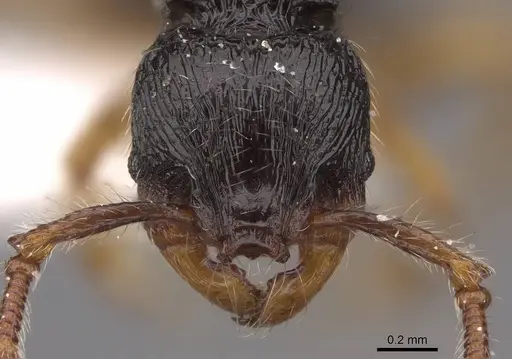
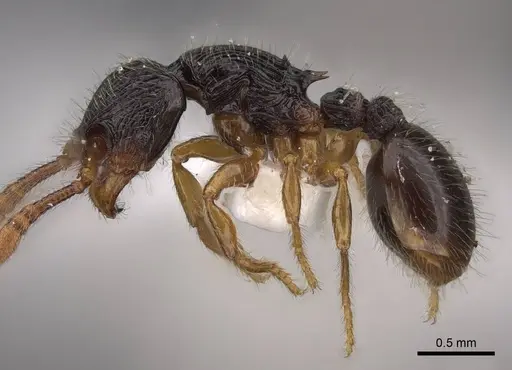
Myrmecina australis is a tiny Australian ant species, measuring just 0.7-0.8mm in head length [1]. Workers are dark brown-black with yellow-brown antennae, mandibles and legs. The most distinctive feature is the first segment of the funiculus (antenna), which is expanded laterally and nearly spherical in shape, this unique morphology sets them apart from all other Australian Myrmecina species [1]. This is the southern-most species of Myrmecina found in Australia, occurring across a wide range of habitats from dry sclerophyll woodlands through wet sclerophyll forests, Nothofagus and Dicksonia fern forests, and into rainforest [1][2].
These are uncommon ants most often encountered in leaf litter samples in forested areas [2]. What makes them particularly interesting is their specialized diet, Myrmecina species are thought to be predatory on oribatid mites, with their larvae having exceptionally small heads adapted for feeding on the partially opened bodies of these tiny mites [2]. This specialized feeding requirement is the most important thing to understand for keeping this species successfully in captivity.
Quick Summary
- Difficulty: Medium
- Origin & Habitat: Southern Australia, this is the southern-most Myrmecina species in Australia, found in various forested habitats from dry sclerophyll woodlands through wet sclerophyll, Nothofagus and Dicksonia forests into rainforest [1][2]. Most specimens have been found in leaf litter samples or under rocks [1].
- Colony Type: Small colonies living in soil with or without coverings, between rocks, in twigs on the ground, or in rotten wood [2]. Colony structure is unconfirmed, the founding behavior and queen number has not been directly studied.
- Size & Growth:
- Queen: Unconfirmed, queen measurements not available in current literature
- Worker: 0.70-0.80mm head length (HL),0.69-0.83mm head width (HW) [1]
- Colony: Small colonies, exact maximum unknown but colonies are described as small [2]
- Growth: Unknown, development timeline has not been directly studied
- Development: Unknown, no direct development data available for this species. Based on typical Myrmicinae patterns, expect 6-10 weeks at optimal temperature, but this is an estimate. (No specific development studies exist for M. australis. Related Myrmecina species suggest slow growth due to specialized dietary needs.)
- Antkeeping:
- Temperature: Keep at room temperature, roughly 20-24°C. This species occurs in temperate to subtropical Australian forests, so moderate temperatures are appropriate. Avoid extremes, a stable room temperature within this range should work well.
- Humidity: Moderate to high humidity, they naturally occur in leaf litter and forest floor environments that retain moisture. Keep the nest substrate consistently moist but not waterlogged. The substrate should feel damp to the touch with some slightly drier areas available.
- Diapause: Unknown, Australian temperate species may have reduced activity in cooler months, but specific diapause requirements have not been documented.
- Nesting: These ants naturally nest in soil, under rocks, in twigs on the ground, or in rotten wood [2]. For captivity, a small test tube setup or a Y-tong (AAC) nest with narrow chambers works well given their tiny size. A naturalistic setup with moist substrate and small hiding structures mimics their natural leaf litter environment. Keep chambers small and passages narrow, these are very tiny ants.
- Behavior: These are docile, non-aggressive ants that forage in leaf litter. They are not known to sting and pose no danger to keepers. Their small size means escape prevention is critical, they can easily slip through standard test tube barriers. They are specialized predators on oribatid mites, so their foraging activity is focused on hunting these tiny prey rather than scavenging. Workers are most active in the evening and night hours when mite activity is highest.
- Common Issues: tiny size makes escape prevention challenging, use fine mesh and tight-fitting barriers, specialized diet on oribatid mites may be difficult to replicate in captivity, live micro-prey is essential, small colony size means slow population growth and higher vulnerability to stress, wild-caught colonies may have parasites that are difficult to detect and treat, overfeeding can lead to mold problems in their small nests
Housing and Nest Setup
Given their tiny size (under 1mm), Myrmecina australis needs carefully scaled housing. A small test tube setup works well for founding colonies, use a standard test tube with a cotton ball creating a water reservoir, but ensure the chamber is small enough that the queen and workers can easily navigate. For established colonies, a Y-tong (AAC) nest with narrow chambers or a small naturalistic setup with moist substrate is appropriate.
These ants naturally live in soil, under rocks, in twigs, and in rotten wood [2]. In captivity, provide a moist substrate that can hold humidity, a mixture of soil and sand works well. Add small hiding structures like small pieces of bark or stones to mimic the leaf litter environment they naturally inhabit. Because they are so small, even tiny gaps in equipment can become escape routes, use fine mesh for any ventilation and ensure all connections are tight.
Lighting should be low, these are cryptic ants that prefer dark, humid microhabitats. Avoid direct sunlight on the nest area.
Feeding and Diet - The Critical Factor
This is the most important aspect of keeping Myrmecina australis successfully. In the wild, these ants are specialized predators on oribatid mites [2]. Their larvae have exceptionally small heads, an adaptation specifically for feeding on the partially opened bodies of these tiny mites [2]. This specialized diet is not optional, it appears to be a key biological requirement.
In captivity, you will need to culture or obtain live oribatid mites. These are tiny soil mites that can be collected from forest floor leaf litter or purchased from suppliers. Other small micro-arthropods like springtails may be accepted experimentally, but oribatid mites should be the primary food source. Do not rely on sugar sources or standard ant feeds, these ants are specialized predators, not generalists.
Feed small amounts of prey regularly, removing any uneaten prey after 24-48 hours to prevent mold. The hunting behavior is part of their natural activity pattern, so allow them to actively hunt rather than just providing pre-killed prey.
Temperature and Seasonal Care
Myrmecina australis occurs across a range of Australian habitats from temperate sclerophyll forests to subtropical rainforest [1]. This suggests they can tolerate a range of conditions, but moderate temperatures are ideal. Aim for roughly 20-24°C, this covers typical room temperature in most homes.
Avoid temperature extremes. Do not place the nest in direct sunlight or near heating vents. A stable temperature is more important than precise control. If your room temperature falls outside this range, a small heating mat on one side of the nest can create a gentle gradient, but monitor carefully to avoid overheating.
Specific seasonal requirements like diapause have not been documented for this species [1]. Australian temperate ants may have reduced activity in winter months, but this species occurs in areas with mild winters. Simply reducing feeding and activity during cooler months is likely sufficient, do not force hibernation unless you observe clear dormancy behavior.
Handling and Observation
These ants are extremely small and delicate. Handling them directly is not recommended, the risk of injury or death to the ants is very high. If you need to move them (for example, to a new nest), use soft brushes or allow them to walk into transfer containers rather than picking them up.
Observation is best done through the nest walls. Use a magnifying glass or macro lens on your phone camera to get a good look, their tiny size means you won't see much detail with the naked eye. Their dark coloration with yellow-brown antennae and legs is distinctive, and the spherical first funicular segment can be seen with magnification.
Because they are cryptic and spend most of their time in the nest or under cover, you may not see much activity. This is normal, they are not a showy species. The interesting behavior happens at the micro scale, particularly their mite-hunting activity.
Frequently Asked Questions
How long does it take for Myrmecina australis to produce first workers?
The exact egg-to-worker timeline is unknown, no specific development studies exist for this species. Based on typical Myrmicinae patterns, expect 6-10 weeks at optimal temperature, but this is an estimate. Their specialized predatory lifestyle may mean slower development than generalist species.
Can I keep Myrmecina australis in a test tube?
Yes, a test tube setup works well for founding colonies. Use a standard test tube with a water reservoir. The key requirement is keeping the chamber appropriately sized, these are very tiny ants, so ensure the cotton barrier is packed tightly enough to prevent escape while still allowing humidity to reach the nest area.
What do Myrmecina australis eat?
They are specialized predators on oribatid mites, this is their primary food source in the wild [2]. In captivity, you will need to culture or obtain live oribatid mites. Other small micro-arthropods may be accepted, but oribatid mites should form the bulk of their diet. Standard ant feeds and sugar sources are not appropriate for this specialized predator.
Do Myrmecina australis ants sting?
No, these ants are not known to sting and pose no danger to keepers. They are small, docile ants that prefer to hide rather than engage in defensive behavior.
Are Myrmecina australis good for beginners?
This species is rated as Medium difficulty. While they are not aggressive and don't require special temperature control, their specialized diet on oribatid mites makes them challenging for beginners. You will need to culture or source live micro-prey, which requires more effort than feeding standard ant foods. They are best suited for antkeepers willing to invest in their specific dietary needs.
How big do Myrmecina australis colonies get?
Colonies are described as small [2]. The exact maximum is unknown, but based on related species and their lifestyle as cryptic leaf-litter ants, colonies likely reach under 100 workers. They are not a species that produces large, impressive colonies.
When should I move Myrmecina australis to a formicarium?
Move them when the test tube setup becomes crowded or the water reservoir runs low. For this small species, a small Y-tong nest or naturalistic setup with moist substrate works well. Do not upgrade too early, they prefer tight, humid spaces and may struggle in large, open formicaria.
Do Myrmecina australis need hibernation?
Specific diapause requirements have not been documented [1]. This species occurs in areas with relatively mild Australian winters. Simply reducing feeding during the coldest months is likely sufficient, observe your colony's activity level and adjust accordingly. Do not force hibernation unless you observe clear dormancy behavior.
Why are my Myrmecina australis dying?
Common causes include: improper diet (not enough oribatid mites), escape through tiny gaps due to their small size, stress from too much space or dry conditions, and parasites from wild-caught colonies. Review their housing, ensure escape prevention is excellent, and verify they are receiving appropriate live prey.
Can I keep multiple queens together?
Colony structure (monogyne/polygyne) has not been documented for this species. Combining unrelated queens is not recommended since we don't know their social structure. If you obtain multiple foundresses, keep them in separate setups until you determine their colony structure.
References

This caresheet is licensed under CC BY-SA 4.0 .
CASENT0922971
View on AntWeb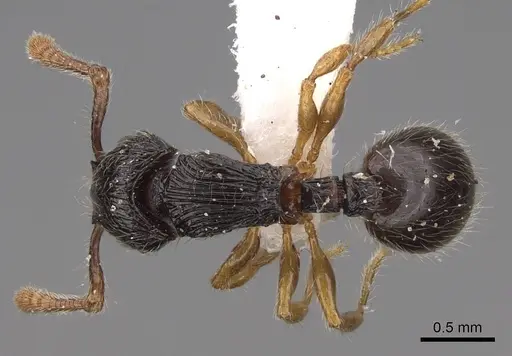
Literature
Loading...Loading products...