

Myrmecia tridentata
- Scientific Name
- Myrmecia tridentata
- Tribe
- Myrmeciini
- Subfamily
- Myrmeciinae
- Author
- Ogata & Taylor, 1991
- Distribution
- Found in 1 countries
Myrmecia tridentata Overview
Myrmecia tridentata is an ant species of the genus Myrmecia. It is primarily documented in 1 countries , including Australia. Detailed taxonomic data and occurrence records can be further explored via authoritative databases such as AntWeb or the Global Biodiversity Information Facility (GBIF).
Myrmecia tridentata
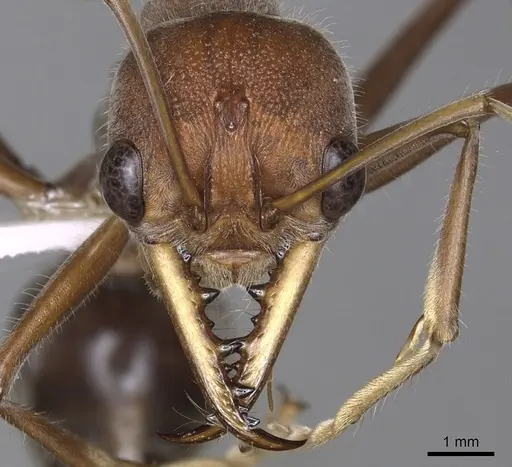
Myrmecia tridentata is a large Australian bulldog ant species known for its distinctive three-toothed mandibles, which give the species its name. Workers are robust ants measuring around 12-18mm, with the characteristic large eyes and powerful mandibles typical of the Myrmecia genus. The species is native to Australia, specifically found in the southern regions. These ants are aggressive defenders of their nests and possess a potent sting, making them a serious consideration for antkeepers. As with other Myrmecia species, they are active hunters and maintain relatively small but persistent colonies. [1]
Quick Summary
- Difficulty: Medium
- Origin & Habitat: Southern Australia, specific habitat preferences are not well-documented in available research
- Colony Type: Likely single-queen (monogyne) colonies based on typical Myrmecia patterns, though colony structure has not been specifically studied for this species
- Colony: Monogyne
- Founding: Claustral
- Size & Growth:
- Queen: Estimated 18-22mm based on genus Myrmecia patterns
- Worker: Estimated 12-18mm based on genus Myrmecia patterns
- Colony: Likely several hundred workers based on typical Myrmecia colony sizes
- Growth: Moderate, estimated based on genus patterns
- Development: Estimated 8-12 weeks at optimal temperature based on related Myrmecia species (Development timeline is estimated from genus-level data, not directly studied for this species)
- Antkeeping:
- Temperature: Keep around 22-26°C with a slight gradient. Australian ants generally prefer warm conditions but not extreme heat. Room temperature within this range is typically suitable.
- Humidity: Moderate humidity is acceptable. Provide a water source and allow the nest to have some moisture, but avoid waterlogging. Australian Myrmecia species are not overly humidity-dependent.
- Diapause: Likely a reduced activity period during Australian winter (roughly May-September in the Southern Hemisphere). A cool period around 10-15°C for 2-3 months is recommended based on typical Australian ant husbandry.
- Nesting: Myrmecia species typically nest in soil or under stones in natural habitats. In captivity, a naturalistic setup with soil or a Y-tong/plaster nest with chambers scaled to their larger size works well. Provide a deep enough nest for colony expansion.
- Behavior: Myrmecia tridentata is a defensive and aggressive species typical of the bulldog ant genus. Workers are active foragers and hunt small invertebrates. They have excellent vision and will readily defend their nest against threats. Their sting is potent and can cause significant pain, this species should be handled with extreme caution. Escape prevention is important but less critical than for tiny ants, their larger size makes standard barriers effective, but they are strong and may attempt to climb out of enclosures. They are diurnal and actively forage during daylight hours.
- Common Issues: potent sting causes painful reactions, handle with extreme caution and use protective equipment, limited species-specific information means care is based on genus patterns rather than documented requirements, colonies may be defensive and aggressive during maintenance, work carefully around active foragers, slow founding means patience is required, claustral queens may take months to raise first workers, Australian species may not tolerate prolonged cool temperatures outside their natural range
Appearance and Identification
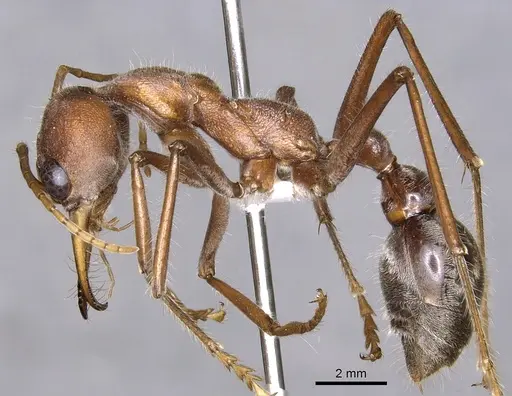
Myrmecia tridentata workers are large, robust ants measuring approximately 12-18mm. The species gets its name from its distinctive three-toothed mandibles, which are powerful and capable of delivering a painful bite. Like other Myrmecia species, they have large, well-developed eyes suggesting excellent vision. The coloration is typically dark with reddish tones on the head and mesosoma. Queens are significantly larger, estimated at 18-22mm, and are winged until after mating, after which they shed their wings and become fully claustral. Males are smaller than workers but have fully developed wings for dispersal. [1]
Natural History and Distribution
Myrmecia tridentata is endemic to southern Australia. The species is part of the Myrmecia genus, which is one of the most recognizable ant groups in Australia and is commonly known as bulldog ants due to their aggressive nature and distinct appearance. In their natural habitat, these ants are active hunters, preying on small invertebrates and arthropods. They establish nests in soil, often under stones or in protected locations. Colonies are typically smaller than many other ant species, usually reaching several hundred workers at maturity. The species is diurnal, with workers actively foraging during daylight hours when temperatures are suitable. [1]
Housing and Nest Setup
For Myrmecia tridentata, provide a nest setup scaled to their larger size. A naturalistic setup with a soil chamber works well and reflects their natural nesting preferences. Alternatively, a Y-tong (acrylic) or plaster nest with appropriately sized chambers can work. The nest should be deep enough to allow for colony expansion over time. Provide an outworld (foraging area) connected to the nest where workers can hunt and forage. Because of their larger size and aggressive nature, ensure the enclosure is secure and escape-proof, while they are not tiny escape artists, they are strong and determined. Use a test tube setup for the founding queen, then transition to a larger nest once the colony reaches 20-30 workers.
Feeding and Diet
Myrmecia tridentata is a predatory species that hunts small invertebrates. In captivity, offer small live insects such as fruit flies, small crickets, mealworms, and other appropriately sized prey. They are not typically sugar-dependent like some ant species, but they may occasionally accept sugar water or honey. Protein-rich foods should form the primary diet. Feed every 2-3 days, adjusting based on colony size and consumption. Remove uneaten prey after 24 hours to prevent mold. A constant water source should be available.
Temperature and Seasonal Care
Maintain temperatures around 22-26°C for optimal colony health and development. Myrmecia species are from Australia and prefer warm conditions, but they do not require extreme heat. A slight temperature gradient in the nest allows ants to regulate their own conditions. During the Southern Hemisphere winter (roughly May-September), consider providing a cool period around 10-15°C to simulate natural seasonal changes. This diapause or reduced activity period is beneficial for colony health and may trigger reproductive behavior in spring. If kept in the Northern Hemisphere, provide a winter cool period during local winter months.
Safety and Handling
Myrmecia tridentata has a potent sting and should be considered dangerous. Workers are aggressive and will readily defend the nest. The sting can cause significant pain, swelling, and in sensitive individuals, more serious allergic reactions. Never handle these ants with bare hands, and use extreme caution during colony maintenance. When working with the colony, use long-forceps or other tools to maintain distance. Keep a secure lid on all enclosures. These ants have good vision and may lunge toward perceived threats. This species is not recommended for beginners due to the sting risk and the specialized care required.
Frequently Asked Questions
How long does it take for Myrmecia tridentata to raise first workers?
The egg-to-worker timeline is estimated at 8-12 weeks based on related Myrmecia species. This is slower than many ant species, so patience is required during the founding stage. The queen will seal herself in a claustral chamber and raise the first brood alone using stored fat reserves.
Do Myrmecia tridentata ants sting?
Yes, they have a potent sting and are aggressive defenders of their nest. The sting can cause significant pain and swelling. These ants should be handled with extreme caution, never with bare hands. Use tools and protective equipment when maintaining the colony.
What do I feed Myrmecia tridentata?
They are predatory ants that hunt small invertebrates. Feed small live insects such as fruit flies, small crickets, and mealworms. They may occasionally accept sugar water or honey, but protein-rich prey should be the primary food source. Remove uneaten prey after 24 hours.
Can I keep multiple Myrmecia tridentata queens together?
Myrmecia species are typically monogyne (single-queen colonies). Combining unrelated queens is not recommended as they are likely to fight. Each colony should be started with a single claustral queen.
Do Myrmecia tridentata need hibernation?
Yes, a cool period is recommended. As an Australian species, they experience cooler winters in their native range. Provide a 2-3 month period around 10-15°C during winter (May-September in the Southern Hemisphere, or local winter if kept elsewhere).
How big do Myrmecia tridentata colonies get?
Colony size is estimated at several hundred workers based on typical Myrmecia patterns. They are not among the largest ant colonies but maintain persistent, long-lived colonies with dedicated workers.
Is Myrmecia tridentata good for beginners?
No, this species is not recommended for beginners. The potent sting, aggressive defense behavior, and specific care requirements make it better suited for experienced antkeepers who can handle dangerous species safely.
When should I move Myrmecia tridentata to a formicarium?
Keep the founding queen in a test tube setup until she has raised her first workers (nanitics). Once the colony reaches around 20-30 workers and the test tube becomes crowded, you can transition them to a larger naturalistic or formicarium setup.
What temperature is best for Myrmecia tridentata?
Keep the nest around 22-26°C. A slight temperature gradient allows the ants to regulate their own conditions. Room temperature within this range is typically suitable. Avoid extreme heat.
Why is my Myrmecia tridentata colony dying?
Common causes include: improper temperature (too cold), overfeeding leading to mold, disturbance during founding stage, or stress from too frequent colony checks. Ensure the queen is undisturbed during claustral founding, maintain appropriate warmth, and keep the setup clean.
References

This caresheet is licensed under CC BY-SA 4.0 .
CASENT0902795
View on AntWeb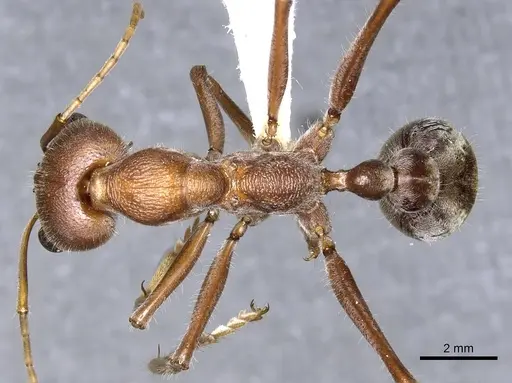
Literature
Loading...Loading products...