

Myrmecia rufinodis
- Scientific Name
- Myrmecia rufinodis
- Tribe
- Myrmeciini
- Subfamily
- Myrmeciinae
- Author
- Smith, 1858
- Distribution
- Found in 1 countries
Myrmecia rufinodis Overview
Myrmecia rufinodis is an ant species of the genus Myrmecia. It is primarily documented in 1 countries , including Australia. Detailed taxonomic data and occurrence records can be further explored via authoritative databases such as AntWeb or the Global Biodiversity Information Facility (GBIF).
Myrmecia rufinodis
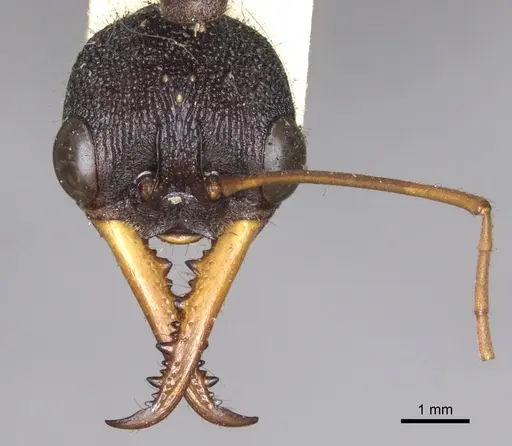
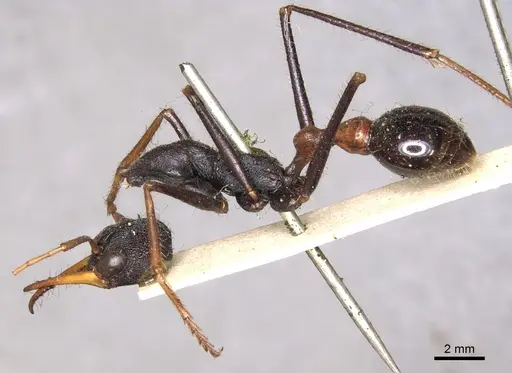
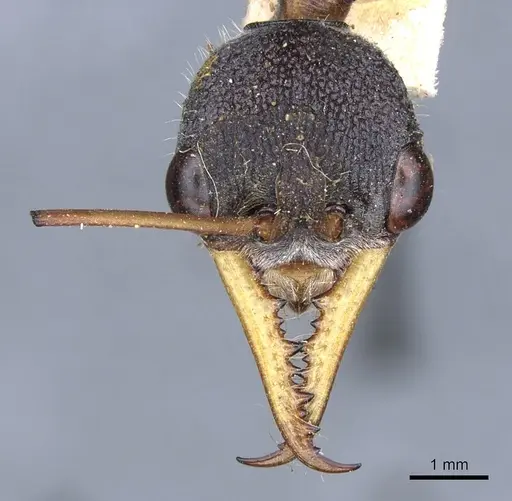
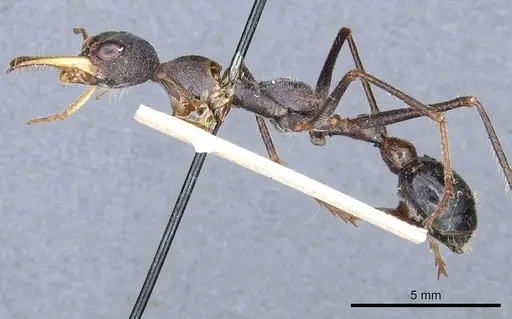
Myrmecia rufinodis is a large, aggressive ant species native to southern Australia, particularly South Australia around Adelaide. Workers are robust and powerful, typically measuring 12-20mm, with the characteristic bulldog ant appearance: large mandibles, a potent sting, and distinctive reddish-brown to dark coloration. These ants belong to the gulosa species group and are known for their aggressive defense of the nest and painful sting [1][2].
As a bulldog ant, M. rufinodis is a predatory species that hunts insects and other small invertebrates. They are day-active foragers with excellent vision, using their large eyes to locate prey. Their venom is medically significant, while the sting pain rating is relatively low at 1.5 on Schmidt's scale, the venom has notable lethality with an LD50 of 0.35 mg/kg [2]. This species was originally described by Frederick Smith in 1858,with the type specimen collected from Adelaide, South Australia [3].
Quick Summary
- Difficulty: Medium
- Origin & Habitat: Native to southern Australia, specifically South Australia around Adelaide. Inhabits dry sclerophyll forest and woodland areas, typically nesting in soil or under rocks [4][3].
- Colony Type: Likely monogyne (single queen colonies) based on typical Myrmecia patterns. Colony founding is claustral, the queen seals herself in a chamber and lives off stored fat reserves until her first workers emerge.
- Colony: Monogyne
- Founding: Claustral
- Size & Growth:
- Queen: Estimated 18-25mm based on genus patterns
- Worker: 12-20mm [3]
- Colony: Estimated 1,000-3,000 workers based on related species
- Growth: Moderate
- Development: Estimated 6-10 weeks based on related Myrmecia species (Development time is temperature-dependent. Warmer conditions within acceptable range accelerate development.)
- Antkeeping:
- Temperature: Keep nest area at 22-26°C. Room temperature is often suitable given their origin in temperate South Australia. Provide a gentle heat gradient so ants can self-regulate.
- Humidity: Moderate humidity around 50-60%. Keep nest substrate slightly moist but allow some drying between waterings. Avoid waterlogging.
- Diapause: No true diapause required. Southern Australia has mild winters, so a brief cooling period (15-18°C for 4-6 weeks) during winter months may benefit colonies but is not strictly necessary.
- Nesting: Y-tong (AAC) nests work well for their size. They prefer dark, enclosed spaces. A test tube setup is suitable for founding colonies. Provide soil or sand substrate for natural digging behavior.
- Behavior: Highly aggressive and defensive of their nest. They will readily attack threats with their powerful mandibles and painful sting. Workers are active foragers, primarily hunting insects during daylight hours. They have excellent vision and will investigate disturbances. Escape prevention is important due to their large size and ability to climb smooth surfaces. They are not supercolonial [3].
- Common Issues: sting pain, handle with care and use protective equipment, aggressive behavior makes colony maintenance challenging for beginners, large size requires spacious enclosures and secure escape prevention, predatory diet requires consistent live insect feeding, colonies can become stressed from frequent disturbances
Housing and Nest Setup
Myrmecia rufinodis requires spacious housing due to their large size and potential colony size. For founding colonies, a standard test tube setup works well, ensure the water reservoir is adequate but not prone to flooding. As the colony grows, transfer to a Y-tong (AAC) formicarium or a large acrylic nest with chambers sized appropriately for their body size.
These ants prefer dark, enclosed nesting areas. Provide a substrate layer of soil or sand if using a naturalistic setup, as they may excavate chambers. Ensure the outworld (foraging area) is spacious enough for workers to hunt and explore. Bulldog ants are excellent climbers, so apply fluon or use smooth-walled enclosures to prevent escapes. A secure escape barrier is essential, these ants will exploit any gap or seam.
Feeding and Diet
Myrmecia rufinodis is predatory and requires a protein-rich diet. Feed workers small live insects such as fruit flies, small crickets, mealworms, and other appropriately-sized invertebrates. They are active hunters and will pursue prey aggressively. Remove uneaten prey after 24-48 hours to prevent mold.
Sugar sources are generally not required for Myrmecia species, as they obtain energy primarily from protein. However, you can occasionally offer a drop of honey or sugar water as a supplement, acceptance varies by individual colony. Fresh water should always be available. Feed founding colonies small prey items they can manage, tiny insects and insect parts work well for nanitic (first) workers.
Temperature and Seasonal Care
Maintain nest temperatures between 22-26°C. Southern Australia has temperate to subtropical conditions, so these ants are adaptable to room temperature in most climates. Provide a heat gradient by placing a heating cable on one side of the nest, this allows workers to self-regulate by moving between warmer and cooler areas.
During winter months (roughly December-February in the northern hemisphere), you can reduce temperatures slightly to 15-18°C for 4-6 weeks. This mimics natural seasonal cycles and may promote colony health, but is not strictly required as they come from relatively mild Australian winters. Do not allow temperatures to drop below 10°C.
Handling and Safety
Myrmecia rufinodis has a potent sting and aggressive temperament. These ants will readily attack when their nest is disturbed, and workers can sting repeatedly. The sting pain rating is 1.5 on Schmidt's scale, and while not the most painful ant sting, the venom has significant lethality (LD50: 0.35 mg/kg) [2].
When working with colonies, use protective equipment such as gloves and eye protection. Approach nests calmly and avoid sudden movements. For colony maintenance, use gentle puff-blowing or smoke to distract workers rather than direct handling. Never tease or provoke these ants, they are not suitable for handling or interactive observation. Keep them in a location away from children and pets.
Colony Development
Colony founding is claustral, the queen seals herself in a chamber and does not leave to forage. She relies on stored fat reserves to survive and raise the first brood. First workers (nanitics) are typically smaller than mature workers but are already capable of hunting and defending the nest.
Growth rate is moderate. A well-fed colony can reach several hundred workers within 1-2 years under optimal conditions. Maximum colony size is estimated at 1,000-3,000 workers based on related Myrmecia species. Colonies become increasingly defensive as they grow, and queen egg-laying rate increases with colony size. The development timeline from egg to worker is estimated at 6-10 weeks at optimal temperature.
Frequently Asked Questions
How long does it take for Myrmecia rufinodis to produce first workers?
Expect first workers (nanitics) approximately 6-10 weeks after the queen lays eggs, assuming optimal temperatures around 24-26°C. This timeline is estimated based on related Myrmecia species, as specific development data for M. rufinodis is not available.
What do Myrmecia rufinodis eat?
They are predatory ants that primarily eat live insects. Feed workers small live prey such as fruit flies, small crickets, mealworms, and other appropriately-sized invertebrates. Sugar sources may be occasionally accepted but are not required.
Are Myrmecia rufinodis good for beginners?
No, they are not recommended for beginners. Their aggressive temperament and painful sting make them challenging to handle. They require careful escape prevention and consistent feeding of live prey. Consider starting with easier species like Lasius or Tetramorium.
Can I keep multiple Myrmecia rufinodis queens together?
Myrmecia species are typically monogyne (single queen). Combining unrelated queens is not recommended and likely results in fighting. Only keep one queen per colony.
What size colony do Myrmecia rufinodis reach?
Based on related species, colonies likely reach 1,000-3,000 workers at maturity. This may take 2-3 years under optimal conditions with proper feeding.
Do Myrmecia rufinodis need hibernation?
No true diapause is required. They come from temperate South Australia with mild winters. A brief cooling period (15-18°C for 4-6 weeks) during winter months may benefit colonies but is not strictly necessary.
When should I move Myrmecia rufinodis to a formicarium?
Keep founding colonies in a test tube setup until they have 20-30 workers. Transfer to a Y-tong or larger acrylic formicarium when the test tube becomes crowded. Ensure the new nest has appropriately-sized chambers and adequate foraging space.
What temperature range is best for Myrmecia rufinodis?
Keep nest temperatures between 22-26°C. Room temperature is often suitable. Provide a gentle heat gradient so workers can self-regulate by moving between warmer and cooler areas of the nest.
References

This caresheet is licensed under CC BY-SA 4.0 .
CASENT0902790
View on AntWeb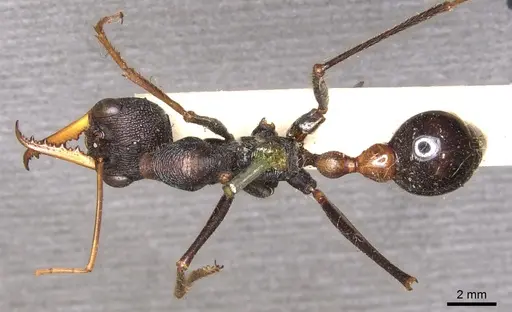
CASENT0903787
View on AntWeb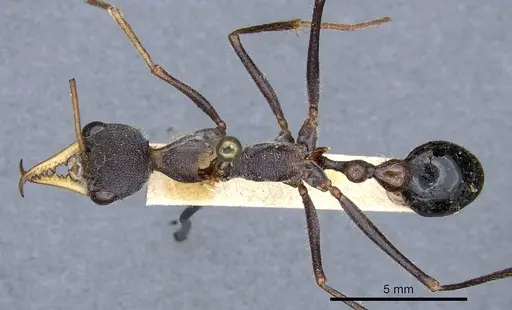
Literature
Loading...Loading products...