

Myrmecia picta
- Scientific Name
- Myrmecia picta
- Tribe
- Myrmeciini
- Subfamily
- Myrmeciinae
- Author
- Smith, 1858
- Common Name
- Small Jumping Ant
- Distribution
- Found in 1 countries
Myrmecia picta Overview
Myrmecia picta (commonly known as the Small Jumping Ant) is an ant species of the genus Myrmecia. It is primarily documented in 1 countries , including Australia. Detailed taxonomic data and occurrence records can be further explored via authoritative databases such as AntWeb or the Global Biodiversity Information Facility (GBIF).
Myrmecia picta - "Small Jumping Ant"
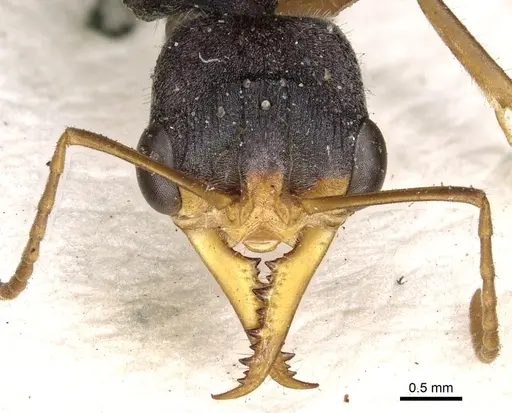
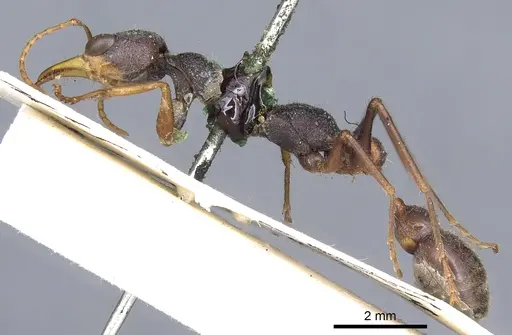
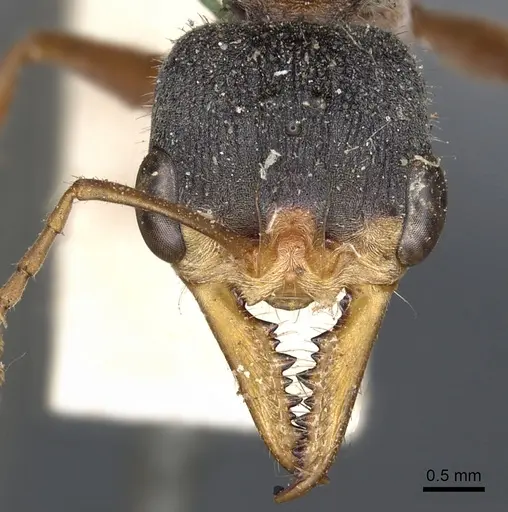
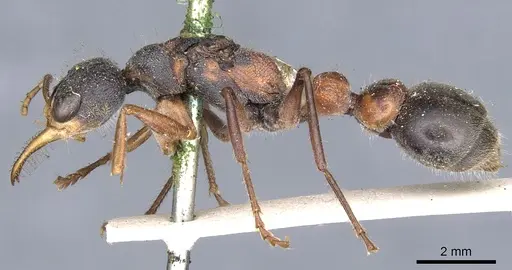
Myrmecia picta is a large bulldog ant species native to Australia, specifically found in South Australia around Adelaide. Workers reach approximately 12-18mm in length with a distinctive bicolored appearance, the head is yellow toward the front and blackish toward the back, making them relatively easy to identify within their range [1]. This species belongs to the picta group, which contains just two species and forms a sister clade to Complex B within the Myrmecia genus [2]. Like all Myrmecia ants, they are robust ants with powerful mandibles and a potent sting. In the wild, they nest in soil or under rocks in Wandoo woodlands, particularly on the eastern slopes of the Darling Range in Western Australia [1].
Quick Summary
- Difficulty: Medium
- Origin & Habitat: Australia (South Australia, Adelaide region). Found in Wandoo woodlands and open woodland habitats in southwestern Australia [1].
- Colony Type: Single-queen (monogyne) colonies typical for Myrmecia species. Colonies likely reach several hundred workers based on typical genus patterns.
- Colony: Monogyne
- Founding: Claustral
- Size & Growth:
- Queen: Estimated 20-25mm based on genus patterns
- Worker: Estimated 12-18mm based on genus patterns
- Colony: Likely several hundred workers based on typical Myrmecia colony sizes
- Growth: Moderate, Myrmecia species typically develop over several months
- Development: Estimated 8-12 weeks based on related Myrmecia species at optimal temperature (Development time inferred from genus-level data, specific timing for M. picta not directly studied)
- Antkeeping:
- Temperature: Keep at 22-26°C. Provide a temperature gradient so ants can regulate. Australian species from temperate regions can tolerate cooler room temperatures but thrive in the low-to-mid 20s°C.
- Humidity: Moderate humidity around 50-60%. Keep nest substrate slightly moist but not waterlogged. Provide a water tube as their primary water source.
- Diapause: Yes, Myrmecia species require a winter dormancy period. Reduce temperature to 10-15°C for 2-3 months during winter (May-August in Northern Hemisphere) [1].
- Nesting: Ground-nesting species. Accepts test tubes for founding, then move to a formicarium with soil or a naturalistic setup with digging medium. Y-tong nests also work well for larger colonies.
- Behavior: Myrmecia picta is an aggressive, diurnal forager. Workers are active hunters, preying on insects and collecting nectar and honeydew. They have a powerful sting and will defend the nest vigorously, approach with caution. Workers are large and relatively easy to contain, but their climbing ability means standard escape prevention (fluon on edges) is still necessary. They are solitary foragers rather than forming recruitment trails.
- Common Issues: Their powerful sting makes handling risky, use caution when servicing the nest, Winter dormancy is essential, colonies that aren't cooled properly often fail to thrive, Large ants need appropriately sized formicaria with spacious chambers, Queens are claustral but may be disturbed during founding, minimize vibrations, Slow founding phase can lead to impatient keepers disturbing the queen
Housing and Nest Setup
Myrmecia picta can start in a standard test tube setup for founding. Fill a test tube one-third with water, plug with cotton, and place the queen in a dark area. Once the first workers (nanitics) emerge and the colony reaches 20-30 workers, transfer to a proper formicarium. These large ants need spacious nesting chambers, a naturalistic setup with digging medium (sand/soil mix) works well, or you can use a Y-tong (acrylic) nest with chambers sized appropriately for their body length. Ensure the outworld (foraging area) is also appropriately sized with space for hunting and food storage. [1]
Feeding and Diet
Myrmecia picta is a predatory species that hunts insects. Feed workers small live insects like fruit flies, small crickets, or mealworms. They also accept sugar sources, offer honey water or sugar water regularly, especially when the colony is growing. Fresh killed insects are usually accepted if live prey isn't available. Feed every 2-3 days, removing uneaten prey after 24 hours. A constant water source (water tube) is essential. [1]
Temperature and Seasonal Care
Maintain temperatures between 22-26°C during the active season. A heating cable on one side of the nest creates a gradient allowing ants to self-regulate. During winter (roughly November to February in Australia, or May to August if you're mimicking Southern Hemisphere seasons), reduce temperature to 10-15°C for a dormancy period. This mimics their natural seasonal cycle and is important for colony health and longevity. Do not feed during dormancy and minimize disturbances. [1]
Behavior and Defense
Myrmecia ants are known for their aggressive defense of the nest and powerful sting, they're called 'jack jumper' ants for a reason. Workers are diurnal and actively forage during the day. They hunt singly rather than forming recruitment trails. When threatened, they will raise their abdomen (gaster) in a defensive posture and may charge at the intruder. Always handle with extreme care and use red film or keep the nest covered to minimize disturbance. Their large size makes them easier to contain than many ants, but they can still climb smooth surfaces. [1]
Colony Development
A claustral queen will seal herself into a chamber and not emerge until her first workers (nanitics) hatch. This founding phase typically takes several months. The first workers are smaller than mature workers but will immediately help tend brood and forages. Colony growth is moderate, expect the colony to reach 50 workers within the first year under good conditions. Myrmecia colonies can live for many years with a healthy queen.
Frequently Asked Questions
How long does it take for Myrmecia picta to have first workers?
Expect first workers (nanitics) to emerge 8-12 weeks after the queen lays eggs, depending on temperature. This is estimated from related Myrmecia species, the exact timeline for M. picta has not been directly studied.
Can I keep multiple Myrmecia picta queens together?
No, Myrmecia species are typically monogyne (single queen). Multiple unrelated queens will fight. Only keep one queen per colony.
Do Myrmecia picta need hibernation?
Yes, they require a winter dormancy period. Reduce temperature to 10-15°C for 2-3 months annually. This is essential for colony health.
What do Myrmecia picta eat?
They are predatory ants that hunt insects. Feed small live insects (fruit flies, small crickets, mealworms) and offer sugar water or honey water as a carbohydrate source.
Are Myrmecia picta good for beginners?
This is a medium-difficulty species. Their large size makes them easier to house, but their powerful sting and specific temperature/seasonal requirements make them better suited for keepers with some experience.
When should I move Myrmecia picta from a test tube to a formicarium?
Transfer once the colony reaches 20-30 workers and the test tube is getting crowded. Make sure the formicarium has appropriately sized chambers and a suitable outworld.
How big do Myrmecia picta colonies get?
Based on typical Myrmecia patterns, colonies likely reach several hundred workers over several years. Exact maximum size for this specific species is not documented.
What temperature should I keep Myrmecia picta at?
Keep at 22-26°C during the active season with a temperature gradient. During winter dormancy, reduce to 10-15°C.
Why is my Myrmecia picta queen not laying eggs?
Queens may take weeks to months to start laying after being caught. Ensure she is in a dark, quiet location with no disturbances. Temperature around 24°C and proper humidity also encourage egg-laying. If she has been alone for months with no eggs, she may be infertile or have died.
References

This caresheet is licensed under CC BY-SA 4.0 .
CASENT0902806
View on AntWeb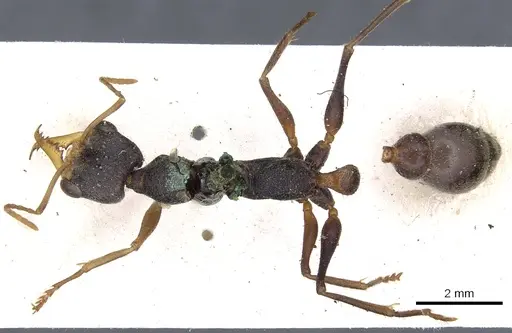
CASENT0902807
View on AntWeb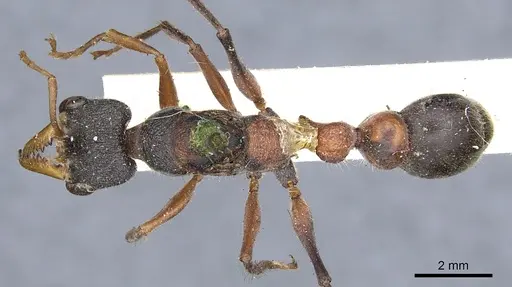
Literature
Loading...Loading products...