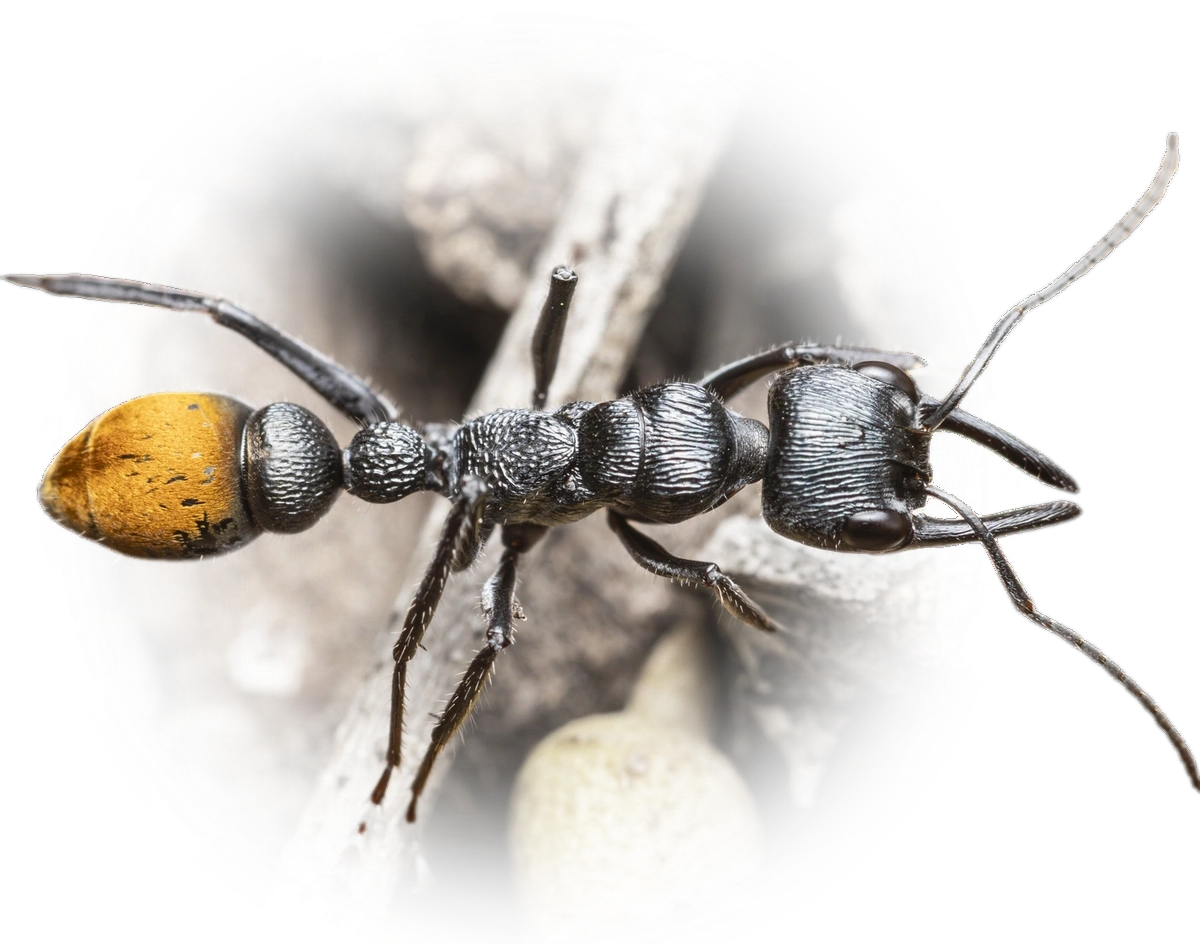

Myrmecia mandibularis
- Scientific Name
- Myrmecia mandibularis
- Tribe
- Myrmeciini
- Subfamily
- Myrmeciinae
- Author
- Smith, 1858
- Common Name
- toothless bull ant
- Distribution
- Found in 1 countries
Myrmecia mandibularis Overview
Myrmecia mandibularis (commonly known as the toothless bull ant) is an ant species of the genus Myrmecia. It is primarily documented in 1 countries , including Australia. Detailed taxonomic data and occurrence records can be further explored via authoritative databases such as AntWeb or the Global Biodiversity Information Facility (GBIF).
Myrmecia mandibularis - "toothless bull ant"
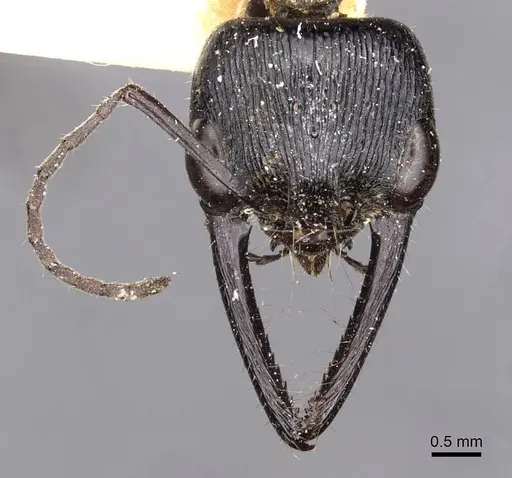
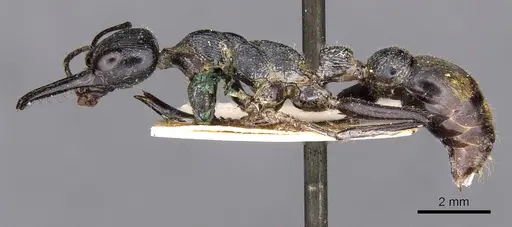
Myrmecia mandibularis is a large, striking bulldog ant native to southern Australia, ranging from southwestern Western Australia through South Australia to Victoria. Workers are robust ants measuring 12-18mm with distinctive elongated mandibles that lack teeth along the shaft, a key identification feature [1]. They have the classic Myrmecia appearance: large eyes, powerful mandibles, and a potent sting. This species is the sole member of the mandibularis species group and is a common and conspicuous ant in the Darling Range region [2].
What makes M. mandibularis stand out is its combination of large size, impressive mandibles, and the painful sting these ants are known for. As a predatory bulldog ant, they are active hunters with excellent vision. They are day-active foragers, patrolling their territory in search of prey. This is not a species for beginners due to their aggressive temperament and sting severity, but experienced antkeepers find them fascinating to observe.
Quick Summary
- Difficulty: Expert
- Origin & Habitat: Southern Australia, found from southwestern Western Australia through South Australia to Victoria, including the Darling Range region. Nests in soil, often under rocks or in open ground areas [2][3].
- Colony Type: Single-queen (monogyne) colonies. Like most Myrmecia species, colonies are founded by a single claustral queen who seals herself in a chamber and raises the first workers alone.
- Colony: Monogyne
- Founding: Claustral
- Size & Growth:
- Queen: Approximately 20-25mm, typical for Myrmecia queens
- Worker: 12-18mm [1]
- Colony: Several thousand workers in mature colonies
- Growth: Moderate, Myrmecia species typically take 2-3 months for first workers
- Development: Approximately 8-12 weeks at optimal temperature (Development time is temperature-dependent, warmer conditions accelerate development)
- Antkeeping:
- Temperature: Keep nest area at 24-28°C with a slight gradient. Room temperature (20-24°C) is acceptable, but warmer conditions promote activity and growth. Provide a heating cable on one side of the nest for a thermal gradient.
- Humidity: Moderate humidity, keep nest substrate slightly moist but not waterlogged. Provide a water tube for drinking access. These ants prefer conditions similar to their arid-to-semi-arid Australian habitat.
- Diapause: No, Myrmecia species are year-round active in Australia and do not require hibernation. They may reduce activity in cooler months but should be kept at normal temperatures.
- Nesting: Soil-based nests work best. Use a naturalistic setup with deep substrate (at least 5-10cm) or a Y-tong/plaster nest with chambers scaled to their large size. They prefer to nest under cover, flat stones or other cover objects are often used in the wild.
- Behavior: Highly aggressive and defensive. Workers will readily attack any perceived threat with their powerful mandibles and painful sting. They are active daytime foragers with excellent vision, hunting insects and other small prey. Escape risk is moderate, their large size makes them visible, but they are strong climbers. Excellent escape prevention is still required. They are predatory and will take a wide variety of live prey.
- Common Issues: sting severity, these ants have a painful sting and will use it, handle with extreme caution, aggression, colonies become increasingly defensive as they grow, avoid disturbing the nest, escape prevention, despite large size, they can squeeze through small gaps, use tight-fitting barriers, slow founding, claustral queens take time to establish, avoid disturbing during founding, prey requirements, being predatory, they need constant access to live insects, sugar alone is insufficient
Housing and Nest Setup
Myrmecia mandibularis requires spacious housing due to their large size and active nature. For founding colonies, use a test tube setup with a water reservoir, but be prepared to move them to a larger enclosure within a few months as the colony grows. Adult colonies do well in naturalistic setups with deep soil substrate (at least 10cm) or in Y-tong/plaster formicariums with appropriately sized chambers. These ants prefer nesting under cover, in captivity, provide flat stones or other objects on the substrate surface. Ensure the outworld is escape-proof, these ants are strong climbers and can escape through surprisingly small gaps. A layer of fluon or petroleum jelly on container edges helps prevent escapes. [2]
Feeding and Diet
Myrmecia mandibularis is primarily predatory and needs a protein-rich diet to thrive. Offer live insects appropriate to their size, crickets, mealworms, roaches, and other arthropods are readily accepted. Feed protein 2-3 times per week, adjusting based on colony size. They will also accept sugar sources like honey or sugar water, which provides energy for foragers. Fresh water should always be available. Unlike some ants, they are not primarily honeydew feeders, live prey is essential for raising brood. Remove uneaten prey after 24-48 hours to prevent mold.
Temperature and Heating
As Australian ants, Myrmecia mandibularis prefers warm conditions. Keep the nest area at 24-28°C for optimal brood development and worker activity. Room temperature (20-24°C) is acceptable but may result in slower growth and reduced activity. Use a heating cable or heat mat on one side of the nest to create a thermal gradient, allowing ants to self-regulate their temperature. Place heating on top of the nest, not underneath, to avoid drying out the substrate. Monitor temperatures with a thermometer placed near the nest. Avoid temperatures above 32°C as this can stress the colony.
Handling and Safety
Myrmecia mandibularis has a potent sting and an aggressive temperament. These ants will not hesitate to attack when their nest is disturbed. Never handle them directly, especially once the colony is established. Use tools like soft brushes or plastic sheets when moving ants or cleaning enclosures. Keep enclosures well-secured and away from reach of children and pets. If stung, the pain is significant and may last for hours, seek medical attention if allergic reactions occur. When working with the colony, do so in a well-lit area where you can see all workers and respond quickly if they become agitated.
Colony Development
A claustral queen will seal herself in a chamber and survive on stored fat reserves while raising her first brood. First workers (nanitics) will be smaller than normal workers but will immediately begin foraging to feed the growing colony. Growth is moderate, expect 8-12 weeks from egg to first worker at optimal temperature. Colony growth accelerates once the first batch of workers emerges. Mature colonies can reach several thousand workers over several years. These ants are long-lived, queens can live for decades in captivity with proper care.
Frequently Asked Questions
Does Myrmecia mandibularis sting?
Yes, and it is painful. These are bulldog ants with a potent sting. They are aggressive and will readily sting if they perceive a threat. Handle with extreme caution and never directly touch the ants.
Is Myrmecia mandibularis good for beginners?
No. This species is recommended for experienced antkeepers only. Their aggressive temperament, painful sting, and specific care requirements make them unsuitable for beginners.
How long does it take for first workers to emerge?
Expect 8-12 weeks from egg to first worker at optimal temperature (24-28°C). Development time varies with temperature, warmer conditions speed up development.
Can I keep multiple Myrmecia mandibularis queens together?
No. This is a monogyne species, colonies are founded by a single queen. Combining unrelated queens will result in fighting and likely the death of all but one queen.
What do Myrmecia mandibularis eat?
They are primarily predatory. Feed live insects like crickets, mealworms, and roaches. They also accept sugar sources like honey or sugar water. Protein is essential for brood development.
Do Myrmecia mandibularis need hibernation?
No. These Australian ants do not require hibernation. Keep them at normal temperatures year-round (24-28°C). They may be less active in cooler months but should not be cooled.
When should I move my colony to a formicarium?
Move to a larger enclosure once the colony reaches 20-30 workers or when the test tube becomes crowded. Myrmecia species grow quickly once established and need space for foraging and brood chambers.
How big do Myrmecia mandibularis colonies get?
Mature colonies can reach several thousand workers over several years. They are among the larger Australian ant species.
What temperature do Myrmecia mandibularis need?
Keep nest temperature at 24-28°C. A heating cable on one side of the nest creates a gradient for self-regulation. Room temperature is acceptable but may reduce activity.
Are Myrmecia mandibularis escape artists?
Despite their large size, they are excellent climbers and can escape through small gaps. Use tight-fitting lids, fluon barriers, and ensure all openings are sealed.
References

This caresheet is licensed under CC BY-SA 4.0 .
CASENT0902808
View on AntWeb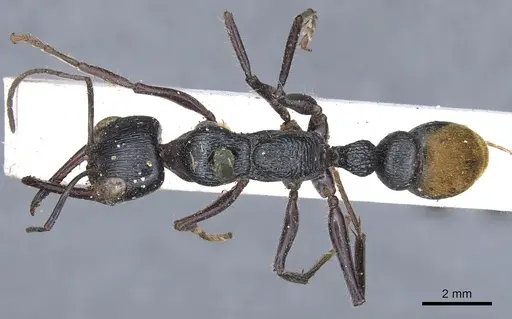
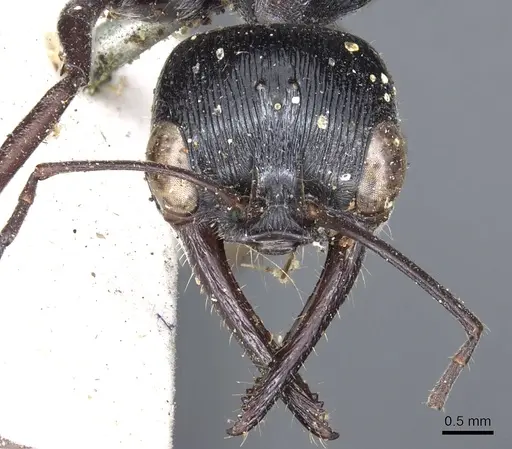
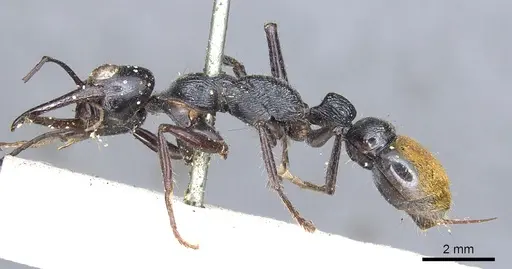
CASENT0907099
View on AntWeb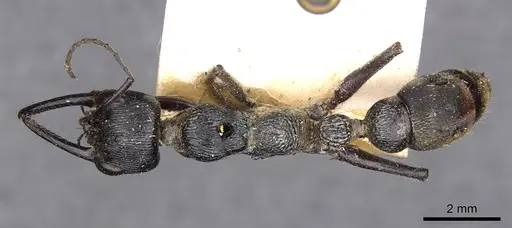
Literature
Loading...Loading products...