

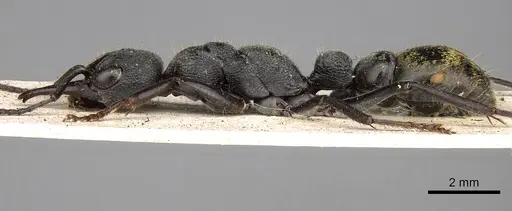
Myrmecia gilberti
- Scientific Name
- Myrmecia gilberti
- Tribe
- Myrmeciini
- Subfamily
- Myrmeciinae
- Author
- Forel, 1910
- Distribution
- Found in 1 countries
Myrmecia gilberti Overview
Myrmecia gilberti is an ant species of the genus Myrmecia. It is primarily documented in 1 countries , including Australia. Detailed taxonomic data and occurrence records can be further explored via authoritative databases such as AntWeb or the Global Biodiversity Information Facility (GBIF).
Myrmecia gilberti
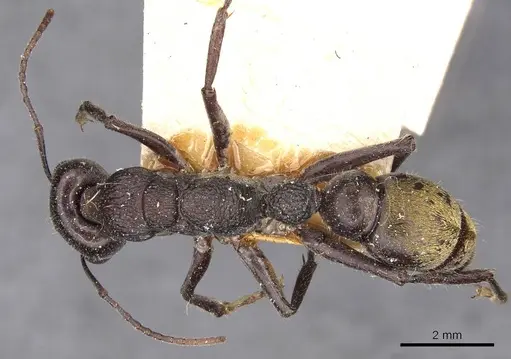
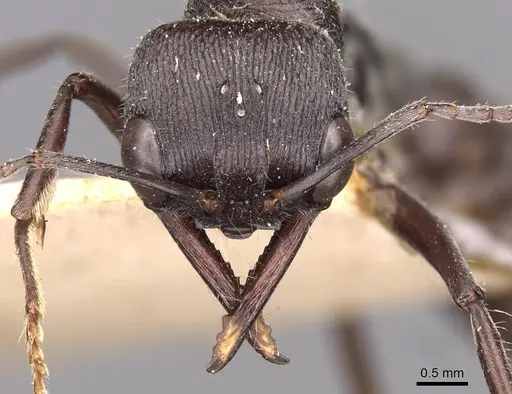
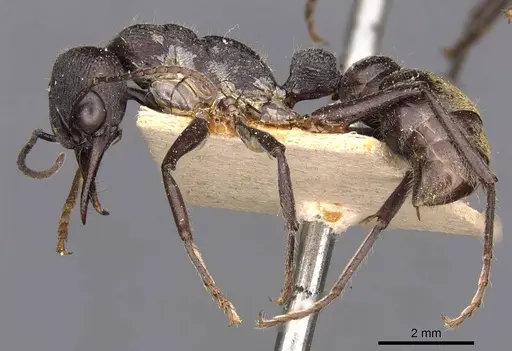
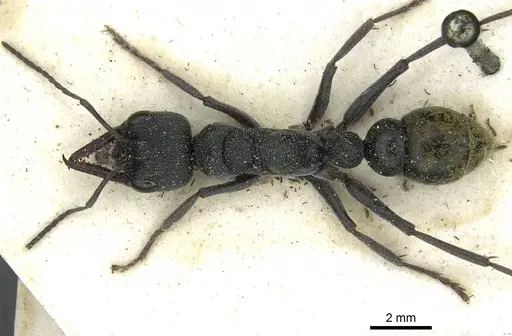
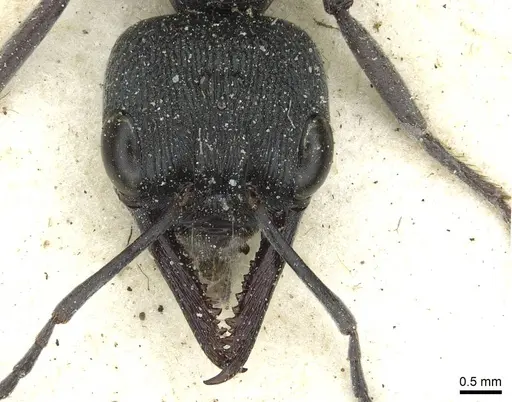
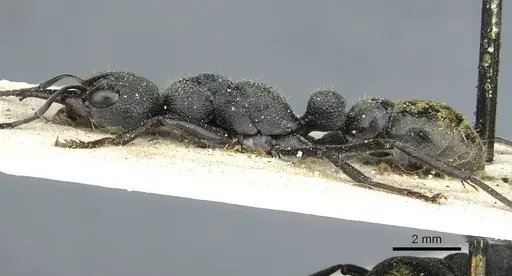
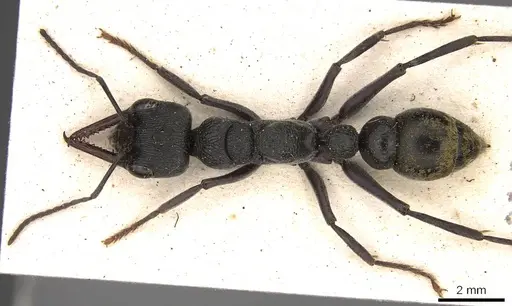
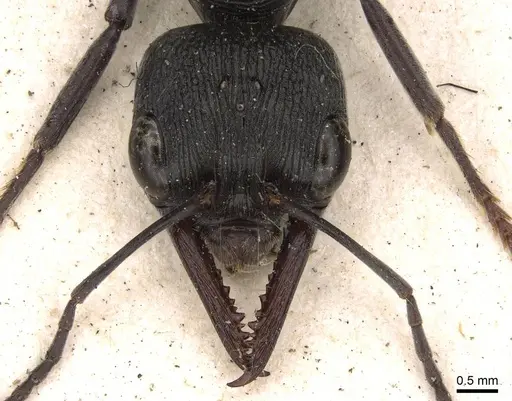
Myrmecia gilberti is a large Australian bulldog ant known for its striking appearance and potent sting. Workers reach 15-20mm with a reddish-brown head and mesosoma (middle body), contrasting with a dark black gaster (abdomen). The legs are often yellowish-orange, adding to their distinctive look. These ants are found across southeastern Australia, particularly in forested and woodland areas where they nest in soil or under stones. As with all Myrmecia species, they possess a painful sting and should be handled with extreme caution. Their large size and bold foraging behavior make them impressive display ants, though their aggressive temperament and sting severity mean they are best suited for experienced antkeepers.
Quick Summary
- Difficulty: Medium
- Origin & Habitat: Southeastern Australia, particularly New South Wales and Victoria. Inhabits forested and woodland areas, nesting in soil or beneath stones in sunny locations.
- Colony Type: Likely monogyne (single queen) based on typical Myrmecia patterns. Ergatoid (wingless) replacement reproductives have been documented in related species, allowing for queen replacement if the primary queen dies.
- Colony: Monogyne
- Founding: Semi-claustral
- Size & Growth:
- Queen: Estimated 20-25mm based on genus patterns for large Myrmecia species
- Worker: 15-20mm [1]
- Colony: Estimated 500-2000 workers at maturity based on genus data
- Growth: Moderate, typical for larger Myrmecia species
- Development: Estimated 8-12 weeks at optimal temperature based on genus development patterns (Development time is temperature-dependent, warmer conditions within safe range accelerate development. Nanitic (first) workers are typically smaller than normal workers.)
- Antkeeping:
- Temperature: Keep at 24-28°C during active season. Room temperature (20-24°C) is acceptable, but warmer conditions promote growth and activity. Provide a temperature gradient so ants can self-regulate.
- Humidity: Moderate humidity around 50-60%. These ants prefer drier conditions than many tropical species. Keep nest substrate slightly moist but allow drying between waterings.
- Diapause: Yes, require a winter rest period. Reduce temperature to 10-15°C for 2-3 months during winter (simulating Australian winter). Reduce feeding and moisture during this period.
- Nesting: Y-tong (acrylic) nests work well for their size. They prefer narrow chambers that allow them to touch both walls. Test tubes are suitable for founding colonies. Avoid overly humid setups as they prefer drier nesting conditions.
- Behavior: Highly aggressive and defensive of their nest. Workers forage individually and boldly, hunting prey rather than collecting honeydew. They have excellent vision and will investigate disturbances. Their sting is very painful and can cause severe reactions in sensitive individuals, this is one of the most painful ant stings in the world. Escape prevention is important but not as critical as with tiny ants, their larger size makes standard barriers effective. They are diurnal, foraging during daylight hours.
- Common Issues: sting severity, these ants have one of the most painful ant stings, use extreme caution when opening nests, winter die-off if diapause conditions are not provided properly, they need a cool rest period, colonies can become sluggish and stop accepting food during normal winter rest, this is normal, not a problem, aggressive temperament means they will attack when the nest is disturbed, work carefully and use props to direct them away, founding colonies are slow to establish, new keepers may lose patience and abandon them
Housing and Nest Setup
Myrmecia gilberti does well in Y-tong (acrylic) nests or test tube setups for founding colonies. For Y-tong nests, use chambers scaled to their large 15-20mm size, they prefer tight-fitting spaces where they can touch both walls. Test tube setups work well for queen founding and early colony stages, use a water reservoir at one end with cotton barrier. Provide a foraging area (outworld) connected to the nest. Because they prefer drier conditions, avoid setups that retain excessive moisture. A small water dish in the outworld is sufficient for drinking water. Escape prevention is important, while not as tiny as some species, they are strong climbers and can escape through small gaps. Ensure all connections between nest and outworld are secure.
Feeding and Diet
Myrmecia gilberti is primarily predatory, hunting insects and other small invertebrates. In captivity, offer live insects such as crickets, mealworms, and roaches. Prey should be appropriately sized, roughly half the ant's body length is ideal. They are not highly attracted to sugar sources like honey or sugar water, though some keepers report occasional acceptance. Protein-rich foods are essential for brood development. Feed adult colonies 2-3 times per week, offering prey that can be consumed within 24 hours. Remove uneaten prey to prevent mold. Founding queens will need to forage, provide small insects they can hunt.
Temperature and Seasonal Care
Maintain temperatures between 24-28°C during the active growing season. Myrmecia species are Australian natives and prefer warm conditions, but they can tolerate room temperature (20-24°C). A heating cable on one side of the nest creates a gradient allowing ants to choose their preferred temperature. During winter (October-March in the Northern Hemisphere), provide a diapause period by reducing temperature to 10-15°C. This simulates their natural seasonal cycle. During diapause, reduce feeding to once every 2-3 weeks and keep substrate slightly drier. Do not feed during deep hibernation. Return to normal temperatures gradually in spring.
Behavior and Handling
Myrmecia gilberti is among the more aggressive bulldog ant species. Workers are bold foragers that will readily attack threats to the colony. They have excellent vision and will track movement outside the nest. Their sting is considered extremely painful, among the worst of any ant species. Reactions can include intense pain lasting hours, swelling, and in sensitive individuals, allergic responses. When working with these ants, use extreme caution: never open the nest without a prop (like a piece of cardboard) to direct ants away, wear protective gloves, and work in a well-lit area where you can see all workers. They are diurnal foragers, most active during daylight hours. Unlike some ants, they do not use chemical recruitment, workers forage individually.
Colony Development
Myrmecia gilberti colonies develop moderately fast for a large ant species. A founding queen will lay her first eggs within 1-2 weeks of mating. The colony progresses through egg, larva, and pupa stages over approximately 8-12 weeks at optimal temperature (around 26°C). The first workers (nanitics) are smaller than normal workers and emerge within a few months of founding. The queen stops foraging once nanitics arrive and transitions to purely reproductive role. Colony growth is steady: expect 20-50 workers by the end of the first year, with mature colonies potentially reaching several thousand workers over several years. Growth rate depends heavily on temperature and feeding frequency.
Frequently Asked Questions
How long does it take for Myrmecia gilberti to produce first workers?
First workers (nanitics) typically emerge 8-12 weeks after the queen lays her first eggs, assuming optimal temperatures around 24-28°C. The exact timing depends on temperature, warmer conditions within safe range speed development.
Do Myrmecia gilberti ants sting?
Yes, absolutely. Their sting is extremely painful and considered one of the worst among ant species. It can cause intense pain lasting hours, swelling, and potentially allergic reactions in sensitive individuals. Handle with extreme caution.
Can I keep multiple Myrmecia gilberti queens together?
No, Myrmecia gilberti is monogyne (single queen). Unlike some ant species, multiple queens will fight. Only keep one queen per colony.
What do I feed Myrmecia gilberti?
Feed them live insects like crickets, mealworms, and small roaches. They are predatory hunters and prefer protein-rich prey. Prey should be roughly half the ant's body size. Sugar sources are rarely accepted.
Do Myrmecia gilberti need hibernation?
Yes, they require a winter rest period. Reduce temperature to 10-15°C for 2-3 months during winter. Reduce feeding and moisture during this time. This diapause period is essential for colony health and reproduction.
Are Myrmecia gilberti good for beginners?
No, they are not recommended for beginners. Their extremely painful sting and aggressive temperament require experienced handling. They are best suited for antkeepers with some experience with aggressive species.
How big do Myrmecia gilberti colonies get?
Mature colonies can reach 500-2000 workers over several years. Growth is moderate, expect the first year to produce 20-50 workers, with growth accelerating in subsequent years.
When should I move Myrmecia gilberti to a formicarium?
Keep them in a test tube or small setup until the colony reaches 30-50 workers. They prefer drier conditions, so a Y-tong or acrylic nest works well once the colony is established. Ensure the chambers are appropriately sized for their 15-20mm workers.
Why is my Myrmecia gilberti queen not laying eggs?
Several factors can affect egg-laying: temperature too low (need 24-28°C), insufficient protein feeding, or the queen is still in founding stress phase. Ensure proper temperature and feed small prey regularly. Some founding queens take weeks to months to lay their first eggs.
References

This caresheet is licensed under CC BY-SA 4.0 .
Literature
Loading...Loading products...