

Myrmecia forceps
- Scientific Name
- Myrmecia forceps
- Tribe
- Myrmeciini
- Subfamily
- Myrmeciinae
- Author
- Roger, 1861
- Distribution
- Found in 1 countries
Myrmecia forceps Overview
Myrmecia forceps is an ant species of the genus Myrmecia. It is primarily documented in 1 countries , including Australia. Detailed taxonomic data and occurrence records can be further explored via authoritative databases such as AntWeb or the Global Biodiversity Information Facility (GBIF).
Myrmecia forceps
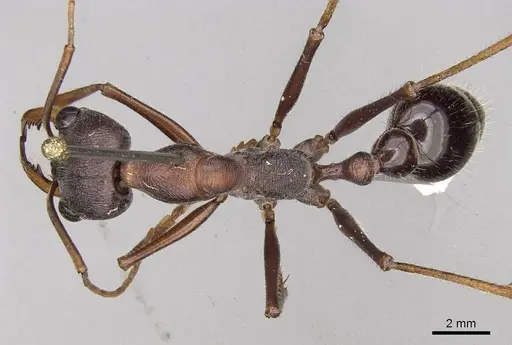
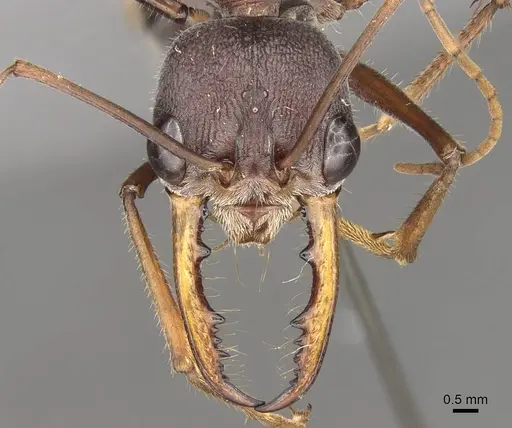
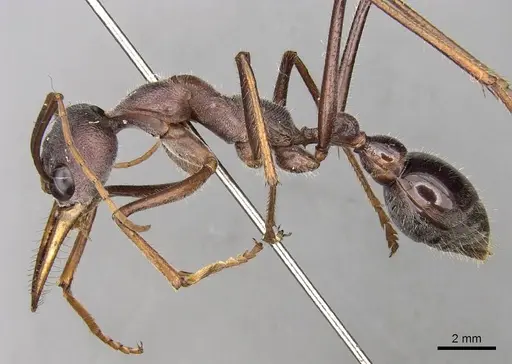
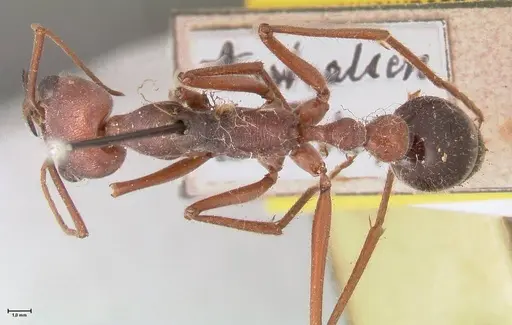
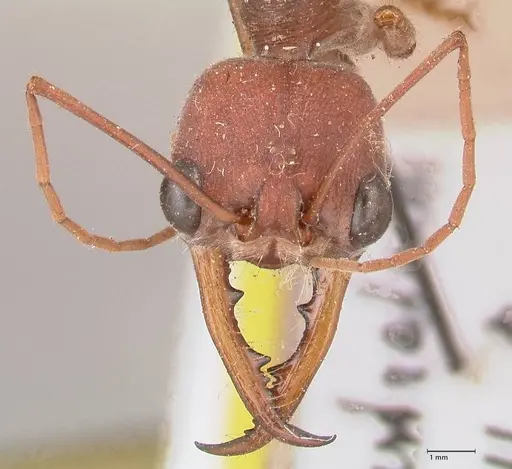
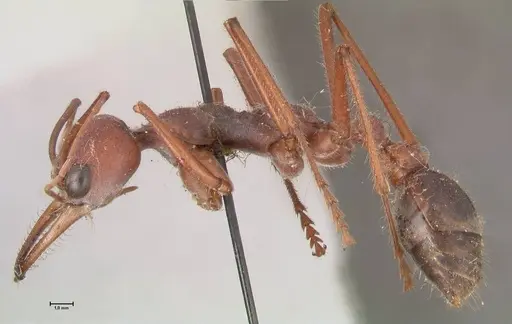
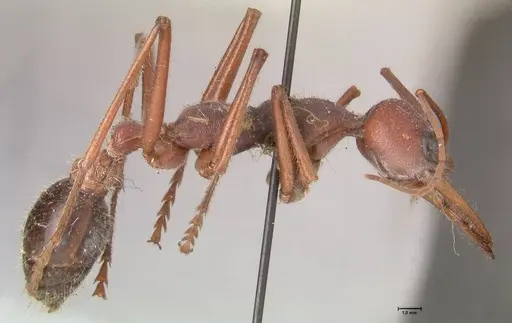
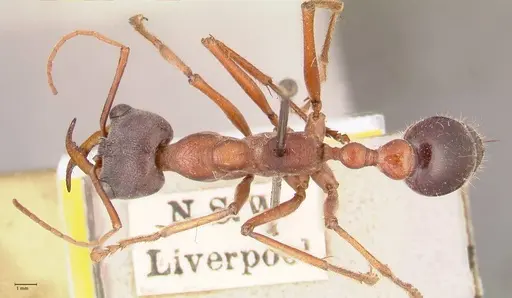
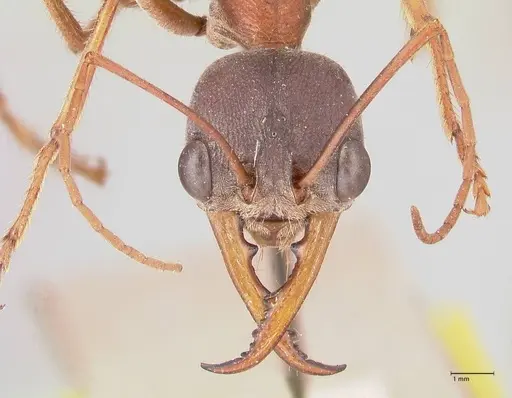
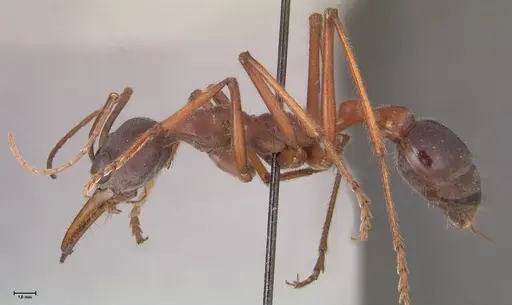
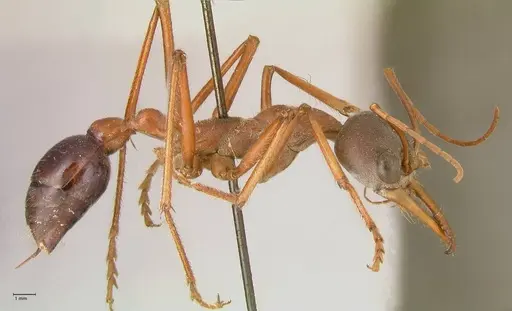
Myrmecia forceps is a large bulldog ant species native to Australia, belonging to the gulosa species group. Workers are robust ants with the characteristic large mandibles and powerful sting typical of Myrmecia. They have a dark reddish-brown to black coloration. This species has been collected rarely in Western Australia's wheatbelt region, with additional records from New South Wales and South Australia's Kangaroo Island [1][2]. As with all Myrmecia species, they possess a potent sting and should be handled with extreme caution. These ants are active foragers that hunt insects and other small prey.
Quick Summary
- Difficulty: Medium
- Origin & Habitat: Australia, primarily Western Australia wheatbelt, with records from New South Wales and South Australia (Kangaroo Island). They inhabit dry to semi-arid woodland and grassland regions [2][1].
- Colony Type: Single-queen (monogyne) colonies typical for the genus, though colony structure is not extensively documented for this specific species.
- Colony: Monogyne
- Founding: Claustral
- Size & Growth:
- Queen: Approximately 20-25mm, typical for Myrmecia queens
- Worker: Approximately 12-18mm
- Colony: Likely several hundred workers at maturity based on typical Myrmecia colony development
- Growth: Moderate, Myrmecia colonies typically grow steadily through the founding phase
- Development: Approximately 8-12 weeks at optimal temperature based on related Myrmecia species (Development time varies with temperature, warmer conditions within safe ranges accelerate development)
- Antkeeping:
- Temperature: Keep nest area at 24-28°C with a slight gradient. Room temperature (around 22-25°C) is suitable for this Australian species. Provide a heating cable on one side of the nest if needed.
- Humidity: Moderate humidity around 50-60%. Allow the nest to partially dry between water additions. These ants prefer drier conditions compared to tropical species.
- Diapause: Yes, a winter rest period is recommended. Reduce temperature to 15-18°C for 2-3 months during winter months (Southern Hemisphere: June-August).
- Nesting: Y-tong (AAC) nests or plaster nests work well. Provide a shallow water reservoir. These ants prefer enclosed nests with narrow chambers scaled to their size. A formicarium with multiple connected chambers allows for proper colony organization [2].
- Behavior: Myrmecia forceps is an aggressive, defensive species with a powerful sting. Workers are active foragers that hunt individually, using their large mandibles to capture prey. They are diurnal, foraging during daylight hours. Escape prevention is important due to their large size and ability to climb smooth surfaces. They are not supercolonial and maintain distinct colony boundaries. The sting pain level is high, among the more painful ant stings in Australia [2].
- Common Issues: sting hazard, these ants have a very painful sting and should be handled with extreme caution, never with bare hands, escape prevention, large ants can escape through gaps, ensure enclosures are secure, slow founding phase, claustral queens take time to raise first workers, avoid disturbing the nest during this period, winter mortality, colonies that are not allowed proper dormation may weaken or die, parasites, wild-caught colonies may carry mites or other parasites that can devastate captive colonies
Housing and Nest Setup
Myrmecia forceps does well in Y-tong (AAC) nests or plaster formicariums. These setups provide the dark, enclosed environment that bulldog ants prefer. The nest should have chambers narrow enough that workers can touch opposite walls, roughly 8-12mm chamber height works for workers of this size. Include a shallow water reservoir or cotton ball for humidity, but avoid oversaturating the nest. An outworld area for foraging is essential, this can be a simple plastic container connected to the nest. Ensure all connections are secure as these large ants can force loose fittings. A layer of substrate in the outworld allows for natural digging behavior if desired. [2]
Feeding and Diet
Myrmecia forceps is a predatory ant that primarily hunts insects and other small arthropods. Feed workers small live insects such as fruit flies, small crickets, mealworms, and waxworms. They will also accept protein-based foods like pieces of raw chicken or hard-boiled egg. Sugar sources are generally not a significant part of Myrmecia diet, though they may occasionally drink honey water or sugar water. Feed protein prey 2-3 times per week, adjusting based on colony size. Remove uneaten prey after 24-48 hours to prevent mold. A constant water source should be available in the outworld. [2]
Temperature and Seasonal Care
Maintain nest temperatures between 24-28°C for optimal brood development. Australian Myrmecia species tolerate a range from roughly 20°C to over 30°C, but consistent warmth within the ideal range produces best results. A heating cable placed on top of the nest (never underneath where it could dry out the substrate) can provide additional warmth if needed. During winter (June-August in the Southern Hemisphere), reduce temperatures to 15-18°C to allow for proper dormation. This winter rest period is important for colony health and may trigger reproductive behavior in spring. Do not feed during deep dormation but ensure water is available. [2]
Behavior and Defense
Myrmecia forceps is among the more defensive Australian ant species. Workers are aggressive when the nest is disturbed and will readily sting. The sting is potent and causes significant pain, these ants should never be handled with bare hands. Use soft brushes or plastic sheets for moving ants. Workers forage individually, hunting prey with their large mandibles. They are diurnal, most active during daylight hours. Unlike some invasive ants, Myrmecia colonies maintain clear boundaries and do not form supercolonies. Each colony will defend its territory aggressively. When threatened, workers may raise their gaster in a defensive posture before striking. [2]
Colony Development
A claustral queen will seal herself in a chamber and raise the first brood without leaving the nest. She relies entirely on stored fat reserves and metabolic water during this founding phase, which typically takes 8-12 weeks under optimal conditions. The first workers (nanitics) are smaller than mature workers but will immediately begin foraging to support the growing colony. Colony growth is steady but not rapid, expect several months to reach 50 workers, and a year or more to reach several hundred. The queen can live for many years, with Myrmecia queens among the longest-lived of all ants. Do not disturb the founding chamber during this critical period.
Frequently Asked Questions
How long does it take for Myrmecia forceps to raise first workers?
Expect 8-12 weeks from egg to first worker at optimal temperature (around 26°C). The queen will remain sealed in her chamber until nanitic workers emerge.
Do Myrmecia forceps ants sting?
Yes, absolutely. They have a very painful sting among the most potent of Australian ants. Never handle them with bare hands, use soft brushes or plastic sheets for any necessary manipulation.
What do I feed Myrmecia forceps?
Feed small live insects like fruit flies, small crickets, and mealworms. They are predatory hunters that prefer protein prey. Occasional protein sources like boiled egg or chicken may also be accepted. Feed 2-3 times per week.
Can I keep multiple Myrmecia forceps queens together?
No. Myrmecia forceps is a single-queen species. Multiple unrelated queens will fight to the death. Only introduce a second queen during pleometrosis (multi-queen founding) if documented, which is not typical for this species.
Do Myrmecia forceps need hibernation?
Yes, a winter rest period is recommended. Reduce temperatures to 15-18°C for 2-3 months during winter. This mimics their natural cycle in temperate Australia and helps maintain colony health.
Is Myrmecia forceps good for beginners?
No. While not the most difficult species, their potent sting and specific temperature requirements make them better suited for keepers with some experience. The sting hazard alone makes them unsuitable for beginners.
When should I move Myrmecia forceps to a formicarium?
Keep newly caught queens in a simple test tube setup for the founding phase. Once the colony reaches 30-50 workers and the test tube becomes crowded, you can move them to a proper formicarium. Do not disturb during the founding phase.
How big do Myrmecia forceps colonies get?
Based on typical Myrmecia patterns, colonies likely reach several hundred workers at maturity. This is a moderate colony size, not the massive supercolonies seen in some invasive species.
What temperature is best for Myrmecia forceps?
Keep the nest at 24-28°C. A slight temperature gradient allows workers to choose their preferred zone. Room temperature in most homes (22-25°C) is acceptable, with slight heating if needed.
Why is my Myrmecia forceps colony dying?
Common causes include: disturbing the queen during founding, temperatures too cold or too hot, improper humidity (too wet or too dry), mold from uneaten food, or parasites from wild-caught colonies. Review each parameter and make adjustments gradually.
References

This caresheet is licensed under CC BY-SA 4.0 .
Literature
Loading...Loading products...