

Myrmecia fabricii
- Scientific Name
- Myrmecia fabricii
- Tribe
- Myrmeciini
- Subfamily
- Myrmeciinae
- Author
- Ogata & Taylor, 1991
- Distribution
- Found in 1 countries
Myrmecia fabricii Overview
Myrmecia fabricii is an ant species of the genus Myrmecia. It is primarily documented in 1 countries , including Australia. Detailed taxonomic data and occurrence records can be further explored via authoritative databases such as AntWeb or the Global Biodiversity Information Facility (GBIF).
Myrmecia fabricii
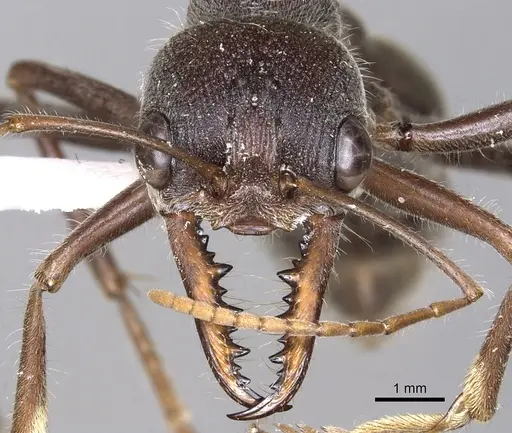
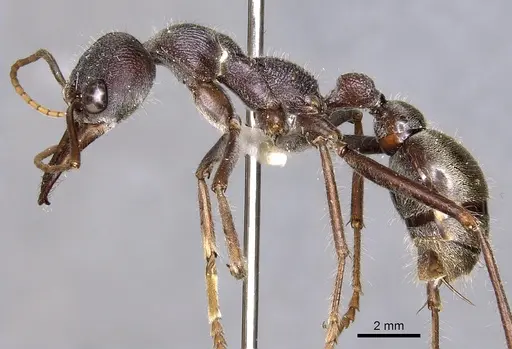
Myrmecia fabricii is a large, striking ant species belonging to the gulosa species group, native to Queensland, Australia. Workers are robust and powerful, typically measuring 12-18mm, with the characteristic elongated mandibles and powerful sting common to all Myrmecia species. They feature the classic bulldog ant appearance, a sturdy build with a distinct head and abdomen, usually dark reddish-brown to black coloration with lighter appendages. This species inhabits the tropical to subtropical regions of eastern Queensland, where it nests in soil or under stones in warm, shaded areas of forest and woodland [1].
As a member of the gulosa species group, M. fabricii shares the typical Myrmecia traits of being a solitary hunter with a potent sting. These ants are active foragers that hunt individually for prey, and they are known for their alert, aggressive defense of their nests. Unlike some more docile ant species, bulldog ants will readily investigate and attack threats, making them a challenging but rewarding species for experienced antkeepers. Their queens are among the largest in the ant world, reflecting their advanced social structure and independent founding behavior [2].
Quick Summary
- Difficulty: Medium
- Origin & Habitat: Eastern Queensland, Australia, tropical to subtropical forest and woodland habitats. Nests are typically found in soil or under stones in warm, shaded locations [1].
- Colony Type: Monogyne (single queen colonies). Like most Myrmecia species, colonies establish with one founding queen who seals herself in to raise the first brood alone. Queens are independent claustral founders that do not require host workers [1].
- Colony: Monogyne
- Founding: Claustral
- Size & Growth:
- Queen: 18-22mm, queens are large and robust, typical of the gulosa species group
- Worker: 12-18mm, workers are large and powerful
- Colony: Colonies typically reach 200-500 workers in captivity. Wild colonies may be larger
- Growth: Moderate, Myrmecia species grow steadily but not as rapidly as some tropical ants. Expect 6-12 months to first workers
- Development: Approximately 8-12 weeks at optimal temperature (25-28°C). This is typical for Myrmecia species which have moderately long development cycles (Development is temperature-dependent, cooler conditions will slow growth significantly)
- Antkeeping:
- Temperature: Keep nest area at 25-30°C with a slight gradient. Queensland origin means they prefer warm conditions. A heating cable on one side of the nest creates the ideal temperature gradient
- Humidity: Moderate humidity around 50-70%. Keep the nest substrate slightly moist but not waterlogged. Provide a water tube for drinking access
- Diapause: No true diapause required. Queensland has mild winters, so reduce feeding and lower temperatures slightly (20-22°C) during winter months rather than a full hibernation
- Nesting: Y-tong (AAC) nests or naturalistic setups with soil chambers work well. These are large ants that need appropriately sized tunnels. Provide a deep soil area for nesting and a separate outworld for foraging
- Behavior: Myrmecia fabricii is an active, alert species with strong defensive instincts. Workers forage individually, hunting small invertebrates and collecting nectar. They have excellent vision and will investigate disturbances quickly. The sting is potent and painful, these ants should be handled with extreme caution. Escape prevention is important but not critical as they are large enough to be contained with standard barriers. They are not aggressive toward humans unless the nest is disturbed, but will defend vigorously if threatened [1].
- Common Issues: sting hazard, their potent sting can cause significant pain and allergic reactions in some people, handle with extreme caution, slow founding, claustral queens take months to raise first workers, patience is essential, overheating risk, too high temperatures can kill colonies, monitor closely, colonies can become aggressive during founding when queen is vulnerable, minimize disturbances, large size requires spacious formicarium, cramped conditions lead to stress and abandonment
Housing and Nest Setup
Myrmecia fabricii requires spacious housing due to their large size. A Y-tong (AAC) nest with appropriately sized chambers works well, or you can use a naturalistic setup with a deep soil area for the nest chamber and a separate foraging area. The nest should have chambers at least 15-20mm in height to accommodate their size comfortably. Provide a water test tube as a constant water source, Myrmecia regularly drink and need access to fresh water. The outworld should be escape-proof but spacious enough for workers to hunt and forage. Use a substrate of dry sand or soil in the foraging area to allow natural digging behavior if desired. Lighting in the room is fine, these ants are diurnal and active during daylight hours. [1]
Feeding and Diet
Myrmecia fabricii is a predatory species that hunts small invertebrates in the wild. In captivity, their primary food should be live insects such as small crickets, mealworms, fruit flies, and other appropriately sized prey. They are active hunters that prefer moving prey, so offering live food encourages natural foraging behavior. They also accept sugar sources like honey water or sugar water, particularly during colony growth when workers need energy. Feed protein-rich prey 2-3 times per week for established colonies, and provide a constant sugar water source. Founding queens do not need to be fed, they survive entirely on stored fat reserves until their first workers emerge. Remove uneaten prey after 24-48 hours to prevent mold.
Temperature and Seasonal Care
As a Queensland species, Myrmecia fabricii thrives in warm conditions. Keep the nest area at 25-30°C, with a heating cable on one side to create a temperature gradient allowing workers to regulate their own temperature. During Australian winter (June-August), you can reduce temperatures slightly to 20-22°C and reduce feeding frequency, but do not cool them dramatically, they do not require true hibernation. A slight winter slowdown is natural but not essential in captivity. Monitor for signs of stress: workers clustering near heat means they need it warmer, while avoiding heated areas means reduce temperature. Avoid temperatures above 35°C as this can be fatal.
Behavior and Handling
Myrmecia fabricii is an impressive but challenging species to keep. Workers are fast, alert, and have excellent vision, they will quickly investigate any disturbance near their nest. The sting is their primary defense and is genuinely painful, comparable to a wasp sting but with longer-lasting effects. Some individuals may experience allergic reactions. Never handle these ants with bare hands, and use extreme caution during nest inspections. They are not suitable for beginners due to their sting and specific care requirements. Workers are solitary foragers that hunt using their vision and mandibles rather than chemical trails. They are not aggressive toward humans unless the nest is threatened, but will defend vigorously if disturbed [1].
Colony Development and Growth
A newly mated queen will dig a chamber and seal herself inside to begin claustral founding. She lays a small number of eggs and tends them alone, surviving on her stored fat reserves. The first brood develops through all stages (egg, larva, pupa) over several months, typically 8-12 weeks at optimal temperature. The first workers (nanitics) are often smaller than subsequent workers but immediately begin foraging to support the colony. After the first workers emerge, the queen's role shifts to pure egg-laying while workers handle all foraging, nest maintenance, and brood care. Growth is steady but not rapid, a mature colony of several hundred workers may take 2-3 years to develop. Colonies can live for many years with a healthy queen.
Frequently Asked Questions
How long does it take for Myrmecia fabricii to produce first workers?
Expect 8-12 months from founding to first workers at optimal temperature (25-30°C). The queen raises the first brood alone in sealed chambers, and development takes several months even under ideal conditions. Patience is essential with this species.
What do Myrmecia fabricii eat?
They are predatory ants that primarily eat live insects like small crickets, mealworms, and fruit flies. They also accept sugar sources such as honey water or sugar water. Feed protein prey 2-3 times per week and provide constant sugar water access for established colonies.
Are Myrmecia fabricii good for beginners?
No, they are not recommended for beginners. Their potent sting, specific temperature requirements, slow colony development, and potential for aggressive defense make them a species for experienced antkeepers only. Consider easier Australian species like some Iridomyrmex or Rhytidoponera species first [1].
What temperature do Myrmecia fabricii need?
Keep nest temperatures between 25-30°C with a slight gradient. Use a heating cable on one side of the nest to create this gradient. They are from tropical Queensland and need consistent warmth. Avoid temperatures above 35°C.
Can I keep multiple Myrmecia fabricii queens together?
No, Myrmecia are typically monogyne (single queen). Unlike some ants that can form multi-queen colonies, these ants establish solitary colonies. Only keep one queen per colony, multiple queens will fight and only one will survive.
How big do Myrmecia fabricii colonies get?
Colonies typically reach 200-500 workers in captivity. With a healthy queen, colonies can live for many years and continue growing. Wild colonies may be larger. They are not among the largest Myrmecia colonies but are still substantial.
Do Myrmecia fabricii need hibernation?
No true hibernation is required. Their native Queensland has mild winters, so a slight temperature reduction to 20-22°C during winter months with reduced feeding is sufficient. They remain active year-round in captivity with proper heating.
Why is my Myrmecia fabricii colony dying?
Common causes include: temperatures too high or too low, improper humidity (too dry or waterlogged), stress from too frequent disturbances, insufficient protein food, or queen death during founding. Review temperature, feeding schedule, and ensure the queen is not being disturbed during the critical founding phase.
References

This caresheet is licensed under CC BY-SA 4.0 .
CASENT0902794
View on AntWeb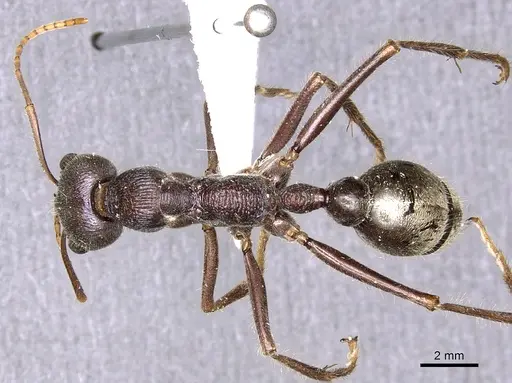
Literature
Loading...Loading products...