

Myopias tenuis
- Scientific Name
- Myopias tenuis
- Tribe
- Ponerini
- Subfamily
- Ponerinae
- Author
- Emery, 1900
- Distribution
- Found in 2 countries
Myopias tenuis Overview
Myopias tenuis is an ant species of the genus Myopias. It is primarily documented in 2 countries , including Australia, Papua New Guinea. Detailed taxonomic data and occurrence records can be further explored via authoritative databases such as AntWeb or the Global Biodiversity Information Facility (GBIF).
Myopias tenuis
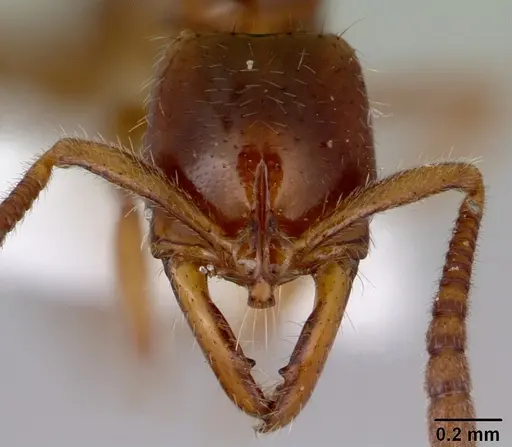
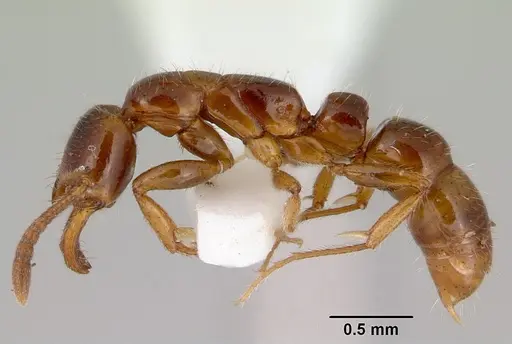
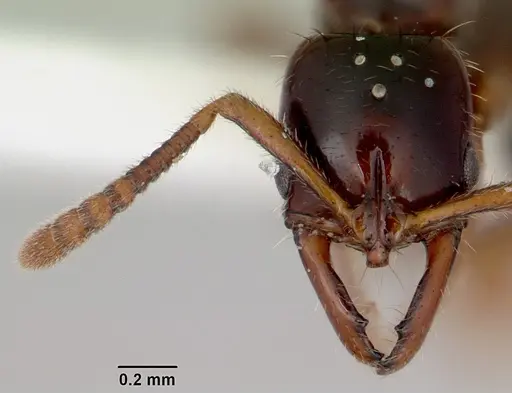
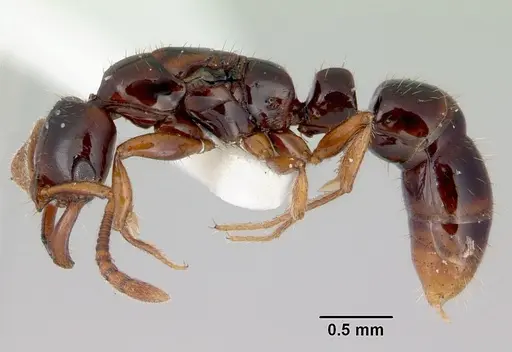
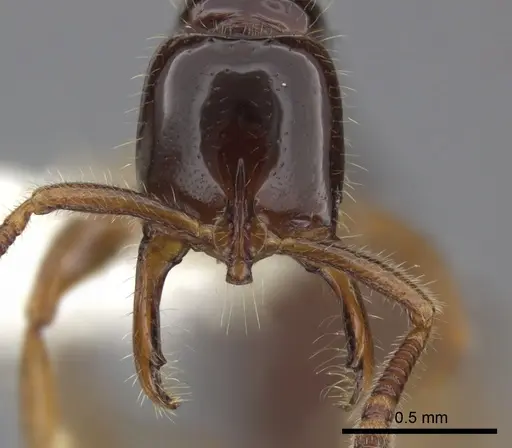
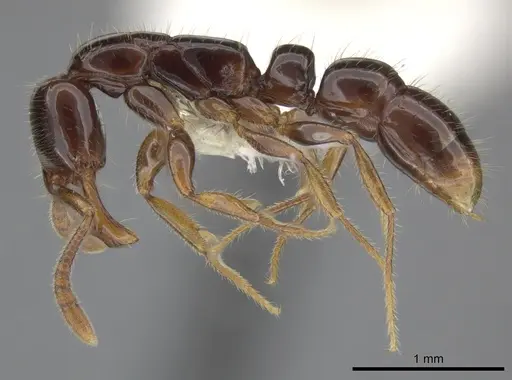
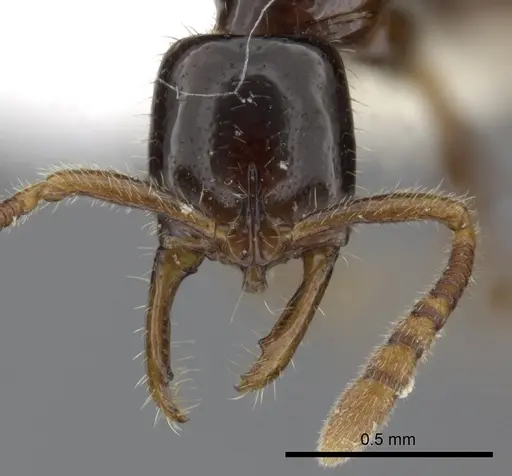
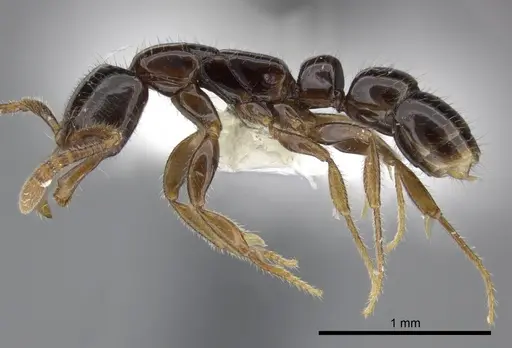
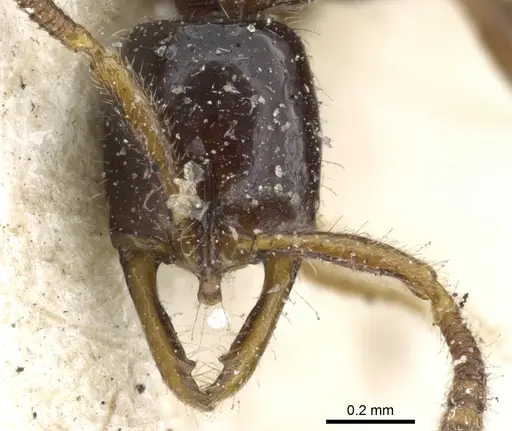
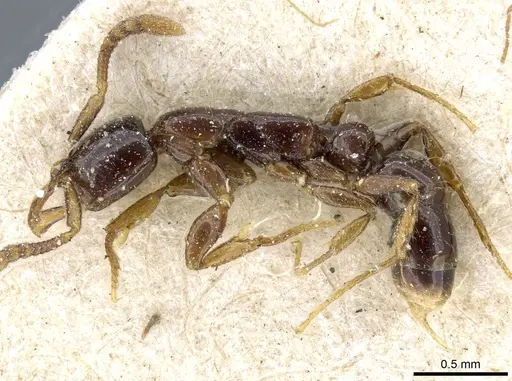
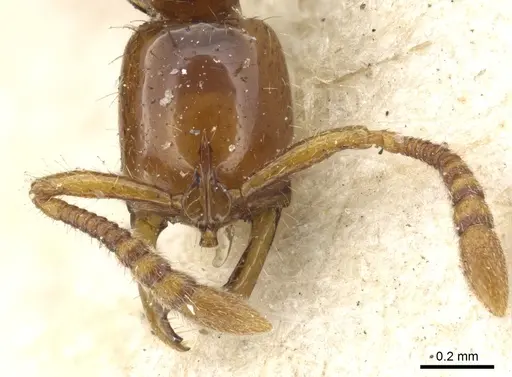
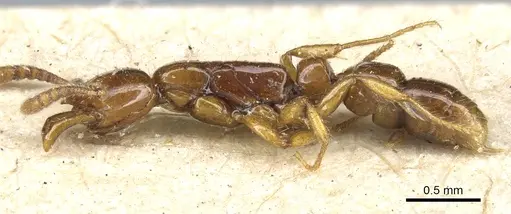
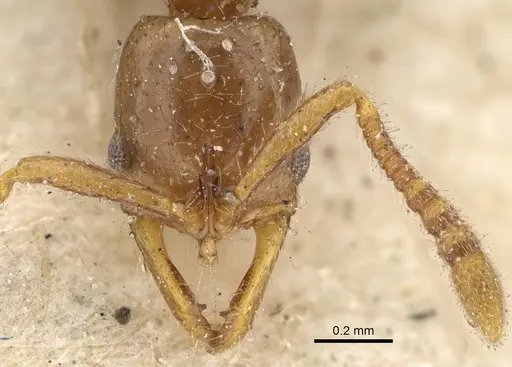
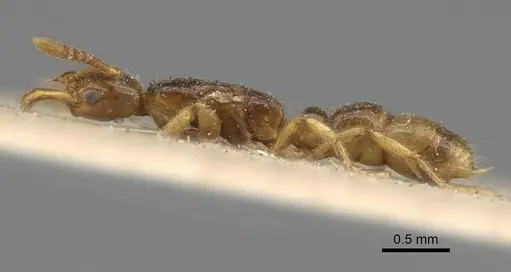
Myopias tenuis is a tiny predatory ant species from the Ponerinae subfamily, found across Papua New Guinea and northern Queensland, Australia. Workers measure just 2.8-4.1mm, making them one of the smallest Myopias species. They have a distinctive median clypeal lobe that is as long as or slightly longer than wide, and their antennae just reach the back of the head when laid straight back. The body is smooth and shiny, typically reddish to yellowish brown. These ants are specialized predators that hunt Entomobryid springtails, carrying them beneath their body army-ant fashion. Colonies are small, typically containing around 15 workers, and may have either a single queen or multiple queens [1].
Quick Summary
- Difficulty: Hard
- Origin & Habitat: Papua New Guinea and northern Queensland, Australia, lowland and hill rainforest habitats, typically nesting in rotten wood, under bark, and in leaf litter.
- Colony Type: Small colonies of about 15 workers. Can be single-queen (monogyne) or multi-queen (polygyne) [1].
- Colony: Optionally polygyne
- Size & Growth:
- Queen: Unconfirmed measurements, estimated similar to other Myopias species at 5-7mm
- Worker: 2.8-4.1mm depending on population, PNG samples smaller (2.8-3.7mm), Australian samples larger (up to 4.1mm)
- Colony: Approximately 15 workers in wild colonies [1]
- Growth: Slow, small colony size and specialized diet suggest gradual growth
- Development: Unknown, likely 8-12 weeks based on typical Ponerinae development at tropical temperatures (No specific development data available for this species. Related Myopias species suggest slower development than many ants due to small colony size and specialized predatory lifestyle.)
- Antkeeping:
- Temperature: Keep at 24-28°C, these are tropical rainforest ants requiring warm, stable conditions. A heating cable on one side of the nest creates a suitable gradient.
- Humidity: High humidity required, aim for 70-85%. Keep the nest substrate consistently moist but not waterlogged. These ants live in rainforest leaf litter and rotting wood in the wild, so they need damp conditions.
- Diapause: No, as a tropical species from Papua New Guinea and northern Queensland, they do not require hibernation. Keep them warm year-round.
- Nesting: Use a naturalistic setup with moist substrate (soil/peat mix) or a Y-tong/plaster nest with high humidity. They naturally nest in rotten wood and under stones in leaf litter. Provide plenty of hiding spots and hunting areas.
- Behavior: These ants are specialized predators with a unique hunting strategy, they carry springtails beneath their body like army ants. Workers are active hunters and will chase down prey. They are not aggressive toward humans and likely cannot sting effectively due to their tiny size. Escape prevention is critical, they are very small and can squeeze through standard mesh. Use fine mesh barriers and tight-fitting lids.
- Common Issues: tiny size means escapes are likely without fine mesh barriers, specialized diet on live springtails makes feeding challenging, cultures may crash, small colony size means any losses have bigger impact, handle gently, high humidity needs can lead to mold if ventilation is poor, slow growth tests keeper patience, resist overfeeding
Housing and Nest Setup
Myopias tenuis requires a setup that mimics their natural rainforest floor habitat. A naturalistic terrarium-style setup works best, use a moist soil/peat mixture as substrate, add leaf litter, small pieces of rotting wood, and stones for hiding places. Alternatively, a Y-tong or plaster nest with high humidity chambers can work well. The key is maintaining consistently damp substrate without flooding. Provide a water source via a test tube with cotton, they will drink from the meniscus. Because they are tiny, even small gaps can lead to escapes. Use fine mesh (0.5mm or smaller) on any ventilation holes and ensure all edges are sealed. A small outworld for feeding is fine, but keep it simple as these ants don't travel far from their nest. [1]
Feeding and Diet
This is the most challenging aspect of keeping Myopias tenuis. They are specialized predators on Entomobryid springtails, tiny, primitive insects that live in soil and leaf litter[2]. In captivity, you must maintain a live springtail culture to feed them. Other small live prey may be accepted experimentally, such as booklice (psocids), tiny mites, or fruit fly larvae, but springtails should be the primary food. Do not rely on sugar sources, these are strict predators. Feed small amounts of prey every few days, removing any uneaten prey after 24 hours to prevent mold. The hunting behavior is fascinating to watch, workers will chase down and subdue springtails, then carry them back to the nest.
Temperature and Humidity Control
As tropical rainforest ants from Papua New Guinea and northern Queensland, Myopias tenuis needs warm and humid conditions year-round. Maintain temperatures between 24-28°C, use a heating cable on one side of the nest to create a gentle gradient if your room temperature is below this range. Place the heating on top of the nest, not underneath, to avoid drying out the substrate. Humidity should be high, around 70-85%. The substrate should feel consistently moist but never waterlogged. Mist the setup occasionally, but rely on damp substrate rather than frequent misting to avoid sudden fluctuations. Good ventilation is essential to prevent mold, but avoid strong airflow that dries things out.
Colony Structure and Behavior
Myopias tenuis forms small colonies of approximately 15 workers, with either a single queen or multiple queens [1]. This is unusual among ants, many species are either strictly single-queen or multi-queen, but this species can do both. Workers are active hunters that search for springtails in the leaf litter layer. Their hunting method is distinctive, they carry captured springtails beneath their body, similar to army ants carrying prey. Workers are not aggressive and likely cannot sting effectively due to their tiny size. The small colony size means each worker is valuable, avoid disturbing the colony unnecessarily and handle gently during any nest maintenance.
Frequently Asked Questions
Can I keep Myopias tenuis in a test tube setup?
A test tube setup is not ideal for this species. They need high humidity and a naturalistic hunting environment. A small naturalistic terrarium or Y-tong nest with moist substrate works better. If using test tubes, provide multiple connected tubes with damp cotton and a hunting area with leaf litter and springtails.
What do Myopias tenuis eat?
They are specialized springtail predators. You must maintain a live springtail culture to keep this species. Other tiny live prey may be accepted experimentally, but springtails should be the primary food. They do not accept sugar or honey.
How long does it take for first workers to appear?
The exact development time is unknown for this species. Based on typical Ponerinae development at tropical temperatures, expect 8-12 weeks from egg to worker. Their small colony size and specialized diet suggest growth may be slower than many common ant species.
Can I keep multiple queens together?
Yes, Myopias tenuis can form both single-queen (monogyne) and multi-queen (polygyne) colonies in the wild. However, if combining unrelated foundress queens, introduce them carefully and monitor for aggression. It is safer to start with a single queen unless you have experience combining ant queens.
Are Myopias tenuis good for beginners?
No, this species is considered difficult to keep. Their specialized diet on live springtails, small colony size, high humidity requirements, and escape risk make them challenging. They are best suited for experienced antkeepers who can maintain live springtail cultures and provide stable tropical conditions.
Do Myopias tenuis need hibernation?
No, as a tropical species from Papua New Guinea and northern Queensland, they do not require hibernation. Keep them warm year-round at 24-28°C. They are active throughout the year in their natural habitat.
Why are my Myopias tenuis dying?
Common causes include: springtail culture crashing (starvation), humidity too low or too high (mold or desiccation), temperature fluctuations, escapes due to fine mesh not being used, or stress from disturbance. Check that your springtail culture is thriving, substrate is consistently damp but not waterlogged, and that you are using fine mesh to prevent escapes.
How big do Myopias tenuis colonies get?
Wild colonies reach approximately 15 workers [1]. In captivity, colonies may grow slightly larger but will likely remain small compared to many common ant species. Their specialized predatory lifestyle and small colony size are typical for this genus.
When should I move them to a formicarium?
Start with a naturalistic setup from the beginning, these ants do well in terrarium-style habitats that mimic their natural leaf litter environment. A small plastic container with moist substrate, leaf litter, and hiding spots works well for founding colonies. Only move to a more formal formicarium if the colony grows significantly larger than typical wild colonies.
References

This caresheet is licensed under CC BY-SA 4.0 .
CASENT0106254
View on AntWeb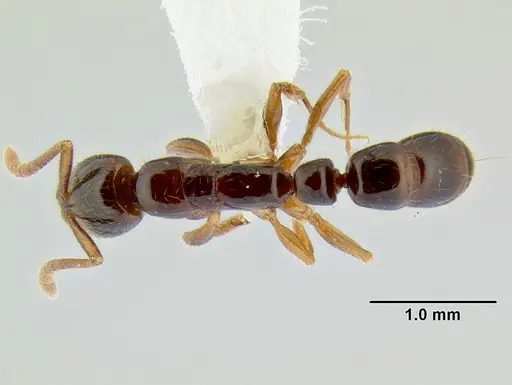
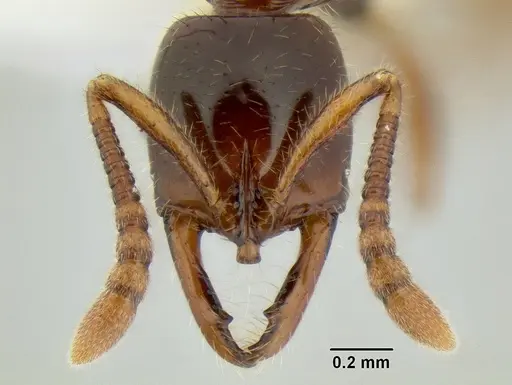
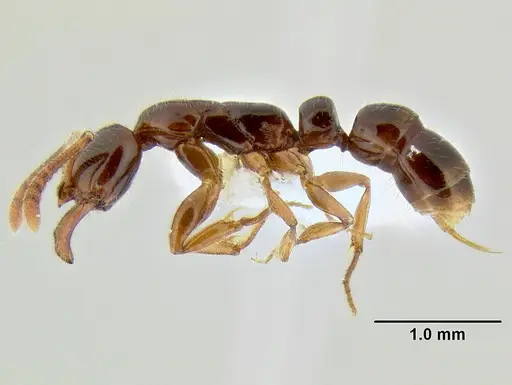
CASENT0172095
View on AntWeb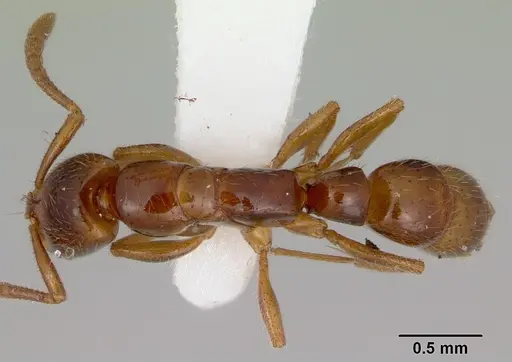
CASENT0172096
View on AntWeb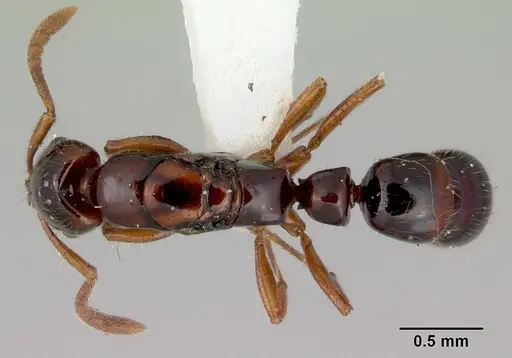
CASENT0270595
View on AntWeb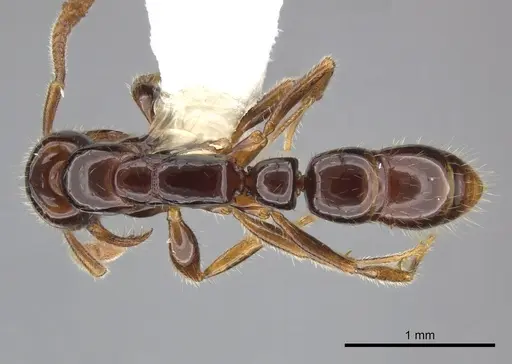
CASENT0270596
View on AntWeb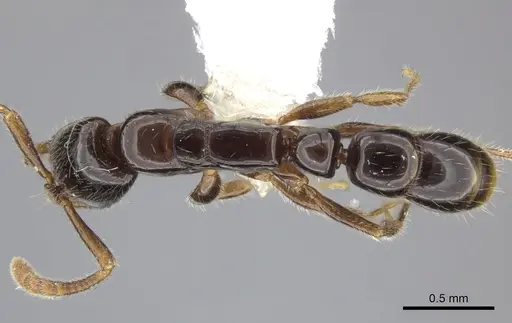
CASENT0903925
View on AntWeb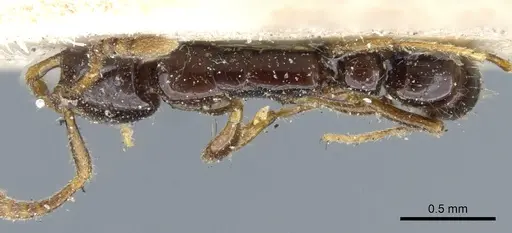
CASENT0903926
View on AntWeb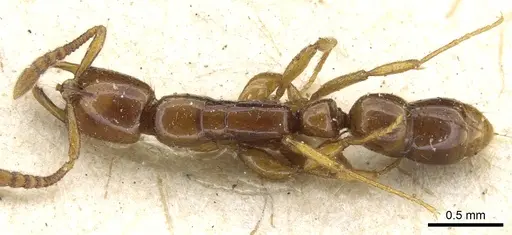
CASENT0922431
View on AntWeb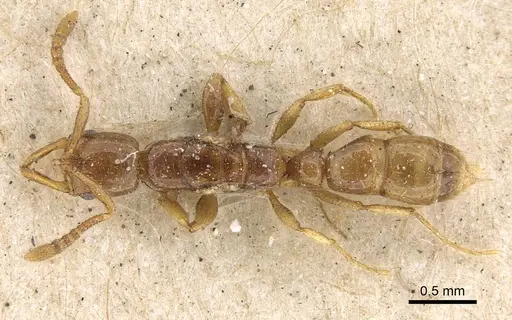
Literature
Loading...Loading products...