

Myopias maligna
- Scientific Name
- Myopias maligna
- Tribe
- Ponerini
- Subfamily
- Ponerinae
- Author
- Smith, 1861
- Distribution
- Found in 1 countries
Myopias maligna Overview
Myopias maligna is an ant species of the genus Myopias. It is primarily documented in 1 countries , including Indonesia. Detailed taxonomic data and occurrence records can be further explored via authoritative databases such as AntWeb or the Global Biodiversity Information Facility (GBIF).
Myopias maligna
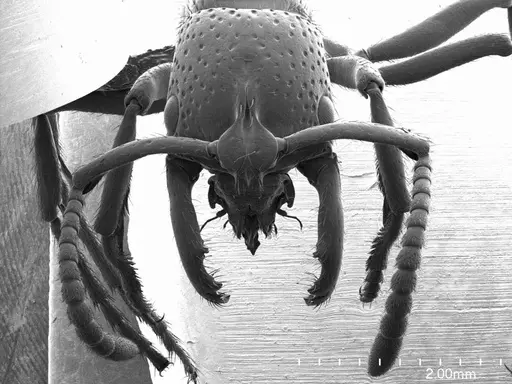
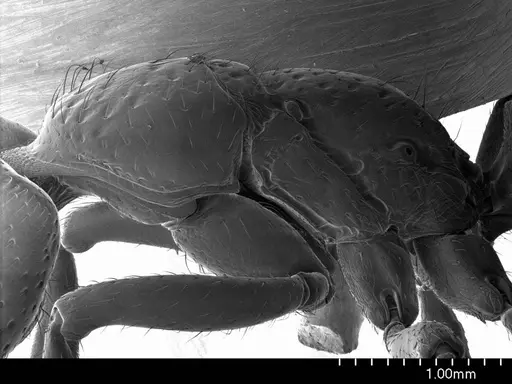
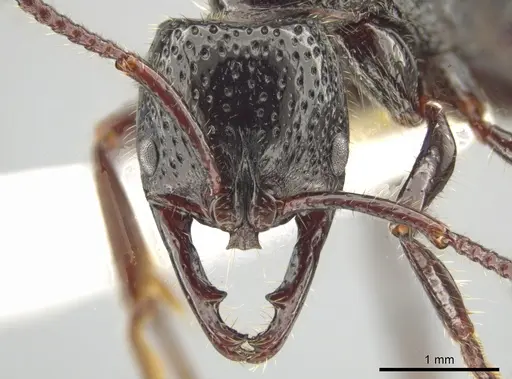
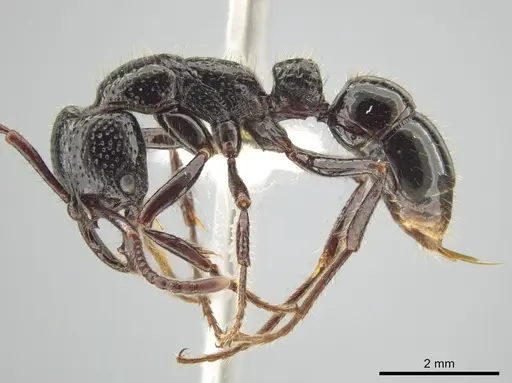
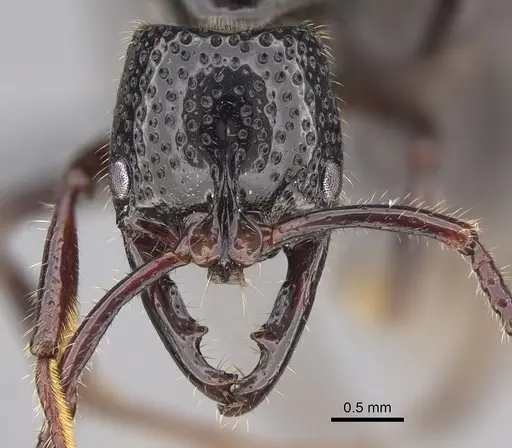
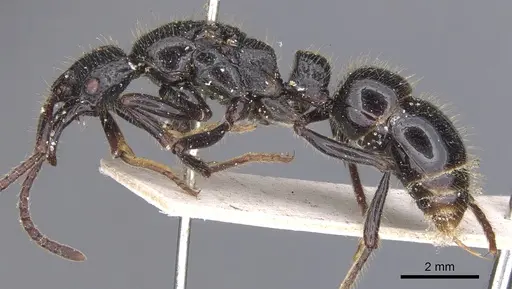
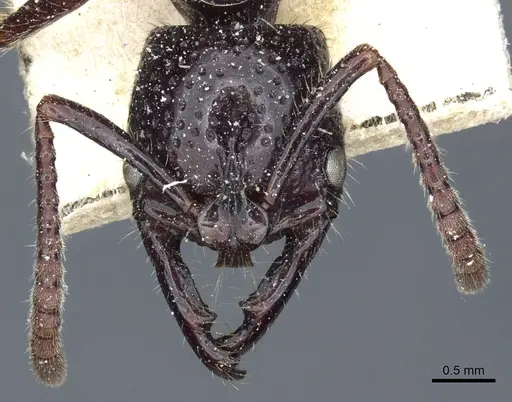
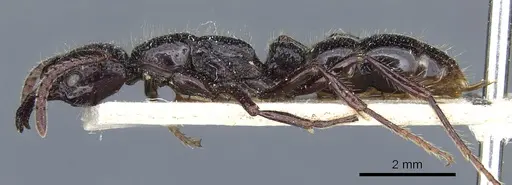
Myopias maligna is a large predatory ant species native to Southeast Asia, specifically found in Indonesia (Sulawesi, Bacan), Malaysia, and Borneo. Workers measure approximately 11-12mm in total length, making them relatively large for the ant world. They have a robust build with distinctive mandibles bearing 7-8 teeth, relatively large convex eyes, and a body coloration ranging from reddish brown to dark brown. The head, mesosoma, and petiole feature dense foveae (small pits) giving them a textured appearance [1].
This species belongs to the Ponerinae subfamily and is known for its specialized predation on millipedes, a relatively unique diet among ants. They possess an elaborate exocrine gland system that gives them a distinctive smell, and they exhibit trail-following behavior when foraging [2]. Colonies are monogynous, meaning they contain a single queen, and typically reach around 120 workers [3].
Quick Summary
- Difficulty: Medium
- Origin & Habitat: Tropical Southeast Asia, found in Indonesia (Sulawesi, Bacan), Malaysia, and Borneo. They nest in rotten wood on the forest floor in lowland primary evergreen forest [1][4].
- Colony Type: Monogyne, single queen colonies with up to 120 workers [3][2].
- Colony: Monogyne
- Size & Growth:
- Queen: Estimated 12-14mm based on related Myopias species and genus morphology
- Worker: 11.40-11.50 mm total length [1]
- Colony: Up to 120 workers [3]
- Growth: Moderate, estimated based on Ponerinae development patterns
- Development: Estimated 8-12 weeks at tropical temperatures based on typical Ponerinae development (Development time is inferred from related Ponerinae species, actual timing may vary)
- Antkeeping:
- Temperature: Keep at 24-28°C, they are a tropical species requiring warm, stable conditions. A heating cable on one side of the nest can create the necessary gradient.
- Humidity: High humidity preferred, aim for 70-80%. Keep the nest substrate consistently moist but not waterlogged, mimicking the damp forest floor where they naturally nest in rotting wood.
- Diapause: No, as a tropical species, they do not require hibernation. Maintain consistent temperatures year-round.
- Nesting: They naturally nest in rotting wood on the forest floor. In captivity, they do well in naturalistic setups with rotten wood pieces, or in Y-tong/plaster nests with high humidity. They need tight, dark chambers scaled to their moderate colony size.
- Behavior: These ants are specialized predators that hunt millipedes, they are not generalist feeders. They exhibit trail-following behavior when foraging, which is unusual among ants. They have a well-developed sting and can be defensive when threatened. Workers are moderately sized and can escape through standard barriers, but are not particularly agile climbers. Their elaborate exocrine system gives them a distinctive odor [2].
- Common Issues: Specialized diet means colonies often fail if not provided appropriate prey, they need millipedes or similar small arthropods, Small colony size (max ~120) means growth is slow and colonies remain modest, High humidity requirements can lead to mold issues if ventilation is poor, Tropical species will decline or die if temperatures drop below 22°C, Queens are monogyne, only one per colony, so combining unrelated queens is not recommended
Nest Preferences and Housing
Myopias maligna naturally nests in rotting wood on the forest floor, particularly in damp, shaded areas of lowland tropical forests. In captivity, they do best in naturalistic setups that mimic these conditions, you can use a terrarium-style setup with moist soil and pieces of rotting wood or cork bark for them to nest in. Alternatively, a Y-tong (acrylic) nest with narrow chambers and high humidity works well. The key is providing dark, tight spaces that feel secure to the ants. Because they come from humid tropical environments, the nest material should stay consistently moist but never waterlogged. Avoid dry setups or the colony will decline. [1][2]
Feeding and Diet
This species is a specialized millipede predator, which is unusual among ants. In captivity, you should prioritize offering small live prey that mimics their natural diet. Millipedes (cut into small pieces), small isopods, and other tiny arthropods are ideal. They may also accept other protein sources like small caterpillars, fruit flies, or tiny crickets, but the key is offering live, moving prey, these are active hunters, not scavengers. Sugar sources are not a significant part of their diet in the wild, so do not rely on honey or sugar water. Feed them prey items 2-3 times per week, removing any uneaten remains promptly to prevent mold. [2]
Temperature and Humidity
As a tropical species from Southeast Asia, Myopias maligna requires warm and humid conditions. Keep the nest area at 24-28°C, room temperature may be sufficient if your home stays in this range, otherwise use a heating cable on one side of the nest to create a gentle gradient. Place the heating on top of the nest, not underneath, to avoid evaporating moisture too quickly. Humidity should be high, around 70-80%. The substrate should feel damp to the touch. Mist the outworld occasionally, but focus on maintaining moisture in the nest itself. Good ventilation is important to prevent mold, but avoid excessive airflow that dries the nest out. These ants will not tolerate cool temperatures, anything below 22°C can stress or kill the colony. [1][4]
Behavior and Colony Dynamics
Myopias maligna is a monogyne species, colonies have a single queen and typically reach 100-120 workers at maturity. They exhibit trail-following behavior during foraging, which is relatively rare among ants and suggests they coordinate hunting activities. Workers are moderately aggressive when defending the nest and possess a functional sting. The colony has an elaborate exocrine gland system that produces a distinctive smell, this is normal and not a sign of illness. Unlike many ants, they are not particularly good climbers, so standard barrier methods are usually sufficient for escape prevention. The colony grows slowly due to the small maximum size, do not expect rapid expansion like you would with Lasius or Camponotus species. [3][2]
Growth and Development
Colony growth with Myopias maligna is moderate but limited. Maximum colony size reaches approximately 120 workers, which is relatively small compared to many common ant species. The queen is roughly similar in size to workers but has a larger thorax and wings (if alate). Development from egg to worker likely takes 8-12 weeks at optimal tropical temperatures, based on typical Ponerinae development patterns. The first workers (nanitics) will be smaller than subsequent workers. Because colonies stay modest in size, you should not expect rapid growth, patience is key. Do not overfeed, as excess prey can mold and cause health problems in small colonies. [3]
Seasonal Care
As a tropical species, Myopias maligna does not require hibernation or diapause. Maintain consistent warm temperatures and high humidity year-round. Seasonal changes in the wild are minimal in their native tropical habitat, so avoid exposing them to temperature drops or dry periods. If your room temperature fluctuates seasonally, you may need to use heating during cooler months. The colony may be slightly less active during cooler periods, but should remain healthy if conditions are maintained. Do not attempt to cool or dry the colony to simulate winter, this will likely kill them.
Frequently Asked Questions
How long does it take for Myopias maligna to produce first workers?
Based on typical Ponerinae development, expect 8-12 weeks from egg to first worker at optimal temperatures (24-28°C). This is an estimate since the specific development timeline has not been directly studied for this species.
What do Myopias maligna ants eat?
They are specialized millipede predators. In captivity, offer small live prey like millipedes (cut into pieces), tiny isopods, fruit flies, or small caterpillars. They are active hunters and prefer moving prey. Do not rely on sugar sources like honey, as this is not a significant part of their natural diet.
How big do Myopias maligna colonies get?
Colonies are relatively small, reaching a maximum of approximately 120 workers. This is modest compared to many common ant species, so expect a small, manageable colony rather than a massive one.
Can I keep multiple Myopias maligna queens together?
No, this is a monogyne species with single-queen colonies. Only one queen per colony has been documented. Combining unrelated queens is not recommended and would likely result in fighting.
What temperature do Myopias maligna ants need?
Keep them at 24-28°C. They are tropical ants and will not tolerate cool temperatures. Below 22°C can stress or kill the colony. Use a heating cable if your room temperature runs cooler.
Are Myopias maligna good for beginners?
They are rated as medium difficulty. They require specific conditions (high humidity, warm temperatures) and have a specialized diet (millipede predation), which makes them more challenging than common species like Lasius. They are best suited for keepers with some experience who can provide consistent tropical conditions.
Do Myopias maligna need hibernation?
No, they are a tropical species and do not require hibernation or diapause. Maintain warm, humid conditions year-round. Simulating winter conditions will likely kill the colony.
What type of nest is best for Myopias maligna?
They naturally nest in rotting wood on the forest floor. In captivity, use a naturalistic setup with moist soil and cork bark/rotten wood, or a Y-tong/plaster nest with high humidity. They need dark, tight chambers and consistently moist substrate.
Why does my Myopias maligna colony smell strange?
This is normal! The species has an elaborate exocrine gland system that produces a distinctive smell. This is not a sign of illness, it's just their natural chemistry. The smell is more noticeable when the colony is disturbed.
How often should I feed Myopias maligna?
Offer prey items 2-3 times per week. Remove any uneaten prey within 24 hours to prevent mold. Since they are specialized predators, focus on protein-rich prey rather than sugar sources. Adjust feeding frequency based on how quickly the colony consumes the prey.
References

This caresheet is licensed under CC BY-SA 4.0 .
ANTWEB1008550
View on AntWeb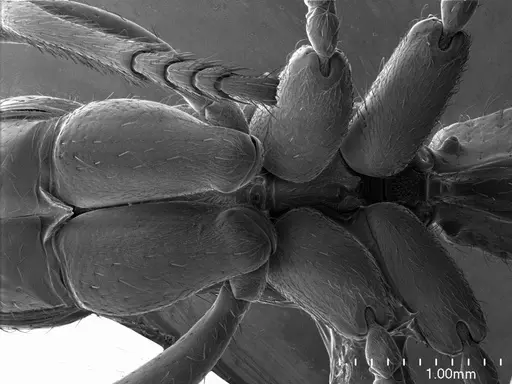
CASENT0634692
View on AntWeb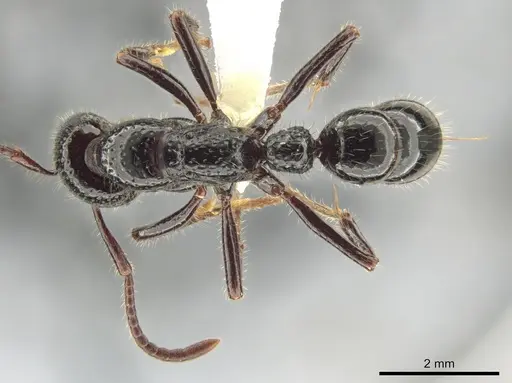
CASENT0722234
View on AntWeb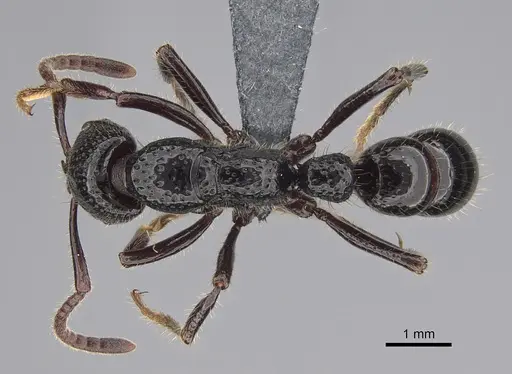
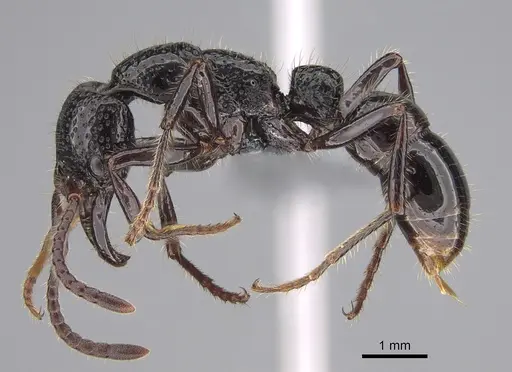
CASENT0902531
View on AntWeb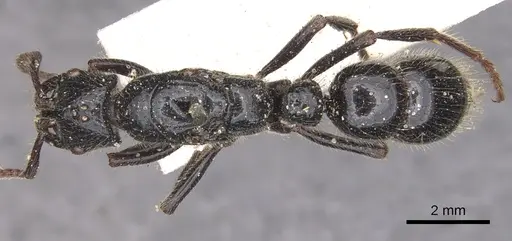
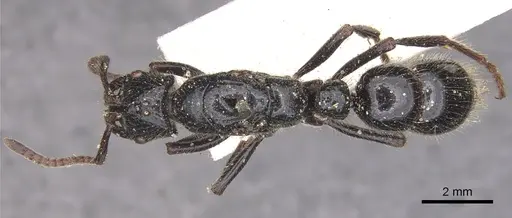
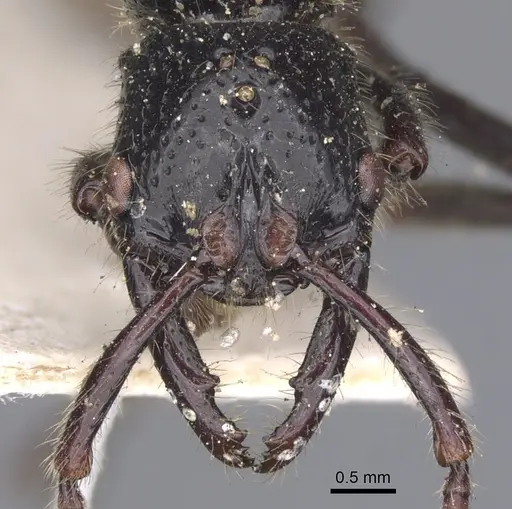
CASENT0903921
View on AntWeb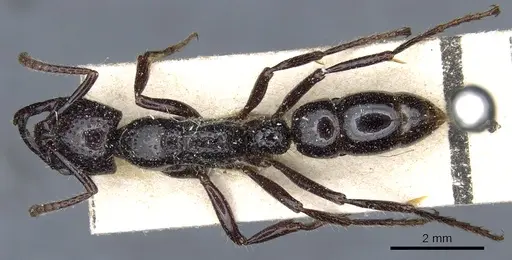
Literature
Loading...Loading products...