

Myopias julivora
- Scientific Name
- Myopias julivora
- Tribe
- Ponerini
- Subfamily
- Ponerinae
- Author
- Willey & Brown, 1983
- Distribution
- Found in 1 countries
Myopias julivora Overview
Myopias julivora is an ant species of the genus Myopias. It is primarily documented in 1 countries , including Papua New Guinea. Detailed taxonomic data and occurrence records can be further explored via authoritative databases such as AntWeb or the Global Biodiversity Information Facility (GBIF).
Myopias julivora
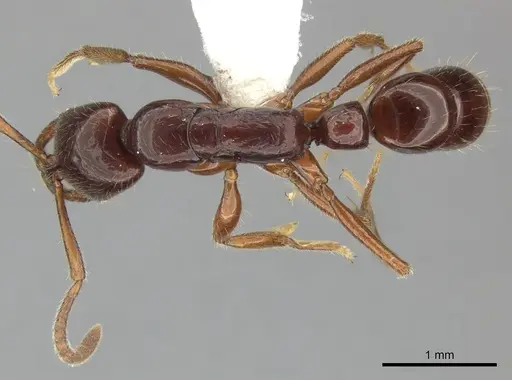
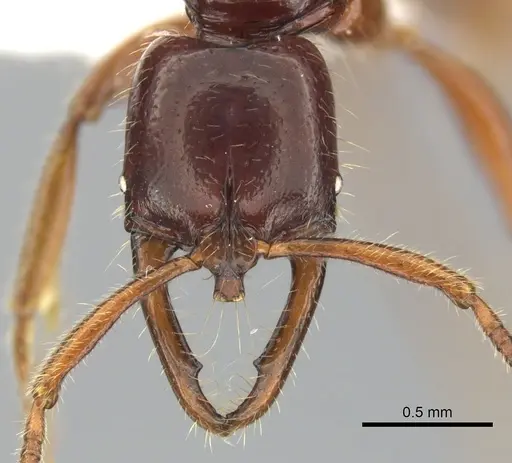
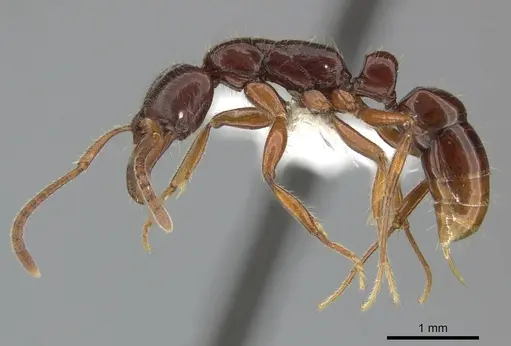
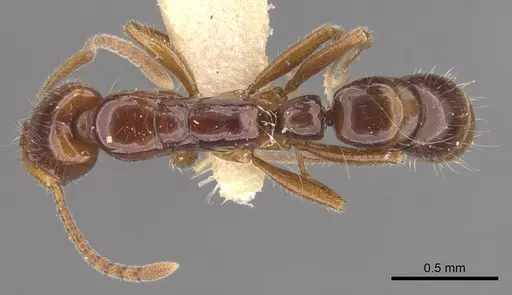
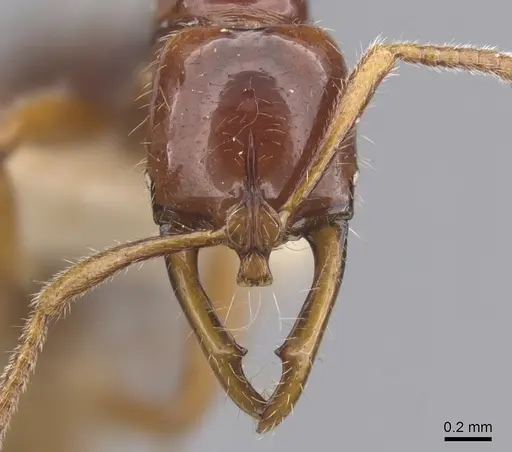
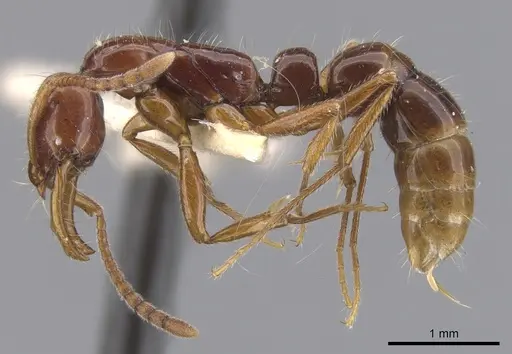
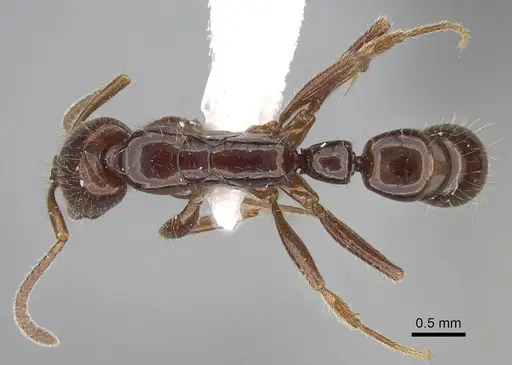
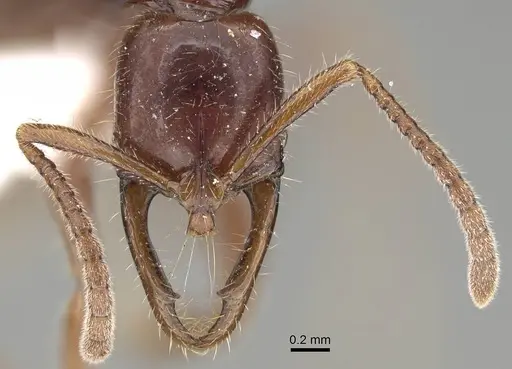
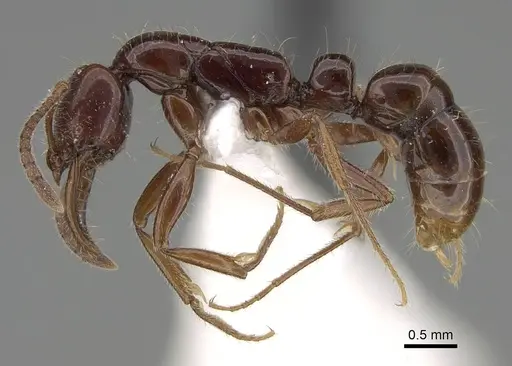
Myopias julivora is a medium-sized predatory ant species native to Papua New Guinea, where it inhabits lowland to montane rain forests. Workers measure 5.8-6.7mm with a distinctive appearance featuring reduced eyes that appear as single convex lenses, relatively long mandibles and antennae, and a long upcurved sting. The species name 'julivora' comes from Latin, meaning 'millipede-eater', this is a specialized predator that exclusively hunts and feeds on millipedes. Colonies are small, containing only 30-75 individuals with a single queen, and they nest in cavities within rotting wood such as small logs, old fungi, and fallen sticks in the forest floor.
Quick Summary
- Difficulty: Medium
- Origin & Habitat: Papua New Guinea, Australasian Region. Inhabits lowland to montane rain forest (40m to 1400m elevation), nesting in cavities within rotting wood such as small rotten logs, old polypore fungi, and fallen sticks [1].
- Colony Type: Single-queen colonies (monogyne) with 30-75 workers [1]. Small colony size makes them a modest commitment compared to larger species.
- Colony: Monogyne
- Size & Growth:
- Queen: 5.6-7.1mm [1]
- Worker: 5.8-6.7mm [1]
- Colony: 30-75 workers [1]
- Growth: Slow, small colony size and specialized diet suggest slower development
- Development: Unknown, no direct data available. Based on typical Ponerine patterns and small colony size, estimate 8-12 weeks at optimal temperature. (Development timeline is unconfirmed for this species. Ponerine ants typically have longer development times than more common kept species like Formicinae or Myrmicinae.)
- Antkeeping:
- Temperature: Keep warm, around 24-28°C. This matches their tropical rain forest origin in Papua New Guinea. A heating cable on one side of the nest can create a temperature gradient.
- Humidity: High humidity is essential, they come from damp rain forest environments. Keep the nest substrate consistently moist but not waterlogged. Provide a water source for drinking.
- Diapause: Unknown, tropical species from Papua New Guinea may not require a true diapause, but may slow down during cooler periods.
- Nesting: Naturalistic setup with rotting wood pieces or a Y-tong/plaster nest works well. They nest in cavities within damp rotting wood in the wild. Provide tight-fitting lids and excellent escape prevention, workers are medium-sized and capable of escaping through small gaps.
- Behavior: These ants are specialized predatory hunters with a strong focus on millipede prey. Workers are active foragers that hunt individually. They have a long, sharp sting which they use to subdue prey. Despite their small colony size, they are confident and will defend the nest. Escape risk is moderate, use standard formicarium barriers but they are not particularly escape-prone like tiny species. Their reduced eyes are a notable morphological feature, indicating they may rely less on vision and more on chemical/tactile cues.
- Common Issues: specialized diet, they only eat millipedes, making feeding challenging compared to ants that accept standard prey, small colony size means slower population growth and less buffer against losses, high humidity requirements can lead to mold issues if ventilation is poor, tropical species may not tolerate temperature drops, keep warm year-round, limited availability, this is not a common species in the antkeeping hobby
Housing and Nest Setup
Myopias julivora does well in a naturalistic setup that mimics their natural rotting wood habitat. A Y-tong (acrylic) or plaster nest with narrow chambers works well, or you can create a naturalistic setup with damp rotting wood pieces. The key is maintaining high humidity while providing good ventilation to prevent mold. Use a water test tube as a moisture source and hydration reservoir. Because they nest in cavities within wood in the wild, they prefer tight, enclosed spaces rather than open foraging areas. Keep the nest dark, these ants live deep inside rotten logs where light is minimal. [1]
Feeding and Diet - The Millipede Specialist
This is the most critical aspect of keeping Myopias julivora successfully. They are specialized millipede predators and in the wild, their diet consists almost exclusively of millipedes. In captivity, you will need to culture or source small millipedes regularly. Other small arthropods may be accepted experimentally, but do not rely on them as primary food. The original collection notes mention 'abundant remains of millipedes were found in the brood chamber' and 'one fresh millipede corpse was among larvae.' This specialized diet makes them a more challenging species to keep than generalist predators. Consider culturing small millipedes or isopods as a reliable food source. [1]
Temperature and Humidity
As a tropical species from Papua New Guinea, Myopias julivora requires warm conditions. Aim for temperatures in the range of 24-28°C. A heating cable placed on one side of the nest creates a gradient allowing the ants to self-regulate their temperature preference. High humidity is equally important, they come from damp rain forest environments. Keep the nest substrate consistently moist but not saturated with standing water. A water tube connected to the nest helps maintain humidity through evaporation. Poor humidity will stress the colony and likely lead to poor brood development or death. [1]
Colony Structure and Growth
Wild colonies contain only 30-75 workers with a single queen. This is a relatively small colony size compared to many commonly kept ant species. The small colony size, combined with their specialized predatory diet, means growth will be slower than species that readily accept varied prey. Do not expect rapid population explosions. The queen measures 5.6-7.1mm and workers are 5.8-6.7mm. Be patient with colony development, a mature colony may max out around 75 workers, so expectations should be calibrated accordingly. [1]
Behavior and Defense
Myopias julivora workers are active foragers that hunt individually, using their sting to subdue millipede prey. They have a notable morphological feature: highly reduced compound eyes that appear as single convex lenses, suggesting they rely more on chemical and tactile senses than vision for hunting and navigation. Workers will defend their nest aggressively using their sting. The sting is described as 'long, sharp, and upcurved' in the original description. While the pain level is not documented, Ponerine stings are typically potent. Handle with care and use appropriate escape prevention. [1]
Frequently Asked Questions
What do Myopias julivora ants eat?
They are specialized millipede predators. In captivity, you will need to provide small millipedes as their primary food source. Other small arthropods may be accepted experimentally, but the species appears to be an obligate millipede eater.
How long does it take for Myopias julivora to produce first workers?
The exact development timeline is unconfirmed for this species. Based on typical Ponerine ant development patterns and their small colony size, expect approximately 8-12 weeks from egg to first worker at optimal temperature (24-28°C).
How big do Myopias julivora colonies get?
Wild colonies contain 30-75 workers with a single queen. This is a small colony size compared to many common ant species. A captive colony will likely max out at similar numbers.
Are Myopias julivora good for beginners?
No, this species is not recommended for beginners. Their specialized millipede diet makes them challenging to feed, they require high humidity and warm temperatures, and they are not commonly available in the antkeeping hobby. They are best suited for experienced antkeepers interested in predatory species.
What temperature do Myopias julivora need?
Keep them warm at 24-28°C. This matches their tropical origin in Papua New Guinea. A heating cable on one side of the nest can create a temperature gradient.
Do Myopias julivora need hibernation?
Unknown, as a tropical species from Papua New Guinea, they likely do not require a true diapause. However, they may slow down during cooler periods. Maintain warm temperatures year-round.
Can I keep multiple Myopias julivora queens together?
No. This species is monogyne (single-queen) in the wild. Multiple queens would likely fight. Only one queen per colony is recommended.
What type of nest should I use for Myopias julivora?
A Y-tong (acrylic) or plaster nest with narrow chambers works well. They naturally nest in cavities within damp rotting wood, so provide tight, enclosed spaces. High humidity is essential, so ensure good moisture retention while maintaining ventilation to prevent mold.
References

This caresheet is licensed under CC BY-SA 4.0 .
Literature
Loading...Loading products...