

Mycocepurus tardus
- Scientific Name
- Mycocepurus tardus
- Tribe
- Attini
- Subfamily
- Myrmicinae
- Author
- Weber, 1940
- Distribution
- Found in 4 countries
Mycocepurus tardus Overview
Mycocepurus tardus is an ant species of the genus Mycocepurus. It is primarily documented in 4 countries , including Costa Rica, French Guiana, Nicaragua. Detailed taxonomic data and occurrence records can be further explored via authoritative databases such as AntWeb or the Global Biodiversity Information Facility (GBIF).
Mycocepurus tardus
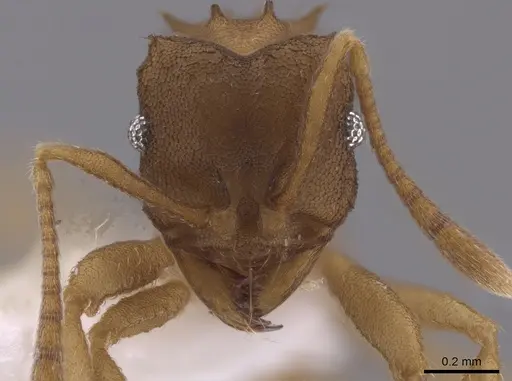
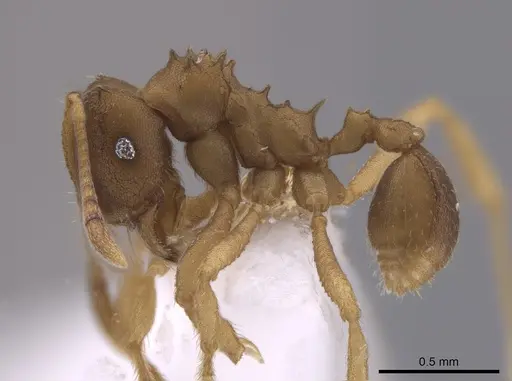
Mycocepurus tardus is a tiny fungus-farming ant belonging to the tribe Attini, native to Central and South America. Workers are minute ants measuring approximately 2-3mm, recognizable by their distinctive spines, they have a pair of promesonotal spines located in the middle of the circlet teeth on the promesonotum, well-developed anterior pronotal spines, and straight propodeal spines directed somewhat vertically [1]. This species inhabits lowland rainforests from Nicaragua through Costa Rica and Panama to French Guiana and Peru [1][2][3]. As a basal attine, M. tardus cultivates a lepiotaceous G3 fungus for food, the ants feed their larvae exclusively on this fungus, while adults consume a mix of fungus and other nutrients [4]. This is one of the more obscure fungus-farming ants, with much of its biology still undocumented.
Quick Summary
- Difficulty: Expert
- Origin & Habitat: Lowland rainforests of Central America (Nicaragua, Costa Rica, Panama) and northern South America (French Guiana, Peru) [1][2]
- Colony Type: Haplometrotic, colonies are founded by a single queen (100% of observed nests had one foundress). The colony structure appears to be single-queen based on founding observations [5].
- Colony: Monogyne
- Founding: Semi-claustral
- Size & Growth:
- Queen: Unknown, queen has not been described in scientific literature [1]
- Worker: Approximately 2-3mm (workers are tiny) [1]
- Colony: Unknown, no colony size data available
- Growth: Unknown
- Development: Unknown, no development data available for this species (No direct measurements exist. As a basal attine, development likely follows patterns typical for the genus Mycocepurus, but specific timelines are unconfirmed.)
- Antkeeping:
- Temperature: Keep at 24-28°C, typical for tropical lowland rainforest species. Use a heating gradient to allow thermoregulation.
- Humidity: High humidity required, these ants live in rainforest leaf litter. Keep nest substrate consistently moist but not waterlogged. Provide humidity around 70-80%.
- Diapause: No, as a tropical species from lowland rainforests, they do not require hibernation. Maintain warm conditions year-round.
- Nesting: Natural nesting: foundresses dig chambers 5-12cm deep in forest floor soil, with small soil mound entrance (~2mm diameter). They use detached forewings as platforms for their fungus garden [5]. Captive care: requires deep soil setup (at least 10-12cm) or a naturalistic terrarium. Test tubes are too shallow, they need space to dig proper chambers. Y-tong or plaster nests with deep soil chambers can work.
- Behavior: Workers are tiny and ground-dwelling, typically foragers on the forest floor. They cultivate fungus gardens and are not aggressive defenders, their main defense is the small colony size and cryptic lifestyle. Escape risk is moderate due to their tiny size, fine mesh barriers are recommended. As fungus farmers, they require live fungal culture maintenance, this is the critical challenge for keeping this species.
- Common Issues: Fungus garden maintenance is extremely difficult, the cultivar may die without proper conditions, starving the colony, No queen description means finding a dealate queen for colony founding is nearly impossible, Tiny size makes escape prevention challenging, they can squeeze through standard barriers, No known development timeline makes it hard to assess colony health, Wild-caught colonies may not establish without their specific fungal cultivar, Ground-nesting requirement means standard test tube setups are inadequate
Fungus Farming - The Critical Challenge
Mycocepurus tardus belongs to the fungus-farming ant tribe Attini, meaning the entire colony depends on maintaining a living fungal garden for survival. Unlike typical ants that eat protein and sugar, these ants feed their larvae exclusively on cultivated fungus, while adult workers consume a mix of fungus and other nutrients [4]. This makes them fundamentally different from most ant species in captivity, you cannot keep them like regular ants. The fungal cultivar must be maintained alive and healthy. In the wild, foundresses carry a fungal pellet from their parent nest when they establish a new colony [4]. This means captive colonies need either a live transfer from an established colony or extremely specialized conditions to re-establish the fungus. Lateral transfers of cultivar clones have been documented between M. tardus and the closely related M. smithii in Panama, showing these ants can share fungal strains [4]. The species cultivates a lepiotaceous G3-fungus [7].
Nest Preferences and Setup
In the wild, M. tardus nests in the forest floor soil at depths of 5-12cm. Foundresses dig small chambers approximately 118mm deep with a volume around 1.4cm³. The nest entrance is tiny, only about 2mm in diameter with tunnels of 1.3mm width. A small mound of soil typically marks the entrance, and nests are located on the flat forest floor rather than slopes near creeks [5]. For captive keeping, you cannot use standard test tube setups, these ants need depth. A naturalistic terrarium with at least 10-12cm of moist soil is essential. The soil should be consistently moist but never waterlogged. The nest should have a small entrance that matches their tiny size. Some keepers use deep acrylic nests or Y-tong style formicaria with soil chambers. The critical requirement is maintaining the fungal garden, the garden is typically suspended from a root or placed on a detached forewing platform in natural nests [5].
Feeding and Nutrition
As obligate fungus farmers, M. tardus cannot survive without their fungal cultivar. The ants do not typically forage for external food in the same way as predatory ants. Instead, they maintain their fungus garden and feed on the fungal hyphae. In captivity, this means the primary focus must be on fungal health, not offering insects or sugar water. The fungus needs a substrate to grow on, typically leaf litter or organic material that the ants can process. Adult workers consume fungal material along with some other nutrients, while larvae are fed exclusively on fungus [4]. This is fundamentally different from keeping species like Camponotus or Lasius. If the fungus dies, the colony will starve regardless of what other food you provide. Some research suggests the fungal cultivar can be maintained on sterile media in laboratory conditions, with basidiocarps developing from pure cultivar isolates [4].
Temperature and Humidity Requirements
As a lowland rainforest species from Central America, M. tardus requires warm, humid conditions year-round. They inhabit tropical rainforests in Panama, Costa Rica, Nicaragua, and have been recorded in French Guiana and Peru [1][2]. The natural habitat is the warm, humid forest floor with stable temperatures in the mid-20s to low-30s Celsius. There is no diapause requirement, these ants do not experience cold winters in their native range. Maintain temperatures between 24-28°C for optimal colony function. Humidity should be high, around 70-80% relative humidity, with consistently moist (but not flooded) soil. The forest floor environment where they nest is shaded and retains moisture. Avoid temperature drops or dry conditions. A small heating cable on one side of the nest can create a thermal gradient, but ensure humidity is maintained, heating can dry out the nest quickly.
Colony Founding Behavior
M. tardus exhibits haplometrotic founding, every observed wild nest had exactly one foundress, meaning single-queen colony foundation is the norm [5]. The founding type is semiclaustral, which means the queen does not seal herself away completely. Instead, she forages near the nest entrance during the founding period to gather substrate for the fungus garden [6][5]. This is different from claustral species like Camponotus or Lasius, where the queen seals in and lives off stored fat. For M. tardus, the queen must actively maintain the fungal garden from the beginning. She uses detached forewings as a platform for the garden in most observed nests (10 out of 11 nests), though in one case the garden was suspended from a root with no forewing present [5]. This foraging requirement during founding makes the founding phase particularly challenging in captivity, the queen needs access to appropriate fungal substrate.
Distribution and Habitat
M. tardus has a broad but fragmented Neotropical distribution. The species is confirmed in Nicaragua (Zelaya: Bluefields), Costa Rica (Puntarenas: Cerro Helado), Panama (including Barro Colorado Island), and extends south to French Guiana and Peru [1][2][3]. All records come from lowland rainforests, this is not a highland or dry habitat species. The original description was from Panama, with the type specimen collected from Barro Colorado Island in 1938 by N.A. Weber [8]. The species is considered part of the lower agriculture system among fungus-farming ants, cultivating a specific lepiotaceous fungus (G3) [9]. It is a basal attine genus, meaning it represents an evolutionary early branch of the fungus-farming ants [7]. The ant is ground-dwelling, collected from leaf litter in plateau forests in French Guiana [10][11].
Frequently Asked Questions
Can I keep Mycocepurus tardus in a test tube?
No, test tubes are completely inadequate. These ants nest 5-12cm deep in soil in the wild, with tiny entrance tunnels of only 1.3mm. You need a naturalistic setup with deep soil (at least 10-12cm) or a specialized deep acrylic/plaster nest. The critical issue is not space for the ants but space for the fungus garden chamber.
What do Mycocepurus tardus eat?
They do not eat conventional ant food. As fungus-farming ants, they cultivate and eat a specific lepiotaceous G3 fungus. The larvae are fed exclusively on fungus, while adults consume fungus plus other nutrients. You cannot keep them without maintaining a live fungal culture, this is the fundamental challenge of keeping this species.
How long until first workers in Mycocepurus tardus?
Unknown, no development timeline has been documented for this species. As a semiclaustral founder, the queen must maintain the fungus during founding, which likely extends the time to first workers compared to claustral species. There is no scientific data to provide estimates.
Are Mycocepurus tardus good for beginners?
No, this is an expert-level species. The fundamental challenge is maintaining a living fungal cultivar, which is extremely difficult in captivity. Unlike regular ants that you can feed protein and sugar, these require fungal garden maintenance. Additionally, the queen has never been described, making colony founding nearly impossible from wild catches.
Do Mycocepurus tardus need hibernation?
No, as a tropical lowland rainforest species from Central America, they do not require hibernation or any cold period. Keep them warm year-round at 24-28°C with high humidity.
Can I keep multiple queens together?
No, M. tardus is haplometrotic, meaning colonies are founded by a single queen. All observed wild nests had exactly one foundress. There is no evidence that multiple queens can found colonies together, and doing so would likely result in fighting.
Why are my Mycocepurus tardus dying?
The most likely cause is fungal cultivar death. Without their specific fungus, the colony will starve regardless of other conditions. Other possibilities include: wrong humidity (too dry kills the fungus), wrong temperature (too cold slows fungal growth), or improper substrate (the fungus needs appropriate organic material). This species is extremely difficult to maintain in captivity.
References

This caresheet is licensed under CC BY-SA 4.0 .
CASENT0653672
View on AntWeb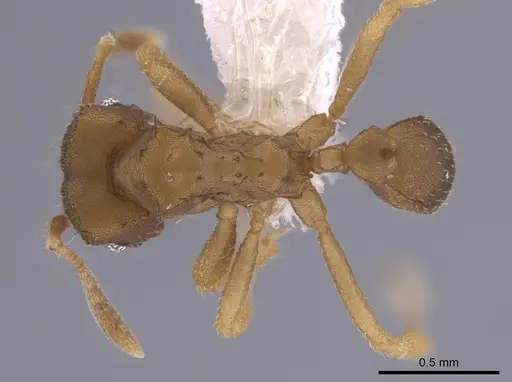
Literature
Loading...Loading products...