

Mycetophylax lectus
- Scientific Name
- Mycetophylax lectus
- Tribe
- Attini
- Subfamily
- Myrmicinae
- Author
- Forel, 1911
- Distribution
- Found in 1 countries
Mycetophylax lectus Overview
Mycetophylax lectus is an ant species of the genus Mycetophylax. It is primarily documented in 1 countries , including Brazil. Detailed taxonomic data and occurrence records can be further explored via authoritative databases such as AntWeb or the Global Biodiversity Information Facility (GBIF).
Mycetophylax lectus
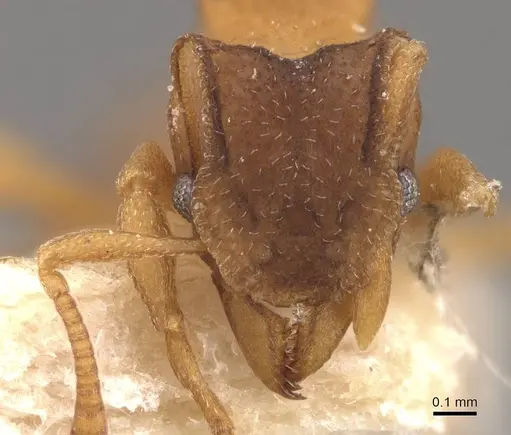
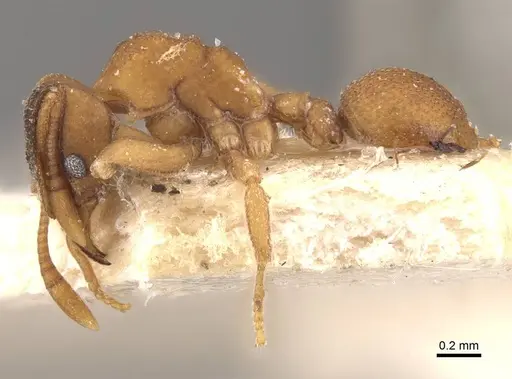
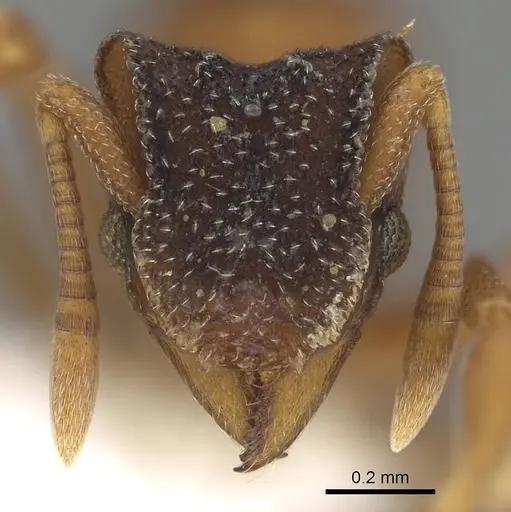
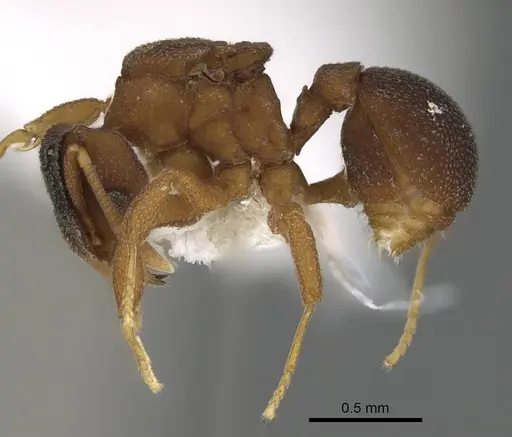
Mycetophylax lectus is a small fungus-growing ant belonging to the tribe Attini, native to southern South America. Workers measure just 2.7-2.8mm and have a yellowish-brown coloration with a reddish front to the head. They feature distinctive broad frontal carinae and a large inferior pronotal spine, making them recognizable under magnification. This species nests in soil in open areas, creating simple circular nest entrances and underground chambers where they cultivate their fungal gardens [1]. Unlike many attine ants that use leaf material, M. lectus collects diverse substrates including insect feces, grass seeds, bark fragments, and insect exoskeletons to feed their fungus [1]. Colonies are relatively small, typically containing around 40-170 workers with a single queen [1].
Quick Summary
- Difficulty: Medium
- Origin & Habitat: Native to southern South America, found in Brazil (São Paulo, Santa Catarina, Mato Grosso do Sul, Paraná), Paraguay, and Argentina (Santa Fe Province). Inhabits transitional areas between Atlantic forest and cerrado (Brazilian savanna), often in disturbed areas with open fields [1][2][3][4][5].
- Colony Type: Monogyne, colonies have a single dealated queen. Small colonies with 41-170 workers (mean ~74) [1].
- Colony: Monogyne
- Size & Growth:
- Queen: Not specifically measured in available literature, estimated based on worker size and genus patterns
- Worker: 2.7-2.8 mm total length
- Colony: Up to 170 workers (mean 73.75 ± 46.61) [1]
- Growth: Moderate, four larval instars with mean growth rate 1.22 [1]
- Development: Estimated 6-10 weeks based on related Attini species and larval development data [1] (Four larval instars documented with distinct head capsule sizes. Development is temperature-dependent, no brood development occurs below 22°C or above 30°C [1].)
- Antkeeping:
- Temperature: Keep nest area at 24-27°C, this is the optimal range for foraging and brood development. Activity ceases below 22°C or above 30°C, with peak foraging at 27°C [1]. A gentle gradient allowing workers to self-regulate is ideal.
- Humidity: Maintain moderate to high humidity in the nest chamber where the fungus garden is located. The fungus requires consistent moisture to survive. Keep substrate damp but not waterlogged.
- Diapause: Unconfirmed, this species is from subtropical/tropical regions where temperatures remain moderate year-round. No documented hibernation requirement [1].
- Nesting: Soil-nesting species that creates underground chambers. In captivity, a naturalistic setup with soil substrate or a plaster/acrylic nest with a soil chamber works well. The fungus garden needs a dedicated chamber space. Keep the nest dark as they prefer dim conditions [1].
- Behavior: These ants are relatively docile and not aggressive. They are diurnal foragers with two daily activity peaks: morning (8:00-11:00) and afternoon (14:00-18:00), with a midday rest period [1]. Workers forage short distances (average ~40cm) and are successful over 50% of the time returning with loads [1]. They are not known to sting and pose no danger to keepers. Escape risk is low given their small but not tiny size, standard formicarium barriers should contain them.
- Common Issues: Fungus garden collapse, the cultivated fungus is essential for colony survival, if it dies, the colony will not survive. Never let the fungus dry out or become contaminated., Temperature stress, activity and brood development stop below 22°C or above 30°C. Keep within the 24-27°C range for optimal colony function [1]., Small colony size, colonies remain relatively small (under 200 workers). This is normal for the species, not a sign of poor care., Improper substrates, they need specific organic materials (insect feces, seeds, plant matter) to cultivate fungus. Standard ant foods alone will not sustain them., Midday inactivity is normal, they rest during midday hours (12:00-13:00). This is not a sign of illness [1].
Fungus Farming - The Essential Diet
Mycetophylax lectus is a fungus-growing ant in the tribe Attini, meaning they cultivate a specialized fungal garden for food, similar to how humans farm mushrooms. This is the most critical aspect of their care: the fungus is NOT optional, it is their sole food source. In the wild, workers collect various organic substrates including insect feces, grass seeds, bark fragments, and dead insect remains. They process these materials and use them as compost to grow their fungus [1]. In captivity, you must provide appropriate substrate materials. Offer small amounts of finely crushed dry leaves, grass clippings, seed husks, or small pieces of dead insects. The workers will process these and apply fecal liquids to cultivate the fungus tuft. Never feed them directly, they cannot eat conventional ant foods. Their fungus garden appears as a grayish spongy mass in the nest chamber [1]. If the fungus dies, the colony will starve.
Temperature Requirements
Temperature control is crucial for this species. Research shows complete foraging inactivity below 22°C and above 30°C, with peak activity at 27°C [1]. This means your heating setup must maintain the nest between roughly 24-27°C for normal colony function. A heating cable or mat on one side of the nest creates a gradient allowing workers to self-regulate. Place the heat source on top of the nest (never underneath in a way that could dry the fungus). Room temperature may be too cold in winter, consider using a small thermostat-controlled heater. Monitor with a thermometer placed near the nest chamber. Brood development is also temperature-dependent, so consistent warmth is needed for the colony to grow [1].
Foraging Behavior and Feeding Schedule
These ants have a predictable daily activity pattern with two foraging peaks: morning between 8:00-11:00 and afternoon from 14:00-18:00. They rest during midday hours (12:00-13:00), which is completely normal behavior [1]. Workers forage relatively short distances, averaging about 40cm from the nest, though they can travel up to 120cm [1]. Over half of returning workers carry loads, showing high foraging efficiency. To feed your colony, place small amounts of appropriate organic material (finely crushed leaves, seed husks, tiny insect pieces) in the outworld. The workers will collect and process it. Do not offer large prey items or conventional ant bait, they cannot consume these directly. Remove any uneaten organic material after a few days to prevent mold.
Nest Setup and Housing
In the wild, M. lectus nests in soil with a simple circular entrance hole about 0.2cm in diameter. The nest consists of galleries averaging 11cm in length with chambers roughly 3.5-3.75cm across [1]. For captivity, a naturalistic setup with a soil-filled container works well, or you can use a plaster/acrylic formicarium with a dedicated soil chamber for the fungus garden. The nest should be kept dark, these ants prefer dim conditions and will be more active with minimal light exposure. Provide an outworld connected to the nest where foragers can collect substrate materials. A water reservoir connected to the nest helps maintain humidity for the fungus. Use standard escape prevention (Fluon on glass edges), while not tiny, they can still climb smooth surfaces.
Colony Structure and Development
M. lectus forms small monogyne colonies with a single dealated queen (one that has shed her wings after mating). Colonies average around 74 workers but can range from 41-170 individuals [1]. This is relatively small compared to many ant species and is normal for the species, do not expect massive colonies. The queen has a primarily reproductive function, while workers handle all other tasks including foraging, substrate preparation, and fungus care [1]. Larvae go through four instars (growth stages) with a mean growth rate of 1.22. The colony grows moderately, patience is needed as they will not rapidly expand like some faster-growing species. Each worker lives several months, and the queen can live for many years with proper care.
Frequently Asked Questions
What do Mycetophylax lectus ants eat?
They eat ONLY the fungus they cultivate, they cannot eat conventional ant foods. You must provide organic substrates (crushed leaves, seed husks, tiny insect pieces, grass) for them to grow their fungus. Without the fungus, the colony starves [1].
Can I keep Mycetophylax lectus in a test tube?
Not recommended for established colonies. They need space for their fungus garden and multiple chambers. A small test tube setup may work for a single queen during founding, but transfer to a naturalistic or plaster nest once workers arrive.
How long does it take for the first workers to emerge?
Estimated 6-10 weeks from egg to first worker at optimal temperature (24-27°C). Development is temperature-dependent, cooler conditions will slow growth significantly [1].
Are Mycetophylax lectus good for beginners?
Medium difficulty, not ideal for complete beginners due to the specialized fungus-farming requirement. You must understand how to maintain a fungal culture. Experienced antkeepers interested in attine ants will find them rewarding.
How big do colonies get?
Small, typically 40-170 workers (average ~74). This is normal for the species. Do not expect massive colonies like some Formica or Camponotus species [1].
Do they need hibernation?
Unconfirmed. They come from subtropical regions of Brazil and Argentina where winters are mild. No documented diapause requirement exists. Keep them at normal temperatures year-round [1].
Why are my ants inactive during midday?
This is completely normal behavior. M. lectus has two daily foraging peaks (morning 8-11 and afternoon 14-18) with a rest period midday (12:00-13:00) [1]. They are not sick, this is their natural rhythm.
What temperature should I keep them at?
Keep the nest at 24-27°C. Activity and brood development stop below 22°C or above 30°C, with peak foraging at 27°C [1]. Use a heating cable or mat to maintain warmth.
Can I keep multiple queens together?
No. This species is monogyne, colonies have a single queen. Combining unrelated queens will likely result in fighting.
Why is my fungus garden dying?
The fungus requires consistent moisture and proper organic substrates. It cannot dry out or become moldy. Check humidity levels, ensure you're providing appropriate substrate materials, and keep the nest dark. If the fungus dies, the colony will not survive.
When should I move them to a formicarium?
Move from a founding setup to a larger nest once the colony reaches 20-30 workers and you see an established fungus garden. They need dedicated chamber space for the fungus.
References

This caresheet is licensed under CC BY-SA 4.0 .
CASENT0909376
View on AntWeb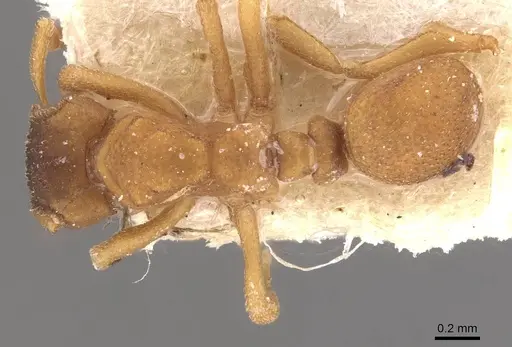
CASENT0922144
View on AntWeb
Literature
Loading...Loading products...