

Mycetomoellerius mikromelanos
- Scientific Name
- Mycetomoellerius mikromelanos
- Tribe
- Attini
- Subfamily
- Myrmicinae
- Author
- Cardenas <i>et al.</i>, 2021
- Distribution
- Found in 1 countries
Mycetomoellerius mikromelanos Overview
Mycetomoellerius mikromelanos is an ant species of the genus Mycetomoellerius. It is primarily documented in 1 countries , including Panama. Detailed taxonomic data and occurrence records can be further explored via authoritative databases such as AntWeb or the Global Biodiversity Information Facility (GBIF).
Mycetomoellerius mikromelanos
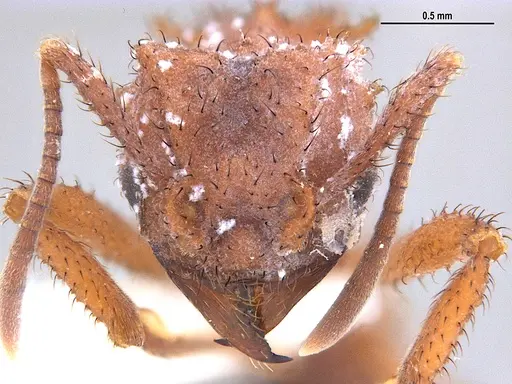
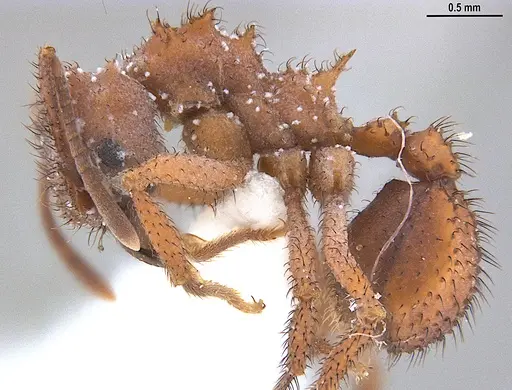
Mycetomoellerius mikromelanos is a small fungus-growing ant native to Panama, where it's the most common 'funnel ant' found in the Pipeline Road area near Gamboa. Workers measure around 4.4mm and have a distinctive dark reddish-brown coloration with granulose sculpturing across their body. The most recognizable field character is their nest entrance, a funnel-shaped opening (called an auricle) with flared margins that the colony rebuilds within seven days if damaged. Queens are smaller and darker than the similar species M. zeteki, reaching about 5.7mm. This species is genetically distinct from M. zeteki with 100% bootstrap support and shows weak population differentiation across its range in Panama.
Quick Summary
- Difficulty: Hard
- Origin & Habitat: Panama (Colón, Darién, and Panama Province), nests in vertical clay embankments along creek margins at high densities, often tucked under roots or overhangs [1][2]
- Colony Type: Monogyne (single-queen colonies). Genetic analysis confirms monandrous reproduction, the queen mates only once. Colonies have up to five vertically arranged chambers connected by single vertical tunnels [2][1]
- Colony: Monogyne
- Founding: Semi-claustral
- Size & Growth:
- Queen: 5.4-5.8mm (TL mean 5.659mm) [1]
- Worker: 3.8-4.9mm (TL mean 4.402mm) [1]
- Colony: Unknown maximum, but colonies have up to five vertically arranged chambers [1]
- Growth: Moderate, estimated based on related fungus-growing ants
- Development: Estimated 6-10 weeks at optimal temperature based on related Attini species (Males tend to emerge before females in captive colonies (approximately 10 days earlier) [1])
- Antkeeping:
- Temperature: Keep warm at 24-28°C. As a Panamanian tropical species, they need consistently warm conditions. A heating cable on one side of the nest creates an appropriate gradient [3]
- Humidity: High humidity required, aim for 70-80%. These ants nest in clay embankments along creeks, so they prefer damp substrate conditions. Keep the nest substrate consistently moist but not waterlogged [1]
- Diapause: No, being a tropical species, they do not require hibernation. Maintain warm conditions year-round [3]
- Nesting: Vertical clay or soil setups work best. They naturally nest in vertical embankments with multiple chambers. A naturalistic setup with vertical space or a well-designed formicarium with narrow chambers mimics their natural conditions. They rebuild their distinctive funnel-shaped entrances (auricles) when damaged, this behavior is biologically important to them [1]
- Behavior: Workers are moderately active and differ in tempo from the similar species M. zeteki. They form infrabuccal pellet piles (filtering and collecting debris). As fungus-growers, they cultivate fungal gardens for nutrition. They are not aggressive toward keepers but small size (~4mm) means escape prevention should be considered. Queens are semi-claustral, they must leave the nest to forage during founding, unlike fully claustral species that seal themselves in [1][2]
- Common Issues: semi-claustral founding is challenging, queens must leave to hunt for food during colony establishment, making founding more difficult than claustral species, fungus-growing requirements, they need fungal substrate or fungal culture to survive, unlike most ant species, high humidity needs, dry conditions will cause colony decline, parasite risk, wild colonies can have Megalomyrmex adamsae social parasites (1-6% rate) and various parasitoid wasps, small size means escapes are possible without proper barriers
Nest Preferences and Setup
Mycetomoellerius mikromelanos naturally nests in vertical clay embankments along creek margins. Their most distinctive feature is the funnel-shaped nest entrance called an auricle, with flared margins that help distinguish their nests. Colonies often tuck themselves under roots or overhangs and occur at remarkably high densities, sometimes as close as 5cm apart along creeks. Each colony builds up to five vertically arranged chambers connected by single vertical tunnels. In captivity, a naturalistic setup with vertical space works best. You can use a formicarium with multiple chambers or a vertical soil setup. The key is providing damp clay or soil material they can manipulate. They will rebuild their funnel entrances if given the opportunity, researchers removed auricles from 16 nests and 15 were rebuilt to roughly the same size within seven days, showing this behavior is biologically important to them [1].
Feeding and Diet - Fungus Growing
As a member of the tribe Attini (fungus-growing ants), Mycetomoellerius mikromelanos cultivates fungal gardens for nutrition rather than eating food directly. This is fundamentally different from keeping most ant species. In the wild, workers forage for plant material to feed their fungus. In captivity, you would need to provide appropriate fungal substrate or maintain a fungal culture. This makes them significantly more challenging to keep than typical ants that accept protein foods and sugar directly. Related Attini species typically require fresh plant material (leaves, flowers, or fragments) to feed their fungal gardens. The fungal symbiont is essential, the ants cannot survive without it. If you're experienced with fungus-growing ants, you may be able to maintain a culture. For most antkeepers, this species presents significant challenges due to its specialized nutritional requirements [1][3].
Colony Founding - Semi-Claustral Challenge
This is a semi-claustral species, which creates significant challenges for colony establishment. Queens establish nests from the start of the rainy season (May) through July in Panama. Unlike claustral queens that seal themselves in and survive on stored fat reserves, semi-claustral queens must leave the nest periodically to forage for food during the founding stage. Genetic data confirms non-claustral founding, queen morphology and dispersal patterns (0.1-1km distances) indicate they must leave to find food. This means you'll need to provide food directly to founding queens, and the founding process is more likely to fail than with claustral species. Plan for higher losses during colony establishment and be prepared to provide appropriate nutrition throughout the founding period [1][2].
Temperature and Seasonal Care
Being native to Panama (tropical Central America), these ants require warm conditions year-round. There is no hibernation or diapause requirement, maintain consistent temperatures between 24-28°C. Panama maintains relatively stable warm temperatures throughout the year, so avoid temperature drops. Use a heating cable on one side of the nest if your room temperature falls below this range. Place the heating element on top of the nest to avoid evaporating moisture too quickly. Monitor both temperature and humidity together, warm conditions with low humidity can be as dangerous as cold conditions. Since they naturally occur along creeks in high-density clusters, they prefer stable, humid, warm microhabitats [1][3].
Symbionts and Parasites
Mycetomoellerius mikromelanos has several known symbionts and parasites that affect wild colonies. The most significant is Megalomyrmex adamsae, an obligate social parasite that forages on host garden and brood and never leaves the nest, this parasite occurs in 1-6% of wild colonies. The fungal parasite Escovopsis also attacks their fungal gardens. Additionally, six Diapriinae morphospecies of parasitoid wasps exploit this species, including Acanthopria and Mimopriella which parasitize larvae. Male Acanthopria tend to emerge before females in captive colonies (about 10 days earlier), while Mimopriella can take up to six months to complete development. If you acquire a wild-caught colony, watch for signs of parasitism, a colony that suddenly declines or shows unusual behavior may have these parasites [1].
Frequently Asked Questions
Can I keep Mycetomoellerius mikromelanos in a test tube?
A test tube is not ideal for this species. They naturally nest in vertical clay embankments with multiple chambers. A naturalistic setup with vertical space or a formicarium with multiple connected chambers works better. They need room to build their characteristic funnel-shaped nest entrances and multiple chambers for their colony structure [1].
How long until first workers in Mycetomoellerius mikromelanos?
Exact development time is unconfirmed for this species, but based on related fungus-growing ants, expect 6-10 weeks from egg to first worker at optimal temperature (24-28°C). Males tend to emerge before females in captive colonies, approximately 10 days earlier [1].
Are Mycetomoellerius mikromelanos good for beginners?
No, this is a difficult species not suitable for beginners. They are semi-claustral (queens must forage during founding), require fungus-growing nutrition (significantly more complex than typical ant diet), need high humidity, and are a tropical species requiring warm conditions year-round. Most antkeepers should gain experience with easier species first [1][3].
Can I keep multiple queens together?
No, this is a monogyne (single-queen) species confirmed by genetic analysis. Queens are territorial and each colony has only one reproductive queen. Do not attempt to keep multiple unrelated queens together, they will fight [2].
What do Mycetomoellerius mikromelanos eat?
They are fungus-growers, they cultivate fungal gardens for nutrition, unlike typical ants that eat protein and sugar directly. You would need to provide appropriate fungal substrate or maintain a fungal culture. This makes them significantly more challenging than most ant species. Related Attini species collect plant material to feed their fungus [1][3].
Do Mycetomoellerius mikromelanos need hibernation?
No, as a tropical Panamanian species, they do not require hibernation or winter cooling. Maintain warm conditions year-round (24-28°C). They are active throughout the year in their native habitat [1][3].
Why is my Mycetomoellerius mikromelanos colony dying?
Common causes include: dry conditions (they need high humidity 70-80%), cold temperatures (below 24°C), improper nutrition (they need fungal substrate, not typical ant food), or parasites (wild colonies may have Megalomyrmex social parasites or parasitoid wasps). Check humidity, temperature, and ensure you're providing appropriate fungal nutrition [1].
How big do Mycetomoellerius mikromelanos colonies get?
Exact maximum colony size is unknown. In the wild, colonies have up to five vertically arranged chambers connected by single vertical tunnels. Based on related species and their nesting biology, colonies likely reach several hundred workers. They occur at high densities in the wild (as close as 5cm apart along creeks) [1].
When to move to formicarium?
Move to a formicarium or larger setup when the colony reaches moderate size (30-50+ workers) and the test tube setup becomes crowded. They prefer naturalistic setups with vertical space and multiple chambers. Ensure the new setup maintains high humidity and provides material they can use to build their characteristic funnel-shaped nest entrances [1].
References

This caresheet is licensed under CC BY-SA 4.0 .
MZSPHYM0136490
View on AntWeb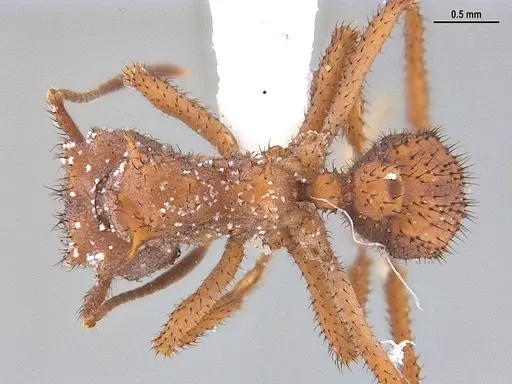
Literature
Loading...Loading products...