

Mycetomoellerius kempfi
- Scientific Name
- Mycetomoellerius kempfi
- Tribe
- Attini
- Subfamily
- Myrmicinae
- Author
- Fowler, 1982
- Distribution
- Found in 2 countries
Mycetomoellerius kempfi Overview
Mycetomoellerius kempfi is an ant species of the genus Mycetomoellerius. It is primarily documented in 2 countries , including Brazil, Paraguay. Detailed taxonomic data and occurrence records can be further explored via authoritative databases such as AntWeb or the Global Biodiversity Information Facility (GBIF).
Mycetomoellerius kempfi
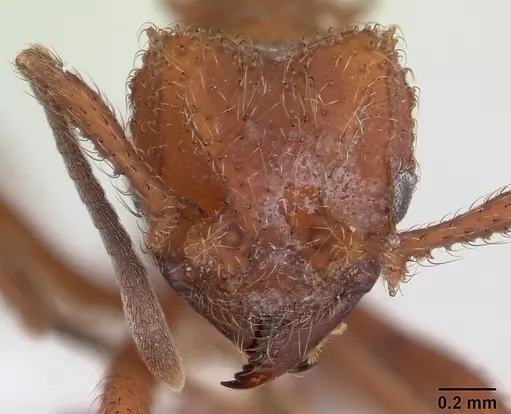
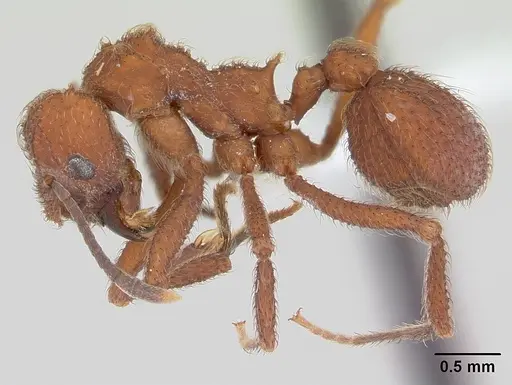
Mycetomoellerius kempfi is a small fungus-farming ant belonging to the tribe Attini, native to the southern Neotropical region including Paraguay, Brazil, and northern Argentina. Workers measure 3.3-4.2mm and have a distinctive reddish-brown coloration with abundant long, flexible hairs covering their body, a feature so prominent that the species was named after this trait (kempfi means 'with long hairs' in Latin). Unlike many Trachymyrmex species, they lack pronounced sharp spines on the head, giving them a relatively smooth appearance. Their most notable features include a prominent frontal carina that covers the antennal socket and a pronounced lobe at the base of the antenna [1][2].
This species is a fungus-growing ant that cultivates a fungal garden for food, a characteristic shared with all Attini ants. Workers forage on fresh leguminous vegetation, which they likely use to feed their fungal crop. Nests consist of small mounds of excavated soil with a single entrance hole. M. kempfi is more common than its close relative M. iheringi, which tends to occur further south. The species was named in honor of the late myrmecologist W.W. Kempf [1][2].
Quick Summary
- Difficulty: Medium
- Origin & Habitat: Native to the southern Neotropical region, found in Paraguay, Brazil (from the Chaco Basin to Rio Grande do Sul), and northern Argentina. In Brazil, recorded in the Pantanal region (Mato Grosso do Sul) and the state of Paraná. They inhabit savanna and grassland areas with vegetation, preferring areas with some plant cover rather than open ground [1][2][3][4].
- Colony Type: Likely single-queen colonies (monogyne), based on typical Attini colony structure. Colonies are weakly polymorphic, workers show some size variation but not dramatically different castes [1].
- Colony: Monogyne
- Founding: Claustral
- Size & Growth:
- Queen: Estimated 6-7mm based on related Mycetomoellerius species
- Worker: 3.3-4.2mm [1]
- Colony: Estimated several hundred workers based on related species in the genus
- Growth: Moderate, typical for fungus-farming ants
- Development: Estimated 6-10 weeks at optimal temperature based on related Attini species (Development times for fungus-farming ants typically fall in the 6-10 week range at warm temperatures. First workers (nanitics) will be smaller than mature workers.)
- Antkeeping:
- Temperature: Keep at 24-28°C. These are warm-climate ants from the southern Neotropics. A heating cable on one side of the nest creates a temperature gradient allowing workers to regulate their own exposure [5].
- Humidity: Moderate to high humidity (60-80%). Fungus-farming ants need consistent moisture to maintain their fungal garden. Keep the nest substrate moist but not waterlogged, with some drier areas for the ants to retreat to if needed.
- Diapause: Likely no true diapause, these are tropical/subtropical ants. However, they may reduce activity during cooler periods. Keep temperatures stable year-round.
- Nesting: In captivity, they do well in Y-tong (AAC), plaster, or acrylic nests. The nest should have chambers scaled to their small size. Provide a water tube for humidity. They prefer nests with some vertical space for the fungal garden to grow. A naturalistic setup with soil substrate also works well given their natural nesting in soil mounds.
- Behavior: Generally peaceful and not aggressive. They are slow-moving compared to some ants and focus on tending their fungal garden rather than defending aggressively. Workers forage for plant material to feed their fungus. They are not known to sting and pose no danger to keepers. Their small size means escape prevention should be considered, use tight-fitting lids and appropriate barriers. They are primarily nocturnal or crepuscular foragers [1][2].
- Common Issues: Fungal garden collapse is the biggest risk, sudden changes in humidity or temperature can kill the fungus, which will kill the colony, Overfeeding can cause mold problems in the nest, remove uneaten plant material promptly, Temperature drops below 20°C can slow or stop colony development and may harm the fungal garden, Small colony size means they are vulnerable, avoid disturbing the queen or disturbing the nest too much during founding, Wild-caught colonies may carry parasites that can devastate captive colonies
Understanding Fungus-Farming Ants
Mycetomoellerius kempfi belongs to the tribe Attini, a group of ants that have evolved a unique agricultural symbiosis with fungi. Unlike most ants that feed on honeydew, insects, or other protein sources, Attini ants cultivate fungal gardens for food. The queen carries a small piece of fungal inoculum when she founds a new colony, and this fungus becomes the primary food source for the developing larvae. Workers forage for plant material (leaves, flowers, grass) to feed the fungus, which in turn provides nutrition for the ant colony. This makes them fundamentally different from other ant species in captivity, you are essentially keeping two organisms that depend on each other [5].
Housing and Nest Setup
For M. kempfi, use a nest with chambers scaled to their small 3-4mm worker size. Y-tong (AAC) nests work well because they allow you to easily monitor the fungal garden. Plaster nests are also suitable as they hold humidity well. The nest should have a water reservoir or be connected to a test tube water source to maintain the moisture levels the fungus needs. The outworld (foraging area) should be simple and easy to clean, these ants are not aggressive escape artists, but their small size means you should still use tight-fitting lids. A small piece of cotton soaked in sugar water or a small dish with fresh plant material can serve as foraging stations. Keep the nest in a warm, stable location away from direct sunlight and drafts [1][2].
Feeding and the Fungal Garden
The most critical aspect of keeping M. kempfi is maintaining a healthy fungal garden. In captivity, you must provide fresh plant material for the fungus to grow on, this is what the workers were foraging in the wild (leguminous vegetation). Offer small pieces of fresh leaves, flowers, or grass every few days. Remove any uneaten plant material within 24-48 hours to prevent mold. The fungus will appear as a white, cottony mass in the nest chamber. If the fungus turns dark or shrinks, something is wrong with the conditions. Beyond the fungal garden, you can occasionally offer a small drop of diluted honey or sugar water as a supplemental energy source for workers, but this should not replace the plant material they need for their fungus [1][2].
Temperature and Humidity Management
Keep your colony at 24-28°C for optimal growth. These are warm-climate ants from the southern Neotropics, and their fungal cultivar also prefers warm, humid conditions. A small heating cable placed on one side of the nest creates a temperature gradient, the ants will move to their preferred temperature. Humidity should be moderate to high (60-80%). The nest substrate should feel damp to the touch. However, avoid both excessive dryness (which kills the fungus) and waterlogging (which promotes mold). A water tube connected to the nest helps maintain steady humidity through evaporation. Monitor the fungus directly, if it looks unhealthy, adjust humidity or temperature gradually [5].
Colony Development and Growth
M. kempfi is weakly polymorphic, meaning workers come in slightly different sizes but not dramatically different castes. The queen will lay eggs that develop into larvae, then pupae, and finally emerge as workers. The first workers (nanitics) will be smaller than mature workers. Development from egg to worker likely takes 6-10 weeks at optimal temperature, similar to other Attini species. Growth is moderate, do not expect rapid colony expansion. A healthy colony will gradually produce more workers over months and years. The fungal garden must grow alongside the colony, as more workers means more foragers to supply the fungus with plant material. Be patient during the founding stage, disturbing the queen or moving the nest can be fatal [1].
Seasonal Care and Wintering
As tropical/subtropical ants from southern South America, M. kempfi does not require true hibernation. They may reduce activity during cooler periods, but this is different from the diapause temperate ants undergo. Keep temperatures stable year-round, ideally in the 24-28°C range. Avoid placing the colony near air conditioning vents, windows, or other cold spots. If your room temperature naturally drops in winter, consider using a small heater or heating cable to maintain warmth. The fungal garden is sensitive to temperature fluctuations, so consistency matters more than absolute temperature. A slight reduction in activity in winter is normal, but the colony should remain active if kept warm enough [5].
Frequently Asked Questions
Can I keep Mycetomoellerius kempfi in a test tube?
Test tubes are not ideal for fungus-farming ants. They need space for a fungal garden to develop, and test tubes make it difficult to provide the plant material the fungus requires. A Y-tong (AAC), plaster, or acrylic nest with a separate foraging area is much better. However, a test tube can work for a newly mated queen during the founding stage if attached to a small outworld.
What do Mycetomoellerius kempfi eat?
They do not eat conventional ant food. These are fungus-farming ants that cultivate a fungal garden for nutrition. You must provide fresh plant material, leaves, flowers, or grass clippings (especially from leguminous plants), for the fungus to grow on. Workers collect this plant material and feed it to the fungus. The fungus then provides food for the colony. You can occasionally offer a drop of sugar water or honey for extra energy, but the plant material is essential.
How long does it take for first workers to appear?
Based on related Attini species, expect 6-10 weeks from egg to first worker at optimal temperature (24-28°C). The first workers (nanitics) will be smaller than mature workers. Development is slower than many common ant species, so patience is required. The queen will remain in the nest chamber tending the initial fungal garden and brood.
Are Mycetomoellerius kempfi good for beginners?
They are rated as medium difficulty. While not the hardest species, they require more specialized care than simple sugar-water feeders. You must understand how to maintain a fungal garden, provide appropriate plant material, and manage humidity. Beginners should be prepared for this commitment. If you want a simpler introduction to ant keeping, consider starting with Lasius or Tetramorium species first.
When should I move them to a formicarium?
Keep the queen in a founding setup (test tube or small container with soil) until she has her first workers. Once you have 10-20 workers and the fungal garden is established, you can move them to a proper nest. Move carefully, fungus-farming ants are sensitive to disturbance. Do not move until the colony is established and growing.
Why is my fungal garden dying?
The fungal garden is sensitive to environmental conditions. Common causes include: sudden temperature changes (keep stable at 24-28°C), too dry or too wet conditions (aim for consistently damp substrate, not waterlogged), mold from uneaten plant material (remove uneaten food within 24-48 hours), or contamination from wild fungi. If the fungus turns dark, shrinks, or develops mold, identify and correct the environmental issue quickly.
Can I keep multiple queens together?
This species is likely monogyne (single queen per colony). Combining unrelated queens has not been documented and is not recommended. In the wild, colonies are founded by a single queen who cultivates her own fungal garden. Multiple founding queens would compete for resources and likely fight.
How big do colonies get?
Based on related species in the genus, colonies likely reach several hundred workers over several years. They are not among the largest Attini ants (that title goes to Acromyrmex species). Growth is moderate, a well-established colony after 2-3 years might have 100-300 workers.
Do they need hibernation?
No, they do not require hibernation. These are tropical/subtropical ants from the southern Neotropics. Keep them warm year-round (24-28°C). They may reduce activity slightly during cooler periods, but this is not true diapause. Stable temperatures are more important than seasonal cycling.
What temperature is best for Mycetomoellerius kempfi?
Keep the nest at 24-28°C. This warm-climate species and its fungal cultivar prefer these temperatures. Use a heating cable on one side of the nest to create a gradient, allowing ants to self-regulate. Avoid temperatures below 20°C as this can harm the fungus and slow or stop colony development.
Why are my ants dying?
Common causes include: fungal garden collapse (the most serious issue, without the fungus, the colony starves), temperature stress (too cold or sudden changes), humidity problems (too dry kills the fungus, too wet causes mold), parasites from wild-caught colonies, or disturbance during founding. Check environmental conditions first and adjust gradually.
References

This caresheet is licensed under CC BY-SA 4.0 .
CASENT0178107
View on AntWeb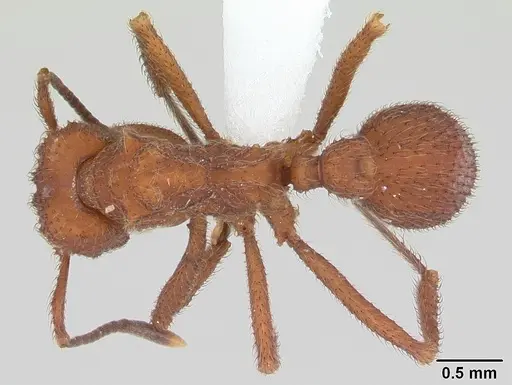
Literature
Loading...Loading products...