

Mycetomoellerius haytianus
- Scientific Name
- Mycetomoellerius haytianus
- Tribe
- Attini
- Subfamily
- Myrmicinae
- Author
- Wheeler & Mann, 1914
- Distribution
- Found in 2 countries
Mycetomoellerius haytianus Overview
Mycetomoellerius haytianus is an ant species of the genus Mycetomoellerius. It is primarily documented in 2 countries , including Haiti, Jamaica. Detailed taxonomic data and occurrence records can be further explored via authoritative databases such as AntWeb or the Global Biodiversity Information Facility (GBIF).
Mycetomoellerius haytianus
Mycetomoellerius haytianus is a small fungus-growing ant species native to the Caribbean islands of Haiti and Jamaica. Workers measure 3.5-4.7mm and have a distinctive dark ferruginous to black coloration with lighter tips on their tarsi and funiculi. Like all Attini ants, they cultivate fungi as their primary food source. This species belongs to the Jamaicensis group, characterized by unique antennal scrobes that reach the posterior margin of the head with an 'opened' appearance and angular posterolateral corners. The species is known almost exclusively from worker caste specimens, queens and males have never been described, making captive breeding extremely challenging. Nests are simple ground-surface entrances without the characteristic crater mounds seen in some related species.
Quick Summary
- Difficulty: Expert
- Origin & Habitat: Caribbean species found only in Haiti (Petionville) and Jamaica (St. Elizabeth, St. James). Inhabits canyon environments in tropical Caribbean climate [1][2][3].
- Colony Type: Unknown colony structure. Only workers have been collected, queens and males are undescribed. Likely single-queen based on typical Attini patterns, but unconfirmed.
- Size & Growth:
- Queen: Unknown, queens have never been described [4]
- Worker: 3.5-4.7mm [1][4]
- Colony: Unknown, only a single colony has ever been collected [1]
- Growth: Unknown
- Development: Unknown (Development timeline unconfirmed. Related Caribbean Trachymyrmex species typically develop in 4-8 weeks at tropical temperatures.)
- Antkeeping:
- Temperature: Keep at warm tropical temperatures around 24-28°C. Inferred from Caribbean distribution and related species requirements [5].
- Humidity: Require moderate to high humidity. Provide moist substrate similar to forest floor conditions in their native Caribbean habitat.
- Diapause: No, Caribbean species do not undergo true hibernation. May show reduced activity during cooler periods.
- Nesting: Natural nests have simple ground-surface entrances without craters. In captivity, provide moist soil-based nests (test tubes, Y-tong, or plaster nests) with fungal cultivation chamber. They need space for their fungus garden.
- Behavior: Typical fungus-growing ant behavior. Workers are moderate foragers that tend their fungal cultivars. Not particularly aggressive but will defend their colony. Escape risk is moderate given their 4mm size, standard barriers recommended.
- Common Issues: queen unavailability makes colony establishment nearly impossible, only workers have ever been collected, requires fungal cultivation, cannot survive without maintaining their fungal crop, extremely rare in the hobby due to limited scientific collection data, care requirements are largely inferred from related species rather than directly studied, Caribbean species may struggle in temperate climates without heating
Fungus-Growing Biology
Mycetomoellerius haytianus belongs to the tribe Attini, a group of ants that have evolved an obligate mutualistic relationship with fungi. These ants cultivate fungal gardens in their nests, feeding the fungus with plant material and in return consuming the specialized fungal structures they produce. This is 'higher attine' agriculture, representing one of the most complex agricultural systems in the animal kingdom [5]. In captivity, you would need to provide appropriate fungal substrate, typically leaf litter, grass clippings, or other plant material that the ants can use to feed their fungus. The fungus itself is essential colony nutrition and must be maintained alongside the ant colony.
Distribution and Habitat
This species has an extremely limited distribution known only from Haiti (the type locality near Petionville) and Jamaica [1][2]. The original collection was from a canyon environment in Haiti, where Wheeler and Mann (1914) found several workers from a single colony. The nest entrance opened directly on the ground surface without a crater mound, which is simpler than the elaborate nest structures seen in some related species. No elevation data is available, but the species clearly prefers tropical Caribbean conditions. Its presence in both Haiti and Jamaica reflects the historical biogeographic connections between these Caribbean islands [6].
Identification and Morphology
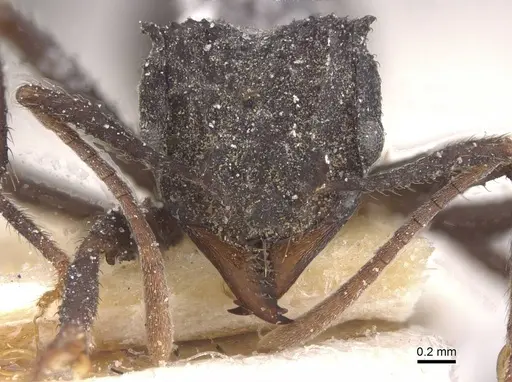
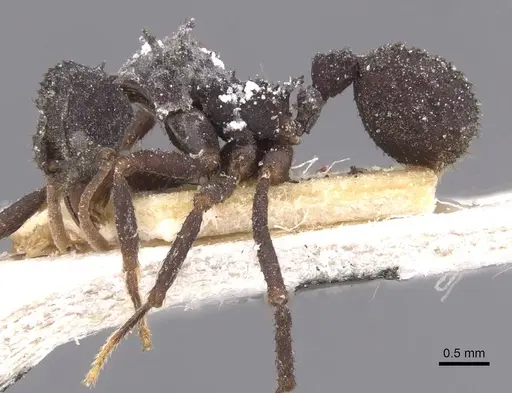
Workers of M. haytianus are small ants measuring 3.5-4.7mm in total length. They have a distinctive dark ferruginous (rusty brown) coloration with lighter-colored tips on their tarsi and funiculi. The species belongs to the Jamaicensis group, which has unique characteristics including antennal scrobes that reach the posterior margin of the head and end as two separate projections from the preocular and frontal carinae, giving an 'opened' appearance. They have well-developed spines and tubercles on the head and mesosoma, including occipital spines and pronotal teeth. The integument is opaque and finely granulose, with sparse pilosity concentrated on body projections, antennal scapes, and gaster tip [1][7].
Current Scientific Knowledge
This is one of the most poorly known ant species in the Caribbean. Only worker specimens have ever been collected, queens, males, and complete colony structures remain undescribed in the scientific literature. The original description dates to 1914 when Wheeler and Mann collected workers from a single colony in Haiti. Mayhé-Nunes and Brandão (2007) revised the species, raising it from subspecies status to full species and providing detailed morphological measurements. Despite being part of a well-studied genus in terms of fungal agriculture, M. haytianus specifically remains a mystery in terms of its basic biology, colony structure, and reproductive behavior [1][4].
Housing and Nesting
Based on the natural nesting behavior (ground-surface entrance in canyon soil) and related species requirements, provide a moist soil-based nest environment. Test tubes with water reservoirs, Y-tong nests, or plaster nests work well for Attini species. Include a chamber specifically sized for fungal garden maintenance. Ensure the nest maintains moderate humidity without becoming waterlogged. Provide an outworld area for foraging and plant material collection. Given their Caribbean origin, maintain warm temperatures year-round. Escape prevention is important, while not among the smallest ants, they can still escape through standard gaps.
Feeding and Nutrition
As obligate fungus farmers, these ants require fresh plant material to cultivate their fungal gardens. Offer a variety of organic matter including leaf fragments, grass clippings, flower petals, or small pieces of wood. Remove uneaten plant material before it molds. The ants will process this material and incorporate it into their fungal garden. The fungus produces specialized structures (gongylidia) that the ants harvest as their primary food source. Do not attempt to keep this species without maintaining a healthy fungal culture, they cannot survive on conventional ant foods alone. Sugar sources are not typically utilized by Attini ants as their nutrition comes from the fungus. [5]
Frequently Asked Questions
Can I keep Mycetomoellerius haytianus in captivity?
Extremely difficult to nearly impossible. This species has never been kept in captivity because only worker specimens have ever been collected, no queens or males are known to science. Without a queen, colony establishment is not possible.
What do Mycetomoellerius haytianus eat?
Like all Attini fungus-growing ants, they do not eat conventional ant foods. Instead, they cultivate fungi in their nest and feed on the fungal structures. In captivity, you would need to provide fresh plant material (leaf litter, grass) for the ants to feed their fungus garden.
How big do Mycetomoellerius haytianus colonies get?
Unknown. Only a single colony has ever been collected, and colony size was not reported. Related Caribbean Trachymyrmex species typically form colonies of several hundred to a few thousand workers.
What temperature do Mycetomoellerius haytianus need?
Keep warm at tropical temperatures around 24-28°C. This is inferred from their Caribbean distribution. Do not allow temperatures to drop below room temperature for extended periods.
Are Mycetomoellerius haytianus good for beginners?
No. This species is completely unsuitable for any antkeeper. Queens have never been described, making captive colonies impossible to establish. Even related Attini species with known queens require specialized fungus-cultivation knowledge.
Where does Mycetomoellerius haytianus live?
Only known from Haiti (Petionville) and Jamaica. The species was originally described from a canyon in Haiti and has also been collected in Jamaican locations including St. Elizabeth and St. James.
How do I start a Mycetomoellerius haytianus colony?
You cannot. This species cannot be kept because no queens have ever been found or described. The entire captive ant hobby depends on obtaining a mated queen to start a colony, and this species' queens remain unknown to science.
Do Mycetomoellerius haytianus need hibernation?
No. As a Caribbean tropical species, they do not require hibernation. Maintain warm temperatures year-round. They may show reduced activity during cooler periods but do not enter true diapause.
References

This caresheet is licensed under CC BY-SA 4.0 .
CASENT0912524
View on AntWeb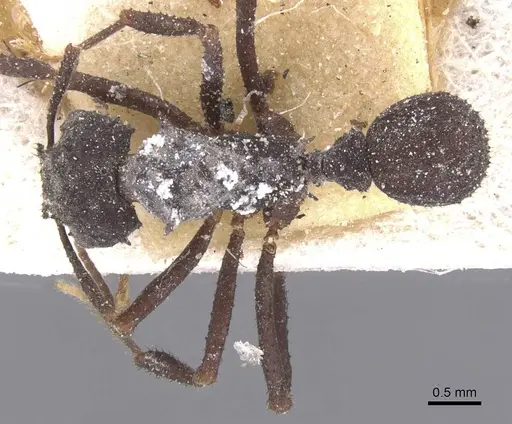
Literature
Loading...Loading products...