

Mycetomoellerius compactus
- Scientific Name
- Mycetomoellerius compactus
- Tribe
- Attini
- Subfamily
- Myrmicinae
- Author
- Mayhé-Nunes & Brandão, 2002
- Distribution
- Found in 1 countries
Mycetomoellerius compactus Overview
Mycetomoellerius compactus is an ant species of the genus Mycetomoellerius. It is primarily documented in 1 countries , including French Guiana. Detailed taxonomic data and occurrence records can be further explored via authoritative databases such as AntWeb or the Global Biodiversity Information Facility (GBIF).
Mycetomoellerius compactus
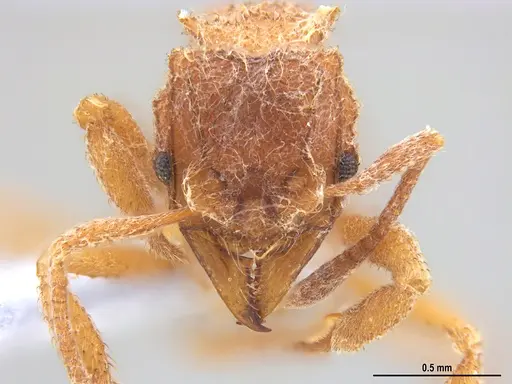
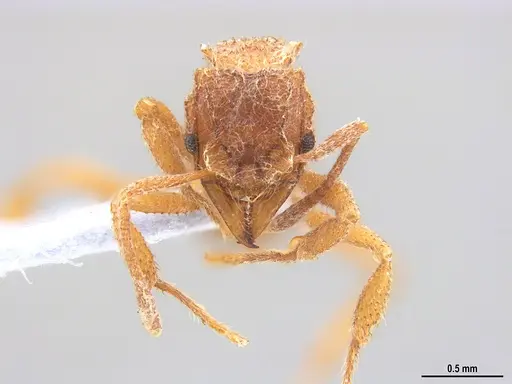
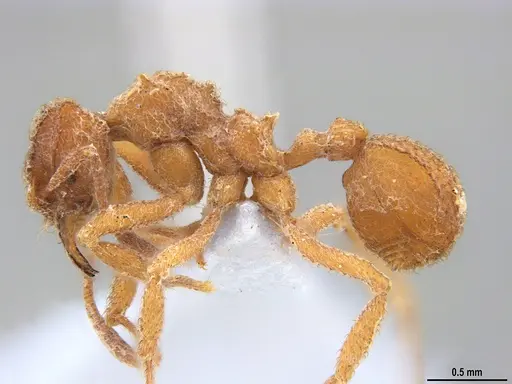
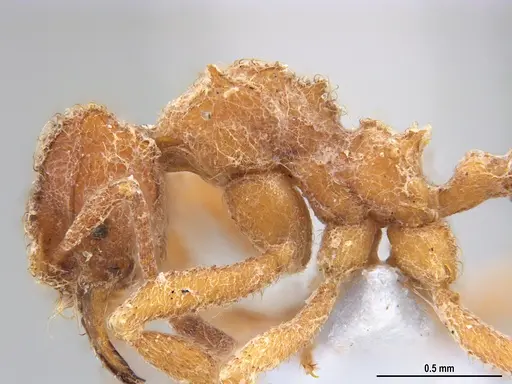
Mycetomoellerius compactus is a tiny fungus-growing ant species from the northern South American rainforests. Workers measure just 3.8mm and are medium brown with a more reddish-brown head. This species belongs to the opulentus group within the Attini tribe, the famous fungus-growing ants that cultivate their own fungal gardens for food. The species is known only from a single worker specimen collected in Suriname in 1959,making it one of the least studied ants in the hobby. They have distinctive body features including reduced mesonotal projections, short propodeal spines, and a gaster that is sharply marginate on the sides. Found in primary forest habitats in Suriname, French Guiana, and Brazil, these ants represent a rarely encountered genus in the antkeeping hobby due to their limited distribution and sparse documentation.
Quick Summary
- Difficulty: Expert
- Origin & Habitat: Northern South America, specifically Suriname, French Guiana, and Brazil. The type locality is in primary forest on sand, on a hill slope about 130km south of Paramaribo near Sarakreek. Found in both plateau and transition forest types in pristine Guianese rainforest [1][2][3].
- Colony Type: Unknown colony structure, only the worker caste has ever been documented. As a fungus-growing ant in the Attini tribe, colonies likely consist of a single queen (monogyne) but this is unconfirmed. No queen, male, or colony size data exists in scientific literature.
- Size & Growth:
- Queen: Unknown, queen has never been described [4]
- Worker: 3.8mm total length [2]
- Colony: Unknown, no colony collections have been documented
- Growth: Unknown, no development data exists
- Development: Unknown, no direct measurements exist. Based on typical Attini patterns, estimate 6-10 weeks at warm temperatures, but this is highly speculative. (No brood development studies exist for this species. Related Trachymyrmex species suggest 6-12 weeks from egg to worker at optimal temperature, but M. compactus may differ significantly.)
- Antkeeping:
- Temperature: Likely requires warm conditions similar to other Attini. Start around 24-27°C and observe colony activity. As a rainforest species from Suriname/French Guiana, they probably need consistently warm temperatures without major fluctuations.
- Humidity: Likely requires high humidity, rainforest floor conditions. Keep nest substrate consistently moist but not waterlogged. Provide a humidity gradient so ants can choose their preferred zone.
- Diapause: Unknown, no seasonal data exists. As a tropical species from near the equator, they may not require a true diapause but might show reduced activity during drier periods.
- Nesting: No direct nesting observations exist. As a litter-dwelling ant collected in primary forest, they likely nest in rotting wood, leaf litter, or soil cavities. In captivity, a naturalistic setup with moist substrate or a Y-tong/plaster nest works well. Avoid drying out the nest.
- Behavior: Behavior is completely unstudied. As a fungus-growing ant, they are likely less aggressive than some Attini (like leaf-cutter ants). Their tiny size (3.8mm) makes escape prevention critical, they can squeeze through standard mesh. Expect typical Attini behaviors: fungus cultivation, likely nocturnal activity peaks, and moderate foraging. No data exists on sting potency, but given their tiny size, any sting is likely negligible to humans.
- Common Issues: extreme data scarcity means no verified care protocols exist, all recommendations are speculative, fungus-growing diet requirements are specialized and difficult to meet in captivity, tiny size makes escape prevention challenging, standard barriers may not work, no established breeding stock in the hobby, wild collection is the only option, potential difficulty establishing fungal cultures that the ants can cultivate
Fungus-Growing Biology
Mycetomoellerius compactus belongs to the Attini tribe, one of the most fascinating groups of ants in the world. These ants have evolved a mutualistic relationship with fungi that they cultivate as their sole food source. Unlike most ants that eat protein from insects or sugar from honeydew, Attini ants feed their fungal gardens with leaf fragments, flower pieces, or other organic material, then eat the fungus itself. This makes them fundamentally different from typical ant species in terms of diet. The genus Mycetomoellerius (formerly part of Trachymyrmex) represents 'higher-attine' ants that have more sophisticated fungal cultivation techniques than their ancestors. In captivity, you would need to provide appropriate organic material for the ants to cultivate their fungus, and the success of the colony would depend entirely on establishing a healthy fungal culture. This is significantly more challenging than feeding typical ants and represents the primary difficulty in keeping this species. [4]
Distribution and Habitat
This species is known from a remarkably small range in northern South America. The only confirmed specimens come from Suriname (Maripaheuvel, collected in September 1959), with additional records from French Guiana and Brazil. The type locality was described as 'primary forest on sand, slope of the hill', indicating they live in mature rainforest environments with sandy soils. Studies in French Guiana found them in both plateau forest and transition forest, suggesting they can tolerate some variation in habitat conditions but require forested environments with significant leaf litter. The region has a tropical climate with high year-round humidity and temperatures. These ants are part of the leaf-litter ant community, meaning they forage in the upper layers of decomposing leaves on the forest floor rather than in open areas or high in trees. [1][2][3]
Why This Species is So Challenging
Mycetomoellerius compactus represents perhaps the most data-poor species you could consider keeping. The entire scientific knowledge of this species consists of a single worker specimen described in 2002,plus a handful of additional records from survey work. We have no information whatsoever on: the queen (her size, appearance, or behavior), how colonies are founded, how many workers a mature colony has, what their fungal diet consists of specifically, nuptial flight timing and behavior, or any aspect of their captive care. Every recommendation for keeping this species must be inferred from related species in the same genus or tribe, and these inferences may be wrong. This is genuinely an 'expert only' species where you would be pioneering all aspects of captive husbandry. If you're set on keeping Attini ants, more commonly kept genera like Trachymyrmex or Sericomyrmex have much more available care information and would be far better choices. [2][4]
Housing and Setup
If you were to attempt keeping this species, a naturalistic setup mimicking rainforest floor conditions would be most appropriate. Use a moist, earthy substrate that can hold humidity, a mix of soil and rotting wood fragments works well. The enclosure should have excellent escape prevention despite the tiny worker size (standard test tube cotton may not stop them). A Y-tong or plaster nest with small chambers could also work, provided humidity is maintained. Temperature should be warm (24-27°C) with a slight gradient if possible. Lighting is not critical as they are likely nocturnal or crepuscular foragers. The most critical and challenging aspect would be establishing a fungal culture that the ants can cultivate, this is the make-or-break factor for success with any Attini species. Without established protocols for this specific species, you would essentially be experimenting.
Related Species for Comparison
If you're interested in fungus-growing ants but find M. compactus too challenging, consider looking at other Attini that are more established in the hobby. The genus Trachymyrmex (closely related to Mycetomoellerius) has several species with more documented care information. Sericomyrmex (another fungus-growing genus) is also occasionally available. These related species would give you experience with the unique fungal cultivation requirements without the extreme uncertainty of M. compactus. The fundamental care challenge with all Attini ants is establishing and maintaining a healthy fungal garden, once you master this, the species-specific details become more manageable. Starting with better-documented species is strongly recommended before attempting rare or unstudied species like M. compactus. [4]
Frequently Asked Questions
Can I keep Mycetomoellerius compactus in a test tube?
Test tubes could work for an initial founding colony, but escape prevention is critical due to their tiny 3.8mm size. Standard cotton barriers may not be sufficient, consider using fine mesh or fluon on the edges. The bigger challenge is establishing a fungal culture for them to cultivate, which test tube setups don't easily accommodate.
What do Mycetomoellerius compactus eat?
As fungus-growing ants in the Attini tribe, they do not eat typical ant foods. They cultivate fungal gardens and feed the fungus organic material (leaf fragments, flower pieces, etc.), then eat the fungus itself. The specific fungal species and substrate requirements are completely unknown for this species, this is the primary challenge in keeping them.
How long until first workers in Mycetomoellerius compactus?
Unknown, no development data exists for this species. Based on typical Attini patterns, expect 6-10 weeks from egg to worker at warm temperatures (around 25°C), but this is a rough estimate with low confidence.
Are Mycetomoellerius compactus good for beginners?
No. This is an expert-only species due to extreme data scarcity. There are no established care protocols, no information on colony founding or development, and the fungus-growing diet is fundamentally different from typical ants. If you're interested in Attini ants, start with better-documented species like Trachymyrmex spp.
How big do Mycetomoellerius compactus colonies get?
Unknown, no colony size data exists. Related Attini species typically reach hundreds to low thousands of workers. The maximum size for this specific species has never been documented.
Can I keep multiple queens together?
Not known, colony structure is unconfirmed for this species. No data exists on whether they are single-queen (monogyne) or multi-queen (polygyne). Combining unrelated queens is not recommended given the complete lack of information.
Do Mycetomoellerius compactus need hibernation?
Unknown, no seasonal data exists. As a tropical species from near the equator (Suriname, French Guiana), they likely do not require a true diapause. They may show reduced activity during drier periods, but this is unconfirmed.
What temperature do Mycetomoellerius compactus need?
Not directly studied. As a rainforest species from northern South America, they likely require warm conditions around 24-27°C. Start in this range and observe colony behavior, increase slightly if they cluster near heat sources, reduce if they avoid warm areas.
Where can I get Mycetomoellerius compactus?
Extremely unlikely to find in the antkeeping hobby. This species is only known from a handful of specimens in scientific collections and has never been cultured. The only way to obtain this species would be wild collection from its limited range in Suriname/French Guiana, which raises significant legal and ethical concerns.
References

This caresheet is licensed under CC BY-SA 4.0 .
MZSP90591
View on AntWeb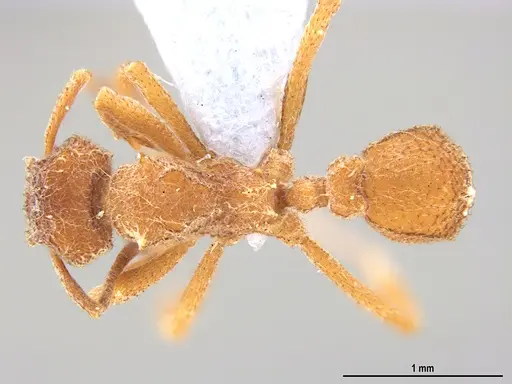
Literature
Loading...Loading products...