

Mycetarotes carinatus
- Scientific Name
- Mycetarotes carinatus
- Tribe
- Attini
- Subfamily
- Myrmicinae
- Author
- Mayhé-Nunes, 1995
- Distribution
- Found in 1 countries
Mycetarotes carinatus Overview
Mycetarotes carinatus is an ant species of the genus Mycetarotes. It is primarily documented in 1 countries , including Brazil. Detailed taxonomic data and occurrence records can be further explored via authoritative databases such as AntWeb or the Global Biodiversity Information Facility (GBIF).
Mycetarotes carinatus
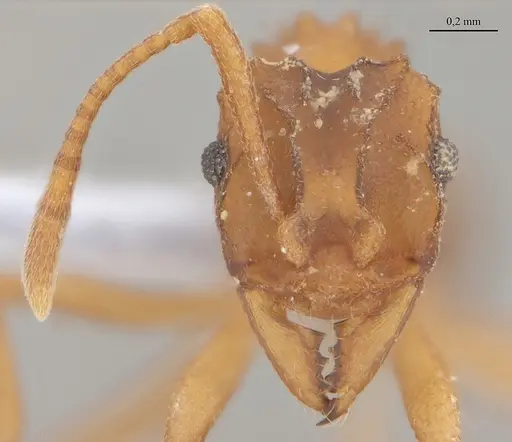
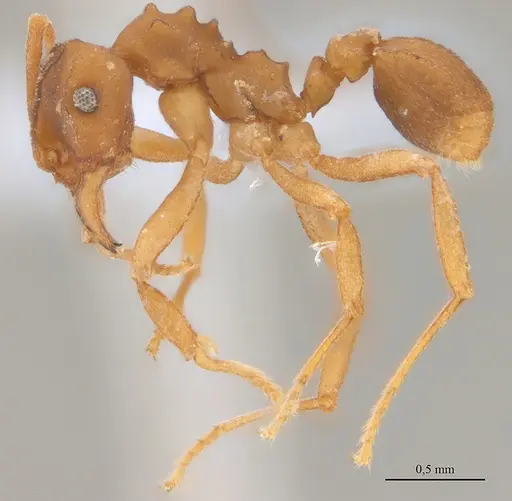
Mycetarotes carinatus is a tiny fungus-growing ant from the Brazilian Atlantic Forest. Workers measure just 2.6-2.9mm and are light brown to yellowish with a slightly darker head [1]. This species belongs to the Attini tribe, a group of ants that cultivate fungus for food, making them unique among ant species kept in captivity. They are distinguished by four longitudinal ridges on the first abdominal segment and blunt mesosomal projections [1]. Queens reach about 3.1mm, while males are larger at 3.9mm [2]. The species was described in 1995 and is known from Rio de Janeiro and Minas Gerais states in southeastern Brazil [2][1].
Quick Summary
- Difficulty: Hard
- Origin & Habitat: Southeastern Brazil (Rio de Janeiro and Minas Gerais states). Found in primary and secondary Atlantic Forest, typically in forest clearings at elevations around 700m. Nests are built in clay soil at shallow depths (9-13cm below surface) [1][3][2].
- Colony Type: Colony structure is unconfirmed, the Attini tribe typically has single-queen colonies, but specific data for M. carinatus is lacking. Colonies produce gynes (new queens) and males in laboratory conditions after about six months [1].
- Size & Growth:
- Queen: 3.1mm [2]
- Worker: 2.6-2.9mm [1]
- Colony: Unknown, no colony size data available
- Growth: Unknown, estimated moderate based on related fungus-growing ants
- Development: Unknown, no direct development data. Related Attini species typically take 6-10 weeks from egg to worker at optimal temperatures. (No specific development timeline has been documented for this species. Estimates based on typical Attini patterns.)
- Antkeeping:
- Temperature: Keep at 24-28°C, these are tropical forest ants requiring warm, stable conditions. A heating cable on one side of the nest creates a gentle gradient
- Humidity: Keep the nest substrate consistently moist but not waterlogged. The fungus garden requires high humidity to thrive, aim for damp substrate conditions similar to their forest floor microhabitat
- Diapause: No, these are tropical ants that do not require hibernation. Maintain warm conditions year-round
- Nesting: Use a naturalistic setup with soil or a Y-tong/plaster nest with narrow chambers scaled to their tiny size. They nest at shallow depths in clay soil in nature. The nest should allow for a fungal garden chamber [1][3].
- Behavior: Workers are docile and non-aggressive. When disturbed during nest excavation, they feign death (thanatosis) as a defense mechanism [1]. They are not known to sting and pose no danger to keepers. Foraging workers follow established trails to dispose of waste materials (old fungal substrate, earth grains) about 15cm from the nest entrance [1][2]. Their tiny size means escape prevention is critical, use fine mesh barriers. They are slow-moving compared to many ant species.
- Common Issues: fungus garden failure is the primary risk, without healthy fungus, the colony will starve, escape prevention is critical due to their very small size (under 3mm), colonies may take many months to establish, patience is required, improper substrate moisture can kill the fungus garden, limited natural history data means keepers must experiment with care conditions
Understanding Fungus-Growing Ants
Mycetarotes carinatus belongs to the Attini tribe, a remarkable group of ants that cultivate fungus for food instead of foraging for insects or honeydew like most ant species. This is the key difference that makes keeping them challenging compared to typical ants. In the wild, workers feed the fungus with plant material (seeds, decaying wood, insect feces) and the fungus itself becomes their food source [1][2]. In captivity, you must replicate this by providing appropriate fungal substrate. The fungus garden appears as a gray-yellowish mass, in one documented nest, the garden was approximately 50ml in volume [1]. This means your colony needs two things to survive: the ants themselves AND a healthy fungal culture.
Nest Setup and Housing
In the wild, M. carinatus nests in clay soil at shallow depths, about 9-13cm below the surface. The nest has a single chamber roughly 7cm wide and 4cm tall, with a tiny entrance hole only 3mm in diameter [1][3]. For captivity, use a naturalistic setup with moist soil or a Y-tong/plaster nest with chambers scaled to their tiny size. The chambers should be narrow and compact, not large and open spaces. Because workers are only 2.6-2.9mm, escape prevention must be excellent, use tight-fitting lids and fine mesh. The nest should include space for a fungal garden chamber where you can place substrate for the fungus to grow on. Some keepers use small containers filled with moist plaster or soil that can be kept humid.
Feeding and the Fungus Garden
This is the most critical aspect of keeping M. carinatus. Unlike typical ants, they cannot survive on protein foods alone, they need a functioning fungus garden. In laboratory conditions, they were fed seeds, decayed wood, insect feces, parts of Hibiscus flowers, manioc root flour, and cotton soaked in water [1][2]. To establish a fungus garden, you will need to provide organic substrate that the ants can cultivate fungus on. This typically includes small pieces of decaying plant material, seeds, or specialized fungal substrate. The process requires patience, the fungus must establish before the colony can thrive. Monitor the fungus garden closely: it should appear gray-yellowish and show new growth. If the fungus dies, the colony will starve regardless of how much other food is available.
Temperature and Humidity
As tropical ants from southeastern Brazil, M. carinatus requires warm and humid conditions. Keep the nest area at 24-28°C, use a heating cable on one side of the nest to create a gentle gradient if your room temperature is lower. The humidity is particularly important because the fungus garden needs moist conditions to survive. Keep the substrate consistently damp but not waterlogged, the fungus should never dry out. However, avoid stagnant air as this promotes mold growth. Good ventilation while maintaining humidity is essential. These are not ants that can tolerate cool or dry conditions, unlike temperate species, they do not enter diapause and need year-round warm conditions. [1]
Behavior and Colony Dynamics
Workers are docile and exhibit interesting behaviors. When their nest is disturbed, they feign death (thanatosis), this is a passive defense mechanism rather than aggression [1]. They are not known to sting and pose no danger to keepers. One unique behavior is their waste management: workers follow two opposite trails to dispose of earth grains and old fungal substrate about 15cm away from the nest entrance [1][2]. This keeps the nest clean and helps maintain fungus garden health. Colonies in laboratory conditions produced new queens (gynes) and males after about six months, suggesting this species can produce reproductives relatively quickly once established [1]. The colony size in the wild is unknown, more data is needed on mature colony populations.
Frequently Asked Questions
Can I keep Mycetarotes carinatus like other ant species?
No. This is a fungus-growing ant (Attini) that requires a fungal garden to survive. They cannot eat standard ant foods like sugar water or insects alone. You must provide organic substrate for them to cultivate fungus on. This makes them significantly more difficult to keep than typical ants.
What do Mycetarotes carinatus eat?
They eat the fungus they cultivate, not direct food. In the wild, they feed the fungus with seeds, decaying wood, insect feces, and plant material. In captivity, provide small amounts of organic substrate like seeds, decaying plant matter, or specialized fungal substrate. The fungus garden is their primary food source, without it, they will starve even if other food is available.
How long does it take for the fungus garden to establish?
This is unknown for M. carinatus specifically. In laboratory conditions, colonies produced reproductives after six months, suggesting the fungus can establish within that timeframe. However, this varies based on conditions. Patience is essential, do not disturb the fungus garden unnecessarily while it establishes.
What temperature do Mycetarotes carinatus need?
Keep them at 24-28°C. These are tropical ants from Brazil that require warm, stable conditions year-round. Unlike temperate ants, they do not need hibernation. Use a heating cable if needed, but avoid overheating.
Are Mycetarotes carinatus good for beginners?
No. They are considered difficult to keep because they require a functioning fungus garden to survive, something that is challenging to maintain in captivity. They are not recommended for beginners. Only experienced antkeepers familiar with fungus-growing ant husbandry should attempt this species.
How big do Mycetarotes carinatus colonies get?
The maximum colony size is unknown, no data exists on mature colony populations in the wild. Workers are very small (2.6-2.9mm), and based on related Attini species, colonies likely reach dozens to a few hundred workers rather than thousands.
Why are my Mycetarotes carinatus dying?
The most likely cause is fungus garden failure, without healthy fungus, the colony starves. Other common issues include: too dry or too wet substrate (both kill the fungus), temperatures outside 24-28°C, escape due to their tiny size, or mold problems from poor ventilation. Review all environmental parameters and the status of your fungus garden.
Can I keep multiple queens together?
This has not been documented for this species. Attini typically have single-queen colonies, but the specific colony structure of M. carinatus is unconfirmed. Do not attempt combining unrelated queens without evidence that this species tolerates pleometrosis.
When should I move them to a formicarium?
Start with a test tube or small container for the founding colony. Once the fungus garden is established and the colony has several workers, you can move them to a more elaborate setup with proper chambers for the fungus. Do not disturb the colony during the founding phase, queens may seal themselves in and should not be exposed to light or vibrations.
References

This caresheet is licensed under CC BY-SA 4.0 .
UFV-LABECOL-010837
View on AntWeb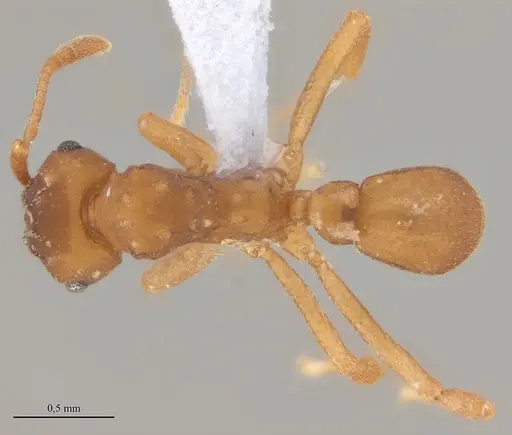
Literature
Loading...Loading products...