

Monomorium viator
- Scientific Name
- Monomorium viator
- Tribe
- Solenopsidini
- Subfamily
- Myrmicinae
- Author
- Santschi, 1923
- Distribution
- Found in 1 countries
Monomorium viator Overview
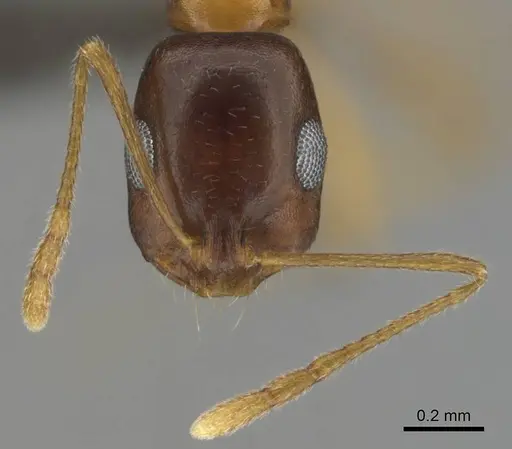
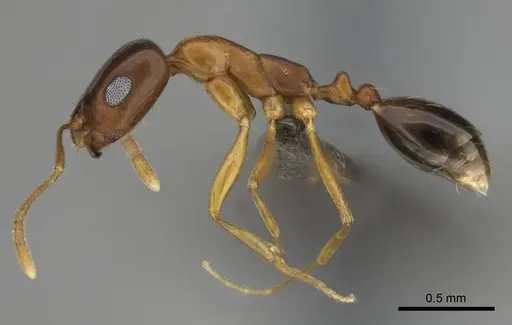
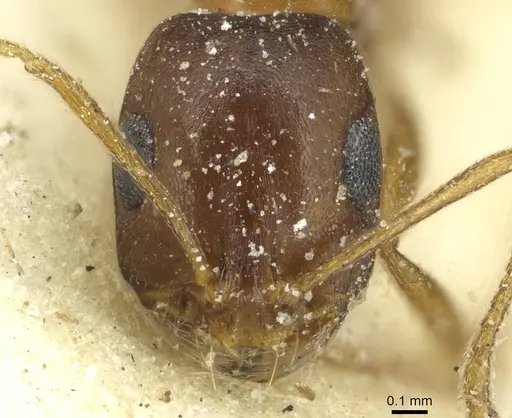
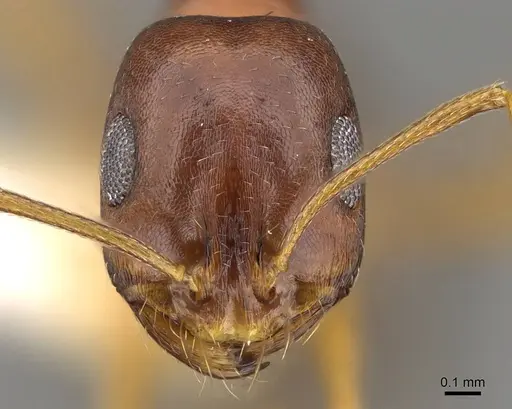
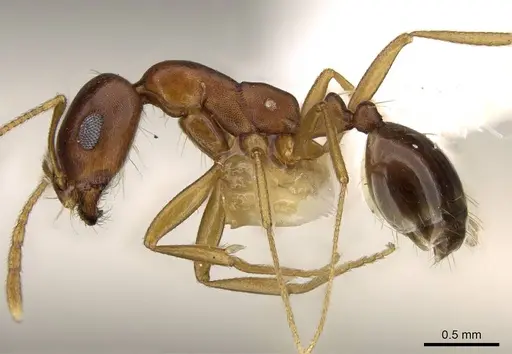
Monomorium viator is an ant species of the genus Monomorium. It is primarily documented in 1 countries , including Namibia. Detailed taxonomic data and occurrence records can be further explored via authoritative databases such as AntWeb or the Global Biodiversity Information Facility (GBIF).
Monomorium viator
Monomorium viator is a small, dark ant species native to eastern North America. Workers measure 2-4mm and are typically dark brown to black in color, with workers often appearing slightly lighter than queens. Queens are larger at 5-7mm and have a more robust build. This species gets its common name from its preference for nesting under pavement slabs, in soil crevices, and along foundations of buildings. They are highly adaptable ants that can thrive in both urban and natural environments, often forming large colonies with multiple queens. Their small size and dark coloration make them a common sight in backyards and parks across their range [1].
Quick Summary
- Difficulty: Easy
- Origin & Habitat: Eastern North America, from southern Canada down to the southeastern United States. They prefer open habitats with sandy or loamy soil, commonly found nesting under pavement, along sidewalks, at the base of foundations, and in disturbed areas. This species thrives in temperate climates and has adapted well to human-altered landscapes [2].
- Colony Type: Facultatively polygyne, colonies can function with a single queen or multiple queens working together. Multiple queen colonies are common in established nests, with queens remaining in the nest and workers tending to all of them. Colonies can reach several thousand workers in mature nests.
- Colony: Optionally polygyne
- Founding: Claustral
- Size & Growth:
- Queen: 5-7mm [2]
- Worker: 2-4mm [2]
- Colony: Up to 3,000-5,000 workers in mature colonies [2]
- Growth: Fast
- Development: 6-8 weeks at optimal temperature, based on typical Monomorium development patterns (Development is relatively quick compared to larger ant species. First workers (nanitics) typically appear within 6 weeks in warm conditions)
- Antkeeping:
- Temperature: Keep nest area at 20-26°C. They tolerate a wide range but grow best in the low-to-mid 20s°C. A gentle heat gradient allows workers to self-regulate [1].
- Humidity: Moderate humidity around 50-60%. They prefer drier nest conditions compared to many tropical ants. Keep substrate slightly moist but allow it to dry between waterings.
- Diapause: Yes, colonies enter a winter rest period in temperate regions. Reduce temperature to 10-15°C for 2-3 months during winter.
- Nesting: Y-tong nests, acrylic nests, or test tube setups work well. They do well in both vertical and horizontal orientations. Provide some dirt or sand substrate for them to dig in if desired.
- Behavior: Generally peaceful and non-aggressive toward keepers. Workers are active foragers that readily search for food. They are not known for biting or stinging humans. Their small size means they can escape through tiny gaps, use fine mesh and tight-fitting lids. They are diurnal and actively forage during daylight hours.
- Common Issues: escape prevention is critical due to their tiny size, they squeeze through gaps smaller than 1mm, colonies can grow very large quickly, be prepared to upgrade to larger setups, they may invade homes in search of food, keep enclosures secure, test tube setups can dry out quickly, monitor moisture levels regularly, foundating queens may be disturbed by vibrations, place setup in a quiet area
Housing and Enclosure Setup
Monomorium viator does well in standard ant keeping setups. Test tubes work perfectly for founding colonies, use a small test tube with a water reservoir separated by a cotton plug. The tube should be around 15-20cm long with 1-1.5cm diameter. For growing colonies, Y-tong (AAC) nests are ideal because they provide proper humidity control and allow you to observe the colony easily. Acrylic nests with dirt chambers also work well. Whatever setup you choose, ensure all connections are tight, these tiny ants can squeeze through gaps that seem impossible. Apply fluon or another barrier to the edges of any lid to prevent escapes. A small outworld for foraging allows workers to hunt and collect food. [2]
Feeding Your Colony
Monomorium viator is omnivorous and will accept a variety of foods. Offer sugar water, honey, or diluted maple syrup as a constant carbohydrate source, they eagerly consume sweet liquids. For protein, provide small insects like fruit flies, pinhead crickets, small mealworms, or frozen bloodworms. They are active hunters and will readily take live prey. Feed protein sources 2-3 times per week, and always have sugar water available. Remove uneaten prey after 24 hours to prevent mold. Young colonies can be fed small drops of honey or sugar water directly in their test tube until they move into a proper outworld. [2]
Temperature and Seasonal Care
These ants are temperate species that experience seasonal changes in the wild. Keep the nest area at 20-26°C during the active season, with 22-24°C being ideal for growth. You can use a heating cable or heating mat on one side of the nest to create a gentle gradient, this allows workers to move to warmer or cooler areas as needed. During winter, reduce temperature to 10-15°C for 2-3 months to simulate hibernation. This winter rest period helps maintain colony health and encourages queens to resume laying eggs in spring. Do not skip hibernation for established colonies, it is important for their long-term health. [1]
Colony Growth and Development
Monomorium viator colonies grow relatively quickly compared to many ant species. A newly mated queen will lay her first eggs within a week or two of sealing herself in. Eggs develop through larva and pupa stages over the following 4-6 weeks, with first workers (nanitics) typically emerging around 6-8 weeks after founding. These first workers are smaller than mature workers but immediately begin caring for the queen and foraging for food. Colony growth accelerates rapidly once the first workers emerge, you should see noticeable increases in population over the following months. Mature colonies can contain thousands of workers and may produce winged reproductive ants annually. [2]
Handling and Observation
These ants are calm and easy to observe. Workers are active and will readily explore their environment, making them fascinating to watch. They are not aggressive and rarely bite or sting keepers. However, their small size means they can be easily crushed, use gentle movements when working around them. They are diurnal and most active during daylight hours. The queen typically stays hidden in the nest chamber, only occasionally moving to different areas. Workers can be marked with colors for observation if desired, though this is rarely necessary for casual keeping. Their foraging behavior is particularly interesting to watch as they communicate food locations to nestmates. [2]
Frequently Asked Questions
How long does it take for Monomorium viator to produce first workers?
First workers typically appear 6-8 weeks after the queen seals herself in, assuming temperatures around 22-24°C. The exact timing depends on temperature, warmer conditions speed development slightly, while cooler temperatures delay it.
Can I keep multiple Monomorium viator queens together?
Yes, this species is facultatively polygyne, meaning colonies can have one queen or multiple queens. However, if you are starting with multiple unrelated foundresses, it is best to introduce them at the same time before they establish territories. Some aggression between queens is normal, and one may eventually dominate or kill the others.
What do I feed Monomorium viator?
They are omnivorous. Offer sugar water, honey, or maple syrup as a constant carbohydrate source. For protein, provide small insects like fruit flies, pinhead crickets, or small mealworms. Feed protein 2-3 times per week and always have sugar water available.
Do Monomorium viator need hibernation?
Yes, they benefit from a winter rest period. Reduce temperatures to 10-15°C for 2-3 months during winter. This helps maintain colony health and triggers proper seasonal breeding cycles. Do not skip hibernation for established colonies.
How big do Monomorium viator colonies get?
Mature colonies can reach 3,000-5,000 workers. They grow relatively quickly compared to many ant species, with significant population increases visible month to month during the active season.
Are Monomorium viator good for beginners?
Yes, they are considered one of the easier species to keep. They are tolerant of various conditions, grow relatively quickly, and are docile. The main challenge is preventing escapes due to their tiny size.
When should I move my colony to a formicarium?
Move to a larger setup once the colony reaches 50-100 workers or when the test tube becomes crowded. A Y-tong or acrylic nest works well for growing colonies. Ensure the transition is smooth and that the new nest has proper humidity.
Why are my Monomorium viator escaping?
Their small size allows them to squeeze through tiny gaps. Check all connections, lids, and tube junctions for gaps. Apply fluon or similar barrier to lid edges. Ensure any cotton plugs are packed tightly. Even gaps less than 1mm can allow escapes.
What temperature range is best for Monomorium viator?
Keep nest temperatures between 20-26°C, with 22-24°C being ideal. They can tolerate brief periods outside this range but grow best in consistent low-to-mid 20s°C. A gentle heat gradient allows self-regulation.
References

This caresheet is licensed under CC BY-SA 4.0 .
CASENT0810829
View on AntWeb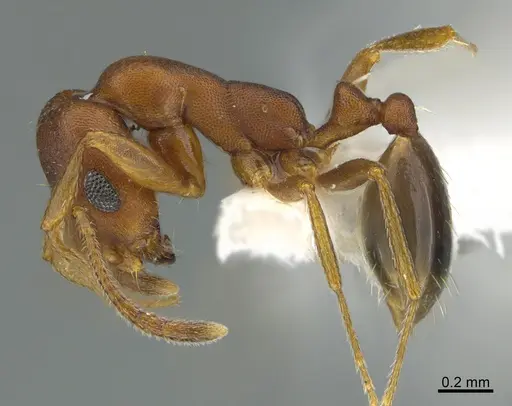
CASENT0814157
View on AntWeb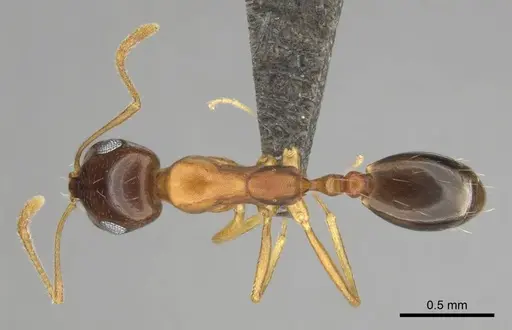
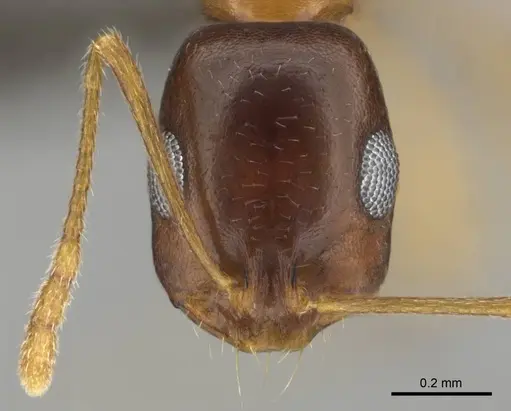
CASENT0913863
View on AntWeb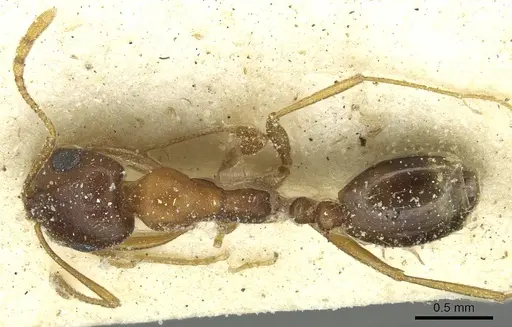
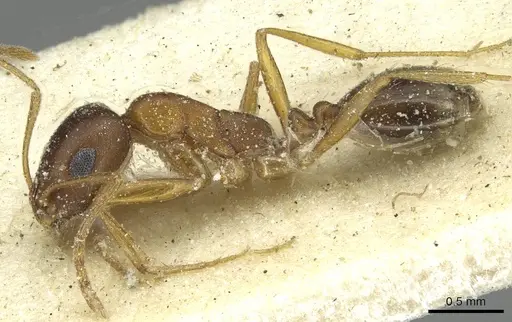
CASENT0914164
View on AntWeb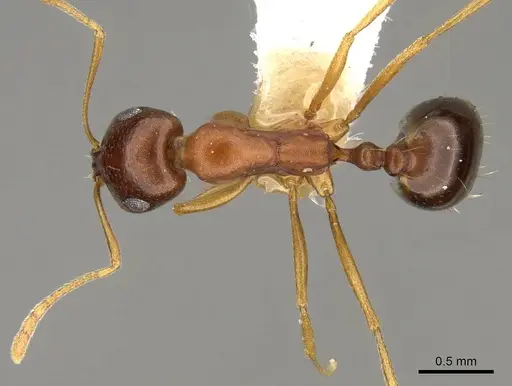
Literature
Loading...Loading products...