

Monomorium versicolor
- Scientific Name
- Monomorium versicolor
- Tribe
- Solenopsidini
- Subfamily
- Myrmicinae
- Author
- Heterick, 2006
- Distribution
- Found in 1 countries
Monomorium versicolor Overview
Monomorium versicolor is an ant species of the genus Monomorium. It is primarily documented in 1 countries , including Madagascar. Detailed taxonomic data and occurrence records can be further explored via authoritative databases such as AntWeb or the Global Biodiversity Information Facility (GBIF).
Monomorium versicolor
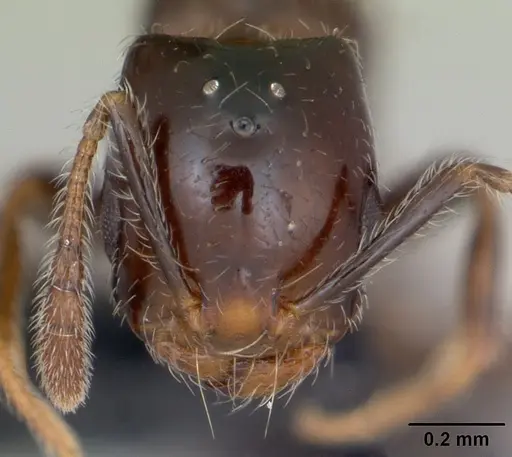
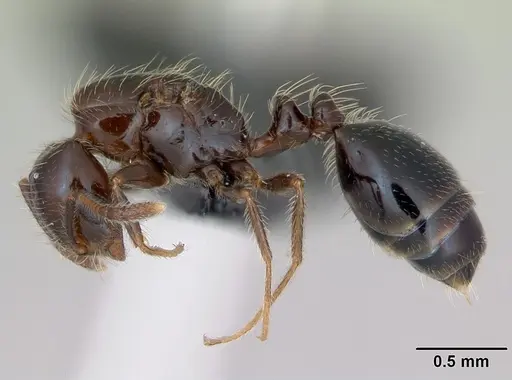
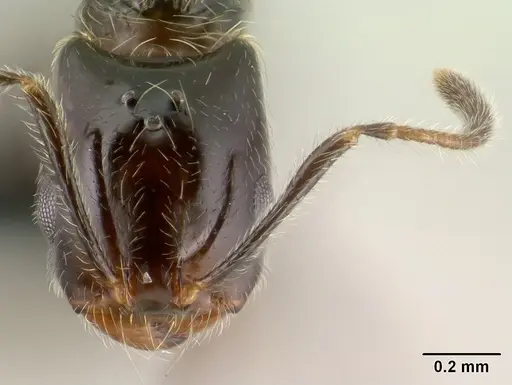
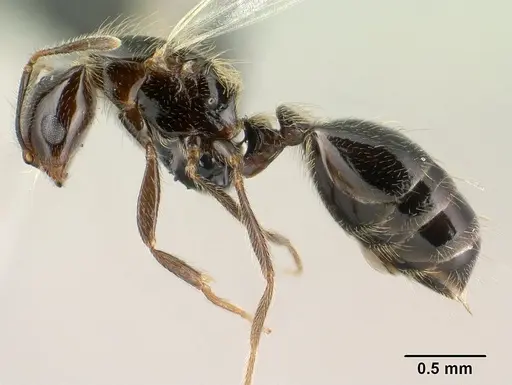
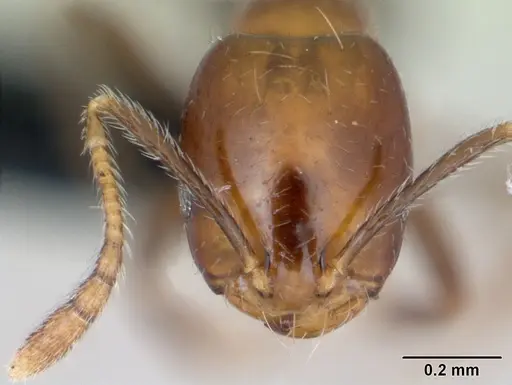
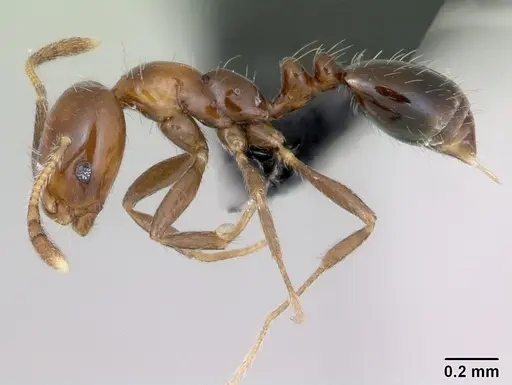
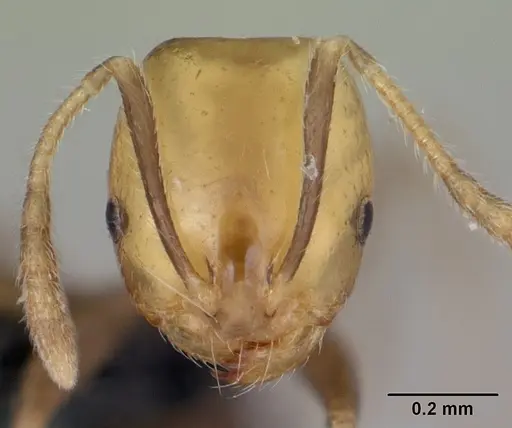
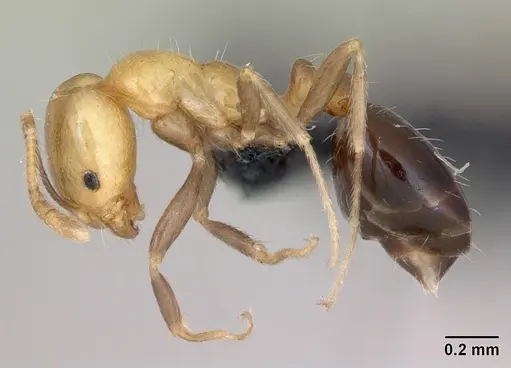
Monomorium versicolor is a medium-sized ant species endemic to Madagascar, first described by Heterick in 2006. Workers measure 1.21-1.63 mm in total length and display striking color variation, some colonies appear uniform dark reddish-brown while others show orange bodies with darker chocolate-colored gasters. The species is easily recognized by its three-toothed mandibles and distinctive high, pointed petiolar node. Queens are larger at 1.81-1.94 mm and have distinctive lobed occipital angles at the back of the head. This species belongs to the Monomorium flavimembra species group and has been found across Madagascar, with most collections from the southern and western regions [1][2]. What makes this species particularly interesting is its nesting preference, unlike many Monomorium that nest in soil, M. versicolor specifically prefers rotting wood substrates and has been collected from diverse habitats including spiny forest, dry tropical forest, montane rainforest, and gallery forest [1][3].
Quick Summary
- Difficulty: Medium
- Origin & Habitat: Monomorium versicolor is found exclusively throughout Madagascar, with most collections from the southern and western regions. It inhabits diverse vegetation communities including spiny forest, dry tropical forest, montane rainforest, and gallery forest. The species prefers nesting in rotting wood substrates, and workers are often collected by beating low vegetation and sifting through leaf litter [1][2][3].
- Colony Type: Colony structure is unconfirmed. The worker caste is monomorphic, meaning all workers are the same size. No information is available on whether this species forms single-queen or multi-queen colonies, or whether ergatoid (wingless replacement) queens are present [1].
- Size & Growth:
- Queen: 1.81-1.94 mm [1][4]
- Worker: 1.21-1.63 mm [1][4]
- Colony: Unknown, no colony size data available in the literature
- Growth: Unknown, development timeline has not been studied
- Development: Unknown, no direct development data available. Based on typical Monomorium patterns from related species, estimate 6-8 weeks at optimal temperature. (Development timeline has not been directly studied. Related Malagasy Monomorium species typically complete development in 6-8 weeks at warm temperatures.)
- Antkeeping:
- Temperature: Based on Madagascar's tropical climate, aim for 22-28°C. Provide a temperature gradient allowing workers to self-regulate. Avoid temperatures below 18°C or above 32°C.
- Humidity: Moderate to high humidity (60-80%). The species inhabits diverse forests including montane rainforest, so it appreciates moisture but avoid waterlogging. Keep the nest substrate consistently damp but not saturated.
- Diapause: Unknown, no documented diapause behavior. As a tropical species from Madagascar, it likely does not require true hibernation but may show reduced activity during cooler periods.
- Nesting: This species strongly prefers wood substrate for nesting. In captivity, provide a naturalistic setup with rotting wood pieces, cork bark, or a Y-tong/plaster nest with wood inclusions. Test tubes may be accepted if provided with a dark, enclosed space, but wood-based nests are ideal [1].
- Behavior: Workers are moderately active and forage both on vegetation and through leaf litter. The three-toothed mandible suggests they may be more predatory than some related species. They are not particularly aggressive toward keepers but may defend their nest vigorously. Escape risk is moderate, while workers are not tiny, they are small enough to exploit small gaps. Use standard barrier methods. The species shows variable coloration within colonies, which is normal [1].
- Common Issues: tropical species may struggle in cool, dry environments, maintain warmth and humidity, wood-nesting preference means standard test tube setups may be less ideal than naturalistic setups, no available data on colony founding behavior makes initial establishment potentially challenging, variable coloration might be mistaken for illness or stress by inexperienced keepers, escape prevention is important given their small worker size
Natural History and Distribution
Monomorium versicolor is endemic to Madagascar, where it occupies a remarkable range of ecological zones. The species has been documented across the island, with most collection records coming from the southern and western regions. This ecological flexibility is reflected in the diverse habitats where workers have been found: spiny forest (the unique southwestern thorny vegetation), dry tropical forest, montane rainforest, and gallery forest (riverine forests) [1].
The species shows a strong preference for nesting in rotting wood, which distinguishes it from many related Monomorium species that readily nest in soil. This wood-nesting behavior means they are often found in more humid microhabitats within their broader habitat type. Workers are collected through various methods including beating low vegetation (shaking branches and catching falling ants) and sifting through leaf litter, indicating they forage both in the canopy and on the forest floor [1][3].
One of the most distinctive features of this species is its color variation. Workers can range from uniform dark reddish-brown to having an orange-brown body with a distinctly darker chocolate-colored gaster. In lighter-colored specimens, the antennae are always darker than the head capsule. This variation is completely normal and not indicative of stress or illness [1].
Housing and Nest Preferences
Because Monomorium versicolor naturally nests in rotting wood, you should prioritize wood-based or naturalistic housing setups. A Y-tong (acrylic and cement) nest with narrow chambers works well, or better yet, a naturalistic setup with pieces of cork bark, rotting wood, or a soil-filled formicarium with wood inclusions. The key is providing a dark, enclosed space that mimics the rotting log environment they naturally prefer [1].
If using a more traditional test tube setup, consider adding a small piece of wood or bark inside the tube to provide the tactile surface they prefer. The nest area should be kept dark, these ants naturally seek enclosed spaces within wood. Provide a water tube for humidity but ensure the nest material stays damp without becoming waterlogged.
The outworld should include substrate suitable for foraging, a layer of soil or coco fiber works well. Because they naturally beat vegetation and sift litter, they will explore and forage through loose substrate. Ensure the setup has adequate ventilation to prevent mold while maintaining humidity.
Feeding and Diet
While specific dietary studies are lacking for M. versicolor, the genus Monomorium typically has an omnivorous diet. The species' three-toothed mandibles suggest it may be more predatory than some related species with simpler mandibles. In captivity, you should offer a varied diet including:
Protein sources: Small live prey such as fruit flies, pinhead crickets, and mealworms. Given their small worker size (1.21-1.63 mm), prey items should be appropriately sized, very small insects are ideal. You can also offer small amounts of raw chicken or fish, though live prey is preferred.
Sugar sources: A small drop of sugar water, honey, or diluted ant jelly can be offered. Monitor whether they accept sugar, some Monomorium species show variable sugar acceptance.
Fresh water should always be available.
Feed small amounts 2-3 times per week, removing any uneaten prey after 24 hours to prevent mold. [1]
Temperature and Humidity Requirements
As a tropical species from Madagascar, Monomorium versicolor requires warm and moderately humid conditions. Maintain the nest area at 22-28°C, with a slight gradient if possible so workers can self-regulate by moving between warmer and cooler areas. A heating cable on one side of the nest can help achieve this, but always provide unheated areas.
For humidity, aim for 60-80% relative humidity. The species inhabits diverse forests including montane rainforest, so it appreciates moisture but avoid creating saturated conditions. Keep the nest substrate consistently damp, check regularly and mist or add water as needed rather than following a fixed schedule. The nest material should feel damp to the touch but water should not pool.
Because this is a tropical species, it does not require hibernation. However, if your room temperature drops significantly below 18°C, you may notice reduced activity. Maintain stable, warm conditions for optimal colony health. [1]
Colony Establishment and Growth
Establishing a colony of M. versicolor can be challenging because the founding behavior has not been documented in scientific literature. Based on typical Monomorium genus patterns, the queen likely seals herself in a small chamber (claustral founding) and raises her first workers alone using stored fat reserves. However, this is an inference rather than a confirmed behavior.
If you obtain a founding queen, provide her with a small, dark enclosure (test tube or small container) with damp substrate. Do not disturb her during the founding period, queens often die if stressed by excessive checking. Expect 2-4 weeks for eggs to appear, then another 4-6 weeks for the first workers (nanitics) to emerge.
Once the colony establishes, growth rate is unknown but likely moderate. Related Monomorium species typically reach several hundred workers over 1-2 years under good conditions. Be patient, small colonies grow slowly, and overfeeding can cause mold problems that kill founding colonies. [1]
Frequently Asked Questions
How long does it take for Monomorium versicolor to go from egg to first worker?
The development timeline has not been directly studied for this species. Based on typical Monomorium patterns, expect approximately 6-8 weeks from egg to first worker at optimal temperature (around 25°C). This is an estimate, actual times may vary.
What is the best nest type for Monomorium versicolor?
This species naturally nests in rotting wood, so naturalistic setups with wood inclusions work best. A Y-tong nest with narrow chambers, cork bark pieces, or a soil formicarium with rotting wood are ideal. Standard test tubes are less ideal but can work if provided with a dark, enclosed space.
Are Monomorium versicolor good for beginners?
This species is rated as Medium difficulty. While not the easiest species for beginners due to their specific wood-nesting preferences and the lack of available care information, they are not the most challenging. Beginners should ensure they can maintain warm, humid conditions before attempting this species.
What temperature do Monomorium versicolor need?
Keep them at 22-28°C. As a tropical Madagascar species, they need warm conditions. Provide a temperature gradient so workers can move between warmer and cooler areas as needed.
Why do my Monomorium versicolor have different colors?
Color variation is completely normal for this species. Workers can range from uniform dark reddish-brown to orange-brown with a darker chocolate gaster. This natural variation is not indicative of illness or stress.
Can I keep multiple queens together?
The colony structure (monogyne vs polygyne) has not been documented for this species. Until more information is available, it is not recommended to house multiple unrelated queens together, as fighting may occur.
Do Monomorium versicolor need hibernation?
As a tropical species from Madagascar, they likely do not require true hibernation. However, they may show reduced activity during cooler periods. Maintain stable warm conditions year-round for best results.
What do Monomorium versicolor eat?
They likely have an omnivorous diet. Offer small live prey (fruit flies, tiny crickets, mealworms) as protein, and sugar water or honey as an energy source. Remove uneaten prey after 24 hours.
How big do Monomorium versicolor colonies get?
Colony size data is not available in the scientific literature. Based on related species, colonies likely reach several hundred workers over 1-2 years under good conditions.
References

This caresheet is licensed under CC BY-SA 4.0 .
CASENT0026023
View on AntWeb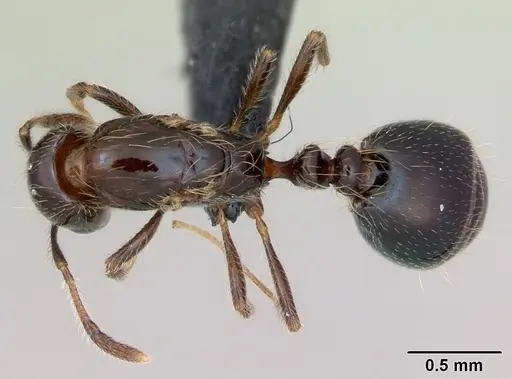
CASENT0144975
View on AntWeb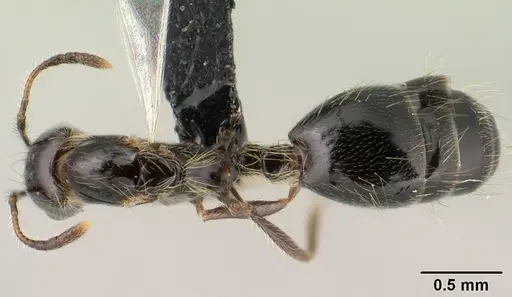
CASENT0433301
View on AntWeb
CASENT0442524
View on AntWeb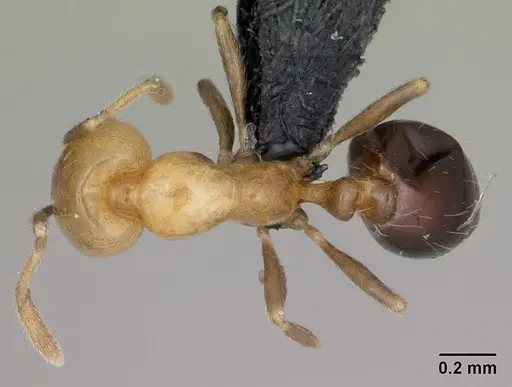
Literature
Loading...Loading products...