

Monomorium triviale
- Scientific Name
- Monomorium triviale
- Tribe
- Solenopsidini
- Subfamily
- Myrmicinae
- Author
- Wheeler, 1906
- Distribution
- Found in 2 countries
Monomorium triviale Overview
Monomorium triviale is an ant species of the genus Monomorium. It is primarily documented in 2 countries , including Japan, Korea, Republic of. Detailed taxonomic data and occurrence records can be further explored via authoritative databases such as AntWeb or the Global Biodiversity Information Facility (GBIF).
Monomorium triviale
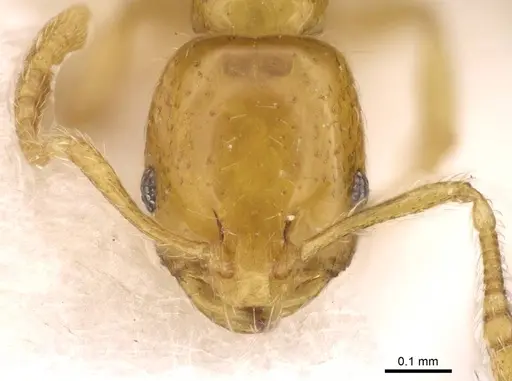
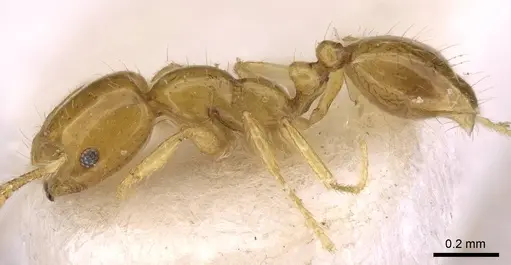
Monomorium triviale is a tiny yellow ant native to East Asia, found in Japan, China, and the Korean Peninsula. Workers measure just 1.5mm and are yellow to yellowish-brown in color, making them nearly invisible against leaf litter and soil [1]. This species is quite rare in Japan and typically inhabits open land and woodland margins [1][2]. What makes M. triviale extraordinary is its reproduction: it is one of the few ants that reproduces through thelytokous parthenogenesis, meaning virgin queens produce workers and new queens without ever mating. Males are completely absent from wild colonies, and workers are sterile [3][4].
Quick Summary
- Difficulty: Medium
- Origin & Habitat: Native to Japan, China, and the Korean Peninsula. Found in open land and at woodland margins, nesting in small cavities within dead plant material like rotten roots, dead twigs, hollow bamboo sticks, and acorns [1][3].
- Colony Type: Single-queen colonies (monogynous) with obligate thelytokous parthenogenesis, queens reproduce without mating, workers are completely sterile [5][3].
- Colony: Monogyne
- Founding: Claustral
- Size & Growth:
- Queen: Wingless (ergatoid) or brachypterous, estimated 2-3mm based on genus [6]
- Worker: 1.5mm [1]
- Colony: Approximately 200 workers on average in the wild [3]
- Growth: Moderate
- Development: Estimated 6-8 weeks based on related Monomorium species (Development timeline not directly studied, estimates based on genus patterns for small Myrmicinae)
- Antkeeping:
- Temperature: Keep at room temperature, roughly 20-25°C. This species tolerates typical indoor conditions as it naturally inhabits temperate Japan.
- Humidity: Moderate humidity. Keep nest substrate slightly moist but not waterlogged. These ants nest in rotting wood and plant cavities in nature, so they prefer damp conditions but need good ventilation to prevent mold.
- Diapause: Likely requires winter rest period (diapause) given temperate origin. Reduce temperature to around 10-15°C for 2-3 months during winter.
- Nesting: Best kept in naturalistic setups with small chambers or in Y-tong/plaster nests with tight passages scaled to their tiny 1.5mm size. They naturally nest in small cavities within dead plant material.
- Behavior: These are tiny, non-aggressive ants that are rarely observed foraging openly. They are shy and tend to stay hidden within their nest chambers. Workers are completely sterile and do not participate in reproduction, only the queen produces offspring via parthenogenesis. Colonies are small and grow slowly. Escape prevention is critical due to their very small size, they can squeeze through standard test tube openings and need fine mesh barriers.
- Common Issues: escape prevention is critical due to tiny 1.5mm size, use fine mesh and tight-fitting lids, colonies remain small (around 200 workers) so growth expectations should be realistic, no males exist, colonies cannot be started from mating flights, only through colony division or finding wild colonies, slow growth compared to many common ants may frustrate beginners, very rare in the hobby and difficult to acquire, wild collection in Japan is the primary source
Unique Reproduction: Thelytokous Parthenogenesis
Monomorium triviale is one of the most scientifically interesting ants you can keep. This species reproduces through obligate thelytokous parthenogenesis, virgin queens produce both workers and new queens without ever mating [3]. Males have never been found in the wild across 333 nests examined in Japan [3]. The queen's spermatheca (sperm storage organ) remains empty throughout her life, yet she produces viable offspring [3]. Workers are obligatorily sterile, they completely lack ovaries and cannot reproduce [4]. This means your colony will never produce males. To start new colonies, you must either divide an existing colony or collect wild colonies (in Japan only, as that's the primary range). This reproductive system is called Type III thelytoky: queens produce both workers and new queens via parthenogenesis, males are absent, and workers are completely sterile [3].
Nesting Preferences and Housing
In the wild, M. triviale nests in small cavities within dead plant material, think rotten roots, dead twigs, hollow bamboo sticks, and even acorns [3]. They've also been found nesting inside bamboo cavities in Kyoto Prefecture [7]. For captive care, these tiny ants need appropriately scaled housing. Y-tong (AAC) nests with narrow chambers work well, as do plaster nests with small passages. Test tubes can work but require excellent escape prevention due to their 1.5mm size. The nest should have some moisture but good ventilation to prevent mold. Because they're so small and secretive, you'll often only see workers when you disturb the nest or offer food. Avoid large, open formicariums, these ants prefer tight, enclosed spaces that mimic their natural nesting cavities.
Feeding and Diet
Like most small Myrmicinae, M. triviale likely feeds on honeydew, small insects, and sugary substances. In laboratory feeding experiments with their predator Lioponera daikoku, M. triviale larvae were stung and carried back to nests, confirming they are preyed upon due to their small colony size [8]. Offer sugar water or honey regularly, along with small protein sources like fruit flies, pinhead crickets, or other tiny arthropods. Given their small size, prey items should be appropriately sized, nothing larger than they can handle. They are not aggressive foragers and may not readily venture far from the nest to collect food.
Temperature and Seasonal Care
As a species native to temperate Japan and Korea, M. triviale experiences distinct seasons and likely requires a winter rest period (diapause). Keep them at room temperature (roughly 20-25°C) during the active season. In winter, reduce temperatures to around 10-15°C for 2-3 months to simulate natural seasonal changes. This species is not tropical and should not be kept consistently warm year-round. During the active season, ensure the nest has a slight moisture gradient so ants can choose their preferred humidity level. The small colony size (around 200 workers maximum) means they are more vulnerable to environmental stresses than larger species. [1][3]
Behavior and Temperament
M. triviale is a shy, non-aggressive species. Workers are tiny (1.5mm) and rarely seen outside the nest. Colonies remain small, typically around 200 workers in the wild [3], and grow slowly. The queen is wingless (ergatoid) or brachypterous (with tiny reduced wings), so they cannot disperse through nuptial flights [6]. New colonies form through colony fission when the queen and some workers relocate to a new nesting site. This means you cannot start colonies from mating flights since no males exist. Their secretive nature and small size make them a 'watching-from-the-sides' species rather than an active display ant.
Frequently Asked Questions
How do I start a Monomorium triviale colony?
Since this species has no males and reproduces through parthenogenesis, you cannot start a colony from a nuptial flight. Your options are: find and collect a wild colony in Japan (where they're native), or obtain a colony from a keeper who has successfully kept and propagated this rare species. Queens are wingless (ergatoid), so they cannot fly to establish new nests, new colonies form through colony fission where the queen moves with workers to a new location.
Do Monomorium triviale ants need a queen to reproduce?
Yes, but uniquely, the queen reproduces through parthenogenesis without mating. She lays eggs that develop into workers or new queens without being fertilized. Workers are completely sterile and cannot reproduce. The colony depends entirely on the queen for reproduction.
How long does it take for Monomorium triviale to develop from egg to worker?
The exact development timeline has not been directly studied. Based on related Monomorium species and typical small Myrmicinae development, estimate roughly 6-8 weeks from egg to worker at room temperature (around 22-25°C). Growth is slow compared to many common ants, and colonies remain small (around 200 workers maximum).
Are Monomorium triviale ants aggressive?
No, they are very docile and non-aggressive. These tiny ants (1.5mm workers) avoid confrontation and stay hidden within their nest. They pose no threat to humans and cannot sting effectively due to their small size. They are preyed upon by other ants like Lioponera daikoku.
What do Monomorium triviale ants eat?
They likely accept sugar sources (honey, sugar water) and small protein prey like fruit flies, tiny crickets, or other small arthropods. As small nesting ants, they probably prefer small, manageable food items. Offer sugar water constantly and protein 1-2 times per week.
Do Monomorium triviale ants need hibernation?
Likely yes. As a species native to temperate Japan and Korea, they likely require a winter rest period. Reduce temperatures to around 10-15°C for 2-3 months during winter. This mimics their natural seasonal cycle and supports healthy colony maintenance.
How big do Monomorium triviale colonies get?
Colonies reach approximately 200 workers on average in the wild [3]. This is a small colony size compared to many common ant species. Expect slow growth and a relatively compact colony even at maturity. Do not expect large, impressive swarms from this species.
Can I keep multiple Monomorium triviale queens together?
No. This species is monogynous, colonies have a single queen. Multiple unrelated queens would likely fight. Additionally, since queens are ergatoid (wingless) and colonies reproduce through fission rather than nuptial flights, combining queens is neither natural nor recommended for this species.
Are Monomorium triviale ants hard to keep?
Medium difficulty. The main challenges are: escape prevention (they're tiny), slow growth, small final colony size, and difficulty acquiring them (they're rare in the hobby). They are not difficult to care for once you have a colony, but starting one is the primary challenge. They are not recommended as a first ant for beginners.
Why are there no male Monomorium triviale ants?
This species reproduces through obligate thelytokous parthenogenesis, males have been completely eliminated from their reproductive system. Queens produce only females (workers and new queens) through asexual reproduction. This has been confirmed across 333 wild nests examined in Japan, no males were ever found [3]. This is a stable, inherited reproductive mode, not a temporary phenomenon.
References

This caresheet is licensed under CC BY-SA 4.0 .
CASENT0914396
View on AntWeb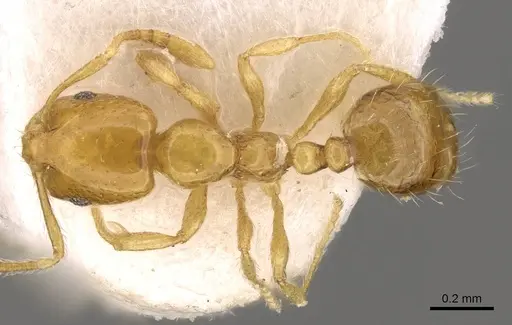
Literature
Loading...Loading products...