

Monomorium trake
- Scientific Name
- Monomorium trake
- Tribe
- Solenopsidini
- Subfamily
- Myrmicinae
- Author
- Bolton, 1987
- Distribution
- Found in 7 countries
Monomorium trake Overview
Monomorium trake is an ant species of the genus Monomorium. It is primarily documented in 7 countries , including Côte d'Ivoire, Gambia, Liberia. Detailed taxonomic data and occurrence records can be further explored via authoritative databases such as AntWeb or the Global Biodiversity Information Facility (GBIF).
Monomorium trake
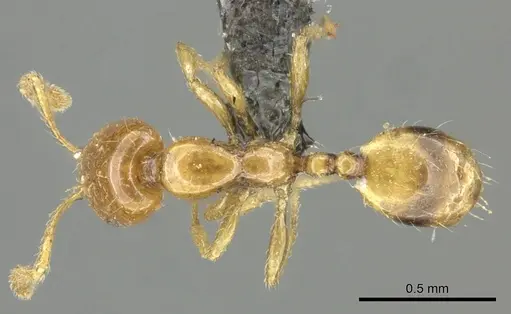
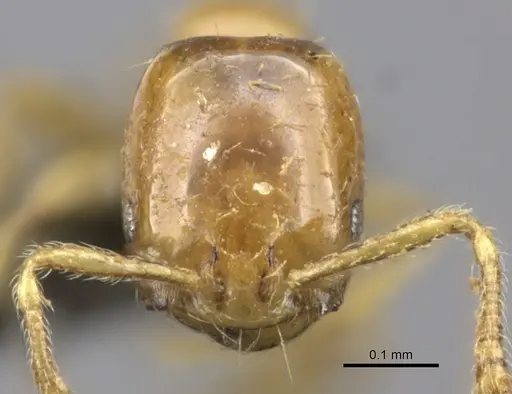
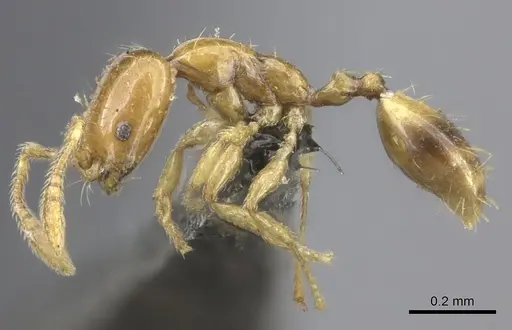
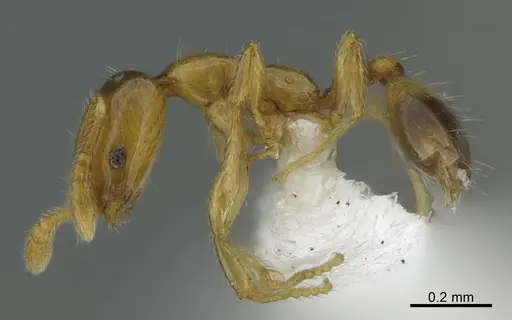
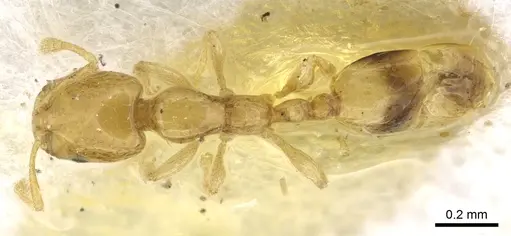
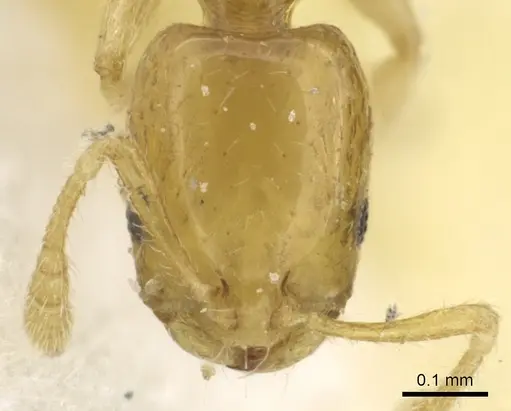
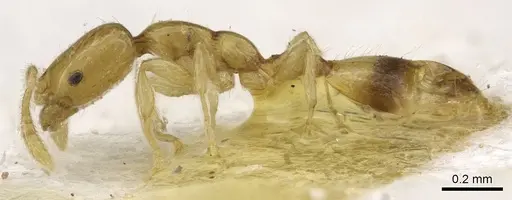
Monomorium trake is a tiny ant species native to the Afrotropical region, found across West and East Africa including Ghana, Benin, Uganda, and Tanzania. Workers measure a mere 1.6mm in total length, making them one of the smaller ant species you'll encounter. They have distinctive 12-segmented antennae with notably short scapes (SI 73), and their small eyes are positioned well forward on the head. The workers are yellowish to light brown, typical of many Monomorium species.
These ants are cavity nesters that will use almost any small space they can find above ground. In the wild, they've been collected from dead branches, rotten logs, live stems, and even nests built into stones. Their versatility extends to agricultural settings, researchers in Benin found them foraging on mango trees. This arboreal and ground-nesting flexibility makes them an interesting species for keepers who want to observe natural foraging behavior.
Quick Summary
- Difficulty: Medium
- Origin & Habitat: Native to the Afrotropical region, found in Ghana (type locality), Benin, Central African Republic, Uganda, and Tanzania. They inhabit mesic (moderately damp) forest environments and have been recorded in both natural forest and mango farm ecosystems [1].
- Colony Type: Colony structure is unconfirmed, likely single-queen (monogyne) based on typical Monomorium patterns, but this hasn't been directly studied for this species.
- Size & Growth:
- Queen: Unknown, no documented queen measurements for this species. Related Monomorium species typically have queens 4-7mm.
- Worker: 1.6mm total length (TL) [1]
- Colony: Unknown, no colony size data exists for this species. Based on similar tiny ants, likely under 500 workers.
- Growth: Unknown, likely moderate based on typical small Myrmicinae patterns.
- Development: Unconfirmed, no direct development data exists. Based on related small tropical ants, estimate 4-8 weeks at optimal temperature. (This is a rough estimate since no species-specific development studies exist.)
- Antkeeping:
- Temperature: Keep around 24-28°C, these are tropical forest ants that prefer warm conditions. A gentle gradient allowing workers to move between warmer and cooler areas is ideal.
- Humidity: Moderate to high humidity (60-80%), they come from mesic forest environments. Keep the nest substrate slightly moist but not waterlogged. Provide a water tube for drinking access.
- Diapause: Unlikely, as a tropical species from Africa, they probably don't require a true hibernation period. However, they may slow down slightly during cooler months.
- Nesting: These tiny ants will nest in small cavities, test tubes work well for founding colonies. They adapt to various nest materials including acrylic, Y-tong, and naturalistic setups. The key is providing appropriately scaled chambers since they're much smaller than typical pet ants [1].
- Behavior: Very small, active ants that forage both on the ground and in vegetation. They likely form trails to food sources like many Monomorium species. Workers are not particularly aggressive but will defend their nest. Escape prevention is critical, at 1.6mm, they can squeeze through remarkably small gaps. Expect them to be quick and agile. They probably accept small prey items and may tend aphids for honeydew.
- Common Issues: escape prevention is critical, their tiny 1.6mm size means they can slip through standard barrier gaps that larger ants cannot, no species-specific care data exists, keepers must adapt from related species, so some trial and error is expected, slow colony growth is typical for tiny species and can frustrate beginners who expect rapid development, humidity control is tricky, too dry and brood dies, too wet and mold becomes a problem in small nests, wild-caught colonies may harbor parasites or pathogens that can devastate captive colonies
Housing and Nest Setup
For a founding colony, a standard test tube setup works well. Fill the tube about one-third with water, push a cotton ball in to create a water reservoir, then add the queen. The small size of Monomorium trake (1.6mm workers) means you should use tubes with appropriately small diameters, standard test tubes are fine, but avoid oversized setups where the queen might get lost. Once the colony reaches 20-30 workers, you can consider moving to a small formicarium or keep them in a test tube setup with an outworld. Because they're cavity nesters, they'll do well in acrylic nests with small chambers, Y-tong nests, or naturalistic setups with small twigs and branches. The key is ensuring chambers are appropriately scaled to their tiny size, passages that seem narrow to us are perfectly sized for these ants. [1]
Feeding and Diet
In the wild, Monomorium trake forages for small prey and likely tends homopteran insects for honeydew. In captivity, offer small protein sources like fruit flies, pinhead crickets (appropriately sized), and small mealworms. They will probably accept sugar water or honey as an energy source, place a small drop on a piece of foil or cotton for easy access. Feed small amounts every 2-3 days and remove any uneaten prey after 24 hours to prevent mold. Since they're so tiny, even a fruit fly is a substantial meal for a worker. Observe your colony's preferences, some Monomorium species are pickier than others about accepting sugar sources. Always ensure fresh water is available. [1]
Temperature and Humidity
As a tropical species from Africa's mesic forests, Monomorium trake prefers warm, moderately humid conditions. Aim for temperatures between 24-28°C (75-82°F). You can achieve this with a heating cable on one side of the nest, creating a temperature gradient so workers can self-regulate. Place the heating element on top of the nest to avoid drying out the substrate too quickly. For humidity, target 60-80%, this is easy to maintain with a water tube in the nest and occasional misting of the outworld. The key is consistency rather than extreme values. Sudden swings in either temperature or humidity can stress these small ants more than larger species. Monitor condensation levels as a rough humidity guide, some condensation on the nest walls is good, but standing water is too much. [1]
Colony Development and Growth
Monomorium trake is a slow-growing species, which is typical for very small ants. A newly mated queen will likely take 4-8 weeks to produce her first workers (nanitics), though this is an estimate since no species-specific data exists. The first batch of workers will be tiny, these nanitics are often smaller than fully grown workers. Colony growth is gradual: expect months to reach 50 workers, possibly over a year to reach 100+ workers. The small size of workers means each individual contributes less to colony labor than in larger species. Patience is essential with this species. Don't be tempted to overfeed or expand the nest too quickly, a stable, slightly crowded condition often promotes better colony health than a spacious but unstable setup.
Handling and Temperament
These ants are not aggressive toward keepers and rarely bite. Their small size means even if they did attempt to bite, it would be imperceptible to humans. They are fast-moving and active foragers, which makes them entertaining to watch. The main concern for keepers is escape prevention, at 1.6mm, workers can slip through gaps that seem impossibly small. Use fluon or another barrier grease on the edges of your setup. Check for any gaps around tube connections and outworld entry points. When observing your colony, do so quickly when the nest is open, as these tiny ants can bolt unexpectedly. They're best suited for observation through nest walls rather than frequent handling. [1]
Frequently Asked Questions
How long does it take for Monomorium trake to produce first workers?
The exact timeline is unconfirmed for this species, but based on related small tropical ants, expect 4-8 weeks from egg to first worker at optimal temperature (around 26°C). The first workers (nanitics) will be very small.
What do Monomorium trake ants eat?
They likely accept small protein sources like fruit flies, tiny crickets, and small mealworms, plus sugar water or honey for energy. They may also tend aphids for honeydew. Feed small amounts every 2-3 days.
Are Monomorium trake ants good for beginners?
They are rated Medium difficulty. While their small size makes them fascinating, the critical need for excellent escape prevention and the lack of species-specific care data makes them better suited for keepers with some experience.
Do Monomorium trake ants need hibernation?
Unlikely, as a tropical African species, they probably don't require a true hibernation period. They may slow down slightly during cooler months, but a full diapause is probably not necessary.
How big do Monomorium trake colonies get?
Colony size is unconfirmed for this species. Based on similar tiny ants, they likely reach a few hundred workers at most, not the thousands seen in larger ant species.
Can I keep multiple Monomorium trake queens together?
This has not been studied for this species. Based on typical Monomorium behavior, single-queen colonies are most common. Combining unrelated queens is not recommended without evidence they can coexist.
What temperature should I keep Monomorium trake at?
Keep them warm at 24-28°C (75-82°F). A heating cable on one side of the nest creates a gradient that lets workers choose their preferred temperature.
Why are my Monomorium trake ants escaping?
Their tiny 1.6mm size allows them to slip through gaps that seem impossibly small. Use fluon or barrier grease on all edges, check connections between tubes and outworlds, and ensure your setup has no gaps larger than 1mm.
When should I move my colony to a formicarium?
Wait until the colony has 30-50 workers and the test tube is becoming crowded. For these small ants, a small acrylic nest or Y-tong with appropriately sized chambers works well.
References

This caresheet is licensed under CC BY-SA 4.0 .
Literature
Loading...Loading products...