

Monomorium rosae
- Scientific Name
- Monomorium rosae
- Tribe
- Solenopsidini
- Subfamily
- Myrmicinae
- Author
- Santschi, 1920
- Distribution
- Found in 7 countries
Monomorium rosae Overview
Monomorium rosae is an ant species of the genus Monomorium. It is primarily documented in 7 countries , including Côte d'Ivoire, Gambia, Kenya. Detailed taxonomic data and occurrence records can be further explored via authoritative databases such as AntWeb or the Global Biodiversity Information Facility (GBIF).
Monomorium rosae
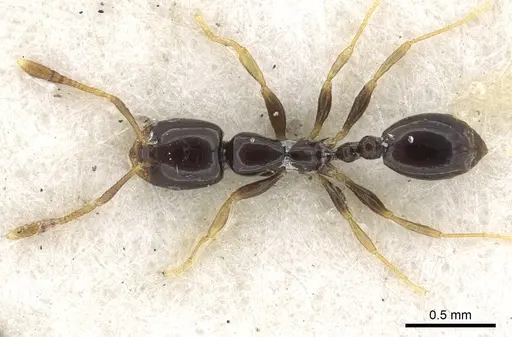
Monomorium rosae is a tiny dark ant species native to tropical Africa, measuring just 1.6-2.0mm in total length for workers [1]. It belongs to the Monomorium genus within the Solenopsidini tribe and is part of the exiguum species complex. The species is glossy blackish brown to black in color, with distinctive 11-segmented antennae and a uniquely shaped postpetiole node that helps distinguish it from similar species [1]. These ants have been documented across a wide range of Western, Central, and Eastern African countries including Ghana, Nigeria, Kenya, Senegal, Democratic Republic of Congo, Gambia, Rwanda, and Gabon [2][3][4]. In their natural habitat, they inhabit savanna forests and have also been found in agricultural settings like tea fields [1]. This is a small, inconspicuous ant that forages in leaf litter and ground layers.
Quick Summary
- Difficulty: Unknown, no captive care documentation exists
- Origin & Habitat: Tropical Africa including Ghana, Nigeria, Kenya, Senegal, Democratic Republic of Congo, Gambia, Rwanda, and Gabon. Found in savanna forest and tea field habitats [1][2].
- Colony Type: Colony structure is unconfirmed. Based on typical Monomorium patterns, likely single-queen colonies, but this has not been documented for this specific species.
- Size & Growth:
- Queen: Unconfirmed, no specific measurements available. Likely similar to workers at 2-3mm based on genus patterns.
- Worker: 1.6-2.0mm total length [1]
- Colony: Unknown, no colony size data available for this species
- Growth: Unknown, no development data exists
- Development: Unconfirmed, no direct measurements. Based on similar small Myrmicinae, estimate 4-8 weeks at optimal temperature. (Development timeline is unconfirmed for this species. Estimates based on genus-level patterns for small tropical ants.)
- Antkeeping:
- Temperature: Keep at room temperature around 22-26°C. This range is typical for tropical African ants and should support basic colony function. Adjust based on observed colony activity, if workers seem sluggish, slightly increase temperature, if they avoid heated areas, reduce slightly.
- Humidity: Moderate humidity around 50-70%. These ants naturally inhabit savanna and forest floor environments, so keep the nest substrate slightly moist but not waterlogged. Allow some drier areas within the setup for the ants to self-regulate.
- Diapause: Unlikely, as a tropical species from equatorial Africa, they probably do not require a hibernation period. However, a slight reduction in temperature during cooler months may trigger minor slowdowns.
- Nesting: Small test tubes or acrylic nests work well for their tiny size. In nature they likely nest in soil or under stones in leaf litter. Provide a small nest chamber with easy access to a foraging area. Given their very small size, ensure escape prevention is excellent, they can squeeze through remarkably small gaps.
- Behavior: Temperament is unconfirmed but based on genus patterns, they are likely docile and non-aggressive. Their small size means they pose no sting threat to humans. Foraging style is probably generalist, they likely scavenge and collect small prey and honeydew like other Monomorium species. Escape risk is high due to their tiny 1.6-2.0mm size, use fine mesh barriers and tight-fitting lids.
- Common Issues: tiny size makes escape prevention critical, they can slip through standard barrier gaps, no species-specific care documentation exists, all advice is based on genus patterns, wild-caught colonies may harbor parasites or pathogens from their native habitat, slow growth may frustrate keepers expecting visible progress, humidity control is important, too wet causes fungal issues, too dry stresses the colony
Appearance and Identification
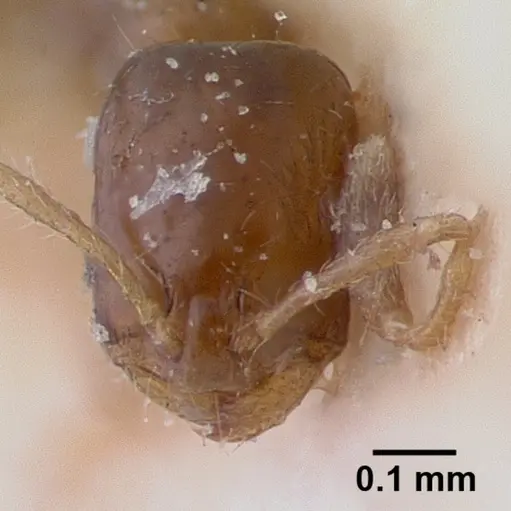
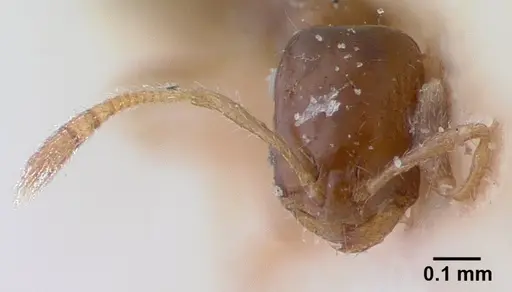
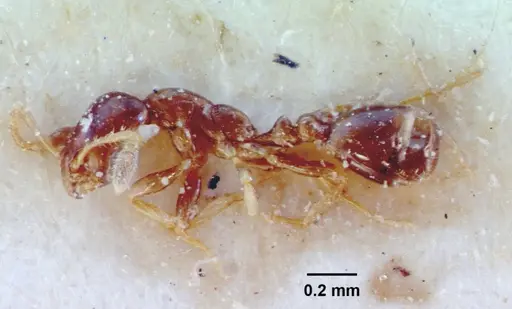
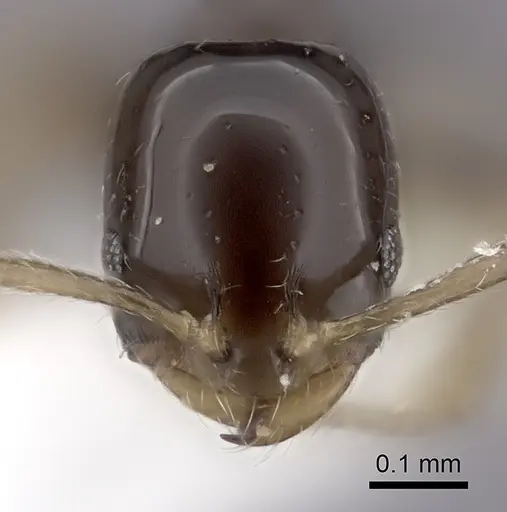
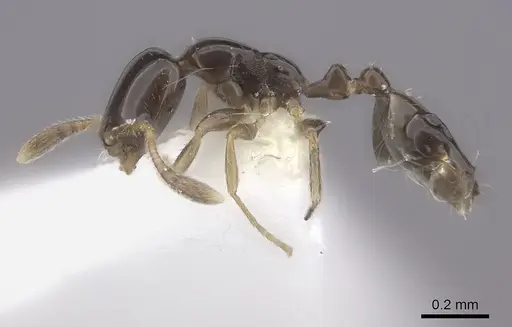
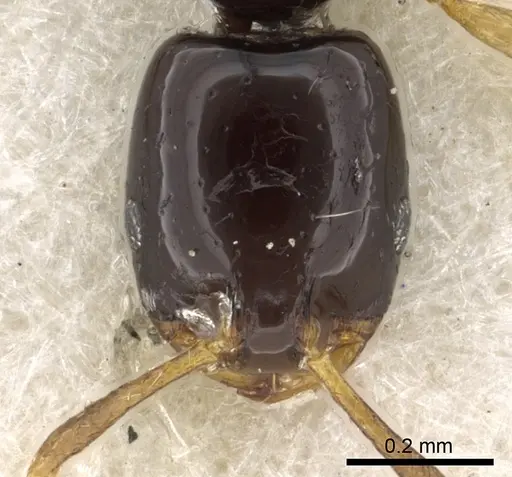
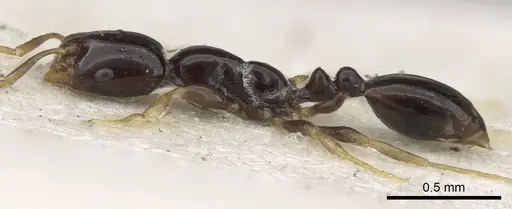
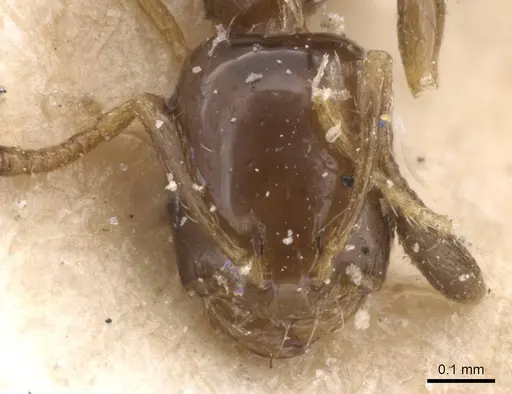
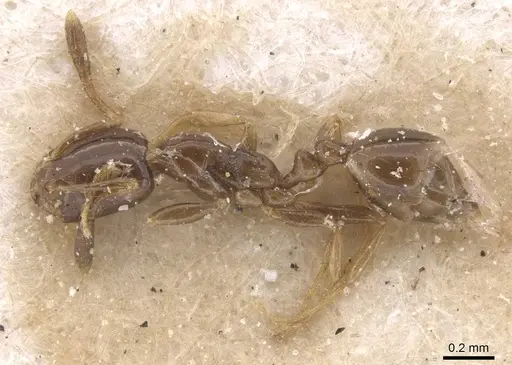
Monomorium rosae is one of the smaller ant species you'll encounter, with workers measuring just 1.6-2.0mm in total length [1]. They have a glossy blackish brown to black coloration that makes them quite distinctive in the leaf litter where they forage. The most reliable identification features are their 11-segmented antennae and the uniquely shaped postpetiole node, this is the segment between the waist and the abdomen, and in M. rosae it has a distinctive broad, rounded shape that separates it from similar species. Their eyes are relatively large for their body size, positioned toward the front of the head. The workers have short standing hairs on their body and lack significant sculpture, giving them a smooth, glossy appearance. These identification features matter for keepers because confirming you actually have M. rosae and not a similar-looking species helps ensure you're providing appropriate care.
Natural Distribution and Habitat
This species has a broad distribution across tropical Africa, documented in countries spanning West Africa (Ghana, Nigeria, Senegal, Gambia), Central Africa (Democratic Republic of Congo, Gabon), and East Africa (Kenya, Rwanda) [2][3][4][5]. They inhabit savanna forests and have also been recorded in agricultural settings like tea fields, suggesting they can adapt to some human-modified environments [1]. In Côte d'Ivoire, they appear in Guinean savanna environments and have been studied in areas with varying fire regimes, indicating some resilience to environmental disturbance [6]. Their presence across this wide geographic range suggests they are adaptable and not extremely specialized in their requirements. For captive care, this broad distribution suggests they can tolerate a range of conditions within tropical parameters, but their preference for forest and savanna habitats indicates they need access to some moisture and likely benefit from naturalistic setups with leaf litter or soil substrate.
Housing and Nest Setup
Given their tiny 1.6-2.0mm worker size, housing M. rosae requires attention to scale. Small test tubes work well for founding colonies, use a standard test tube setup with a water reservoir cotton ball at one end, but ensure the cotton is packed tightly enough that it won't flood the chamber. The colony will need a small outworld for foraging. Because of their minute size, escape prevention must be excellent, standard fluon barriers may need reinforcement, and any connections between nest and outworld should be checked for gaps. Many keepers use fine mesh (at least 0.5mm or smaller) on any ventilation. Acrylic nests with small chambers can work, but ensure the tunnel dimensions are appropriate for such tiny ants. A naturalistic setup with a shallow layer of moist soil or sand topped with leaf litter mimics their natural forest floor habitat and gives them opportunities to forage naturally. The key is providing a setup where you can easily observe them while meeting their need for small-scale, humid conditions.
Feeding and Diet
While specific dietary studies for M. rosae do not exist, Monomorium species are generally omnivorous with a preference for protein sources. In their natural savanna and forest habitats, they likely scavenge for small insects, collect honeydew from aphids or scale insects, and exploit other sweet secretions. For captive care, offer small protein sources appropriate to their tiny size, small fruit flies, pinhead crickets, or tiny pieces of mealworms work well. They will likely accept sugar water or honey as an energy source, though some Monomorium species show weak sugar attraction. Feed small amounts initially and observe what they consume. Remove uneaten food after 24-48 hours to prevent mold. Because they are so small, even tiny prey items represent significant meals, don't overfeed. A constant supply of clean water is essential.
Temperature and Seasonal Care
As a tropical species from equatorial Africa, M. rosae does not require hibernation or diapause. Keep them at stable room temperature in the range of 22-26°C, which aligns with typical indoor conditions in most homes and matches their natural tropical environment. Avoid temperatures below 18°C or above 30°C unless you observe clear signs of stress (workers clustering away from heat or heat sources). Unlike temperate species, they don't need seasonal temperature drops, but minor fluctuations matching indoor seasonal changes are likely tolerated. If your room temperature falls below the recommended range, a small heating cable on one side of the nest can provide a gentle warmth gradient. Place any heating on top of the nest, not underneath, to avoid drying out the substrate. Monitor for condensation, some moisture is good, but excessive condensation can drown tiny colonies.
Behavior and Temperament
Specific behavioral documentation for M. rosae is lacking, but members of the Monomorium genus are generally docile, non-aggressive ants that focus on foraging rather than defending territory. Their tiny size means they pose no sting threat to humans, their stingers are present but too small to penetrate skin effectively. Workers likely forage individually or in small groups, searching for small prey and sweet substances. They probably don't exhibit dramatic defensive behaviors like some larger ants might. The main behavioral concern for keepers is their small size enabling easy escape, they are excellent at finding and exploiting tiny gaps that larger ants would miss. Expect slow, methodical foraging rather than rapid, aggressive recruitment. Colonies are likely slow-growing given their small worker size, so patience is essential.
Frequently Asked Questions
How long does it take for Monomorium rosae to produce first workers?
The egg-to-worker timeline is unconfirmed for this species. Based on typical patterns for small Myrmicinae ants, expect approximately 4-8 weeks from egg to first worker at optimal temperature (around 24°C). However, this is an estimate, actual development time may vary and has not been specifically documented for M. rosae.
Can I keep Monomorium rosae in a test tube?
Yes, test tubes work well for founding colonies of this tiny species. Use a standard test tube setup with a water reservoir. Because they are only 1.6-2.0mm, ensure the cotton barrier is packed tightly to prevent flooding and escape through gaps. You'll need to transition them to a larger setup as the colony grows.
What do Monomorium rosae eat?
They are omnivorous like most Monomorium species. Offer small protein sources (tiny insects like fruit flies, small cricket pieces, or mealworm fragments) and sugar sources (honey water or sugar water). Remove uneaten food after 24-48 hours to prevent mold.
Do Monomorium rosae need hibernation?
No, as a tropical African species they do not require hibernation. Keep them at stable temperatures between 22-26°C year-round. Minor seasonal temperature variations in typical indoor environments are likely tolerated.
How big do Monomorium rosae colonies get?
Colony size is unknown, no documentation exists for maximum colony size in this species. Based on their tiny worker size (1.6-2.0mm), colonies are likely smaller than many common ant species, possibly reaching dozens to a few hundred workers at most.
Are Monomorium rosae good for beginners?
Difficulty level is unknown since no captive care documentation exists for this species. Their tiny size actually makes them more challenging than larger, more common species because of escape prevention and observation difficulties. They may not be ideal for complete beginners, but experienced antkeepers interested in unusual African species may find them rewarding.
Why are my Monomorium rosae escaping?
Their tiny 1.6-2.0mm size makes them excellent escape artists. They can squeeze through remarkably small gaps. Use fine mesh (0.5mm or smaller), ensure all connections are sealed with fluon or similar barriers, and check for any gaps in your setup regularly. Even standard barrier setups may need reinforcement for these minute ants.
Can I keep multiple Monomorium rosae queens together?
Colony structure is unconfirmed for this species. Combining unrelated queens has not been documented and is not recommended. Most Monomorium species establish single-queen colonies, so it's safest to house foundresses separately.
What temperature is best for Monomorium rosae?
Keep them at 22-26°C, with around 24°C being a good target. This matches their tropical African origin. Use a heating cable on one side of the nest if your room temperature runs cooler, placing it on top of the nest to avoid drying.
References

This caresheet is licensed under CC BY-SA 4.0 .
CASENT0010826
View on AntWeb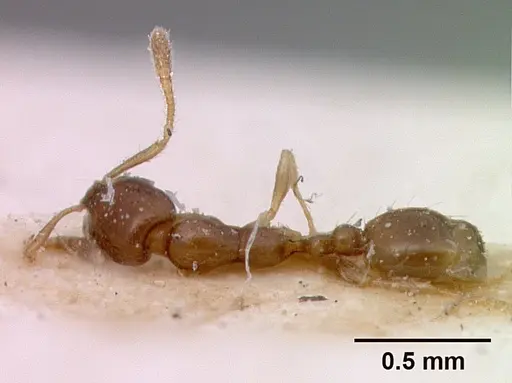
CASENT0217174
View on AntWeb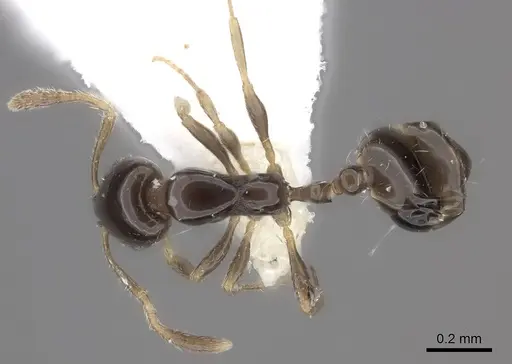
CASENT0902271
View on AntWeb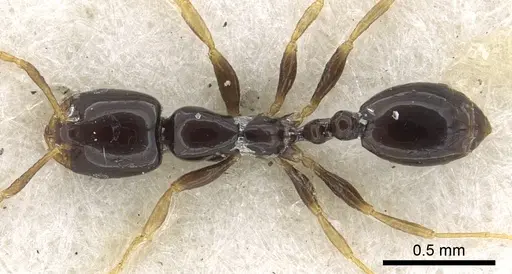
CASENT0923615
View on AntWeb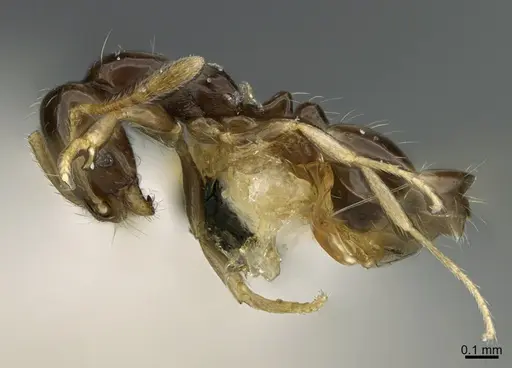
RMCAENT000017774
View on AntWeb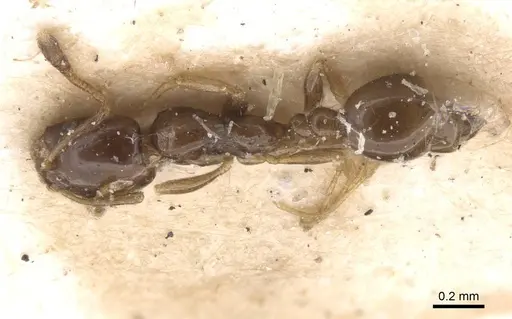
Literature
Loading...Loading products...