

Monomorium invidium
- Scientific Name
- Monomorium invidium
- Tribe
- Solenopsidini
- Subfamily
- Myrmicinae
- Author
- Bolton, 1987
- Distribution
- Found in 10 countries
Monomorium invidium Overview
Monomorium invidium is an ant species of the genus Monomorium. It is primarily documented in 10 countries , including Congo, Democratic Republic of the, Central African Republic. Detailed taxonomic data and occurrence records can be further explored via authoritative databases such as AntWeb or the Global Biodiversity Information Facility (GBIF).
Monomorium invidium
Monomorium invidium is a tiny black ant species native to West Africa, measuring just 1.8-2.3mm in worker length. It belongs to the Monomorium hanneli species group and is the most common and widely distributed member of this group across its range, found in countries including Nigeria, Ghana, Guinea, Ivory Coast, Cameroon, Uganda, and the Democratic Republic of Congo. These ants are glossy and polished blackish-brown to jet black in color, with smooth bodies and distinctive standing hairs on their dorsal surfaces. They live in forest habitats, commonly found in leaf litter samples, and have been recorded at elevations around 110m in Gabon and in various forest types across their range [1][2]. This species has also adapted to urban environments, appearing in green spaces in Abidjan, Ivory Coast [3].
Quick Summary
- Difficulty: Medium
- Origin & Habitat: West African forests, found in leaf litter across Nigeria, Ghana, Guinea, Ivory Coast, Cameroon, Uganda, and DRC. Prefers forest habitats and is commonly collected through litter sampling[1].
- Colony Type: Colony structure is unconfirmed. Based on typical Monomorium patterns, likely single-queen colonies. Queens have been described but colony founding behavior has not been directly studied.
- Size & Growth:
- Queen: Queens described by Bolton 1987 but exact measurements not specified in available literature, estimated around 4-5mm based on genus patterns.
- Worker: 1.8-2.3mm.
- Colony: Likely small colonies based on worker size and typical genus patterns, estimated under 500 workers.
- Growth: Moderate, based on typical Monomorium development patterns.
- Development: Estimated 6-8 weeks at optimal tropical temperatures based on genus-level data for related species. (Development timeline not directly studied for this species. Estimates based on typical Monomorium patterns.)
- Antkeeping:
- Temperature: Keep at 24-28°C. As a West African forest species, they prefer warm, stable conditions. A heating cable on one side of the nest creates a suitable gradient.
- Humidity: Keep substrate consistently moist but not waterlogged. Forest litter species require higher humidity, aim for 60-80% relative humidity. Provide a water tube for drinking access.
- Diapause: Unlikely, being a tropical species from West Africa, they probably do not require a diapause period. Keep at stable warm temperatures year-round.
- Nesting: These tiny ants naturally nest in leaf litter and rotting wood. In captivity, a Y-tong (AAC) nest or plaster nest with small chambers works well. Avoid large, open spaces, they prefer tight, humid chambers scaled to their tiny size.
- Behavior: These are small, generally docile ants that forage in leaf litter and upper soil layers. They are not aggressive and rarely sting. Their tiny size (under 2.5mm) makes them excellent escape artists, you must use fine mesh and tight-fitting barriers. They are ground-nesting and likely omnivorous, feeding on small insects, honeydew, and nectar. Activity level is moderate, with workers actively foraging through the substrate.
- Common Issues: escape prevention is critical due to their very small size, they can squeeze through standard mesh, slow founding phase means colonies are vulnerable, avoid disturbing claustral queens, high humidity requirements can lead to mold if ventilation is poor, small colony size makes them sensitive to disturbance, handle minimally, wild-caught colonies may have parasites that can devastate captive colonies
Natural History and Distribution
Monomorium invidium is a West African species that has been recorded across a broad geographic range including Nigeria, Ghana, Guinea, Ivory Coast, Cameroon, Uganda, and the Democratic Republic of Congo. It was also recently recorded in Rwanda at Akagera National Park, expanding its known range further east [2]. This species is a member of the Monomorium hanneli species group and is considered the most common and widely distributed member of this group in West Africa. It is typically found in forest habitats, commonly collected through leaf litter sampling methods. Studies in Gabon found this species at approximately 110m elevation in leaf litter transects [1]. Research has also shown these ants can adapt to human-modified landscapes, appearing in urban green spaces in Abidjan, Ivory Coast, though they remain most abundant in natural forest areas [3]. The species was originally described by Bolton in 1987 based on specimens from Nigeria and other West African countries.
Identification and Morphology
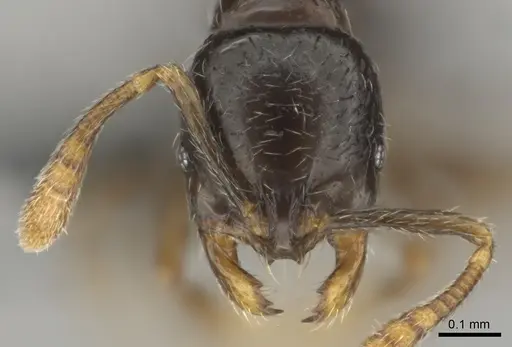
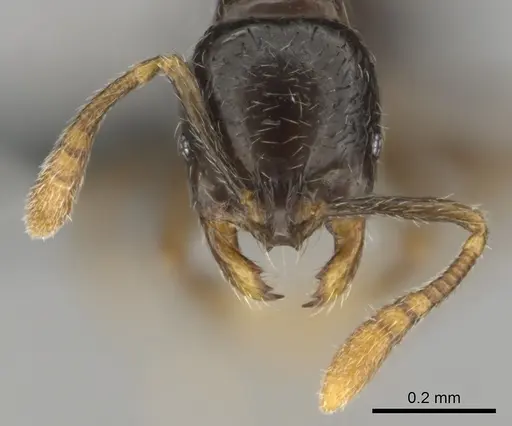
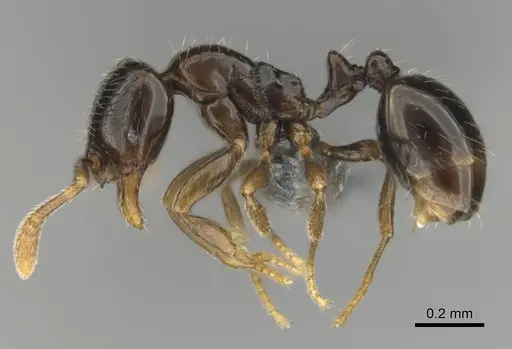
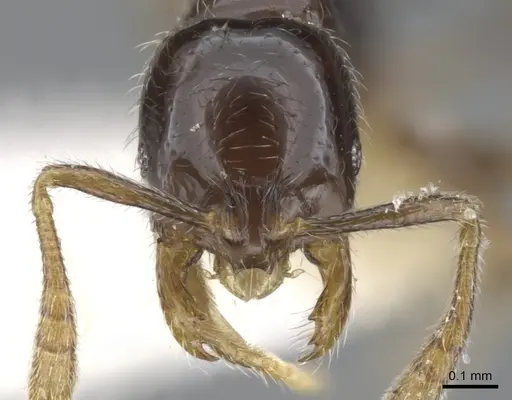
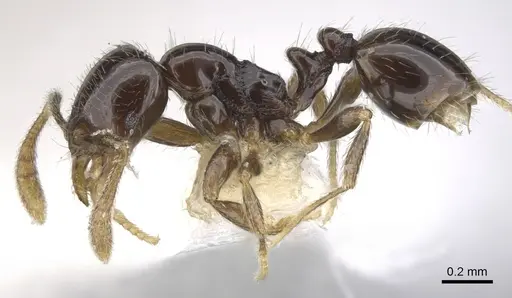
Workers of Monomorium invidium are tiny, measuring 1.8-2.3mm in total length. They have a highly polished, glossy appearance ranging from blackish-brown to jet black in color. The species is characterized by smooth, unsculptured mandibles and a distinctive clypeal margin with a conspicuous pair of teeth. The eyes are relatively small, with 3-5 ommatidia in the longest row. The propodeum (the section behind the mesonotum) varies in profile shape from narrowly but bluntly rounded to sharply obtusely angular. The petiole and postpetiole nodes are high and narrow in profile, with narrowly rounded tops. All dorsal surfaces of the head and body bear numerous standing hairs, which is a distinctive feature. The species can be distinguished from related West African Monomorium by its less strongly sculptured appearance compared to M. jacksoni, and its broader nodes compared to M. guineense. [2]
Housing and Nest Setup
For keeping Monomorium invidium successfully, you need to replicate their natural leaf litter environment. These tiny ants require small, humid nest chambers, a Y-tong (acrylic) nest or plaster nest with tight chambers works well. The chambers should be appropriately sized for their tiny 2mm workers, avoid large, open spaces that can stress them. A water tube or moist cotton should provide constant access to drinking water. Since they come from forest habitats with stable humidity, maintain substrate moisture at 60-80% relative humidity. Place the nest in a dark area as they prefer dim conditions. For the outworld, a small container with a layer of moist soil or coco fiber substrate allows for natural foraging behavior. Escape prevention is critical, use fine mesh (at least 0.5mm) and tight-fitting lids, as these tiny ants can squeeze through standard gaps.
Feeding and Diet
Based on typical Monomorium genus behavior, these ants are likely omnivorous, accepting both protein and sugar sources. In captivity, you can offer small protein sources like fruit flies, pinhead crickets, or small mealworms. They will likely accept sugar water, honey, or diluted syrup as an energy source. Since they are tiny, portion sizes should be very small, a drop of sugar water or a small insect fragment is sufficient. Feed protein roughly twice weekly, and keep sugar water available constantly. Remove uneaten food after 24-48 hours to prevent mold. Their small size means they cannot tackle large prey items, always offer appropriately sized food.
Temperature and Seasonal Care
As a West African tropical species, Monomorium invidium prefers warm, stable temperatures in the range of 24-28°C. This is warmer than what most temperate ant species require. You can achieve this with a heating cable placed on one side of the nest to create a temperature gradient, allowing ants to regulate their own temperature by moving between warmer and cooler areas. Place the heating on top of the nest to avoid drying out the substrate too quickly. Unlike temperate species, they likely do not require a diapause or hibernation period, maintain consistent temperatures year-round. Avoid temperature drops below 20°C, as this could stress or slow their metabolism. Room temperature in a heated home (around 22-24°C) may be sufficient, but supplemental heating is recommended for optimal colony development.
Colony Development and Growth
Monomorium invidium colonies likely start with a single claustral queen (queen seals herself in and raises the first brood alone, living off stored fat reserves), though founding behavior has not been directly documented for this species. The first workers, called nanitics, are typically smaller than normal workers and may take 6-8 weeks to emerge at optimal temperatures. Based on their tiny worker size (1.8-2.3mm), colony growth is likely moderate rather than explosive. Maximum colony size is estimated at under 500 workers based on typical patterns for small Monomorium species. Colonies develop slowly during the founding phase, so patience is essential. Avoid disturbing founding queens during the claustral period, as this can cause them to abandon or consume their brood. Once established, colonies grow steadily with regular brood production.
Frequently Asked Questions
How long does it take for Monomorium invidium to raise first workers?
Based on typical Monomorium development patterns, expect 6-8 weeks from egg to first worker at optimal temperatures (24-28°C). The exact timeline has not been directly studied for this species, so this is an estimate based on related species.
What size colony does Monomorium invidium reach?
Based on their tiny worker size (1.8-2.3mm), colonies likely remain small, probably under 500 workers at maturity. They are not large colony builders.
What temperature should I keep Monomorium invidium at?
Keep them at 24-28°C. As a West African forest species, they prefer warm, stable conditions. A heating cable on one side of the nest creates a suitable gradient.
Are Monomorium invidium good for beginners?
They are rated as Medium difficulty. While not aggressive, their tiny size makes them challenging for beginners, escape prevention is critical and they require careful attention to humidity and temperature.
Can I keep multiple Monomorium invidium queens together?
The colony structure for this species has not been directly studied. Based on typical Monomorium patterns, they are likely single-queen (monogyne) colonies. Combining unrelated queens is not recommended without evidence they can coexist.
What do Monomorium invidium ants eat?
Based on typical Monomorium behavior, they are omnivorous. Offer small protein sources (fruit flies, tiny crickets) and keep sugar water (honey water) available constantly. Portion sizes should be small due to their tiny size.
Do Monomorium invidium need hibernation?
Unlikely, being a tropical West African species, they probably do not require a diapause period. Maintain warm temperatures year-round.
What nest type is best for Monomorium invidium?
A Y-tong (AAC) nest or plaster nest with small, tight chambers works well. They naturally nest in leaf litter and rotting wood, so replicate humid, compact conditions. Avoid large open spaces.
Why are my Monomorium invidium escaping?
Their very small size (under 2.5mm) makes them excellent escape artists. You must use fine mesh (at least 0.5mm) and ensure all lids and connections are tight. Check for any gaps in your setup.
References

This caresheet is licensed under CC BY-SA 4.0 .
CASENT0010947
View on AntWeb


CASENT0815756
View on AntWeb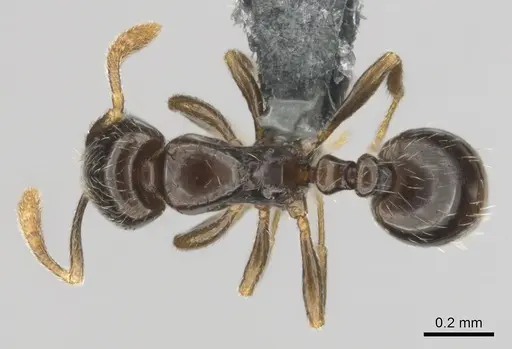
CASENT0887961
View on AntWeb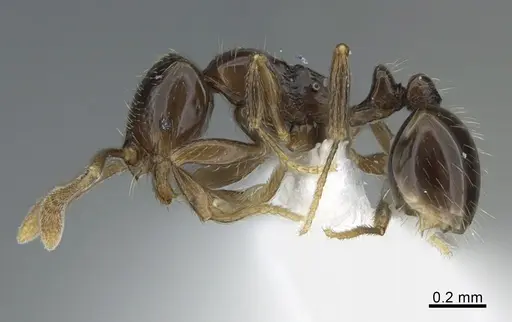
CASENT0902229
View on AntWeb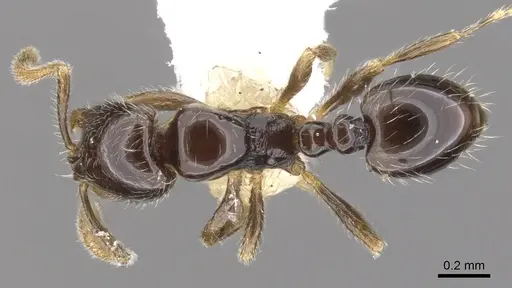
Literature
Loading...Loading products...