

Monomorium eremophilum
- Scientific Name
- Monomorium eremophilum
- Tribe
- Solenopsidini
- Subfamily
- Myrmicinae
- Author
- Heterick, 2001
- Distribution
- Found in 1 countries
Monomorium eremophilum Overview
Monomorium eremophilum is an ant species of the genus Monomorium. It is primarily documented in 1 countries , including Australia. Detailed taxonomic data and occurrence records can be further explored via authoritative databases such as AntWeb or the Global Biodiversity Information Facility (GBIF).
Monomorium eremophilum
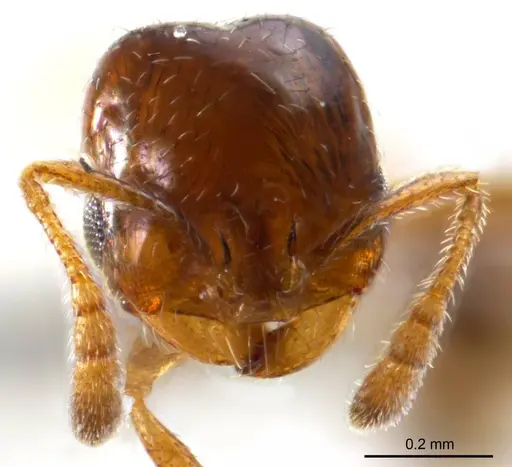
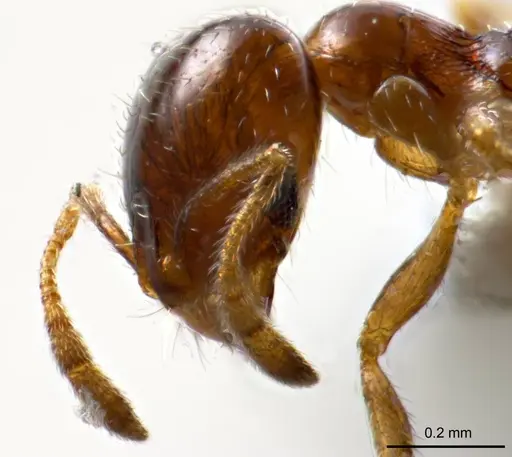
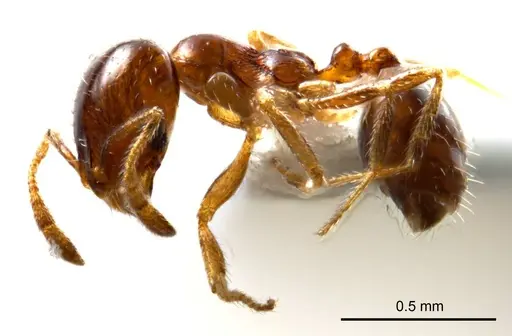
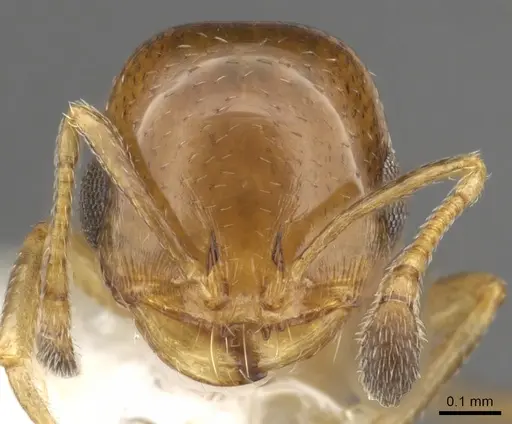
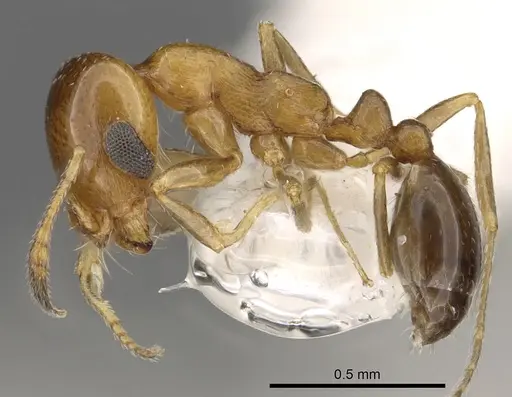
Monomorium eremophilum is a tiny desert ant from the arid regions of Australia, specifically South Australia, New South Wales, Queensland, and Western Australia. The species name comes from Greek words meaning 'lover of deserts, ' perfectly describing where these ants make their home. Workers are very small at just 1.15-1.71mm in total length, with a broad head and distinctive large, elongated eyes that are positioned quite low on the head, in profile, the eye reaches almost to the underside of the head capsule. They have 11-segmented antennae and a pale orange to chocolate brown coloration depending on the individual. This species belongs to the Monomorium group of ants and is only known from the worker caste, queens and males have never been described.
Quick Summary
- Difficulty: Unknown, likely Moderate due to limited data
- Origin & Habitat: Arid Australia, found in South Australia, New South Wales, Queensland, and Western Australia in desert and semi-desert environments [1]
- Colony Type: Unconfirmed, colony structure has not been documented in scientific literature
- Size & Growth:
- Queen: Unknown, queens have not been described
- Worker: 1.15-1.71mm total length, HW 0.43-0.72mm [1]
- Colony: Unknown, no colony size data available
- Growth: Unknown, no development data available
- Development: Unknown, no direct measurements exist. Based on typical Monomorium patterns from related species, estimate 4-8 weeks at warm temperatures. (Development timeline is unconfirmed. Related Australian Monomorium species typically complete development in 4-8 weeks under optimal conditions.)
- Antkeeping:
- Temperature: Keep at room temperature (20-26°C). As a desert species from arid Australia, they likely tolerate warmer conditions. Start at room temperature and observe colony activity, if they seem sluggish, slightly increase warmth.
- Humidity: Low to moderate, these are desert ants adapted to dry conditions. Keep nest substrate relatively dry with only occasional misting. Allow the nest to dry out between waterings rather than keeping it constantly moist.
- Diapause: Unknown, Australian arid-zone ants may have reduced activity during extreme summer heat rather than winter diapause. Observe your colony for seasonal slowdowns.
- Nesting: Use a dry, well-ventilated nest setup. Given their tiny size and desert origin, a Y-tong (AAC) nest or small acrylic formicarium works well. Keep nesting area dry and avoid excessive moisture.
- Behavior: These ants are very small and likely escape easily due to their tiny size. Use fine mesh barriers and ensure all openings are sealed. They are probably generalist foragers based on typical Monomorium diet patterns, likely eating small insects and possibly seeds. Their large eyes suggest they may be more visually oriented than most ants. Temperament is unknown but related species are generally non-aggressive.
- Common Issues: tiny size means escapes are likely without fine mesh barriers, very limited biological data makes care recommendations uncertain, no confirmed diet preferences, start with small protein sources and observe acceptance, wild-caught colonies may be difficult to establish due to unknown founding requirements
Appearance and Identification
Monomorium eremophilum workers are among the smallest ants you might keep, measuring just 1.15-1.71mm in total length. Their most distinctive feature is their unusually large, elongated eyes that are positioned quite low on the head, when viewed from the side, the eye reaches almost to the underside of the head capsule. They have 11-segmented antennae, which helps distinguish them from some related species. The head is relatively broad compared to other small Monomorium species. Coloration varies: some individuals are pale orange with a yellowish abdomen, while others are chocolate brown with amber-colored mandibles and legs. The palp formula is 2,2 (two segments on the maxillary palps and two on the labial palps). These tiny ants may be challenging to distinguish from other Australian Monomorium species without magnification and careful examination. [1]
Natural Habitat and Distribution
This species is native to the arid regions of Australia, with confirmed records from South Australia, New South Wales, Queensland, and Western Australia. The name 'eremophilum' literally means 'desert lover' in Greek, reflecting their preference for dry, desert environments. They have been collected in various arid zone locations including Koonamore in South Australia, Broken Hill in New South Wales, and Fowlers Gap. The species has also been recorded on Barrow Island off the Western Australian coast. In their natural habitat, they likely nest in sandy or rocky desert soils, avoiding the more humid coastal and tropical regions of Australia. Many arid-zone Monomorium species are granivorous, eating seeds, but the specific nesting habits and food sources of M. eremophilum have not been documented. [1]
Housing and Nest Setup
Given their tiny size and desert origin, these ants need excellent escape prevention. Use a nest with tight-fitting connections and fine mesh barriers on all openings, even the smallest gap can be an escape route for ants this small. A Y-tong (AAC) nest or small acrylic formicarium with narrow chambers works well. Keep the nesting area dry and well-ventilated, these are desert ants adapted to arid conditions, not rainforest species. Avoid setups that retain excessive moisture. Room temperature (20-26°C) is likely suitable, and you can provide a gentle heat gradient on one side of the nest using a heating cable or mat placed on top of the nest. The outworld should be simple with minimal decorations since these tiny ants can easily get lost in elaborate setups.
Feeding and Diet
The specific diet of Monomorium eremophilum has not been documented in scientific literature. Based on typical Monomorium genus behavior and their arid habitat, they are likely generalist foragers that eat small insects, seeds, and honeydew. Many Australian Monomorium species are granivorous, meaning they collect and eat seeds. For captive care, start with small protein sources like fruit flies, pinhead crickets, or small mealworms. You can also offer occasional sugar water or honey as an energy source. Since they are so small, food items must be appropriately sized, even a standard fruit fly may be large to them. Observe what your colony accepts and adjust accordingly. Remove any uneaten food after 24-48 hours to prevent mold issues in their dry nest environment.
Temperament and Handling
The specific temperament of this species has not been documented, but related Monomorium species are generally peaceful and non-aggressive. As very small ants, they pose no sting threat to humans, their stingers are too tiny to penetrate human skin. However, their tiny size means they can be easily lost or crushed during handling. If you need to move or observe them, do so gently and avoid disturbing the nest too much. They are likely more active during cooler parts of the day in their natural habitat, avoiding the extreme heat of Australian deserts. In captivity, observe when they are most active and schedule feeding and maintenance during those periods.
Challenges and Unknowns
This is one of the least-studied ant species in the antkeeping hobby, with almost no biological data available. The scientific literature only describes the worker caste, queens, males, and colony structure have never been documented. This means many care recommendations are educated guesses based on related species rather than confirmed requirements. You should expect a learning curve and be prepared to experiment with different conditions. Start with standard Monomorium care parameters and adjust based on your colony's behavior. Colonies may be difficult to establish from wild-caught queens since we don't know their exact founding requirements. If you acquire a colony, document your observations carefully, any information you gather would be valuable for the antkeeping community given how little is known about this species. [1]
Frequently Asked Questions
How long does it take for Monomorium eremophilum to go from egg to worker?
The exact development time is unknown, no scientific studies have measured this. Based on typical Monomorium species patterns, estimate 4-8 weeks at warm temperatures (around 24-26°C). Related Australian species generally complete development relatively quickly.
What do Monomorium eremophilum ants eat?
Their specific diet is unconfirmed. Based on related species, they likely eat small insects and may collect seeds. Start with tiny protein sources like fruit flies or small mealworms, and offer sugar water or honey as an occasional supplement. Remove uneaten food promptly.
Are Monomorium eremophilum good for beginners?
This species is not recommended for beginners due to the lack of biological data and their very small size. The care requirements are not well-understood, and their tiny size makes them prone to escaping. More established species with known care parameters are better choices for new antkeepers.
What temperature do Monomorium eremophilum need?
Keep them at room temperature (20-26°C). As a desert species from arid Australia, they likely tolerate warmer conditions. Start at room temperature and adjust based on colony activity, if they seem sluggish, slightly increase warmth.
How big do Monomorium eremophilum colonies get?
The maximum colony size is unknown, no scientific data exists on colony size for this species. Related Monomorium species typically form colonies of several hundred to a few thousand workers.
Do Monomorium eremophilum need hibernation?
Diapause requirements are unknown. As an Australian arid-zone species, they may reduce activity during extreme summer heat rather than requiring winter hibernation. Observe your colony for seasonal changes in activity.
What type of nest should I use for Monomorium eremophilum?
Use a dry, well-ventilated nest. A Y-tong (AAC) nest or small acrylic formicarium works well. The key is excellent escape prevention, their tiny size means they can squeeze through very small gaps. Use fine mesh barriers and check all connections.
Can I keep multiple queens together?
The colony structure is unconfirmed, we don't know whether they are single-queen (monogyne) or multi-queen (polygyne) colonies. Combining unrelated queens is not recommended since this has not been documented for this species.
Why are my Monomorium eremophilum dying?
Common issues include escape (use fine mesh barriers), excessive moisture (keep nest dry), and stress from unknown care requirements. Since so little is known about this species, establishing and maintaining colonies may be challenging. Document your conditions and adjust gradually.
References

This caresheet is licensed under CC BY-SA 4.0 .
ANTWEB1008676
View on AntWeb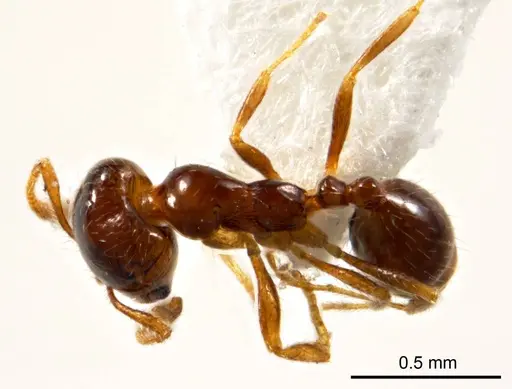
CASENT0902303
View on AntWeb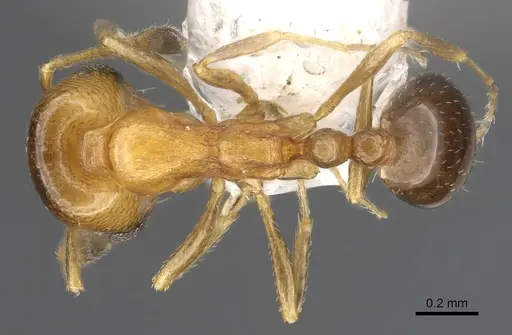
Literature
Loading...Loading products...