

Monomorium egens
- Scientific Name
- Monomorium egens
- Tribe
- Solenopsidini
- Subfamily
- Myrmicinae
- Author
- Forel, 1910
- Distribution
- Found in 6 countries
Monomorium egens Overview
Monomorium egens is an ant species of the genus Monomorium. It is primarily documented in 6 countries , including Congo, Democratic Republic of the, Côte d'Ivoire. Detailed taxonomic data and occurrence records can be further explored via authoritative databases such as AntWeb or the Global Biodiversity Information Facility (GBIF).
Monomorium egens
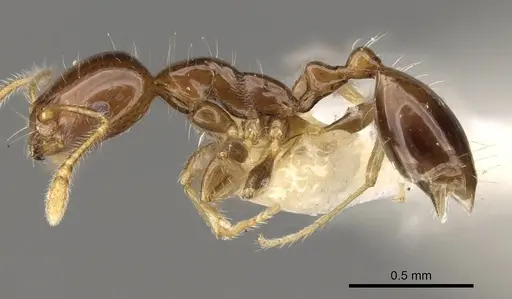
Monomorium egens is a tiny brown to blackish-brown ant species native to West and Central Africa. Workers measure just 2.0-2.5mm, making them one of the smaller ant species you'll encounter in the hobby. They belong to the Monomorium monomorphum species group and are recognized by their small eyes, minute spiracle, and densely hairy scapes. These ants nest naturally in rotten wood in the soil or within fallen trunks, foraging through the wood and surrounding leaf litter. They are occasionally found nesting in rotten parts of standing trees, some distance above the ground. In Benin, researchers have recorded them foraging on mango trees, indicating they can adapt to agricultural environments.
Quick Summary
- Difficulty: Medium
- Origin & Habitat: West and Central Africa, found in Angola, Benin, Cameroon, Democratic Republic of Congo, Gambia, Ghana, Ivory Coast, and Nigeria. They live in tropical forest environments, nesting in rotting wood, fallen trunks, and occasionally in standing trees. Found from lowland areas up to 640m elevation[1].
- Colony Type: Colony structure is not well documented in scientific literature. Based on typical Monomorium genus patterns, they likely form small colonies with single queens. More research needed to confirm whether they are monogyne (single queen) or polygyne (multiple queens).
- Size & Growth:
- Queen: Not documented in available literature, estimated 4-6mm based on genus patterns
- Worker: 2.0-2.5mm
- Colony: Likely small colonies, typical for the genus, probably under 500 workers
- Growth: Moderate, based on typical Monomorium development patterns
- Development: Estimated 6-8 weeks at tropical temperatures (24-28°C) based on related species (Direct development data not available for this species, estimates based on genus-level patterns for small Myrmicinae)
- Antkeeping:
- Temperature: Keep at 24-28°C. As a tropical West African species, they need warm conditions. A heating cable on one side of the nest creates a suitable gradient. Room temperature may be sufficient in warm homes.
- Humidity: High humidity is essential, these ants naturally live in rotting wood and leaf litter in humid tropical forests. Keep nest substrate consistently moist but not waterlogged. Provide a water tube and mist occasionally.
- Diapause: Unlikely, being a tropical species, they probably do not require a true hibernation period. However, they may slow down slightly during cooler months.
- Nesting: Best kept in naturalistic setups with rotting wood pieces, or in Y-tong/plaster nests that retain moisture well. They prefer tight chambers scaled to their tiny size. Avoid dry, airy setups.
- Behavior: These are small, relatively docile ants that forage quietly through leaf litter and rotting wood. They are not aggressive and rarely sting. Their tiny size means they can squeeze through small gaps, excellent escape prevention is essential. They are not known for forming supercolonies. Workers are active throughout the nest material, not just at foraging trails.
- Common Issues: escape prevention is critical due to their very small 2-2.5mm size, they can squeeze through standard test tube cotton, high humidity requirements can lead to mold if ventilation is poor, slow colony growth may frustrate beginners expecting fast development, wild-caught colonies may carry parasites that can decimate the colony in captivity, dry conditions quickly lead to colony death, monitor moisture levels closely
Natural History and Distribution
Monomorium egens is found across West and Central Africa, with confirmed records from Angola, Benin, Cameroon, Democratic Republic of Congo, Gambia, Ghana, Ivory Coast, and Nigeria. They inhabit tropical forest environments and have been recorded at elevations ranging from 110m to 640m in Gabon [1]. These ants are adapted to humid, shaded forest floors where they nest in rotting wood and fallen tree trunks. Their nesting preference for decaying wood places them in the category of 'litter ants', species that live in the decomposing organic matter on the forest floor. In agricultural areas like mango farms in Benin, they can persist and forage in trees, showing some adaptability to human-modified landscapes. The species was originally described by Forel in 1910 from Cameroon, with two junior synonyms (Monomorium egens and M. longiusculum) later recognized as the same species.
Identification and Morphology
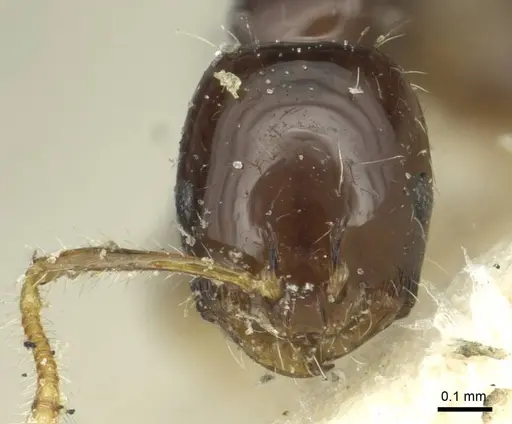
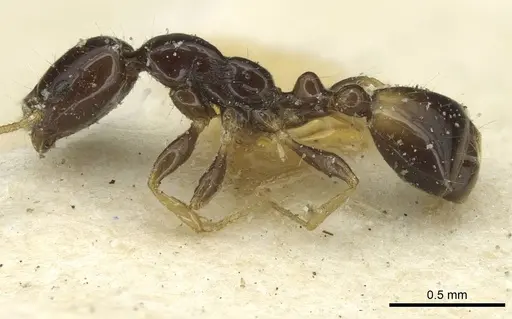
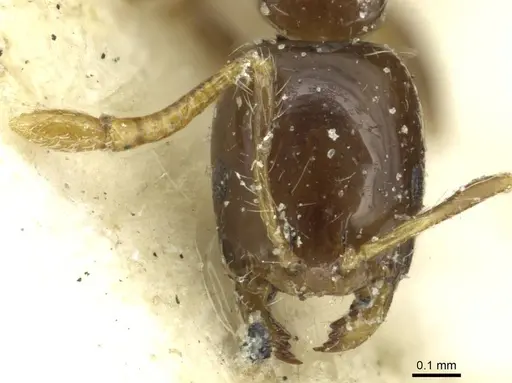
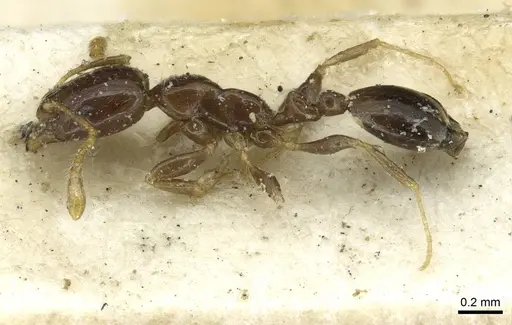
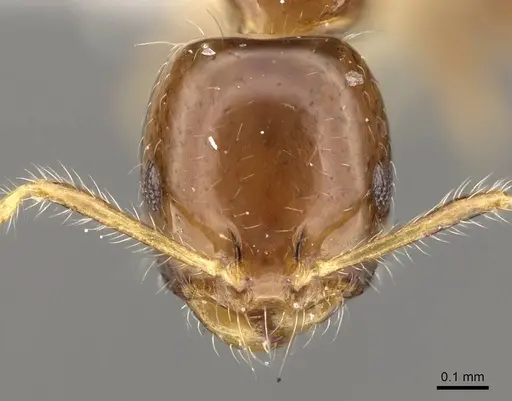
Workers of Monomorium egens are tiny, measuring only 2.0-2.5mm in total length. They are brown to blackish-brown in color, with a relatively featureless body that appears smooth and polished. The species is diagnosed by several distinctive characters: small eyes (maximum diameter 0.19-0.21 times head width), a minute pinhole-like propodeal spiracle, and densely hairy antennal scapes. The pronotum is almost flat when viewed from behind, with conspicuous angular humeral corners rather than broadly rounded ones. The head has distinctly convex sides and a broadly shallowly concave occipital margin. All dorsal surfaces of the head and alitrunk bear numerous standing hairs. This combination of small eyes, minute spiracle, and hairy scapes quickly distinguishes M. egens from other West African Monomorium species.
Housing and Nest Setup
For keeping Monomorium egens successfully, you need to replicate their natural habitat of rotting wood in humid tropical conditions. A naturalistic setup works well, use a container filled with moist substrate (a mix of soil and rotting wood pieces) that maintains high humidity. Alternatively, a Y-tong or plaster nest with moisture-retaining properties provides a more controlled environment. The key is ensuring the nest material stays consistently damp but never becomes waterlogged. Because these ants are so tiny (only 2-2.5mm), they require excellent escape prevention, standard test tube setups may allow escapes through small gaps. Use fine mesh on any ventilation holes and ensure all connections are sealed. A small outworld for foraging can be attached once the colony is established, but keep it simple to prevent escapes.
Feeding and Diet
In their natural habitat, Monomorium egens forages through leaf litter and rotting wood, likely feeding on small arthropods, honeydew, and other organic matter. For captive care, offer small protein sources such as fruit flies, tiny crickets, or other small live prey appropriate to their size. Sugar sources like honey water or sugar water are usually accepted, though some Monomorium species prefer protein. Offer a variety of foods and observe what your colony prefers. Feed small amounts several times per week, removing any uneaten prey after 24-48 hours to prevent mold. Because they are so small, the portions should be tiny, a fragment of a fruit fly or a barely visible drop of honey water is sufficient.
Temperature and Humidity Requirements
As a tropical West African species, Monomorium egens requires warm and humid conditions. Maintain temperatures between 24-28°C for optimal colony development. A heating cable placed on one side of the nest can create a temperature gradient, allowing the ants to self-regulate by moving between warmer and cooler areas. If your room temperature stays in this range naturally, you may not need additional heating. Humidity is critical, these ants naturally live in moist rotting wood in humid tropical forests. Keep the nest substrate consistently moist by checking daily and misting or adding water as needed. However, avoid creating standing water, as this can drown the colony and promote harmful mold. A water tube attached to the nest helps maintain humidity through evaporation.
Colony Development and Growth
Monomorium egens colonies likely start with a single claustral queen who seals herself in a chamber and raises the first workers alone, surviving on her stored fat reserves until the nanitic (first) workers emerge. The exact development timeline is not documented in scientific literature, but based on typical Monomorium genus patterns and their small size, expect approximately 6-8 weeks from egg to first worker at optimal tropical temperatures (24-28°C). Colony growth will be moderate rather than rapid, these are naturally small colonies. Be patient with founding colonies, the queen may remain sealed in her chamber for weeks before the first workers appear. Once established, colonies may grow to a few hundred workers over time. Avoid disturbing the queen during the founding stage, as this can cause her to abandon or consume her brood.
Frequently Asked Questions
How long does it take for Monomorium egens to produce first workers?
The exact timeline is not documented, but based on typical Monomorium development patterns, expect 6-8 weeks from egg to first worker at optimal temperatures of 24-28°C. Founding colonies can be slow to develop, so patience is essential.
What do Monomorium egens ants eat?
They likely accept small protein sources like fruit flies, tiny crickets, and other small live prey. Sugar sources such as honey water or sugar water are also typically accepted. Offer small amounts several times per week and remove uneaten food promptly.
What temperature do Monomorium egens need?
Keep them at 24-28°C, which mimics their natural tropical West African habitat. A heating cable on one side of the nest can provide a gradient if your room temperature is cooler.
Are Monomorium egens good for beginners?
They are rated as medium difficulty. Their small size and high humidity requirements make them slightly more challenging than larger, more hardy species. They require excellent escape prevention and close attention to moisture levels.
How big do Monomorium egens colonies get?
Based on typical Monomorium genus patterns, colonies likely reach a few hundred workers at most. They are naturally small colonies compared to many common ant species in the hobby.
Do Monomorium egens need hibernation?
As a tropical species from West Africa, they likely do not require a true hibernation period. They may slow down slightly during cooler months, but a full diapause is not necessary.
Why are my Monomorium egens escaping?
Their tiny 2-2.5mm size allows them to squeeze through gaps that larger ants cannot. Use fine mesh on all ventilation, seal all connections thoroughly, and ensure your setup has no gaps larger than 1mm.
Can I keep multiple Monomorium egens queens together?
The colony structure is not well documented. Based on typical Monomorium patterns, they likely form single-queen colonies. Combining unrelated queens has not been studied and is not recommended.
References

This caresheet is licensed under CC BY-SA 4.0 .
CASENT0408314
View on AntWeb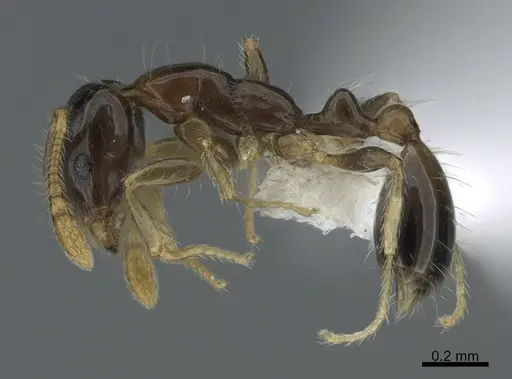
CASENT0908697
View on AntWeb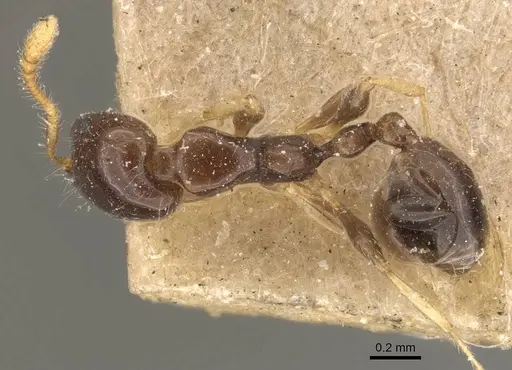
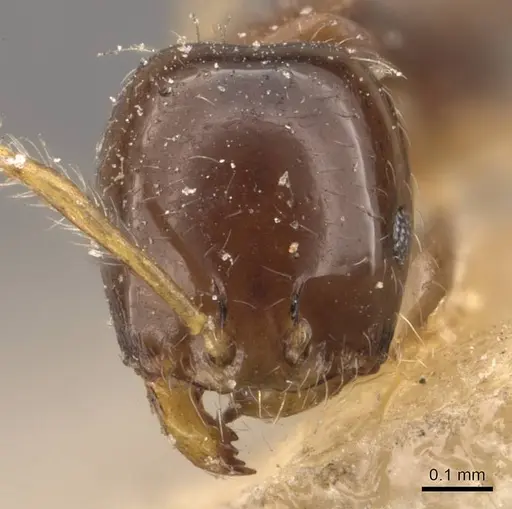
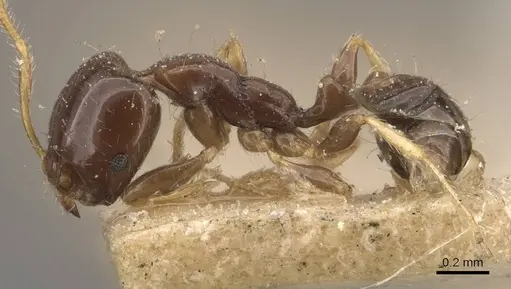
CASENT0913576
View on AntWeb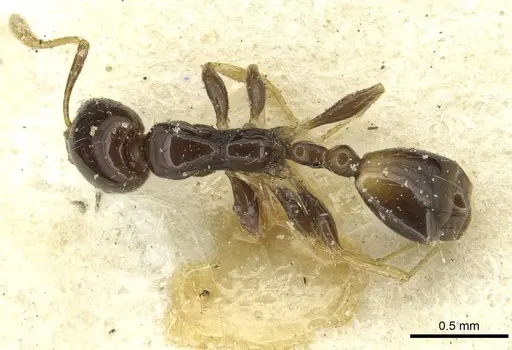
CASENT0913577
View on AntWeb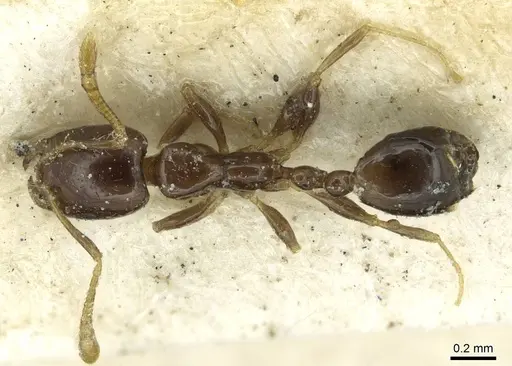
CASENT0914330
View on AntWeb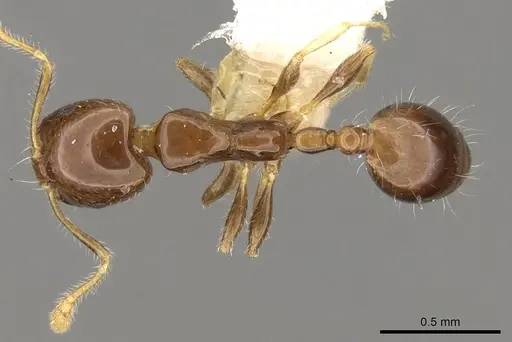
Literature
Loading...Loading products...