

Monomorium denticulum
- Scientific Name
- Monomorium denticulum
- Tribe
- Solenopsidini
- Subfamily
- Myrmicinae
- Author
- Heterick, 2006
- Distribution
- Found in 1 countries
Monomorium denticulum Overview
Monomorium denticulum is an ant species of the genus Monomorium. It is primarily documented in 1 countries , including Madagascar. Detailed taxonomic data and occurrence records can be further explored via authoritative databases such as AntWeb or the Global Biodiversity Information Facility (GBIF).
Monomorium denticulum
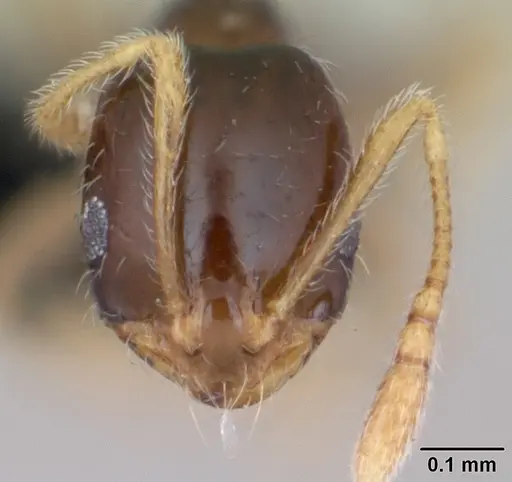
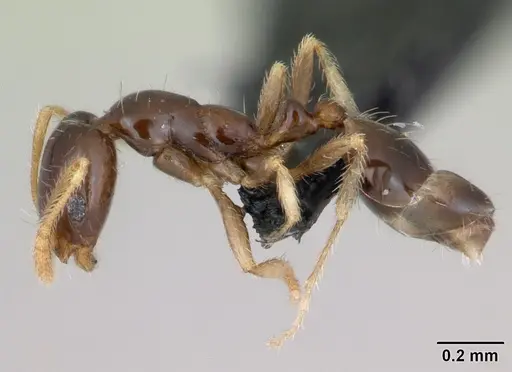
Monomorium denticulum is an exceptionally tiny ant species native to Madagascar, with workers measuring just 1.01-1.29 mm in total body length [1]. Workers are yellow to brown with a shiny, smooth appearance and large eyes that are notably wider than the antennal scape [2]. This species belongs to the M. schultzei species complex and is the only member found in Madagascar, its relatives are otherwise exclusively Afrotropical [2][1]. The workers have 12 antennal segments with a 3-segmented club, and their most distinctive features include a rectangular head, well-defined clypeal carinae, and a strongly impressed metanotal groove with transverse costulae [2].
What makes this species particularly interesting is its habitat flexibility, despite being part of a typically dry-adapted species complex, M. denticulum has been collected from a surprising variety of habitats across Madagascar including Uapaca woodland, tropical dry forest, spiny forest, and rainforest [2][1]. It appears to be both terricolous (ground-nesting) and arboreal (tree-nesting), demonstrating remarkable ecological adaptability [3]. However, colonies appear very rare in the wild, suggesting this species may have specialized requirements or low population density [1].
Quick Summary
- Difficulty: Unknown, insufficient data for assessment
- Origin & Habitat: Madagascar (Mahajanga, Fianarantsoa, and Toliara Provinces). Found in Uapaca woodland, tropical dry forest, spiny forest, and rainforest [2][1].
- Colony Type: Colony structure is unconfirmed. No data on queen number or colony organization.
- Size & Growth:
- Queen: Unknown, queen measurements not documented
- Worker: 1.01-1.29 mm total length, HW 0.32-0.38 mm [1][2]
- Colony: Unknown, colony size has not been documented
- Growth: Unknown, no development data available
- Development: Unknown, development timeline has not been studied (No direct measurements available. Related Monomorium species typically develop in 4-8 weeks at optimal temperatures, but this is a rough estimate for this species.)
- Antkeeping:
- Temperature: Likely warm conditions based on Madagascar origin. Inferred from habitat data: tropical dry forest and spiny forest suggest temperatures in the 22-28°C range. Start around 24-26°C and observe colony activity.
- Humidity: Variable based on collection habitats, found in both dry and humid forests. The species shows ecological flexibility (dry=1,humid=0 in some samples, but also collected in rainforest). Provide a gradient with both moist and drier areas. Allow the ants to self-select.
- Diapause: Unknown, no data on seasonal dormancy. Madagascar has mild climate year-round, so diapause may not be required.
- Nesting: Likely prefers small chambers scaled to their tiny size. In nature collected from sifted litter and pitfall traps, suggesting ground-nesting in soil/litter layer. A test tube setup or small acrylic nest with tight chambers would likely work well. The species is both terricolous and arboreal, so some vertical space may be appreciated.
- Behavior: Behavior is poorly documented. As a tiny Monomorium, they are likely docile and non-aggressive. Their large eyes suggest good vision. Workers were collected using pitfall traps and sifted litter sampling, indicating they forage at ground level in leaf litter. Escape prevention is critical due to their extremely small size, they can squeeze through the tiniest gaps. No data on stingers, but most Monomorium in the subfamily Myrmicinae have small stingers that rarely penetrate human skin.
- Common Issues: extremely small size makes escape prevention critical, use fine mesh and tight-fitting barriers, no documented captive breeding success, this species may be difficult to establish in captivity, wild-caught colonies may be rare and difficult to locate, colony size and growth rates are unknown, making care unpredictable, humidity requirements are unclear due to conflicting habitat data (dry forest vs rainforest)
Natural History and Distribution
Monomorium denticulum is endemic to Madagascar, where it has been recorded from three provinces: Mahajanga, Fianarantsoa, and Toliara [2]. This species occupies a unique taxonomic position as the only member of the M. schultzei species complex found in Madagascar, its relatives are otherwise exclusively Afrotropical (continental Africa) [2][1]. The species was described relatively recently in 2006 by Brian Heterick, based on specimens collected from various forest types across the island [1].
The habitat data reveals surprising ecological flexibility for a species in what is typically a dry-adapted species complex. Workers have been collected from Uapaca woodland, tropical dry forest, spiny forest, and rainforest [2][1]. This suggests M. denticulum may have adapted to Madagascar's diverse microclimates. The species appears to be both terricolous (ground-dwelling) and arboreal (tree-dwelling), based on morphological and collection data [3]. However, colonies appear very rare in the wild, only a handful of specimens have been documented despite extensive ant surveys on the island [1].
Identification and Morphology
Monomorium denticulum workers are among the smallest ants you might encounter, measuring just 1.01-1.29 mm in total body length with a head width of only 0.32-0.38 mm [1]. Despite their tiny size, they have several distinctive features that set them apart from other Malagasy Monomorium. Their most notable characteristic is their exceptionally large eyes, the eye width is 1.5 times greater than the greatest width of the antennal scape [2][1].
The workers have 12 antennal segments with a 3-segmented club, and their head is rectangular with a planar vertex [2]. The clypeus (the face plate above the mandibles) has well-defined carinae (ridges) that terminate in small denticles (tiny teeth), and the anteromedian clypeal margin is either emarginate (notched) or straight [2]. The mesosoma (the middle body section) is elongate and bears a superficial resemblance to the species M. exiguum [1]. The metanotal groove is strongly impressed with transverse costulae (cross-ribs), and the propodeum (the rear body section) is shining and smooth [2]. Workers are monomorphic, meaning all workers look the same size and form [2]. Color ranges from yellow to brown [2][1].
Housing and Nest Setup
Due to their extremely small size, housing M. denticulum requires careful attention to escape prevention. These ants can squeeze through gaps that would hold back larger species, so fine mesh on all openings is essential. A standard test tube setup works well for founding colonies, but ensure the cotton plug is tightly packed and consider adding a small barrier like fluon around the rim.
For established colonies, a small acrylic nest (like a Y-tong or similar) with chambers scaled to their tiny size works best. The chambers should be relatively tight, these ants don't need the large open spaces that bigger species require. Given their dual terricolous/arboreal nature in the wild, providing some vertical space or a small amount of climbing material may be appreciated, but this is speculative.
The species has been collected from sifted litter, suggesting they naturally nest in soil or decaying organic matter in the leaf litter layer. A naturalistic setup with a thin layer of substrate could replicate this, but test tubes remain the most practical option for most keepers.
Feeding and Diet
The diet of M. denticulum has not been specifically studied, but general Monomorium biology provides some guidance. Most Monomorium species are omnivorous, feeding on small insects, honeydew, and nectar. However, given their tiny size, their prey items would be correspondingly small, likely micro-arthropods like springtails, mites, and tiny flies.
For captive care, offer small protein sources such as fruit flies, pinhead crickets (very small), or other appropriately sized live prey. Sugar water or honey water may be accepted, though this is not confirmed for this species. Due to their small size, even small prey items may be too large, consider chopping larger insects into tiny pieces or relying on liquid food sources. Feed conservatively and remove any uneaten food to prevent mold.
Temperature and Environmental Conditions
Monomorium denticulum originates from Madagascar, a tropical island with warm temperatures year-round. While specific temperature requirements are not documented, reasonable care would aim for temperatures in the 22-28°C range, with 24-26°C being a good starting point. This aligns with conditions in their collection habitats (tropical dry forest, spiny forest).
The habitat data shows some confusion regarding humidity preferences, the species has been collected from both dry forests and rainforest, suggesting it may be ecologically flexible. Provide a humidity gradient with both moist and drier areas and allow the ants to self-select. A small water tube or moist cotton in one area of the setup can provide humidity while leaving other areas relatively dry.
Regarding diapause, no data exists. Madagascar has a relatively mild climate without harsh winters, so this species may not require a true dormancy period. However, a slight reduction in temperature during winter months (simulating cooler dry season conditions) may be beneficial if the colony shows reduced activity.
Frequently Asked Questions
How big do Monomorium denticulum ants get?
Workers are extremely small, measuring just 1.01-1.29 mm in total body length with a head width of 0.32-0.38 mm [1]. This makes them one of the smaller ant species kept in captivity. Queen size has not been documented.
Where is Monomorium denticulum found in the wild?
This species is endemic to Madagascar, found in Mahajanga, Fianarantsoa, and Toliara provinces. It occupies a unique position as the only member of the M. schultzei species complex on Madagascar [2][1].
What habitat does Monomorium denticulum live in?
Surprisingly varied habitats including Uapaca woodland, tropical dry forest, spiny forest, and rainforest [2]. The species appears to be both ground-nesting and tree-nesting, collected from sifted leaf litter [1].
Are Monomorium denticulum ants difficult to keep?
Difficulty level is unknown due to limited data on captive care. The main challenges are their extremely small size (escape prevention is critical), lack of documented captive breeding success, and unknown specific requirements. This species is not recommended for beginners due to the lack of established care protocols.
What do Monomorium denticulum ants eat?
Diet is not specifically documented, but likely similar to other Monomorium species: small insects and honeydew. In captivity, offer small live prey (fruit flies, tiny crickets) and sugar water or honey water. Due to their tiny size, prey items must be very small.
How long does it take for Monomorium denticulum to raise first workers?
Development timeline is unknown, no studies have documented egg-to-worker time for this species. Related Monomorium species typically take 4-8 weeks at optimal temperatures, but this is a rough estimate.
Can I keep multiple Monomorium denticulum queens together?
Colony structure (monogyne vs polygyne) has not been documented. Until more information is available, it is not recommended to combine unrelated queens.
What temperature should I keep Monomorium denticulum at?
Based on their Madagascar origin, aim for 24-26°C as a starting point. This can be adjusted based on colony behavior, if workers cluster near a heat source, increase slightly, if they avoid it, reduce.
Why is Monomorium denticulum so rarely kept?
This species was only described in 2006 and appears to be very rare in the wild (colonies have rarely been collected) [1]. Additionally, there is no documented captive breeding success, and the extreme small size creates practical challenges for antkeepers.
References

This caresheet is licensed under CC BY-SA 4.0 .
CASENT0470359
View on AntWeb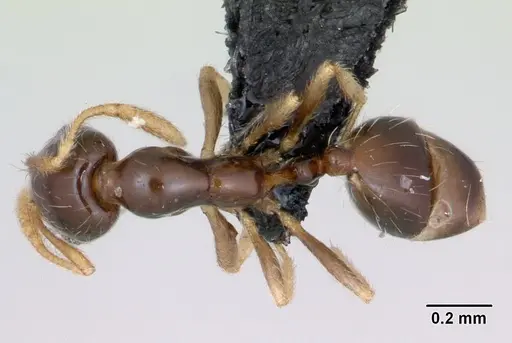
Literature
Loading...Loading products...