

Monomorium algiricum
- Scientific Name
- Monomorium algiricum
- Tribe
- Solenopsidini
- Subfamily
- Myrmicinae
- Author
- Bernard, 1955
- Distribution
- Found in 1 countries
Monomorium algiricum Overview
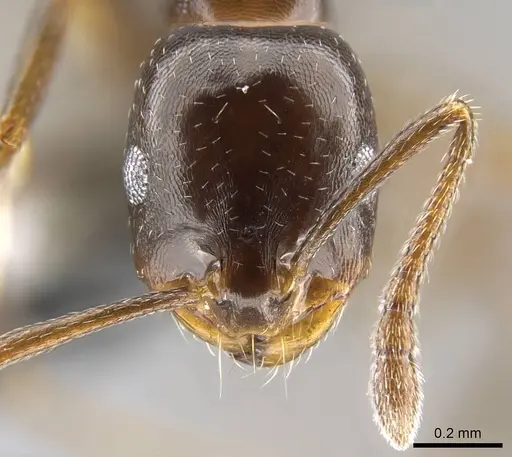
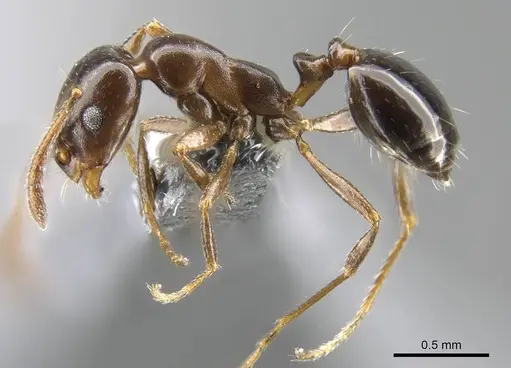
Monomorium algiricum is an ant species of the genus Monomorium. It is primarily documented in 1 countries , including Spain. Detailed taxonomic data and occurrence records can be further explored via authoritative databases such as AntWeb or the Global Biodiversity Information Facility (GBIF).
Monomorium algiricum
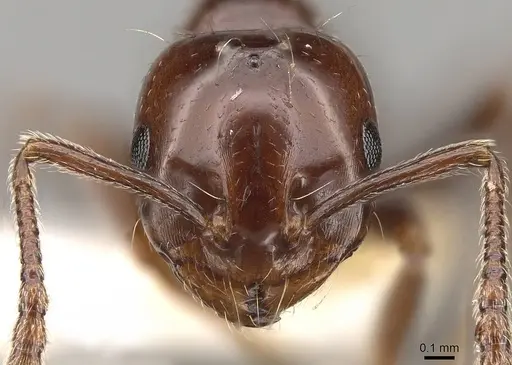
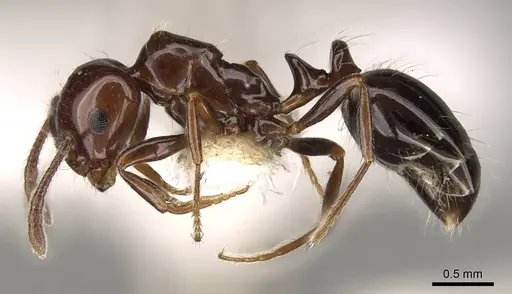
Monomorium algiricum is a small dark brown ant native to the Mediterranean region, found in Algeria and southern Spain. Workers measure 1.8-2.5mm and are notably smaller than the ergatoid (permanently wingless) queens, which reach around 2.7mm. Unlike most ant species, M. algiricum queens are ergatoid, they never develop wings and have a worker-like thorax with reduced volume and fused flight sclerites. This species nests in mountainous open shrubland at elevations around 600m, with colonies building nests 30-55cm deep in rocky soil. Colonies range from a few hundred to nearly 4000 workers, and both single-queen and multi-queen colonies exist throughout the year.
Quick Summary
- Difficulty: Medium
- Origin & Habitat: Native to Algeria and southern Spain (Iberian Peninsula), living in mountainous open shrubland with scattered olive and almond trees at around 600m elevation [1][2].
- Colony Type: Facultatively polygynous, both monogyne (single queen) and polygyne (multiple queens,4-41) colonies exist year-round [1]. Queens are ergatoid (wingless) and can coexist with previous cohorts. Colonies reproduce through fission/budding rather than nuptial flights.
- Colony: Optionally polygyne
- Size & Growth:
- Queen: 2.68 ± 0.13 mm (ergatoid queen, gaster excluded) [1]
- Worker: 1.76 ± 0.08 mm, total length 2.2-2.5mm [1][3]
- Colony: 228-3999 workers, averaging around 1300 in spring and 2100 in autumn [1]
- Growth: Moderate, seasonal growth with worker numbers significantly higher in autumn [1]
- Development: Unconfirmed, no specific development data available for this species (Egg-laying stops from autumn until spring due to seasonal dormancy. New sexuals are produced at the end of summer.)
- Antkeeping:
- Temperature: Keep at room temperature around 20-24°C. In the wild, foraging stops from November to early April due to cold, and nest activity halts during extreme summer heat (July-August). A gentle temperature gradient allows ants to self-regulate.
- Humidity: Moderate, native to Mediterranean shrubland with seasonal dry periods. Keep nest substrate moderately moist but allow some drying between waterings. Avoid waterlogging.
- Diapause: Yes, colonies become dormant from November to early April (winter) and also reduce activity during peak summer heat (July-August) when nest entrances are blocked [1]. Reduce feeding and keep cool during these periods.
- Nesting: Y-tong (AAC) or plaster nests work well. In nature, they nest 30-55cm deep in rocky soil. Provide deep substrate or a nest with adequate depth. Avoid excessive heat that would dry out the nest.
- Behavior: Peaceful temperament, these are not aggressive ants. Workers forage individually and are not territorial or defensive. Ergatoid queens walk with workers to establish new colonies through budding rather than dispersing via nuptial flights. Escape risk is moderate due to small size, use standard barrier methods.
- Common Issues: Seasonal dormancy can alarm keepers, reduced activity November-April and July-August is normal, Multi-queen colonies have lower individual queen fecundity, which may affect growth rate, Wolbachia infection present in wild colonies, may affect breeding in captivity [4], Deep nesting requirement means they need appropriate formicarium setup, Colony fission is the only reproduction method, no nuptial flights to catch
Understanding Ergatoid Queens
Monomorium algiricum has a unique reproductive system: all queens are ergatoid, meaning they are permanently wingless and never develop the large wings typical of most ant queens. Their thorax is worker-like with decreased volume and fused flight sclerites because they lack wing muscles [1]. This is unusual, most Monomorium species have winged queens, but M. algiricum is specifically known for its ergatoid condition [4]. Queens are considerably bigger than workers (2.68mm vs 1.76mm) and have a larger gaster for egg production, with 28-40 ovarioles [1]. Because they cannot fly, new queens disperse on foot alongside workers when colonies split, this is called dependent colony foundation (DCF) or budding [1].
Colony Structure and Reproduction
This species shows remarkable flexibility in colony structure. Both monogynous (single queen) and polygynous (multiple queens,4-41) colonies exist throughout the year [1]. In polygynous colonies, individual queens are less fecund than in monogynous colonies, this is a trade-off where sharing reproduction reduces each queen's output. New ergatoid queens and males are produced during a short period at the end of summer. Queens mate soon after emergence, and newly mated queens can coexist with older queens from previous years [1]. Colonies reproduce exclusively through fission, no small incipient colonies with a single queen have ever been found in the wild. Instead, ergatoid queens walk with groups of workers to new nesting sites to establish satellite colonies.
Seasonal Activity Patterns
Monomorium algiricum has pronounced seasonal cycles tied to Mediterranean climate. Foraging and above-ground activity completely stops from November through early April due to cold temperatures [1]. Similarly, ants stay inside during July and beginning of August when extreme heat and dry conditions prevail, nest entrances are actually blocked during this period. This means colonies are effectively dormant for about 6 months of the year with no foraging and no egg-laying [1]. Egg-laying stops in autumn and does not resume until spring. Worker numbers are significantly higher in autumn colonies (around 2100) compared to spring colonies (around 1300), reflecting the growth season [1]. For keepers, this means reduced feeding during winter and summer dormancy periods is completely normal.
Housing and Nest Setup
In the wild, M. algiricum nests at depths of 30-55cm in rocky soil, preferring mountainous shrubland habitat at around 600m elevation [1]. For captivity, Y-tong (AAC) nests or plaster formicariums work well since they provide darkness and humidity control. The nest should have adequate depth to accommodate their natural tunneling behavior. Keep the nest substrate moderately moist, damp but not waterlogged, with some drier areas available. Room temperature around 20-24°C is suitable, with a gentle gradient if possible. Because they are small ants (workers under 2.5mm), standard escape prevention with tight-fitting lids and barrier gel at connections is sufficient.
Feeding and Diet
Like most Monomorium species, these ants are omnivorous and will accept typical ant foods including sugar sources (honey, sugar water), protein (small insects, mealworms), and possibly seeds. Their small size means prey items should be appropriately sized, fruit flies, pinhead crickets, or small mealworm pieces work well. Feed protein 2-3 times per week and keep sugar water available constantly. During winter and summer dormancy periods, reduce or stop feeding entirely since colonies are inactive. Remove uneaten food promptly to prevent mold.
Frequently Asked Questions
How long does it take for Monomorium algiricum to produce first workers?
The exact egg-to-worker development time is unconfirmed for this species. Based on related Monomorium species and their seasonal biology, expect development to take several months. New queens mate in late summer but most do not lay eggs until the following spring, so first workers typically appear in late spring or early summer after the colony is established.
Can I keep multiple queens together in one colony?
Yes, M. algiricum is facultatively polygynous, meaning both single-queen and multi-queen colonies occur naturally. Polygynous colonies can have 4-41 queens [1]. However, individual queen fecundity is lower in multi-queen colonies, and very polygynous colonies (10+ old queens) may stop producing sexuals entirely. For keepers, starting with a single queen is simpler, but combining unrelated foundresses is not recommended since this has not been studied in captivity.
Do these ants need hibernation?
Yes, M. algiricum naturally enters dormancy from November to early April when temperatures drop and foraging becomes impossible [1]. You should simulate this by keeping the colony cool (10-15°C) with minimal feeding during winter. Additionally, expect reduced activity during extreme summer heat (July-August) when nest entrances are naturally blocked.
How big do Monomorium algiricum colonies get?
Colonies reach 228-3999 workers in the wild, with averages around 1300 in spring and 2100 in autumn [1]. This is a moderate-sized colony for a small ant species. Growth is seasonal, worker numbers increase through the active season and peak in autumn.
Why are my ants not moving much?
This is likely normal seasonal behavior. M. algiricum becomes nearly inactive from November to April (winter) and also during July-August (summer heat) when nest entrances are blocked [1]. Reduced activity during these periods is natural. If it occurs outside these seasons, check temperature (too cold causes sluggishness) and humidity (too dry can cause torpor).
What makes Monomorium algiricum different from other ants?
The main difference is their ergatoid queen system, all queens are permanently wingless with worker-like thoraces, and they disperse by walking with workers rather than flying [1]. This is rare among ants and makes them a fascinating species for observing colony budding behavior. Their pronounced seasonal dormancy (6 months of near-inactivity) is also notable.
Are Monomorium algiricum good for beginners?
This species is moderate difficulty. While peaceful and manageable, their pronounced seasonal dormancy and specific nesting depth requirements may surprise beginners. The need to reduce feeding during two dormancy periods (winter and summer) requires understanding of their natural cycle. They are rewarding for keepers interested in observing unique queen biology and colony fission.
References

This caresheet is licensed under CC BY-SA 4.0 .
CASENT0906902
View on AntWeb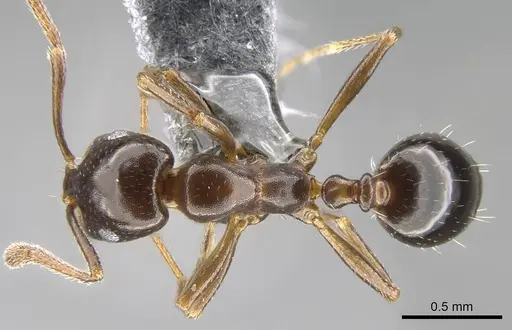
CASENT0914315
View on AntWeb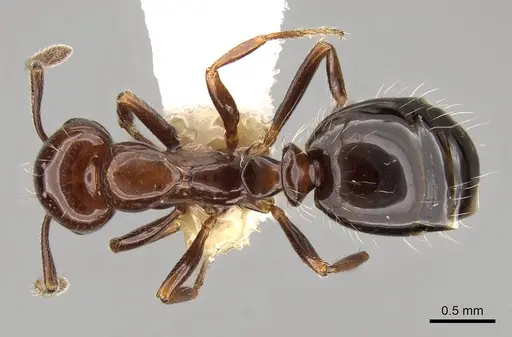
Literature
Loading...Loading products...