

Microdaceton viriosum
- Scientific Name
- Microdaceton viriosum
- Tribe
- Attini
- Subfamily
- Myrmicinae
- Author
- Bolton, 2000
- Distribution
- Found in 1 countries
Microdaceton viriosum Overview
Microdaceton viriosum is an ant species of the genus Microdaceton. It is primarily documented in 1 countries , including Uganda. Detailed taxonomic data and occurrence records can be further explored via authoritative databases such as AntWeb or the Global Biodiversity Information Facility (GBIF).
Microdaceton viriosum
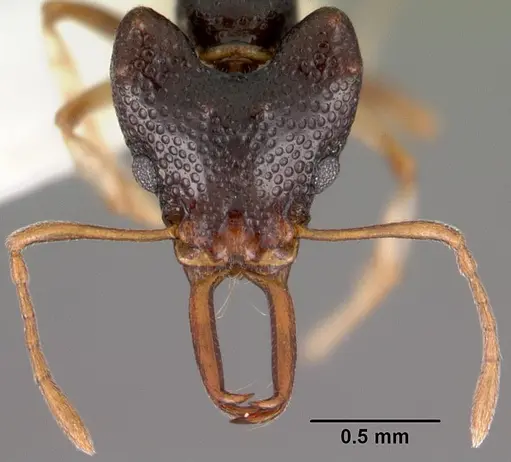
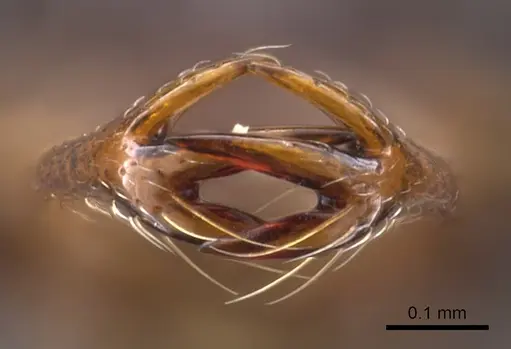
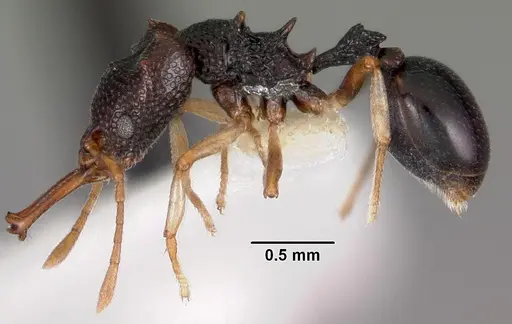
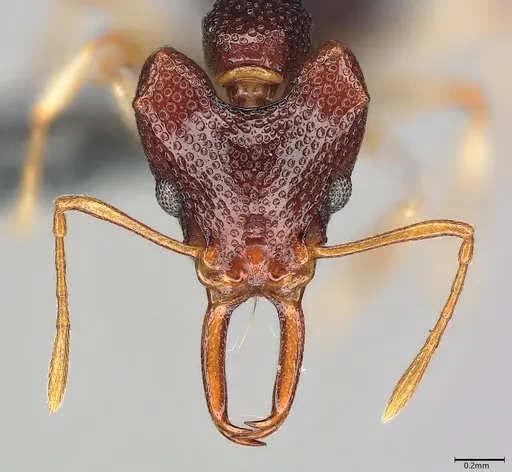
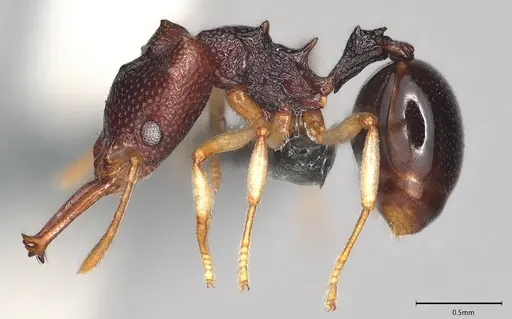
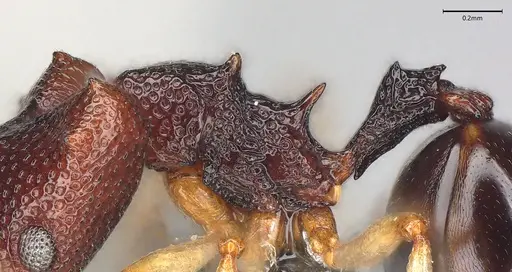
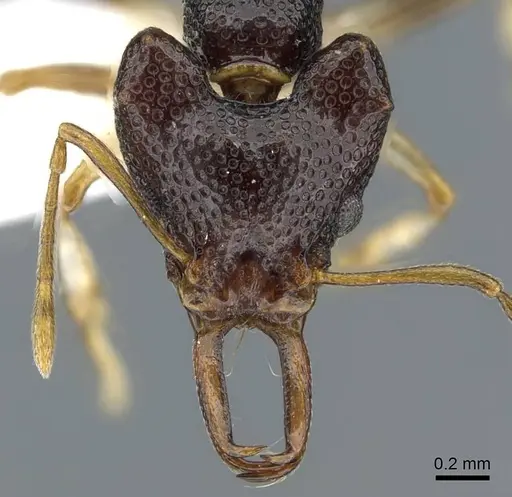
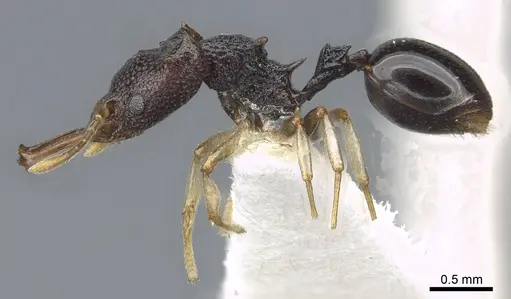
Microdaceton viriosum is a tiny predatory ant native to the Afrotropical region, found in Rwanda and Uganda. Workers measure just 3.7-4.2mm, making them one of the smaller ant species kept in captivity [1]. They belong to the Dacetini tribe, a group of trap-jaw ants known for their specialized hunting behavior, their large mandibles can snap shut rapidly to capture prey. The species was described by Bolton in 2000 from specimens collected in Uganda's Ruwenzori Mountains at 1550m elevation [1]. These ants have distinctive features including a pair of blunt tubercles on the mesonotum and a notably inflated petiole node. They inhabit wet forest environments and are collected from leaf litter samples [1][2].
Quick Summary
- Difficulty: Medium
- Origin & Habitat: Ruwenzori Mountains in Uganda and Nyungwe tropical rainforest in Rwanda. Found in wet forest leaf litter at elevations around 1550m [1][2].
- Colony Type: Colony structure is unconfirmed, no research has documented whether they are single-queen or multi-queen colonies.
- Size & Growth:
- Queen: Described but measurements not fully specified in available literature [1].
- Worker: 3.7-4.2mm [1].
- Colony: Unknown, no colony size data available.
- Growth: Unknown, no development data exists for this species.
- Development: Unknown, no direct measurements available. Based on typical Dacetini patterns, expect 6-10 weeks at warm temperatures. (Development timeline is unconfirmed. Related Dacetini species typically develop in 6-10 weeks under optimal conditions.)
- Antkeeping:
- Temperature: Keep at 22-26°C as a starting point. Adjust based on colony activity, if workers cluster near heat sources, increase slightly, if they avoid heated areas, reduce temperature.
- Humidity: High humidity required, they come from wet forest leaf litter. Keep nest substrate consistently moist but not waterlogged. Provide a humidity gradient so ants can choose their preferred zone.
- Diapause: Unknown, no research on overwintering requirements. Given their Ugandan origin in the Ruwenzori Mountains, they likely tolerate cooler periods but may not require true hibernation.
- Nesting: Natural nesting occurs in leaf litter and rotting wood in wet forests. In captivity, a small test tube setup or acrylic nest with moist substrate works well. Provide tight chambers scaled to their tiny 4mm size.
- Behavior: Dacetini ants are specialized predators with trap-jaw mandibles. They hunt small arthropods and will likely accept small live prey like springtails, fruit flies, and other micro-arthropods. Workers are small and can squeeze through small gaps, use fine mesh and excellent escape prevention. Their small size means they are not dangerous to humans and cannot sting effectively.
- Common Issues: tiny size makes escape prevention critical, they can squeeze through standard barrier gaps, no specific care information exists, keepers must adapt from related species, slow growth and small colony sizes may frustrate beginners, high humidity requirements can lead to mold if ventilation is poor, wild-caught colonies may have parasites that affect survival in captivity
Housing and Nest Setup
Microdaceton viriosum is a tiny ant at only 3.7-4.2mm workers, so housing must be scaled appropriately. A small test tube setup works well for founding colonies, use a test tube with a cotton ball creating a water reservoir on one end. For established colonies, a small acrylic nest or Y-tong style formicarium with narrow chambers prevents them from getting lost in large open spaces. Because they come from wet forest leaf litter, keep the nest substrate consistently moist. A small water tube or moisture reservoir connected to the nest maintains humidity. Escape prevention is critical, their tiny size allows them to squeeze through gaps that larger ants cannot fit through. Use fine mesh on any ventilation holes and apply fluon or other barriers to all edges. [1]
Feeding and Diet
As members of the Dacetini tribe, these ants are specialized predators with trap-jaw mandibles designed for capturing small arthropods. In captivity, their primary food should be small live prey, springtails, fruit flies, and tiny crickets are ideal. You can also offer other small insects like aphids, small beetles, and micro-arthropods. Feed protein prey 2-3 times per week, removing any uneaten prey after 24 hours. Sugar sources are not typically accepted by Dacetini ants as they are obligate predators, but you can occasionally offer a tiny drop of honey or sugar water to test acceptance. Never rely on sugar as a primary food source for this species.
Temperature and Humidity
Based on their origin in the Ugandan Ruwenzori Mountains at 1550m elevation, these ants are accustomed to tropical conditions with moderate temperatures. Aim for a temperature range of 22-26°C. You can use a heating cable on one side of the nest to create a gentle gradient, allowing ants to self-regulate. Place the heating on top of the nest, not underneath, to prevent excessive drying. Humidity is crucial, they come from wet forest environments. Keep the nest substrate moist but not waterlogged. Mist the area occasionally and ensure the water tube is filled. Provide a humidity gradient so ants can choose their preferred moisture level. Poor humidity will stress the colony and may cause workers to die or refuse to forage. [1]
Colony Development
No specific development data exists for Microdaceton viriosum. Based on typical Dacetini patterns and related genera, expect the first workers (nanitics) to emerge 6-10 weeks after the queen lays eggs, assuming optimal temperatures around 24-26°C. The queen will lay eggs in small batches, and brood development depends heavily on temperature and food availability. Growth rate is likely slow to moderate given their small size and the typical patterns of Dacetini ants. Colonies will remain small, even established colonies likely number only dozens to perhaps a few hundred workers, given the tiny worker size and what we know about similar litter-dwelling ants.
Behavior and Temperament
Dacetini ants are not aggressive toward humans and pose no danger, their small size means they cannot effectively sting or bite. In the nest, they are typically calm and not skittish. Workers are active foragers that hunt individually using their trap-jaw mandibles. They likely use chemical trails to recruit nestmates to good food sources, similar to other Dacetini species. Their small size makes them excellent escape artists, always check that your setup is secure. When keeping this species, observe their hunting behavior, which is one of the most interesting aspects of Dacetini ants. Their specialized mandibles can snap shut extremely fast to capture prey.
Frequently Asked Questions
How long does it take for Microdaceton viriosum to produce first workers?
The egg-to-worker timeline is unconfirmed for this specific species. Based on typical Dacetini patterns, expect 6-10 weeks at optimal temperatures of 24-26°C. Factors like temperature, humidity, and food availability can speed up or slow down development.
What do Microdaceton viriosum ants eat?
They are specialized predators. Feed small live prey like springtails, fruit flies, tiny crickets, and other micro-arthropods. Offer protein 2-3 times per week. Sugar sources are unlikely to be accepted but can be tested occasionally.
Can I keep Microdaceton viriosum in a test tube?
Yes, a test tube setup works well for founding colonies. Use a small test tube with a water reservoir. Keep the cotton ball moist but not flooded. The small chamber size is appropriate for their tiny 4mm workers.
Are Microdaceton viriosum good for beginners?
This species is rated as Medium difficulty. While not aggressive, the lack of specific care information and their tiny size make them better suited for keepers with some experience. Their escape prevention requirements are higher than larger ants.
What temperature do Microdaceton viriosum ants need?
Keep them at 22-26°C as a starting point. A heating cable on one side of the nest creates a gradient. Adjust based on colony behavior, if they cluster near heat, increase slightly, if they avoid heated areas, reduce temperature.
Do Microdaceton viriosum need hibernation?
Diapause requirements are unknown for this species. Given their origin in Uganda's mountains, they may tolerate cooler periods but likely do not require true hibernation. Do not force hibernation without evidence.
How big do Microdaceton viriosum colonies get?
Colony size is unknown but likely small, probably dozens to a few hundred workers given their tiny 4mm size. They will never form large colonies like some Myrmicinae species.
Why are my Microdaceton viriosum escaping?
Their tiny 3.7-4.2mm size allows them to squeeze through gaps that larger ants cannot. Use fine mesh on all ventilation, apply fluon or similar barriers to edges, and check all connection points. Escape prevention must be excellent.
Can I keep multiple queens together?
Colony structure is unconfirmed for this species. No research has documented whether they are single-queen or multi-queen colonies. Combining unrelated queens is not recommended without evidence they can coexist.
References

This caresheet is licensed under CC BY-SA 4.0 .
CASENT0102252
View on AntWeb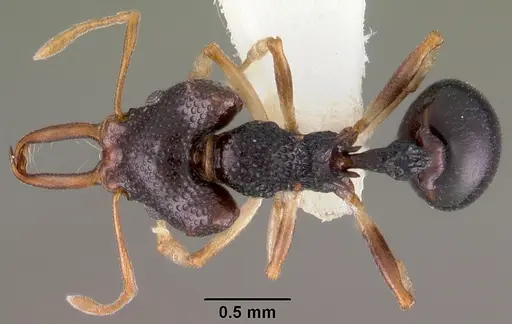
CASENT0290012
View on AntWeb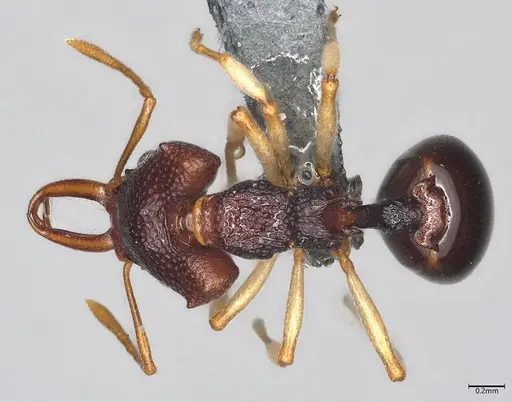
CASENT0291708
View on AntWeb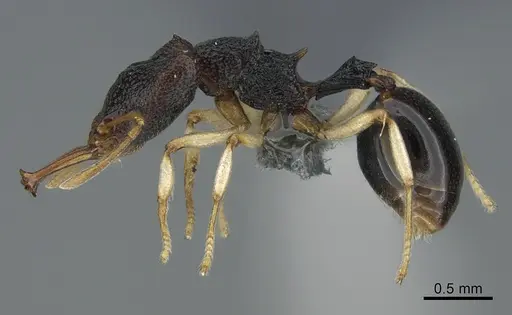
CASENT0900312
View on AntWeb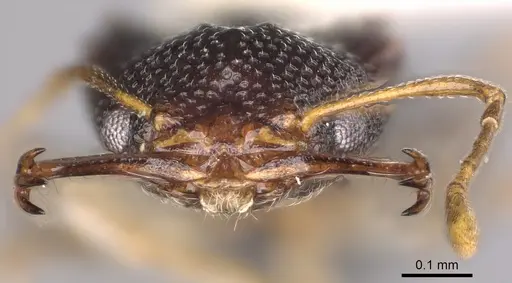
CASENT0911196
View on AntWeb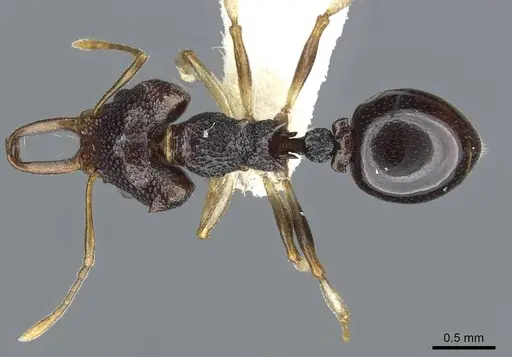
Literature
Loading...Loading products...