

Messor ponticus
- Scientific Name
- Messor ponticus
- Tribe
- Stenammini
- Subfamily
- Myrmicinae
- Author
- Steiner <i>et al.</i>, 2018
- Distribution
- Found in 2 countries
Messor ponticus Overview
Messor ponticus is an ant species of the genus Messor. It is primarily documented in 2 countries , including Greece, Romania. Detailed taxonomic data and occurrence records can be further explored via authoritative databases such as AntWeb or the Global Biodiversity Information Facility (GBIF).
Messor ponticus
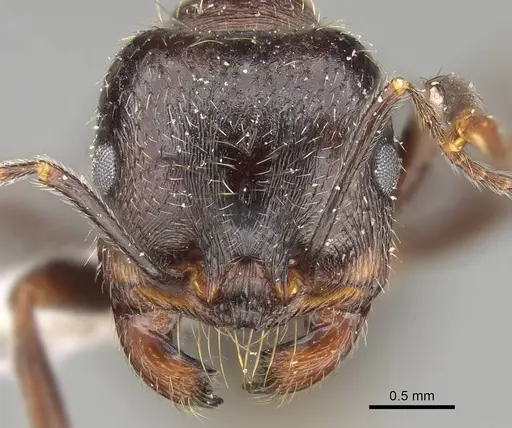
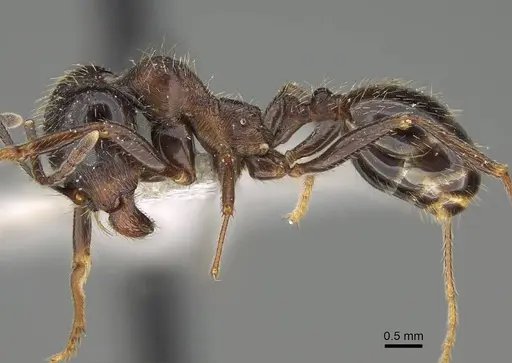
Messor ponticus is a large harvester ant species native to the Balkans and Black Sea region, first described as a distinct species in 2018 after being recognized as part of the Messor 'structor' complex [1]. Workers are dark brown to black with a distinctly black gaster, and they stand out from related species by their finer body sculpturing, reduced head setae, and shorter first funicular segment [1]. This lowland species nests in open habitats like pine forests, roadsides, pastures, and village ruderal areas across Bulgaria, Romania, Turkey, Ukraine, and northern Greece [2][3]. As a harvester ant, they collect and store seeds as their primary food source, making them fascinating for keepers interested in seed-processing behavior.
Quick Summary
- Difficulty: Easy
- Origin & Habitat: Balkans and Black Sea region (Bulgaria, Romania, Turkey, Ukraine, northern Greece), lowland species found in pine forests, roadsides, pastures, and open ruderal habitats [2][3]
- Colony Type: Single-queen colonies (monogyne), typical for the genus Messor [3]
- Colony: Monogyne
- Founding: Claustral
- Size & Growth:
- Queen: Larger than M. ibericus, similar to other Messor species [1]
- Worker: Larger than M. ibericus, M. structor, and M. muticus, similar in size to M. mcarthuri [1]
- Colony: Likely reaches several thousand workers based on genus patterns [3]
- Growth: Moderate, typical for harvester ants
- Development: 6-10 weeks at optimal temperature (estimated from genus Messor patterns) (Development time is typical for temperate Messor species, faster in warm conditions, slower if cool)
- Antkeeping:
- Temperature: Keep around 22-26°C, they thrive in warm, Mediterranean-style conditions. A heating cable on one side of the nest creates a useful gradient [3].
- Humidity: Low to moderate, these are dryland ants from open habitats. Keep nest substrate relatively dry, with a small water tube for drinking water only [3].
- Diapause: Yes, as a temperate species from the Balkans, they need a winter rest period. Reduce temperature to 10-15°C for 2-3 months during winter [3].
- Nesting: Y-tong (AAC) nests or plaster nests work well. These ants prefer dry conditions and will not do well in overly humid setups. Provide a spacious outworld for seed storage and foraging [3].
- Behavior: Harvester ants with a generally calm temperament. Workers are large and robust, making them easy to observe. They are not aggressive toward keepers but will defend their nest if threatened. Escape risk is moderate, their large size makes them easier to contain than tiny ants, but they are active foragers. They collect and store seeds, displaying fascinating seed-processing behavior where they break seeds open and feed on the nutritious insides [3].
- Common Issues: overfeeding leading to mold in the nest, offer seeds in the outworld, not in the nest chamber, keeping humidity too high, these are dryland ants that prefer arid conditions, disturbing the queen during founding, Messor queens are claustral but can be sensitive to vibration, improper seed storage, ensure seeds are dry to prevent mold in the outworld, winter die-off if diapause conditions are not provided, they need a cold period to thrive long-term
Nest Preferences and Housing
Messor ponticus does well in Y-tong (acrylic) nests or plaster formicariums designed for dry conditions. These are lowland ants from open, often dry habitats, so they prefer their nest chambers relatively dry. Avoid setups that retain too much moisture, a test tube with a cotton-plug water reservoir works for founding colonies, but established colonies do better in nests that can stay dry. Provide a spacious outworld because these ants are active foragers and need room to process and store seeds. The outworld should be escape-proof but well-ventilated to prevent mold buildup on stored seeds. Flat stones or other structures in the outworld give workers something to walk on and organize their foraging trails. [2][3]
Feeding and Diet
As harvester ants, Messor ponticus collects and stores seeds as their primary food source. Offer a variety of seeds, millet, sunflower seeds, chia seeds, and grass seeds are all readily accepted. Workers will crack open seeds to access the nutritious endosperm inside, displaying fascinating seed-processing behavior. While seeds form the bulk of their diet, they also need protein. Offer small amounts of protein-rich foods like crushed insects, mealworms, or cricket pieces once or twice a week. Sugar water or honey can be offered occasionally but is not a required part of their diet like it is for many other ant species. Always remove uneaten protein within 24-48 hours to prevent mold. Keep seeds in the outworld, not in the nest chambers, to maintain proper hygiene. [3]
Temperature and Seasonal Care
Messor ponticus thrives at warm temperatures in the low-to-mid 20s°C range. Keep the nest area around 22-26°C for optimal brood development. A heating cable placed on one side of the nest creates a temperature gradient that lets ants choose their preferred spot. As a species from the Balkans and Black Sea region, they experience cold winters and need a diapause period. In autumn, gradually reduce the temperature to around 10-15°C and maintain this for 2-3 months. During diapause, the colony will be less active and requires minimal food, just occasional water is sufficient. Do not skip diapause as it is essential for the colony's long-term health and reproductive cycle. Return to warm conditions gradually in spring. [2][3]
Behavior and Colony Dynamics
This is a calm, non-aggressive species that makes an excellent beginner harvester ant. Workers are large and robust, making them easy to observe and handle. They are not particularly aggressive and rarely bite, though larger workers could give a mild pinch if provoked. The colony grows moderately, expect the first workers (nanitics) within 6-10 weeks after the queen lays eggs, depending on temperature. Colonies can eventually reach several thousand workers. The most fascinating behavior to watch is their seed processing: workers carry seeds to the outworld, crack them open using their mandibles, and carefully store the pieces. They maintain distinct seed caches and will defend these food stores. Queens are claustral, they seal themselves in a chamber and raise the first brood alone without foraging. [1][3]
Frequently Asked Questions
How long does it take for Messor ponticus to have first workers?
Expect first workers (nanitics) within 6-10 weeks after the queen lays eggs, assuming optimal temperatures around 24-26°C. Cooler temperatures will slow development significantly.
What do Messor ponticus ants eat?
They are harvester ants that primarily eat seeds, offer millet, sunflower seeds, chia, and grass seeds. They also need protein like crushed insects or mealworms twice weekly. Sugar sources are optional.
Do Messor ponticus ants need hibernation?
Yes, they require a winter diapause. Reduce temperature to 10-15°C for 2-3 months during winter. This rest period is essential for long-term colony health.
Are Messor ponticus good for beginners?
Yes, they are considered easy to keep. They are large, calm, and have straightforward care requirements, just provide warmth, dry conditions, seeds, and a proper winter diapause.
How big do Messor ponticus colonies get?
Based on typical Messor patterns, colonies can reach several thousand workers over several years with proper care.
What humidity level do Messor ponticus need?
Keep them relatively dry, these are dryland ants from open habitats. Low to moderate humidity is ideal. Avoid humid, swampy setups that can kill them.
Can I keep multiple Messor ponticus queens together?
No, Messor ponticus is monogyne (single-queen). Only keep one queen per colony. Multiple queens will fight until only one remains.
What temperature is ideal for Messor ponticus?
Keep nest temperature around 22-26°C. A heating cable on one side of the nest creates a gradient. They prefer warm, Mediterranean-style conditions.
Do Messor ponticus ants sting?
They can bite but are not aggressive. Their large size means they could give a mild pinch if threatened, but they are not considered dangerous to keepers.
When should I move my Messor ponticus to a formicarium?
Wait until the colony has at least 50-100 workers and the test tube is getting crowded. They need a spacious outworld for seed processing and storage.
Why are my Messor ponticus dying?
Common causes include: too high humidity (they prefer dry conditions), improper diapause, mold from overfeeding, or temperatures that are too cool. Check each of these factors.
Is Messor ponticus invasive?
No, they are native to the Balkans and Black Sea region. They have not been documented as invasive anywhere.
References

This caresheet is licensed under CC BY-SA 4.0 .
CASENT0922403
View on AntWeb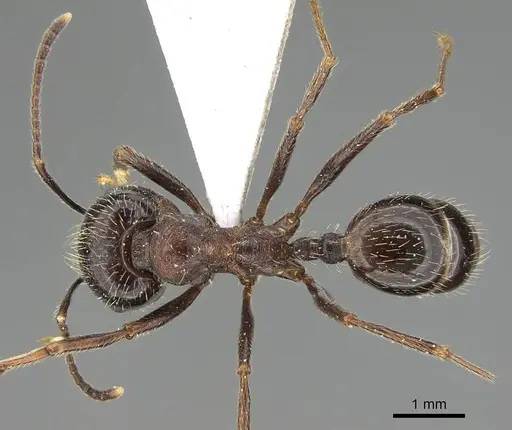
Literature
Loading...Loading products...