

Messor bucephalus
- Scientific Name
- Messor bucephalus
- Tribe
- Stenammini
- Subfamily
- Myrmicinae
- Author
- Salata <i>et al.</i>, 2023
- Distribution
- Found in 1 countries
Messor bucephalus Overview
Messor bucephalus is an ant species of the genus Messor. It is primarily documented in 1 countries , including Cyprus. Detailed taxonomic data and occurrence records can be further explored via authoritative databases such as AntWeb or the Global Biodiversity Information Facility (GBIF).
Messor bucephalus
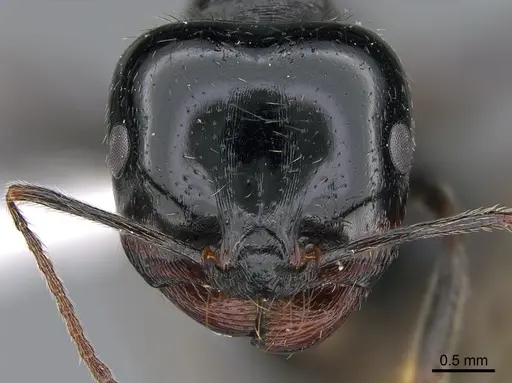
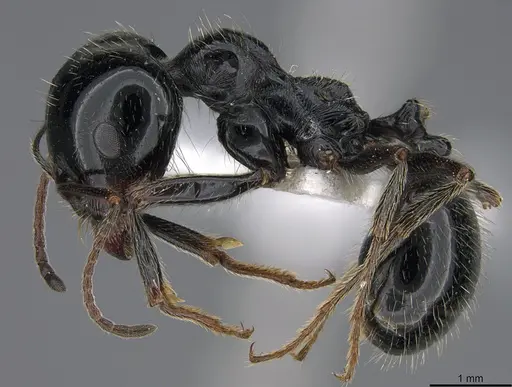
Messor bucephalus is a recently described harvester ant from Cyprus, named after Alexander the Great's horse Bucephalus due to its massive-headed major workers and predominantly black coloration [1]. These ants show strong worker size differences, with major workers having heads 2.4-2.8mm wide and powerful mandibles, while minor workers are less than half that size [1][2]. In nature, they nest directly in sandy or gravelly soil in warm, open habitats ranging from beaches and riverbanks to parking lots and gardens across Cyprus [1].
What makes this species notable is its adaptability to human-disturbed areas while maintaining specific habitat preferences for sunny, open ground [1]. Unlike many ants that avoid urbanization, Messor bucephalus thrives in cities, tourist resorts, and even dirty parking lots, provided the ground is open and warm [1]. They were frequently misidentified as other Messor species before their formal description in 2023,and previous records of M. ebeninus from Cyprus likely refer to this species [1][3].
Quick Summary
- Difficulty: Medium
- Origin & Habitat: Cyprus, sunny open areas including beaches, riverbanks, pine forests, and urban wasteland from sea level to 424m [1]
- Colony Type: Single-queen colonies likely, though not directly studied, based on typical Messor patterns
- Founding: Claustral
- Size & Growth:
- Queen: Unknown, based on typical Messor patterns, likely 10-14mm
- Worker: Major workers: head width 2.40-2.84mm, minors: head width ~1.0mm (total body length estimated 4-5mm for majors,2-3mm for minors) [1][2]
- Colony: Unknown, likely several hundred to a few thousand based on related harvester ants
- Growth: Moderate
- Development: Unknown, estimated 8-12 weeks at 25-28°C based on related Messor species (First workers (nanitics) may emerge slightly faster but smaller than subsequent workers)
- Antkeeping:
- Temperature: Warmth-loving, keep nest area at 25-30°C with a gradient. They naturally inhabit warm, sunny open areas [1]
- Humidity: Low to moderate humidity, nest substrate should be slightly moist but not wet, with dry areas available. They prefer well-drained sandy soils [1]
- Diapause: Likely required based on Mediterranean climate, unconfirmed in research. Most keepers hibernate Messor species at 10-15°C for 2-3 months
- Nesting: Ground-nesting species, use Y-tong (AAC) blocks, plaster nests, or naturalistic setups with sand/soil mix. Provide depth for tunneling
- Behavior: Harvester ants that collect and store seeds, polymorphic with distinct major and minor workers. Majors likely defend the nest and crack hard seeds, while minors forage and maintain the nest. They possess sand-carrying hairs on their heads for moving soil [1]. Minors are small (2-3mm) so escape prevention must be excellent.
- Common Issues: minor workers are tiny (2-3mm) and can escape through small gaps, use fine mesh and Fluon barriers., overfeeding protein instead of seeds, these are harvester ants that need a seed-based diet with insects only as supplement., keeping nests too humid, they prefer well-drained, drier conditions typical of beaches and open ground., impatience with slow growth, colonies develop moderately slowly and beginners may overfeed or disturb them., lack of winter rest, Mediterranean species likely need hibernation to maintain healthy colony cycles.
Nest Preferences
In nature, Messor bucephalus nests directly in the ground, with workers excavating small areas around the nest entrance [1]. They prefer sunny, open areas with sandy or gravelly soil, including beaches, riverbanks, and even compacted dirt in parking lots [1].
For captive care, replicate these ground-nesting conditions with a deep substrate. Y-tong (autoclaved aerated concrete) blocks with horizontal chambers work well, as do plaster nests or naturalistic setups containing a mix of sand and loam. Provide at least 5-10cm of substrate depth to allow for natural tunneling behavior. The nest should have a dry to slightly moist gradient, avoid waterlogged conditions as these ants prefer well-drained soils typical of their coastal and open-habitat preferences [1].
Feeding and Diet
As harvester ants, Messor bucephalus primarily collects and stores seeds. In captivity, provide a variety of small seeds such as chia, millet, canary seed, and grass seeds. Major workers with their large heads and powerful mandibles can crack harder seeds, while minors handle smaller seeds and foraging [1].
Supplement seeds with occasional protein sources like small insects (fruit flies, pinhead crickets, or mealworm pieces) once or twice weekly. Offer a sugar source such as honey water or sugar water in a test tube setup, though harvester ants typically prioritize seeds. Ensure a constant supply of fresh water via test tubes or a water tower, and avoid placing food directly on damp substrate to prevent mold.
Temperature and Care
Messor bucephalus is described as thermophilous, meaning it loves warmth [1]. They naturally inhabit sunny, open areas from sea level to 424m elevation in Cyprus, suggesting they thrive in warm conditions. Keep the nest area at roughly 25-30°C with a heating cable or mat placed on one side of the nest to create a thermal gradient [1].
Monitor colony behavior to adjust temperature, if workers cluster near the heat source, they may want more warmth, if they avoid it, reduce slightly. Room temperature (20-22°C) may be tolerated but likely slows development significantly for this warmth-loving species.
Behavior and Temperament
These ants show strong size differences between workers, with major workers possessing massive heads compared to their smaller sisters [1]. Major workers likely serve as soldiers for nest defense and as seed-crushers, while smaller workers handle foraging and nest maintenance. The workers possess specialized sand-carrying hairs on the underside of their heads, which they use to transport soil particles during excavation [1].
Minor workers measure only 2-3mm in body length, making escape prevention critical. Use Fluon or PTFE barriers on outworld walls and ensure all ventilation holes are covered with fine mesh (less than 1mm holes). They are ground-foraging harvester ants that will collect and store seeds in granaries within the nest.
Growth and Development
Specific development timelines for Messor bucephalus are unknown as the species was only described in 2023. Based on related Messor species from Mediterranean climates, expect egg-to-worker development to take approximately 8-12 weeks at optimal temperatures (25-28°C). First workers (nanitics) may emerge slightly faster but will be smaller than subsequent generations.
Colony growth is likely moderate, not as fast as tropical species, but steady once established. Based on typical Messor patterns, colonies may eventually reach several hundred to a few thousand workers, though exact maximum size for this species remains unstudied. [1]
Overwintering
While not directly documented in the available research, Messor bucephalus likely requires a winter rest period (diapause) given its Mediterranean distribution in Cyprus. Most keepers hibernate Messor species at temperatures between 10-15°C for 2-3 months during winter.
Before hibernation, reduce feeding gradually and ensure the colony has adequate seed stores. During hibernation, keep the nest slightly moist but do not disturb the colony. Resume normal temperatures and feeding in spring when the colony becomes active again. [1]
Frequently Asked Questions
Can I keep Messor bucephalus in a test tube?
Yes, for founding colonies, a standard test tube setup with water reservoir works well. Once the colony grows beyond 20-30 workers, move them to a proper nest with space for seed storage and room for the polymorphic workers.
How long until Messor bucephalus gets its first workers?
The exact timeline is unknown, but based on related Messor species, expect 8-12 weeks from egg to first worker at 25-28°C. Cooler temperatures will extend this timeline significantly.
What do Messor bucephalus ants eat?
They are harvester ants that primarily eat seeds. Provide a mix of small seeds like chia, millet, and grass seeds. Supplement with occasional small insects for protein and sugar water for energy.
Do Messor bucephalus need hibernation?
Likely yes. As a Mediterranean species from Cyprus, they probably require a winter diapause at 10-15°C for 2-3 months, though this remains unconfirmed.
Are Messor bucephalus good for beginners?
They are medium difficulty. While hardy once established, they require specific care including seed-based diet, good escape prevention due to small minor workers, and likely hibernation. Beginners might find Lasius or Camponotus easier.
How big do Messor bucephalus colonies get?
Exact maximum size is unknown, but based on related harvester ants, expect several hundred to a few thousand workers at maturity.
Do Messor bucephalus ants sting?
Like most Myrmicinae ants, they likely possess a stinger but it is too small to penetrate human skin effectively. They are not considered dangerous to humans.
Can I keep multiple Messor bucephalus queens together?
Not recommended. While the exact colony structure is unconfirmed, Messor species are typically monogyne (single queen). Combining multiple queens usually results in fighting and death.
What temperature do Messor bucephalus need?
Keep them warm at 25-30°C. They are thermophilous (warmth-loving) ants from sunny, open habitats in Cyprus. Provide a heat gradient so they can regulate their temperature.
Why are my Messor bucephalus dying?
Common causes include: escapes of tiny minor workers, overfeeding protein instead of seeds, nests that are too humid or wet, lack of winter hibernation, or disturbance during the sensitive founding stage.
References

This caresheet is licensed under CC BY-SA 4.0 .
CASENT0923729
View on AntWeb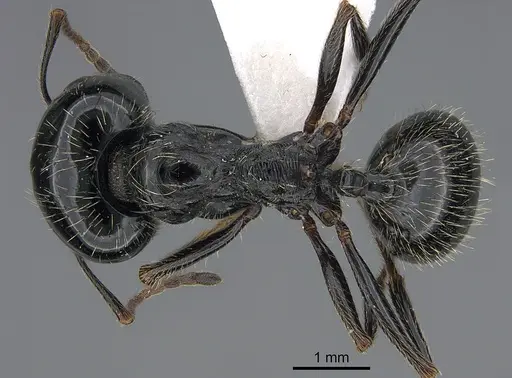
Literature
Loading...Loading products...