

Mesostruma turneri
- Scientific Name
- Mesostruma turneri
- Tribe
- Attini
- Subfamily
- Myrmicinae
- Author
- Forel, 1895
- Distribution
- Found in 1 countries
Mesostruma turneri Overview
Mesostruma turneri is an ant species of the genus Mesostruma. It is primarily documented in 1 countries , including Australia. Detailed taxonomic data and occurrence records can be further explored via authoritative databases such as AntWeb or the Global Biodiversity Information Facility (GBIF).
Mesostruma turneri
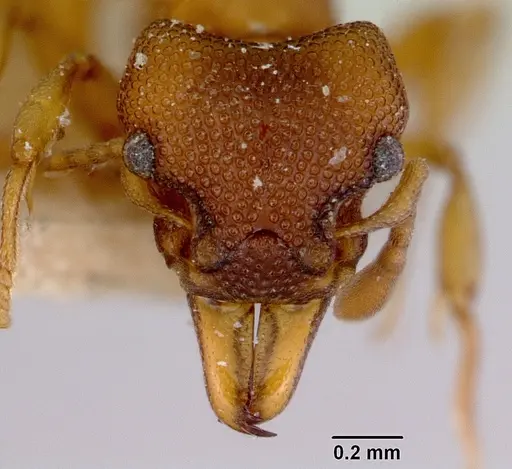
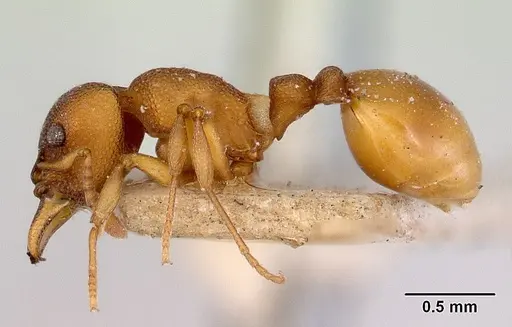
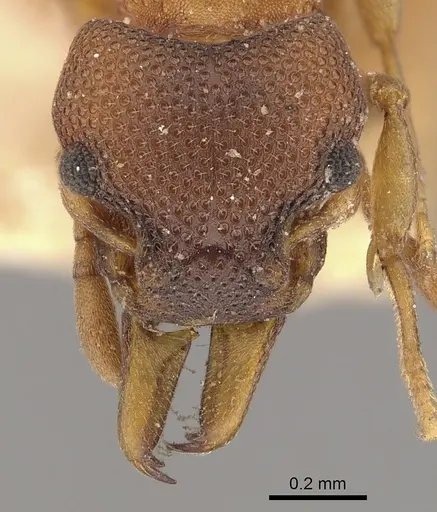
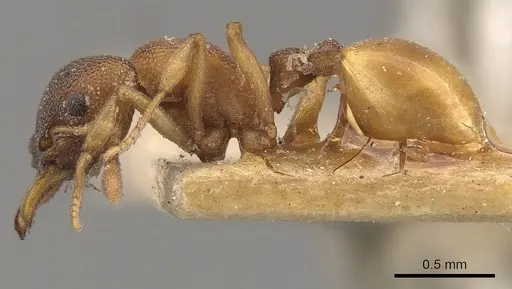
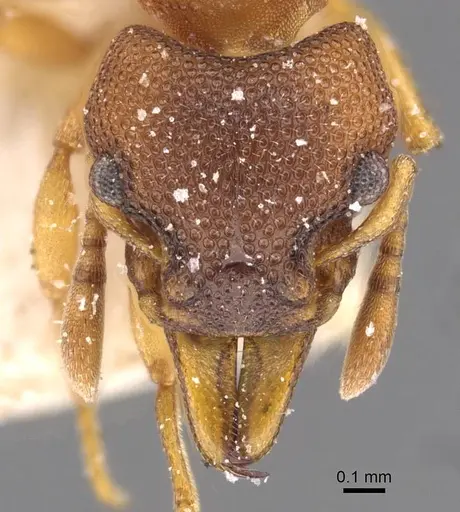
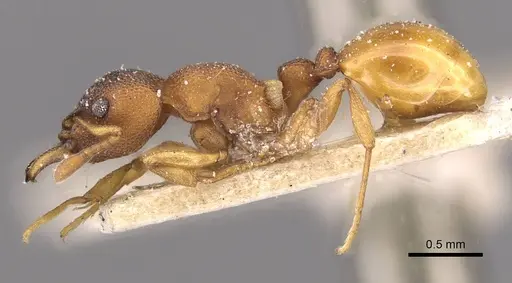
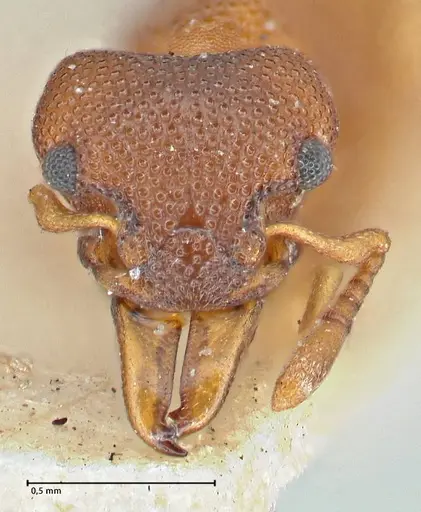
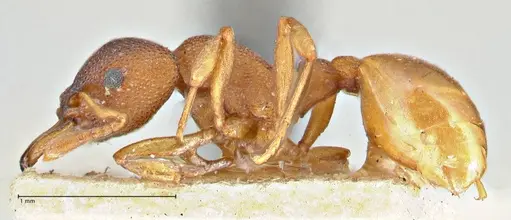
Mesostruma turneri is a tiny, rare Australian ant measuring just 3-4mm in total length. Workers have a distinctive almost-square head with large, protruding eyes and a honey-yellow body with slightly darker coloration on the head. This species belongs to the tribe Attini and is closely related to the trap-jaw ants (Strumigenys group). It was collected only once in 1894 near Mackay, Queensland, making it one of the rarest and least-studied Australian ants. It represents the northernmost extent of the genus Mesostruma. [1][2]
Quick Summary
- Difficulty: Unknown, likely Expert
- Origin & Habitat: Northern Queensland, Australia. The single known collection was from dry, low woodland along the coastal strip near Mackay, Queensland. [2][1]
- Colony Type: Unknown, colony structure has never been documented. Based on related genera in the Attini tribe, likely single-queen colonies.
- Size & Growth:
- Queen: Unknown, queen has not been described [2]
- Worker: 3.0-4.0mm total length, with head width 0.72-0.89mm [2][1]
- Colony: Unknown, no colony data exists
- Growth: Unknown, no development data exists
- Development: Unknown, no direct measurements exist. Based on related small Myrmicinae, estimate 6-10 weeks at optimal temperature. (Estimated from related genus patterns, no species-specific data available)
- Antkeeping:
- Temperature: Unconfirmed, no thermal studies exist. Based on Queensland coastal habitat, likely tolerates 22-28°C. Start around 24°C and observe colony activity.
- Humidity: Unconfirmed, no humidity data. Dry woodland habitat suggests moderate humidity needs, roughly 50-70%. Keep nest substrate slightly moist but allow some drying.
- Diapause: Unknown, no overwintering data exists for this species. Queensland experiences mild winters, so a true diapause may not be required.
- Nesting: No captive nesting data exists. In nature, likely nests in soil or under stones in dry woodland. A small test tube setup or Y-tong nest with narrow chambers would suit their tiny size.
- Behavior: Behavior is unstudied. Based on related genera (Strumigenys, Epopostruma), these ants are likely predatory on small invertebrates and may use their trap-jaw mandibles to capture prey. Their large, protruding eyes suggest visual hunting may play a role. Escape prevention is critical due to their tiny 3-4mm size, they can easily slip through standard barrier setups.
- Common Issues: extremely rare in the wild, virtually no captive colonies exist, no established care protocols, all advice is speculative based on related species, tiny size means escape prevention must be excellent, no documented diet preferences, must experiment with small live prey, no information on founding behavior or colony development
Rarity and Collection History
Mesostruma turneri is one of the rarest ants in the world, known from a single collection made in May 1894 by Gilbert Turner near Mackay, Queensland. The original collection site has since been converted to agricultural land. This species represents the northernmost extent of the genus Mesostruma, which otherwise extends southward into New South Wales and Victoria. No additional specimens have been documented since the original collection, making any information about this species extremely limited. [2][1]
Identification and Morphology
Workers measure 3.0-4.0mm in total length with an almost square head (cephalic index 96-103). The most distinctive features include very broad, convex heads with large, strongly protruding eyes. The body has dense, shallow foveolate punctures, and the first gastral segment has evenly spaced elongate rugae. Body coloration is honey yellow with the dorsum of the head slightly darker. The propodeal lamellae are broad with weakly convex dorsal margins. These tiny ants can be distinguished from similar species like Mesostruma inornata by the distinctive rugae pattern on the first gastral segment. [2][1]
Taxonomy and Relationships
Mesostruma turneri was originally described as Strumigenys (Epopostruma) turneri by Forel in 1895,then transferred to Epopostruma by Emery in 1924,and finally to Mesostruma by Brown in 1948. This species belongs to the tribe Attini within the subfamily Myrmicinae. While the Attini are famous for fungus-growing, the genus Mesostruma is not a fungus-grower, it belongs to the broader dacetine ant group that includes the famous trap-jaw ants (Strumigenys). These ants share the characteristic large eyes and specialized mandibles with their trap-jaw relatives. [2][1]
Housing and Care Recommendations
Since no captive breeding records exist for this species, all care recommendations are speculative based on related genera. Use a small test tube setup or Y-tong nest with chambers scaled to their tiny 3-4mm size. Escape prevention must be excellent, these ants will easily pass through standard barriers. For substrate, use slightly moist but not wet material. Temperature around 24°C is a reasonable starting point based on their Queensland habitat. Feeding will require experimentation, likely accepts small live prey such as springtails, fruit flies, or other micro-arthropods. Sugar water acceptance is uncertain. Due to the complete lack of captive husbandry information, this species is not recommended for beginners and should only be kept by experienced antkeepers willing to document their findings.
Research Gaps
This species represents a complete mystery in antkeeping. No information exists on: colony size, queen characteristics, founding behavior, development timeline, diet preferences, temperature/humidity requirements, nuptial flight timing, or any aspect of captive care. The entire global population in captivity appears to be zero or near-zero. Any successful captive husbandry would represent a significant scientific contribution. Keepers interested in this species should be prepared to document their observations carefully and potentially publish their findings.
Frequently Asked Questions
Can I keep Mesostruma turneri as a pet?
This species is virtually unavailable in the antkeeping hobby, it has only been collected once in 1894 and no captive colonies are known to exist. Even if a colony were found, establishing it in captivity would be extremely challenging given how little we know about its care requirements.
What do Mesostruma turneri ants eat?
Diet is completely unconfirmed for this species. Based on related genera in the Attini tribe (particularly Strumigenys), they are likely predatory on small invertebrates and may accept micro-prey like springtails, fruit flies, and other tiny arthropods. Sugar acceptance is unknown.
How big do Mesostruma turneri colonies get?
Colony size is unknown, no colony data has ever been documented. Related small Myrmicinae typically reach dozens to a few hundred workers.
What is the ideal temperature for Mesostruma turneri?
No thermal studies exist. Based on their Queensland coastal habitat, they likely tolerate 22-28°C. A starting point of around 24°C with a gradient is reasonable, but colony response should guide adjustments.
How long does it take for Mesostruma turneri to develop from egg to worker?
No development data exists for this species. Based on related small Myrmicinae, a rough estimate would be 6-10 weeks at optimal temperature, but this is purely speculative.
Is Mesostruma turneri a good species for beginners?
No. This species is not recommended for any level of keeper due to complete lack of captive care information and probable extreme rarity in the wild. Related species like Strumigenys are occasionally kept, but this specific species has no established protocols.
Where does Mesostruma turneri live in the wild?
Only known from a single collection near Mackay, Queensland, Australia, made in 1894. The original habitat was dry, low woodland along the coastal strip. This represents the northernmost extent of the genus.
Do Mesostruma turneri queens need to forage during founding?
Founding behavior is completely unconfirmed. Related Attini tribe members are typically claustral (queen seals herself in and lives off stored fat), but this is an estimate rather than documented behavior for this species.
References

This caresheet is licensed under CC BY-SA 4.0 .
CASENT0172478
View on AntWeb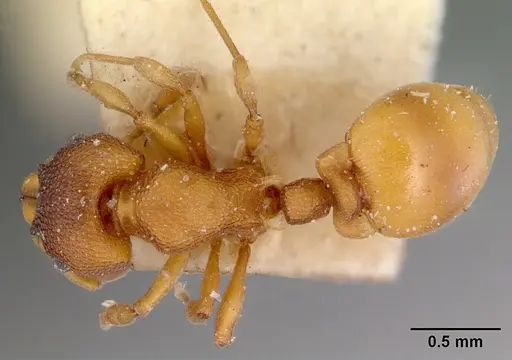
CASENT0900000
View on AntWeb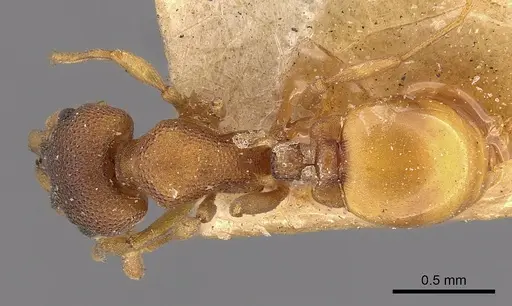
CASENT0909351
View on AntWeb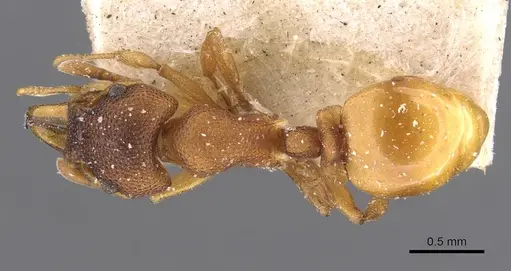
FOCOL2971
View on AntWeb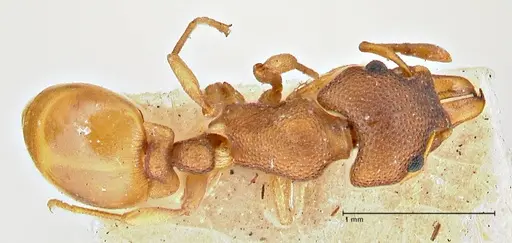
Literature
Loading...Loading products...