

Meranoplus testudineus
- Scientific Name
- Meranoplus testudineus
- Tribe
- Crematogastrini
- Subfamily
- Myrmicinae
- Author
- McAreavey, 1956
- Distribution
- Found in 1 countries
Meranoplus testudineus Overview
Meranoplus testudineus is an ant species of the genus Meranoplus. It is primarily documented in 1 countries , including Australia. Detailed taxonomic data and occurrence records can be further explored via authoritative databases such as AntWeb or the Global Biodiversity Information Facility (GBIF).
Meranoplus testudineus
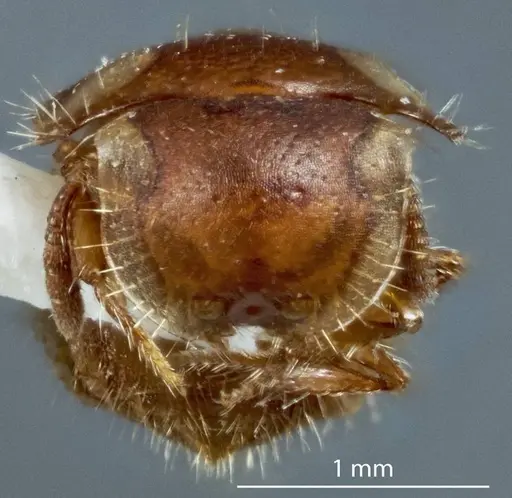
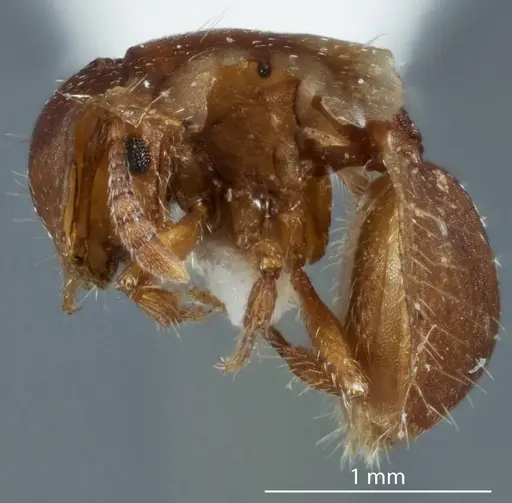
Meranoplus testudineus is a striking Australian ant known as the 'turtle ant' due to its remarkably developed promesonotal shield that forms an armor-like covering over its body. Workers are small but heavily armored, featuring distinctive translucent windows along the sides of their shield and a flanged gaster. This species belongs to the M. testudineus complex and is found in the northern Kimberley region of Western Australia [1]. The genus gets its common name from this turtle-like appearance, with extensive dorsal flanges that make them look like tiny armored vehicles [2]. These ants are very uncommon in the wild, with most Meranoplus species being rarely encountered [1].
Quick Summary
- Difficulty: Medium
- Origin & Habitat: Northern Kimberley region of Western Australia. They inhabit tropical to subtropical areas and are typically found in ground nests in arid and semi-arid habitats.
- Colony Type: Colony structure is unconfirmed. Based on genus patterns, likely single-queen (monogyne) colonies with moderate worker counts.
- Colony: Monogyne
- Founding: Claustral
- Size & Growth:
- Queen: Estimated 5-7mm based on genus patterns
- Worker: Approximately 4-5mm based on type specimen descriptions [1]
- Colony: Likely small to moderate, estimated under 500 workers based on related species
- Growth: Moderate, growth rate is estimated based on typical Meranoplus patterns
- Development: Estimated 6-10 weeks at optimal temperature based on genus-level data (Development timeline is inferred from related Meranoplus species, specific data for this species is unavailable)
- Antkeeping:
- Temperature: Keep at 24-28°C. Australian Meranoplus species prefer warm conditions. A heating cable on one side of the nest creates a suitable gradient.
- Humidity: Moderate humidity around 50-60%. Allow the nest to dry out partially between waterings. These ants prefer drier conditions compared to many tropical ants.
- Diapause: Likely a short winter rest period of 2-3 months during Australian winter (June-August). Reduce temperature to 15-18°C during this period.
- Nesting: Ground-nesting species. A Y-tong (AAC) nest or plaster nest works well. Provide a sandy-clay substrate in the outworld. Avoid overly moist conditions.
- Behavior: Meranoplus testudineus workers are docile and non-aggressive. They are slow-moving and spend much of their time foraging on the ground surface. Their heavy armor provides protection, but they rely more on concealment than confrontation. They are not known to sting and pose no danger to keepers. Escape risk is low, their larger size and heavy body makes them easy to contain with standard barriers.
- Common Issues: colonies are very uncommon in the wild, making wild collection difficult and potentially impacting wild populations, slow growth means colonies take time to establish, beginners may lose patience, limited availability means this species is rarely kept in captivity, poorly documented care requirements means keepers must rely on genus-level guidance, dry habitat requirements mean overwatering is a common mistake that can kill colonies
Housing and Nest Setup
Meranoplus testudineus is a ground-nesting ant that prefers dry to moderate conditions. A Y-tong (acrylic and cotton) nest works well for this species, providing the dark, secure environment they prefer. The nest chambers should be appropriately sized for their 4-5mm workers, not too large, as ants feel safer in snugger spaces. In the outworld, provide a sandy or sandy-clay substrate that mimics their natural Australian habitat. A water tube attached to the nest provides moisture without creating overly damp conditions. Keep the nest area relatively dry, these are not rainforest ants. [1]
Feeding and Diet
Like most Meranoplus species, M. testudineus is omnivorous. They likely forage for sweet liquids (honeydew, nectar) and protein sources (small insects, dead arthropods). Offer sugar water or honey water as a constant sugar source. For protein, provide small insects like fruit flies, pinhead crickets, or mealworm pieces. Feed protein 2-3 times per week, adjusting based on colony size. Remove uneaten prey after 24-48 hours to prevent mold. These ants are not aggressive hunters, they prefer scavenging to active predation.
Temperature and Heating
As an Australian species from the Kimberley region, Meranoplus testudineus prefers warm conditions. Keep the nest at 24-28°C for optimal brood development. A small heating cable placed on top of the nest (never underneath where it can dry out the water reservoir) can maintain these temperatures. Room temperature may suffice in warmer climates, but most keepers need supplemental heating. Create a temperature gradient so workers can choose their preferred warmth. During the Australian winter (roughly June-August), you can reduce temperatures to 15-18°C for 2-3 months to simulate their natural rest period. [1]
Behavior and Temperament
Meranoplus testudineus is a calm, non-aggressive species. Workers are slow-moving and spend considerable time foraging on the ground. Their heavily armored body provides defense, but they are not known to bite or sting. They are not escape artists despite their moderate size, standard barrier methods work well. Colonies are relatively peaceful and can be observed for long periods without aggressive behavior. Workers may show mild alarm responses if the nest is disturbed, but they do not swarm or attack. This makes them suitable for observation-focused keepers. [2][1]
Colony Establishment
Founding queens likely seal themselves in a claustral chamber, as is typical for Meranoplus. The queen will remain inside, feeding on her stored fat reserves while raising the first brood alone. Expect 4-8 weeks for the first nanitic (first-generation) workers to emerge. The initial colony grows slowly, patience is essential. Do not disturb the founding chamber during this time. Once workers emerge, they will begin foraging for food. Colony growth is moderate, with full maturity taking 1-2 years. Maximum colony size is likely several hundred workers.
Frequently Asked Questions
How long does it take for Meranoplus testudineus to produce first workers?
Expect first workers (nanitics) to emerge in approximately 6-10 weeks after the queen lays her first eggs. This timeline is estimated from related Meranoplus species, as specific development data for M. testudineus is not available. Factors like temperature and feeding can affect this timeline.
What do Meranoplus testudineus ants eat?
They are omnivorous. Offer sugar water or honey water as a constant food source. For protein, provide small insects like fruit flies, small crickets, or mealworm pieces. Feed protein 2-3 times per week and remove uneaten food promptly.
Do Meranoplus testudineus ants sting?
No, they are not known to sting. While heavily armored, they are docile and pose no danger to keepers. Their primary defense is their armor, not aggression.
Are Meranoplus testudineus good for beginners?
They are rated as medium difficulty. They require warm, relatively dry conditions and grow moderately slowly. Their docile nature makes them manageable, but their specific care requirements are less well-documented than common species.
What temperature do Meranoplus testudineus need?
Keep them at 24-28°C. A heating cable on top of the nest can maintain these temperatures. They prefer warm conditions similar to their Australian Kimberley habitat.
How big do Meranoplus testudineus colonies get?
Based on related species, colonies likely reach several hundred workers at maturity. They are not among the largest ant species, but can establish substantial colonies over 1-2 years.
Do Meranoplus testudineus need hibernation?
They likely benefit from a short winter rest period of 2-3 months during the cooler months (roughly June-August in the Southern Hemisphere). Reduce temperatures to 15-18°C during this time.
Can I keep multiple Meranoplus testudineus queens together?
This is not recommended. While colony structure is not fully confirmed, Meranoplus species are typically single-queen colonies. Combining unrelated queens has not been documented and may result in aggression.
References

This caresheet is licensed under CC BY-SA 4.0 .
ANTWEB1041198
View on AntWeb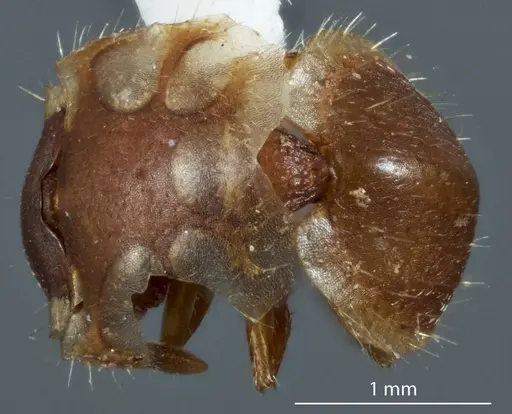
Literature
Loading...Loading products...