

Meranoplus niger
- Scientific Name
- Meranoplus niger
- Tribe
- Crematogastrini
- Subfamily
- Myrmicinae
- Author
- Donisthorpe, 1949
- Distribution
- Found in 2 countries
Meranoplus niger Overview
Meranoplus niger is an ant species of the genus Meranoplus. It is primarily documented in 2 countries , including Indonesia, Papua New Guinea. Detailed taxonomic data and occurrence records can be further explored via authoritative databases such as AntWeb or the Global Biodiversity Information Facility (GBIF).
Meranoplus niger
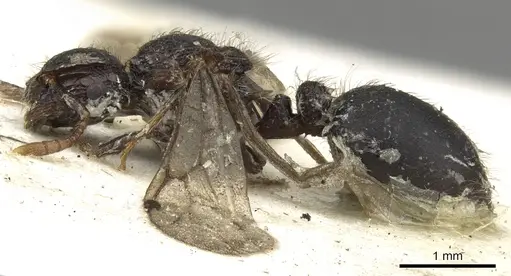
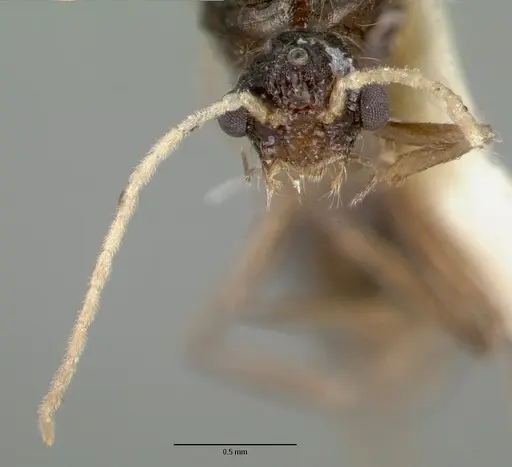
Meranoplus niger is a small, dark ant species native to the tropical rainforests of New Guinea and surrounding islands. Queens measure approximately 3-4mm in total length, with workers being significantly smaller at around 2mm. They have the characteristic Meranoplus body shape, a somewhat flattened appearance with a distinctive pronotum. This species is known only from the Australasian region, specifically eastern Indonesia (Irian Jaya) and Papua New Guinea, where they inhabit lowland to mid-elevation tropical rainforest environments [1]. The species was originally described in 1949 from specimens collected at Maffin Bay in Dutch New Guinea. Like other Meranoplus species, they are ground-nesting ants that likely forage on the forest floor. This is a rarely encountered species in both the wild and in antkeeping, with limited documented information on their biology and captive care.
Quick Summary
- Difficulty: Unknown, likely Medium
- Origin & Habitat: Eastern Indonesia (Irian Jaya) and Papua New Guinea, from sea level to at least 600m elevation in tropical rainforest [1]
- Colony Type: Colony structure is unconfirmed. Based on typical Meranoplus patterns, likely single-queen (monogyne) colonies.
- Size & Growth:
- Queen: Approximately 3-4mm total length (based on measurements: HL 0.56-0.57mm, HW 0.60-0.61mm, ML 1.19-1.25mm) [1]
- Worker: Estimated 2-2.5mm (inferred from queen size and typical Meranoplus proportions)
- Colony: Unknown, likely hundreds of workers based on genus patterns
- Growth: Unknown, likely moderate growth rate typical of tropical Myrmicinae
- Development: Estimated 6-8 weeks at tropical temperatures (25-28°C), based on typical Myrmicinae development (Development timeline is unconfirmed for this species. Related tropical Myrmicinae typically develop faster in warm conditions.)
- Antkeeping:
- Temperature: Keep at 24-28°C. This is a tropical species from New Guinea rainforest, so they need warm, stable temperatures [1]. A heating cable on one side of the nest can create a gradient.
- Humidity: Keep substrate consistently moist but not waterlogged. Tropical rainforest ants need high humidity, aim for 70-80% relative humidity in the nest area. Provide a water tube as a moisture source.
- Diapause: Unlikely, as a tropical species from near the equator, they probably do not require a diapause period. However, slight temperature reduction during winter months may be beneficial.
- Nesting: Natural nesting occurs in tropical rainforest soil and rotting wood. In captivity, a Y-tong (AAC) nest or plaster nest with good moisture retention works well. They prefer tight, humid chambers scaled to their small size.
- Behavior: Behavior is poorly documented. Meranoplus ants are typically not aggressive and are considered peaceful colony members. They are ground-nesting and likely forage on the forest floor for small prey and honeydew. Workers are small but not particularly escape-prone compared to some tiny ants, however, standard escape prevention is still recommended. Their small size means they may have difficulty with standard barriers designed for larger ants.
- Common Issues: very limited species-specific information makes care recommendations somewhat speculative, tropical humidity requirements can be difficult to maintain consistently, wild-caught colonies may have parasites or diseases not yet documented, slow colony growth can frustrate beginners expecting fast development, tropical species may not tolerate temperature drops below 20°C
Origin and Natural Habitat
Meranoplus niger originates from the tropical rainforests of New Guinea and surrounding islands in the Australasian region. The species has been documented in eastern Indonesia (Irian Jaya) and Papua New Guinea, ranging from sea level to at least 600 meters elevation [1]. The type locality is Maffin Bay in Dutch New Guinea (now Indonesia), where the original specimens were collected in 1944. Additional specimens have been collected from Morobe Province in Papua New Guinea, specifically from primary rainforest areas at Tikadu in the Lakekamu Basin [1]. The collection dates (January, June, July, August) suggest these ants are active year-round in their tropical habitat, with mating flights presumably occurring during the wet season months [1]. In their natural habitat, they likely nest in soil or rotting wood on the forest floor, typical of many Meranoplus species.
Size and Identification
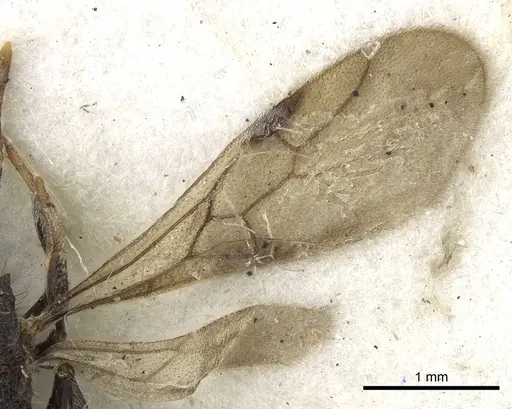
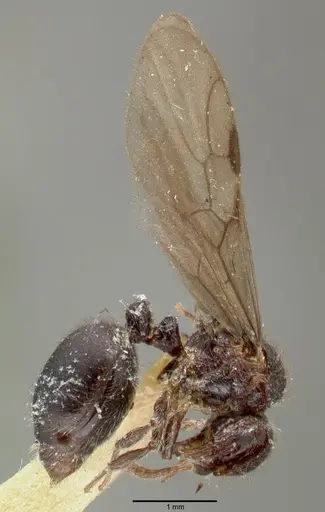
Queens of Meranoplus niger measure approximately 3-4mm in total length, based on morphological measurements: head length 0.56-0.57mm, head width 0.60-0.61mm, and mesosoma length 1.19-1.25mm [1]. Workers are significantly smaller at approximately 2-2.5mm. The species has the characteristic Meranoplus body shape, somewhat flattened with a distinctive pronotum structure. They are described as dark-colored ants (implied by the species name 'niger' meaning black). Males have been documented with relatively short petiolar nodes that do not distinctly surpass the height of the petiolar node [1]. The male genitalia show specific differences from related species like M. parviumgulatus, including a less swollen digitus apex and proportionally less tall penisvalva [1].
Temperature and Humidity Requirements
As a tropical rainforest species from New Guinea, Meranoplus niger requires warm and humid conditions in captivity. Keep the nest area at 24-28°C, which mimics their natural tropical environment. A heating cable placed on one side of the nest can create a temperature gradient, allowing the ants to regulate their own temperature by moving between warmer and cooler areas. Humidity is critical, maintain 70-80% relative humidity in the nest area. The substrate should remain consistently moist but never waterlogged. A water tube attached to the nest provides a constant moisture source. These ants are unlikely to tolerate cool temperatures, avoid exposing them to temperatures below 20°C, as this could stress or kill the colony. Unlike temperate species, they do not require a winter diapause period.
Feeding and Diet
The specific diet of Meranoplus niger is not documented in scientific literature. However, based on typical Meranoplus and Myrmicinae feeding behavior, they likely consume small insects, arthropods, and honeydew from aphids or scale insects. In captivity, offer a varied diet including small live prey such as fruit flies, pinhead crickets, and small mealworms. Sugar sources like honey water or sugar water should be provided occasionally. Feed protein prey 2-3 times per week and keep a constant sugar water source available. Remove uneaten prey after 24-48 hours to prevent mold. Because of their small worker size, prey items should be appropriately sized, very small insects and micro-arthropods are most suitable.
Nesting and Colony Setup
In the wild, Meranoplus niger nests in soil and rotting wood in tropical rainforest environments. For captive colonies, use a nest setup that maintains high humidity, Y-tong (AAC) nests or plaster nests work well for this species. The chambers should be appropriately sized for their small worker size (around 2mm), with tight passages that prevent the ants from getting lost in overly large spaces. Provide a water tube connected to the nest for moisture. The outworld should include a small foraging area with a sugar water station and protein prey dishes. Escape prevention is recommended, though these ants are not particularly known for being escape artists like some tiny Camponotus species. Standard barrier methods like fluon on test tube rims should suffice.
Colony Development and Growth
The colony development timeline for Meranoplus niger is not directly documented. Based on typical Myrmicinae development patterns in tropical species, expect approximately 6-8 weeks from egg to first worker at optimal temperatures (25-28°C). Queens are likely claustral founders, they seal themselves in a chamber and survive on stored body fat until the first workers emerge. The first workers (nanitics) will be smaller than normal workers and may take additional time to develop into full-sized workers. Colony growth is likely moderate, do not expect rapid expansion. Maximum colony size is unknown but is probably in the hundreds of workers range based on typical Meranoplus colony sizes. Be patient with colony development, as tropical species often grow more slowly than some temperate ants.
Frequently Asked Questions
How long does it take for Meranoplus niger to produce first workers?
The exact timeline is unconfirmed, but based on typical tropical Myrmicinae development, expect 6-8 weeks from egg to first worker at optimal temperatures of 25-28°C. Patience is key, do not disturb the founding queen during this time.
What do Meranoplus niger ants eat?
They likely eat small insects and honeydew like other Meranoplus species. In captivity, offer small live prey (fruit flies, pinhead crickets, small mealworms) 2-3 times per week and provide constant access to sugar water or honey water.
Do Meranoplus niger ants need hibernation?
No, they do not require hibernation. As a tropical species from near the equator, they are active year-round and need consistently warm temperatures (24-28°C) without seasonal temperature drops.
How big do Meranoplus niger colonies get?
Maximum colony size is unknown for this species. Based on typical Meranoplus patterns, colonies likely reach several hundred workers over time. Growth is expected to be moderate rather than rapid.
Are Meranoplus niger good for beginners?
This species is not well-documented in the antkeeping hobby, so it may not be ideal for complete beginners. However, if you have experience with tropical Myrmicinae and can maintain warm, humid conditions, it could be an interesting species to try. The main challenge is the limited species-specific information available.
What temperature should I keep Meranoplus niger at?
Keep them at 24-28°C. This tropical rainforest species needs warm, stable temperatures. A heating cable on one side of the nest can create a gradient. Avoid temperatures below 20°C.
Do Meranoplus niger ants sting?
Meranoplus ants have stingers but are not known for aggressive behavior. Given their small size, any sting would likely be mild and barely perceptible to humans.
Can I keep multiple Meranoplus niger queens together?
The colony structure is unconfirmed for this species. Based on typical Meranoplus patterns, they likely form single-queen colonies. Combining unrelated queens is not recommended without documented evidence of pleometrosis in this species.
What type of nest is best for Meranoplus niger?
Use a nest that maintains high humidity, Y-tong (AAC) nests or plaster nests work well. The chambers should be appropriately sized for their small worker size (around 2mm) with tight passages.
References

This caresheet is licensed under CC BY-SA 4.0 .
CASENT0171192
View on AntWeb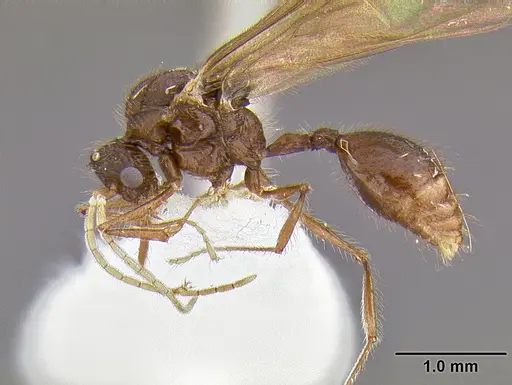
CASENT0171193
View on AntWeb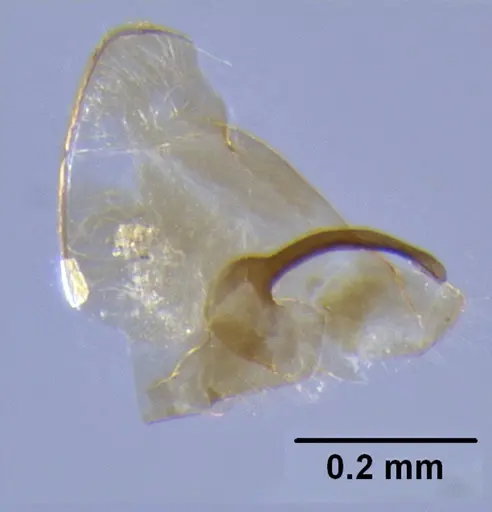
CASENT0902040
View on AntWeb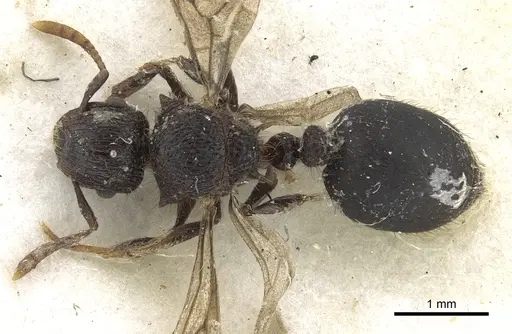
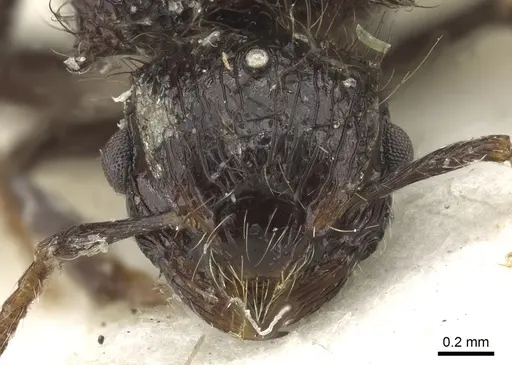
CASTYPE06968-01
View on AntWeb

CASTYPE06968-02
View on AntWeb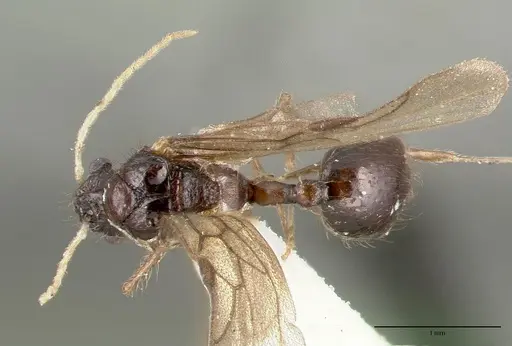

Literature
Loading...Loading products...