

Meranoplus mjobergi
- Scientific Name
- Meranoplus mjobergi
- Tribe
- Crematogastrini
- Subfamily
- Myrmicinae
- Author
- Forel, 1915
- Distribution
- Found in 2 countries
Meranoplus mjobergi Overview
Meranoplus mjobergi is an ant species of the genus Meranoplus. It is primarily documented in 2 countries , including Australia, Papua New Guinea. Detailed taxonomic data and occurrence records can be further explored via authoritative databases such as AntWeb or the Global Biodiversity Information Facility (GBIF).
Meranoplus mjobergi
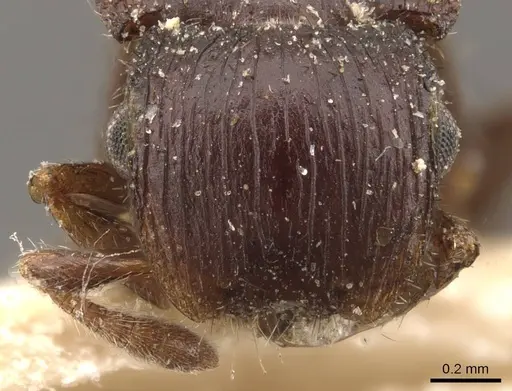
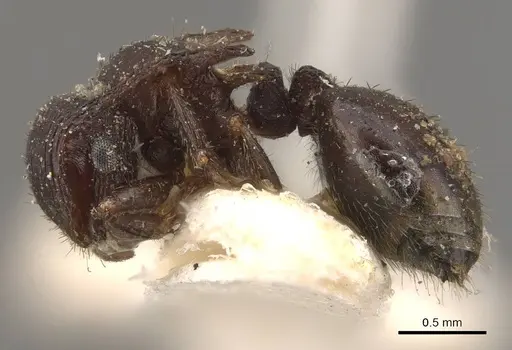
Meranoplus mjobergi is a small to medium-sized myrmicine ant native to northern Australia and New Guinea. Workers have the distinctive shield-like pronotum that gives this genus its common name, with a dark chocolate brown head and mesosoma, and smooth, dark integument [1][2]. The species belongs to the M. fenestratus group and is found in Australia's monsoonal tropics [2]. These ants are ground-nesters, typically found in soil or under stones in tropical environments. They are not aggressive and form moderate-sized colonies.
Quick Summary
- Difficulty: Medium
- Origin & Habitat: Northern Australia and New Guinea, monsoonal tropics. They inhabit tropical savanna and woodland regions, nesting in soil or under stones [2][3].
- Colony Type: Colony structure is unconfirmed. Based on typical Meranoplus patterns, likely single-queen colonies with moderate worker numbers.
- Size & Growth:
- Queen: Estimated 7-9mm based on genus Meranoplus patterns
- Worker: Estimated 4-6mm based on genus Meranoplus patterns
- Colony: Likely several hundred workers based on related species
- Growth: Moderate
- Development: Estimated 6-8 weeks at optimal temperature based on typical Myrmicinae development (Development time is estimated from genus-level data, specific timing for this species has not been documented.)
- Antkeeping:
- Temperature: Keep at 24-28°C. These are tropical ants from the monsoonal regions of northern Australia, so they prefer warm conditions [2]. A heating cable on one side of the nest creates a suitable gradient.
- Humidity: Moderate to high humidity, around 60-80%. They come from tropical areas with seasonal rainfall, so they tolerate variable conditions but prefer consistently damp substrate.
- Diapause: Likely minimal or no true diapause. As tropical ants, they probably remain active year-round with possible slowed growth during cooler months.
- Nesting: Standard test tube setups work well for founding colonies. For established colonies, Y-tong nests or plaster nests with moisture reservoirs suit their needs. They prefer tight, snug chambers typical of ground-nesting ants.
- Behavior: Workers are not aggressive and typically go about their activities calmly. They are generalist foragers, collecting honeydew and small insects. Escape risk is moderate, they are small ants but not particularly fast or agile. Standard escape prevention measures are sufficient.
- Common Issues: tropical species may struggle in cool, dry environments, maintain warmth and humidity, limited available information means care is based on genus-level patterns rather than species-specific research, colonies may be slow to establish, patience is required during founding phase, wild-caught colonies may carry parasites that can affect captive populations
Housing and Nest Setup
Meranoplus mjobergi does well in standard test tube setups for colony founding. Use a test tube with a water reservoir sealed with a cotton plug, the ants will cling to the dry side. For larger colonies, Y-tong (acrylic) nests or plaster nests with moisture chambers work well. These ants prefer snug chambers rather than open spaces, so avoid large formicarium chambers. A small outworld for foraging allows you to observe their behavior and offer food. Ensure the nest material can hold some moisture without becoming waterlogged.
Feeding and Diet
Like most Meranoplus species, these ants are generalists that feed on honeydew from aphids and scale insects, plus small insects and arthropods. In captivity, offer sugar water or honey water as a constant energy source. For protein, provide small prey items like fruit flies, small crickets, mealworms, or other appropriately-sized insects. They are not large ants, so prey should be small enough for workers to handle. Feed protein 2-3 times per week, and keep sugar water available at all times.
Temperature and Heating
As tropical ants from Australia's monsoonal north, Meranoplus mjobergi requires warm conditions. Keep the nest area at 24-28°C. Room temperature may suffice in warmer climates, but most keepers use a heating cable or heating mat on one side of the nest to maintain warmth. Place the heating element on top of the nest, not underneath, to avoid drying out the substrate too quickly. Monitor the actual temperature with a thermometer. If workers cluster near the heat source, increase slightly, if they avoid it, reduce heat. [2]
Humidity and Water
These ants come from tropical regions with seasonal rainfall, so they appreciate moderate humidity. Keep the nest substrate consistently moist but not waterlogged. The substrate should feel damp to the touch. In test tube setups, the water reservoir provides humidity as it slowly evaporates. In formicarium setups, mist occasionally and ensure the moisture gradient allows ants to choose between damper and drier areas. Good ventilation helps prevent mold while maintaining humidity.
Colony Development and Growth
Meranoplus mjobergi colonies likely grow at a moderate pace typical of Myrmicinae. The queen will lay eggs after mating, and the first workers (nanitics) will emerge after an estimated 6-8 weeks at optimal temperature. These initial workers are typically smaller than mature workers. Colony growth depends on consistent feeding, warmth, and humidity. Unlike some fast-growing species, Meranoplus colonies build gradually over months and years. Patience is key during the founding phase.
Behavior and Temperament
Workers are relatively calm and not prone to biting or stinging. They forage individually or in small groups, searching for honeydew and small prey. They are not aggressive toward the keeper and can be observed without much drama. Their small size means they can squeeze through small gaps, so ensure your setup has proper barriers. They are primarily ground-nesting and do not climb smooth surfaces aggressively. Overall, they are a manageable species suitable for keepers who can maintain warm, humid conditions.
Frequently Asked Questions
How long does it take for Meranoplus mjobergi to produce first workers?
Based on typical Meranoplus and Myrmicinae development, expect first workers (nanitics) approximately 6-8 weeks after the queen lays eggs, at optimal warm temperatures around 26°C. This is an estimate since specific development timing for this species has not been documented.
What do Meranoplus mjobergi ants eat?
They are generalist feeders. Offer sugar water or honey water constantly for energy, and small insects like fruit flies, small crickets, or mealworms for protein 2-3 times per week. They also likely collect honeydew in the wild.
Do Meranoplus mjobergi ants sting?
They are not known to be aggressive and rarely sting. Their sting is likely present but too weak to penetrate human skin effectively. They are considered docile and safe to handle gently.
What temperature do Meranoplus mjobergi need?
Keep them warm at 24-28°C. These are tropical ants from Australia's monsoonal north, so they need consistent warmth. A heating cable on the nest can help maintain proper temperatures.
Are Meranoplus mjobergi good for beginners?
They are rated as medium difficulty. They require warm, humid conditions that may be challenging to maintain consistently. Their care is straightforward once temperature and humidity requirements are met. They are docile and interesting to observe.
How big do Meranoplus mjobergi colonies get?
Based on related species, colonies likely reach several hundred workers over time. They are not among the largest ant species but can form substantial colonies with proper care over multiple years.
Do Meranoplus mjobergi need hibernation?
Probably not. As tropical ants from northern Australia and New Guinea, they likely do not require a true diapause period. They may slow down slightly during cooler months but should remain active year-round if kept warm.
When should I move Meranoplus mjobergi to a formicarium?
Move them when the test tube setup becomes crowded, typically when the colony reaches 50-100 workers. Ensure the new setup maintains appropriate humidity and has appropriately-sized chambers. They prefer snug spaces, so avoid overly large formicarium chambers.
Can I keep multiple Meranoplus mjobergi queens together?
This has not been documented for this specific species. Most Meranoplus appear to be single-queen colonies. Combining unrelated queens is not recommended unless you observe them accepting each other, which is unlikely.
Why is my Meranoplus mjobergi colony declining?
Check temperature (should be 24-28°C), humidity (substrate should be damp but not wet), and food availability. Poor conditions, parasites, or disease can cause decline. Ensure the queen is still present and laying eggs. If conditions are correct, the issue may be internal to the colony.
References

This caresheet is licensed under CC BY-SA 4.0 .
ANTWEB1008669
View on AntWeb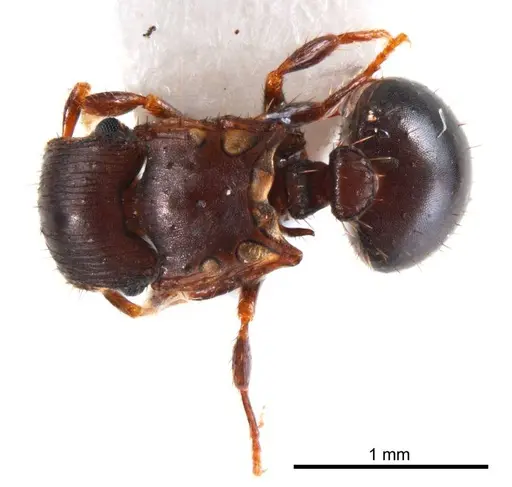
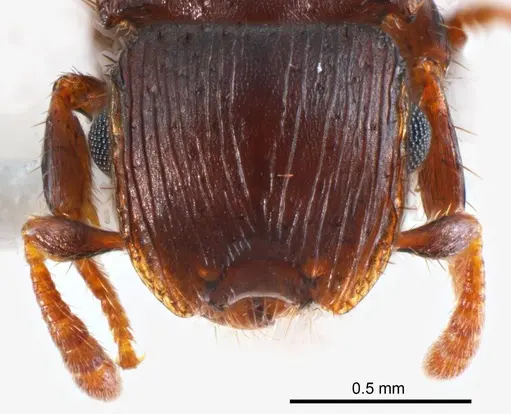
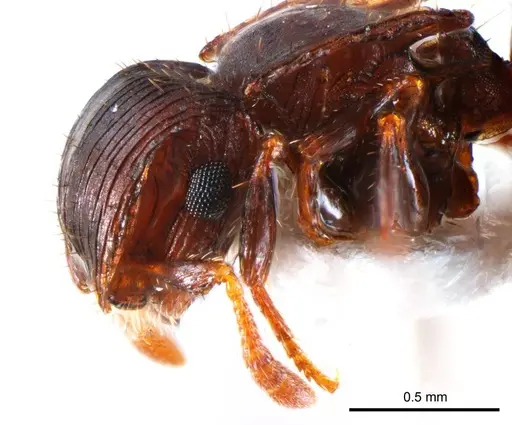
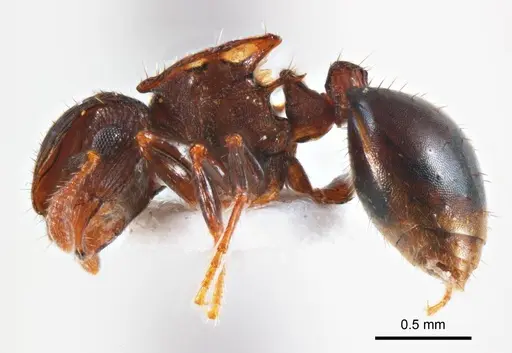
CASENT0908945
View on AntWeb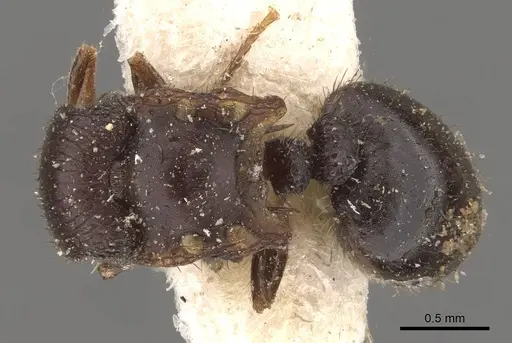
Literature
Loading...Loading products...