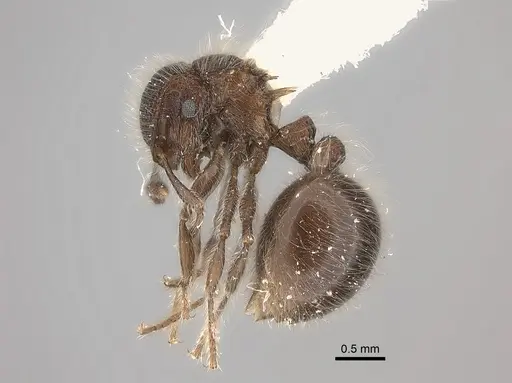
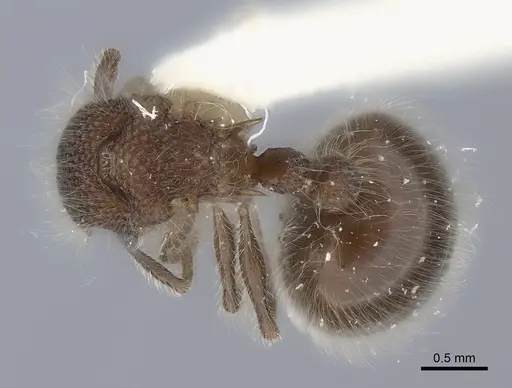
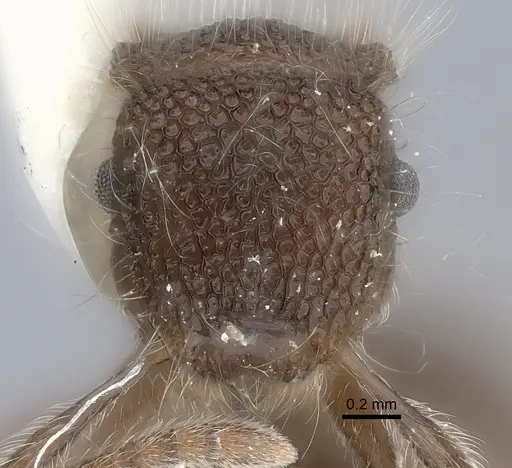
Meranoplus laeviventris - "Shield Ant"
Meranoplus laeviventris is a fascinating ant species known for its unique, heavily armored appearance, often described as 'shield ants'. Workers are typically dark brown to black with a reddish-brown thorax and possess a distinctive, somewhat quadrangular petiole and a compact mesosoma that forms a shield-like structure. They are characterized by their slow, deliberate movements, even when disturbed, and can secrete an effective repellent. This species is relatively small, with workers ranging from 3-5mm and queens from 8-9mm.
- Difficulty: Medium
- Origin & Habitat: Southeast Asia, including Myanmar (type locality), Thailand, Laos, India, and China (Yunnan Province). in Primarily found in rainforests and semi-dry to wet forests..
- Colony Type: Monogyne, claustral (without feeding) founding.
- Size & Growth:
- Queen: 8-9mm
- Worker: 3-5mm
- Colony: Medium (up to 10,000 individuals). Medium growth.
- Antkeeping:
- Temperature: Nest area: 24-28°C (75-82°F). Arena: 21-28°C (70-82°F)..
- Humidity: Nest area: 50-70%. Arena: 30-50%..
- Diapause: Not required. Not specified at Not specified.
- Nesting: They build nests in soil and also in rotten wood..
- Behavior: Low (towards handler) aggressiveness.
- Common Issues: Humidity fluctuations, Escape prevention (due to small size), Mold in nest.
One of the most striking features of Meranoplus laeviventris is their armored appearance and defensive behaviors. These ants move quite slowly, which might seem like a vulnerability, but they compensate by producing a strong repellent. This makes them less appealing to potential predators and can deter other ants, adding to their unique charm in a formicarium. Observers might notice their tendency to tuck their legs under their body and play dead when disturbed, a behavior known as thanatosis, often enhanced by accumulating dirt on their pilosity for crypsis.
When setting up a habitat for these distinctive ants, providing a mixed substrate of sand-loam is recommended for their nesting chambers, as they are known to burrow in soil and rotten wood in their natural environments. Creating a naturalistic outworld with elements like branches, roots, tree needles, and leaf litter will greatly benefit their foraging behavior and overall well-being. Given their preference for semi-dry to wet forest habitats, maintaining consistent humidity levels within the nest is crucial for their long-term health and colony development.
Meranoplus species, including laeviventris, are generally omnivorous, with some groups being specialist granivores. Therefore, offering a varied diet consisting of honey water, small insects (like flies or mosquitoes), and various grains is essential for a thriving colony. It's also worth noting that these ants are active both day and night, meaning their foraging habits can be observed at various times.
While Meranoplus laeviventris colonies can grow to a substantial size of up to 10,000 workers, their growth rate is considered medium. This offers keepers a manageable pace for observation and care compared to faster-growing species. As a monogyne species, a single queen will lead the colony, simplifying management in terms of multiple queen interactions.
Frequently Asked Questions
What makes Meranoplus laeviventris a unique ant species for antkeeping?
Meranoplus laeviventris, often called 'shield ants', stand out due to their distinct armored bodies and slow, deliberate movements. Their ability to secrete a repellent when disturbed and their 'playing dead' behavior (thanatosis) make them truly captivating to observe in an ant setup.
What type of nest is best suited for Meranoplus laeviventris?
These ants thrive in formicariums that mimic their natural nesting preferences in soil and rotten wood. Ant farms, farm basins, or Ytong/Plaster nests that allow for a sand-loam substrate are excellent choices.
What is the ideal temperature and humidity for Meranoplus laeviventris?
For optimal health and development, aim for a nest temperature of 24-28°C (75-82°F) and an arena temperature of 21-28°C (70-82°F). Humidity should be kept at 50-70% in the nest part and 30-50% in the foraging area.
What do Meranoplus laeviventris eat?
Meranoplus laeviventris are omnivores. Their diet should include sugary liquids like honey water and various insects such as flies and mosquitoes. Some Meranoplus species also consume grains, so offering a variety is beneficial.
Do Meranoplus laeviventris require diapause?
No, Meranoplus laeviventris do not require a hibernation period (diapause). They are active year-round in their natural tropical habitats.
How large do Meranoplus laeviventris colonies get?
These colonies can grow to a respectable size of up to 10,000 individuals, offering a substantial population to observe as your colony matures.
Are Meranoplus laeviventris aggressive?
Meranoplus laeviventris are generally considered to have low aggression towards handlers. Their primary defense mechanism is their repellent and 'playing dead' behavior.
Where are Meranoplus laeviventris found in the wild?
These fascinating ants originate from Southeast Asia, with documented presence in countries like Myanmar, Thailand, Laos, India, and China. They prefer humid environments such as rainforests and semi-dry to wet forests.
What is the typical size of a Meranoplus laeviventris queen and worker?
The queen of Meranoplus laeviventris measures between 8-9mm, while the workers are smaller, typically 3-5mm in length.
Can Meranoplus laeviventris cohabit with other ant species?
While some Meranoplus species like M. bicolor are known to be peaceful and suitable for cohabitation, specific information for M. laeviventris cohabitation is limited. It's generally safer to keep them in a species-specific setup to avoid potential conflicts or stress.
What kind of substrate should I use in their outworld?
For the outworld, a substrate of sand or sand-loam is suitable. Adding natural decorations like branches, roots, tree needles, and leaf litter will enrich their environment and encourage natural foraging behaviors.