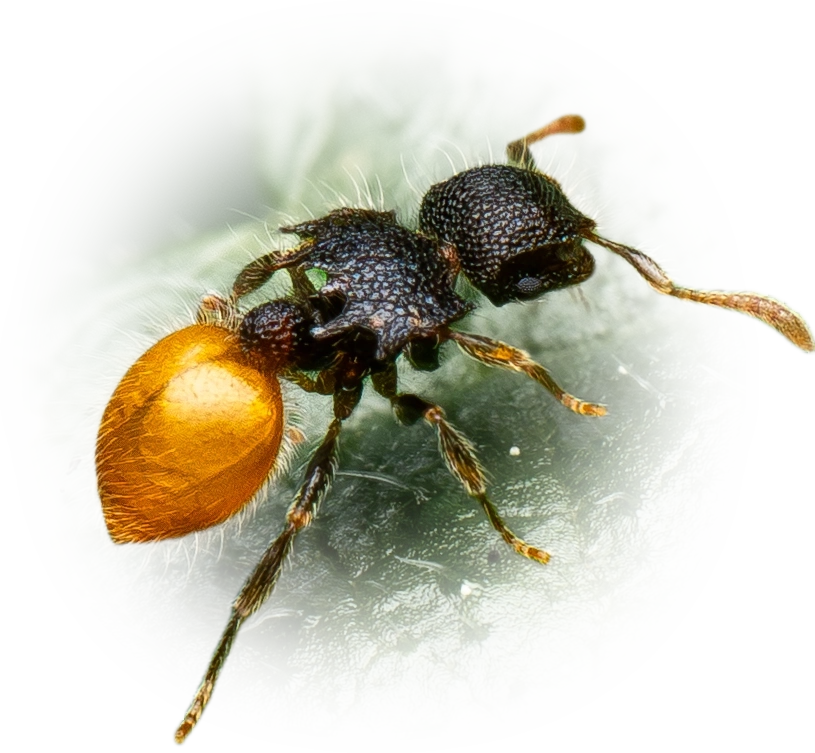

Meranoplus hirsutus
- Scientific Name
- Meranoplus hirsutus
- Tribe
- Crematogastrini
- Subfamily
- Myrmicinae
- Author
- Mayr, 1876
- Distribution
- Found in 1 countries
Meranoplus hirsutus Overview
Meranoplus hirsutus is an ant species of the genus Meranoplus. It is primarily documented in 1 countries , including Australia. Detailed taxonomic data and occurrence records can be further explored via authoritative databases such as AntWeb or the Global Biodiversity Information Facility (GBIF).
Meranoplus hirsutus
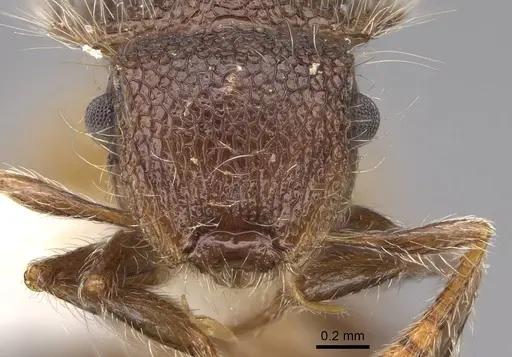
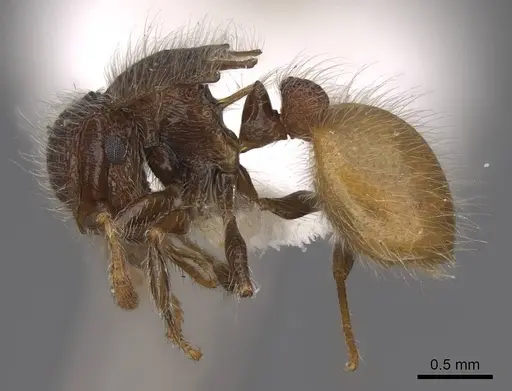
Meranoplus hirsutus is a small, distinctive ant native to the rainforests of northeastern Australia. Workers measure 0.99-1.23mm in total length, with a medium reddish-brown body and a brightly orange-brown gaster (the rear segment). The name 'hirsutus' means hairy, and these ants are indeed covered in long, dense hairs. They have a very strongly developed promesonotal shield, a shield-like structure on their middle body section, with translucent flanging that gives them a somewhat translucent appearance. Their eyes are moderate in size, taking up less than one-third of the sides of their head. These ants are very common and widespread in Australian rainforests, found from North Queensland down to northern New South Wales along the Great Dividing Range [1].
Quick Summary
- Difficulty: Medium
- Origin & Habitat: Northeastern Australia, primarily in rainforest environments along the Great Dividing Range from approximately 15°45'S in Queensland to 28°30'S in New South Wales. They nest in soil or rotting wood on the ground, or under stones. Elevational range spans from near sea level up to 950-1000m. In the south, they also occur in dry sclerophyll forest, while in the north they're primarily rainforest dwellers [2].
- Colony Type: Colony structure is not well documented in scientific literature. Workers forage diurnally on vegetation, often several metres above ground, which is unusual for small ants. Likely single-queen colonies based on typical Meranoplus patterns, but this is unconfirmed.
- Size & Growth:
- Queen: Unconfirmed, queen measurements not documented in available literature
- Worker: 0.99-1.23mm total length (HWE 0.99-1.23mm, HW 0.83-1.03mm) [2]
- Colony: Unknown, no colony size data available
- Growth: Unknown, growth rate not documented
- Development: Unconfirmed, no direct development data available. Based on typical Myrmicinae patterns in tropical rainforest species, estimate 4-8 weeks at optimal temperature. (Estimate based on genus patterns rather than direct observation. Tropical rainforest location suggests faster development than temperate species.)
- Antkeeping:
- Temperature: Keep around 22-26°C. Being a rainforest species from northeastern Australia, they prefer warm, stable conditions. A gentle gradient allowing them to choose their preferred temperature works best.
- Humidity: High humidity is essential, think damp rainforest floor. Keep the nest substrate consistently moist but not waterlogged. Provide a water source and mist occasionally. These ants forage in vegetation above ground, so they likely tolerate some variation.
- Diapause: Likely minimal or no true diapause. As a tropical/subtropical rainforest species from northeastern Australia, they probably remain active year-round with slight slowing in cooler months. No formal research on overwintering requirements exists.
- Nesting: In captivity, they do well in nests that retain moisture, Y-tong (acrylic) nests with tight chambers work well, or naturalistic setups with moist soil/rotting wood. They naturally nest in soil, rotting wood, and under stones. Provide small chambers scaled to their tiny size.
- Behavior: These are diurnal foragers that actively search for food on vegetation, often climbing several metres above ground, notable behavior for such small ants. They are not aggressive and likely rely on their hairy, spiny appearance for defense rather than biting or stinging. Their small size (around 1mm) means escape prevention is critical, they can squeeze through tiny gaps. Workers are quite active and visible, making them interesting to watch.
- Common Issues: escape prevention is critical due to their tiny 1mm size, use fine mesh barriers and tight-fitting lids, high humidity requirements can lead to mold if ventilation is poor, balance humidity with airflow, slow colony growth may frustrate beginners, be patient with founding colonies, no documented queen size means founding colony setup is based on genus patterns rather than species-specific data, foraging height in the wild suggests they need vertical space in captivity, include climbing structures
Housing and Nest Setup
Meranoplus hirsutus is a tiny ant requiring appropriately scaled housing. Use test tubes for founding colonies, with chambers sized appropriately, these ants are only about 1mm long, so tight-fitting connections and small water reservoirs work better than large tubes that can flood. For established colonies, Y-tong (acrylic) nests with narrow chambers work well, or you can use a naturalistic setup with moist soil and pieces of rotting wood to mimic their natural nesting sites. Because they naturally forage on vegetation several metres above ground, include some vertical climbing space or branches in the outworld so they can display their natural foraging behavior. Escape prevention must be excellent, these tiny ants can squeeze through gaps that seem impossibly small. Use fine mesh on any ventilation holes and ensure all connections are tight. [2]
Feeding and Diet
In the wild, these ants forage on vegetation and likely collect honeydew from aphids and scale insects, plus small insects. In captivity, offer sugar water or honey as a constant energy source. For protein, provide small live prey appropriate to their size, fruit flies, pinhead crickets, or other tiny insects. Being diurnal foragers, they are likely to accept food during daylight hours. Feed protein sources 2-3 times per week, and keep sugar water available at all times. Remove uneaten prey after 24-48 hours to prevent mold. Their small size means prey items should be appropriately scaled, what seems tiny to you is a proper meal for these ants. [2]
Temperature and Humidity
As a rainforest species from northeastern Australia, Meranoplus hirsutus needs warm and humid conditions. Keep temperatures in the 22-26°C range, they come from a tropical to subtropical climate where temperatures remain fairly stable year-round. A heating cable on one side of the nest can create a gentle gradient, but ensure it does not dry out the nest too quickly. Humidity is crucial: keep the nest substrate consistently moist but not waterlogged. The substrate should feel damp to the touch. Mist the nest occasionally and provide a water source. However, balance humidity with adequate ventilation to prevent mold growth, which can kill colonies. These ants are active foragers even in daylight hours, so stable warm conditions will keep them active and growing. [2]
Behavior and Observation
One of the most interesting aspects of Meranoplus hirsutus is their foraging behavior, they actively search for food during the day on vegetation, often climbing several metres above ground in the wild. This makes them unusual among small ants and provides excellent viewing opportunities in captivity. They are covered in long, dense hairs and have distinctive spines on their promesonotal shield, giving them a somewhat fuzzy, armored appearance. They are not aggressive and likely use their spiny, hairy appearance for passive defense rather than active attack. Workers are quite active and visible, making this species engaging to watch. Their small size means you can observe entire colonies in appropriately scaled setups without disturbing them. [1][2]
Colony Establishment
Starting a colony of Meranoplus hirsutus requires patience, as with most small ant species. Queens have not been documented in scientific literature, so founding behavior is estimated based on genus patterns, likely claustral, meaning the queen seals herself in a chamber and lives off stored fat reserves until her first workers (nanitics) emerge. Provide a simple test tube setup with a water reservoir and keep it undisturbed in a warm, humid location. Do not check on the colony frequently during founding, this causes stress and can lead to abandonment. Expect 4-8 weeks for the first workers to emerge based on typical Myrmicinae patterns, though this is an estimate since no species-specific development data exists. Once workers emerge, you can begin offering small amounts of sugar water and appropriately sized prey.
Frequently Asked Questions
How long does it take for Meranoplus hirsutus to produce first workers?
The exact timeline is unconfirmed, but based on typical Myrmicinae development patterns for tropical rainforest species, expect approximately 4-8 weeks from egg to first worker at optimal temperature (22-26°C). This is an estimate since no species-specific development data exists.
What do Meranoplus hirsutus ants eat?
They likely forage for honeydew and small insects in the wild. In captivity, offer sugar water or honey constantly for energy, and protein sources like fruit flies, tiny crickets, or other small insects 2-3 times per week. Remove uneaten prey after 24-48 hours.
Are Meranoplus hirsutus good for beginners?
They are rated as medium difficulty. Their small size and high humidity requirements can be challenging, but their active foraging behavior makes them rewarding to keep. They are not aggressive and are interesting to observe.
Do Meranoplus hirsutus ants sting?
They are not known to be aggressive and likely rely on their spiny, hairy appearance for defense rather than stinging. As Myrmicinae, they have stingers but are too small to cause meaningful pain to humans.
What temperature should I keep Meranoplus hirsutus at?
Keep them at 22-26°C. As a rainforest species from northeastern Australia, they prefer warm, stable conditions. A gentle gradient allowing them to choose their preferred temperature works best.
How big do Meranoplus hirsutus colonies get?
Colony size is not documented in scientific literature. Being a common rainforest species, colonies likely reach several hundred workers, but exact maximum size is unknown.
Can I keep multiple queens together?
Colony structure is unconfirmed for this species. Combining unrelated queens is not recommended since it has not been documented and could result in fighting.
Do Meranoplus hirsutus need hibernation?
Likely no true hibernation. As a tropical/subtropical species from northeastern Australia, they probably remain active year-round with slight slowing in cooler months.
Why are my Meranoplus hirsutus escaping?
Their tiny 1mm size means they can squeeze through impossibly small gaps. Use fine mesh on all ventilation, ensure all connections are tight-fitting, and check for any cracks or gaps in your setup. Escape prevention must be excellent.
When should I move my colony to a formicarium?
Wait until the colony is established with at least 20-30 workers and the test tube setup is becoming cramped. For this small species, a Y-tong nest with appropriately sized chambers works well. Always ensure the new setup maintains proper humidity.
References

This caresheet is licensed under CC BY-SA 4.0 .
CASENT0902051
View on AntWeb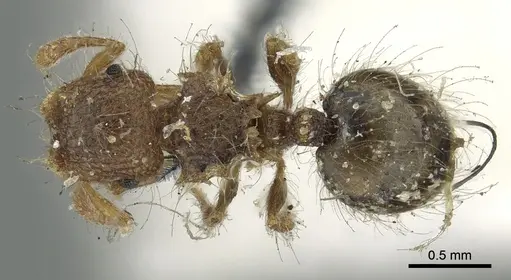
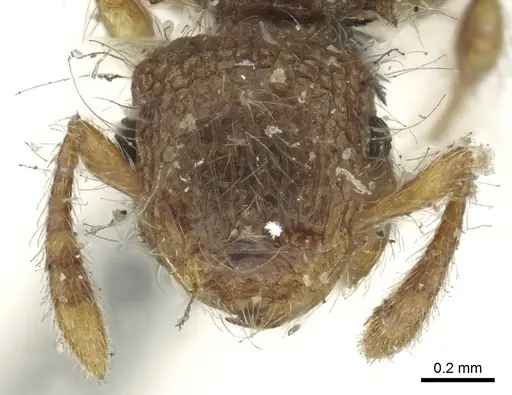
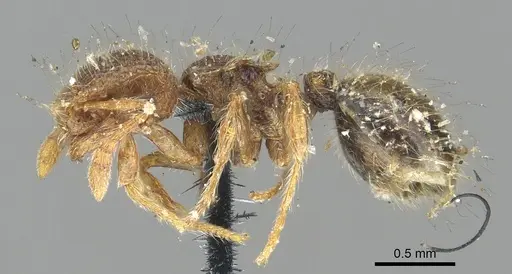
CASENT0922909
View on AntWeb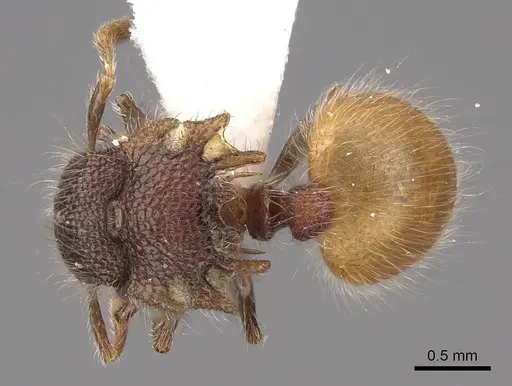
Literature
Loading...Loading products...