

Meranoplus fenestratus
- Scientific Name
- Meranoplus fenestratus
- Tribe
- Crematogastrini
- Subfamily
- Myrmicinae
- Author
- Smith, 1867
- Distribution
- Found in 1 countries
Meranoplus fenestratus Overview
Meranoplus fenestratus is an ant species of the genus Meranoplus. It is primarily documented in 1 countries , including Australia. Detailed taxonomic data and occurrence records can be further explored via authoritative databases such as AntWeb or the Global Biodiversity Information Facility (GBIF).
Meranoplus fenestratus
Meranoplus fenestratus is a small myrmicine ant native to Western Australia, named for the distinctive translucent 'windows' or flanges on its dorsal surface [1]. Workers measure around 4-5mm with a reddish-brown head and mesosoma, and belong to a species complex that includes M. oceanicus [2]. The species was originally described in 1867 and has a complex taxonomic history, having been synonymized with M. pubescens before being revived as a valid species in 1985 [3]. These ants are found primarily in Western Australia's coastal and semi-arid regions, nesting in soil or under stones.
Quick Summary
- Difficulty: Medium
- Origin & Habitat: Western Australia, particularly coastal areas around Champion Bay and Barrow Island [3][4]. Found in arid to semi-arid zones with typical Australian bushland habitat.
- Colony Type: Colony structure is unconfirmed. Based on typical Meranoplus patterns, likely monogyne (single queen) colonies.
- Colony: Monogyne
- Founding: Claustral
- Size & Growth:
- Queen: Estimated 6-7mm based on genus patterns
- Worker: Approximately 4-5mm [2]
- Colony: Likely moderate colonies of several hundred workers based on genus typical sizes
- Growth: Moderate, estimated based on related Myrmicinae
- Development: Estimated 6-10 weeks at optimal temperature based on genus patterns (Development timeline is estimated from related species, specific data for M. fenestratus is unavailable)
- Antkeeping:
- Temperature: Keep around 22-26°C, mimicking warm Australian conditions. A gentle heat gradient allows ants to regulate their temperature.
- Humidity: Moderate humidity around 50-70%. These ants prefer drier conditions than many tropical species, reflecting their arid Australian habitat.
- Diapause: Likely a mild winter slowdown period, though specific diapause requirements are unconfirmed for this species.
- Nesting: Use a dry to moderately moist substrate. Y-tong nests or acrylic setups with sand/soil mixtures work well. Provide narrow chambers scaled to their small size.
- Behavior: Workers are active foragers that likely scavenge for seeds and small insects. Not particularly aggressive, but may bite if threatened. Their small size means escape prevention is important, use fine mesh barriers. They are diurnal and actively forage during warmer parts of the day.
- Common Issues: escape prevention is critical due to their small size, they can squeeze through tiny gaps, limited available information means care is based on genus patterns rather than species-specific studies, dry Australian habitat means overwatering can be fatal, err on the dry side, slow growth may frustrate beginners expecting rapid colony development
Identification and Appearance
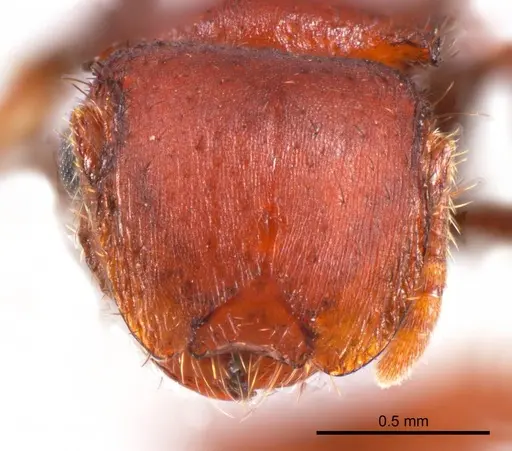
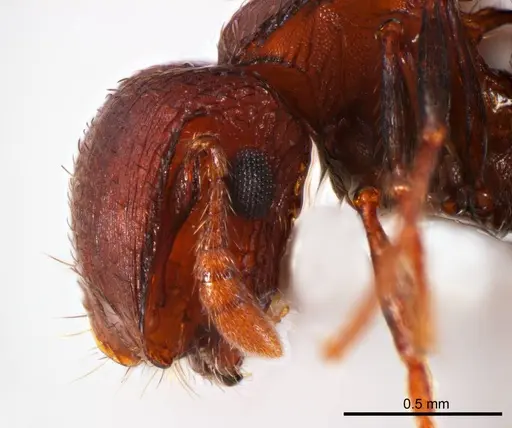
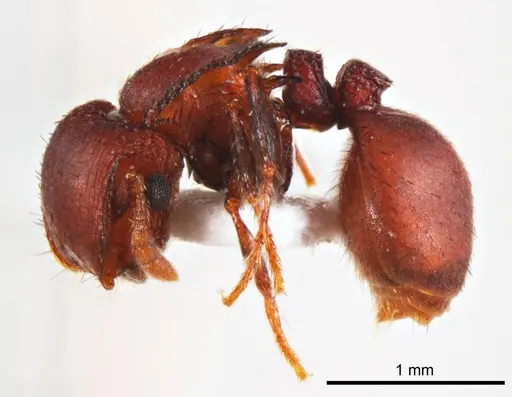
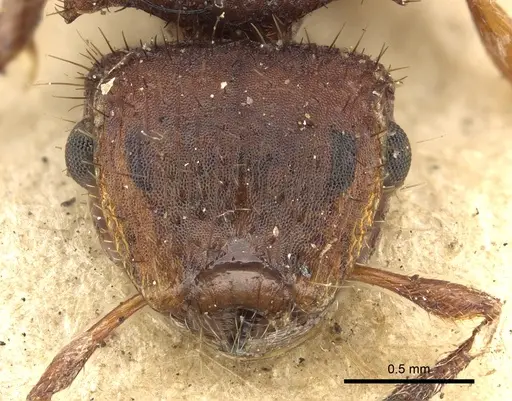
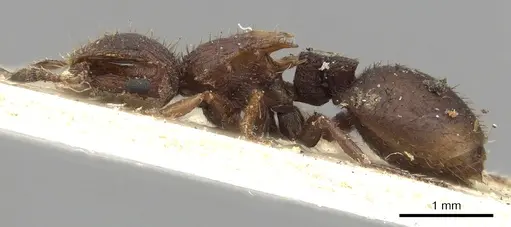
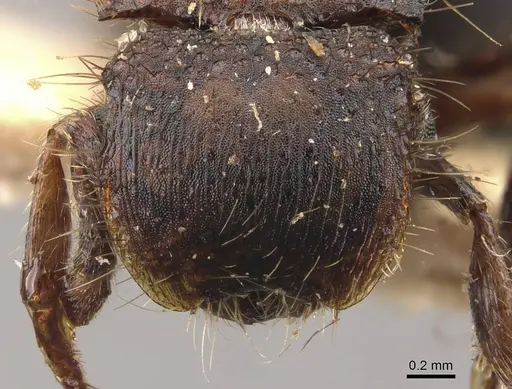
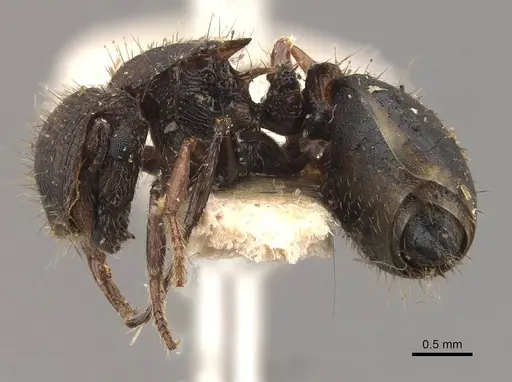
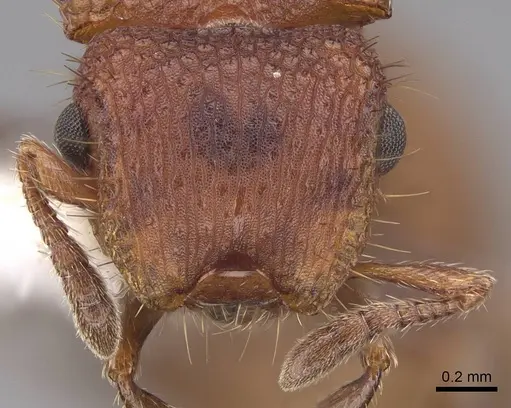
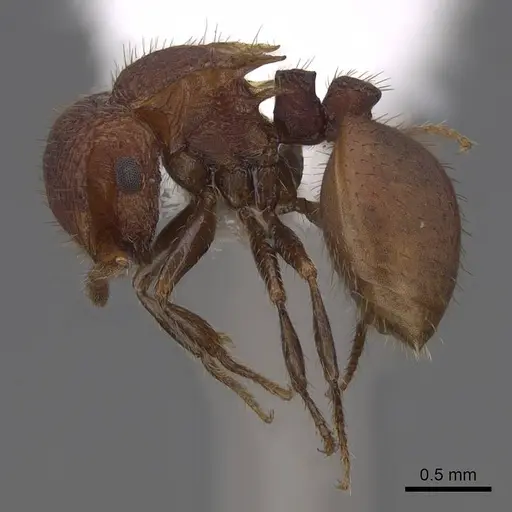
Meranoplus fenestratus workers are small ants around 4-5mm in length with a distinctive appearance [2]. Their most notable feature is the dorsal flanges with translucent 'windows' that give them their common name [1]. The head and mesosoma are more reddish-brown compared to related species, and the shield (the characteristic Meranoplus plate) is longer than in southern semi-arid zone populations [2]. In full-face view, the head sculpture shows vestigial, minute, dense longitudinal striae that are almost invisible [5]. The petiolar node in profile is subcuboidal with a planar dorsum [5]. These identification features are subtle and require careful examination, making positive species identification challenging for beginners.
Natural History and Distribution
This species is endemic to Western Australia, with the type locality recorded at Champion Bay [3]. It has been documented on Barrow Island through baseline surveys [4], indicating presence in coastal island environments as well as mainland areas. The species belongs to a complex of seven species that includes M. oceanicus, and shows some variation between populations from different regions [2]. Like other Meranoplus species, these ants likely nest in soil or under stones in arid to semi-arid Australian bushland. Their distribution in Western Australia suggests they are adapted to warm, relatively dry conditions with seasonal variation.
Housing and Nest Setup
For keeping Meranoplus fenestratus successfully, use a nest setup that mimics their natural dry to moderately moist environment. Y-tong (acrylic) nests work well, or you can use test tube setups for founding colonies. The substrate should be able to hold some moisture but should not remain constantly wet, these are not high-humidity ants. Provide a small outworld for foraging with access to protein foods and sugar sources. Because of their small size, ensure all connections and barriers are secure, fine mesh is essential to prevent escapes. A thin layer of substrate in the outworld allows for natural foraging behavior. Avoid overly complex setups initially, simple is better for monitoring colony health.
Feeding and Diet
Based on typical Meranoplus feeding habits, these ants are likely omnivorous with a preference for seeds and small insects. Offer protein sources such as small crickets, mealworms, or other appropriately-sized insects. They will likely accept sugar water or honey as an energy source. Seeds may be collected and stored, as is common in this genus. Feed protein roughly twice weekly, and keep sugar water available at all times. Remove uneaten prey after 24-48 hours to prevent mold issues. The exact dietary preferences of M. fenestratus specifically have not been studied, so observe your colony's preferences and adjust accordingly.
Temperature and Seasonal Care
Maintain temperatures in the range of 22-26°C, reflecting their warm Australian habitat. Room temperature within this range is typically suitable. If your colony shows increased activity near one side of the nest, you can use a heating cable on that side to create a gentle gradient, but place it on top of the nest, not underneath, to avoid excessive drying. During winter months, a slight reduction in temperature (to around 18-20°C) may be appropriate to simulate seasonal changes, though specific diapause requirements are unconfirmed for this species. Monitor colony behavior, if workers become less active and cluster together, this indicates they are responding to cooler conditions. Avoid sudden temperature swings.
Colony Development and Growth
Colony growth is expected to be moderate rather than rapid. The first workers (nanitics) will typically be smaller than mature workers and may take 6-10 weeks to develop from egg to worker based on related Myrmicinae patterns. After the founding stage, colony growth depends on proper feeding and temperature maintenance. Meranoplus colonies generally reach several hundred workers at maturity. Be patient during the founding phase, queen mortality can be high, and colonies may appear stagnant before rapid growth begins. Once established, the colony should grow steadily with consistent care. Regular feeding and appropriate temperature will support healthy brood development.
Frequently Asked Questions
How long does it take for Meranoplus fenestratus to produce first workers?
Based on related Myrmicinae species, expect 6-10 weeks from egg to first worker at optimal temperature (around 24-26°C). The exact timeline for this specific species has not been documented.
What do Meranoplus fenestratus ants eat?
They likely accept small insects (like small crickets or mealworms) for protein and sugar sources (honey or sugar water). Based on genus patterns, they may also collect seeds. Offer protein twice weekly with constant access to sugar water.
Are Meranoplus fenestratus ants aggressive?
They are not typically considered aggressive. Workers may bite if threatened or handled, but they are generally docile compared to many ant species. Their small size means they pose minimal threat to humans.
Do Meranoplus fenestratus need hibernation?
Specific diapause requirements are unconfirmed, but based on their Western Australian origin, a mild winter cool-down (reducing to around 18-20°C) may be appropriate. Avoid prolonged cold temperatures.
How big do Meranoplus fenestratus colonies get?
Based on genus patterns, colonies likely reach several hundred workers at maturity. Specific colony size data for this species has not been documented.
Can I keep multiple Meranoplus fenestratus queens together?
Colony structure is unconfirmed for this species, but based on typical Meranoplus patterns, they likely have single-queen colonies. Combining unrelated queens is not recommended as queens typically fight.
What temperature is best for Meranoplus fenestratus?
Keep them at 22-26°C. This range mimics their warm Australian habitat. Room temperature in this range is typically suitable, with a slight increase if your colony seems sluggish.
Why are my Meranoplus fenestratus escaping?
Their small size (around 4-5mm) means they can escape through very tiny gaps. Use fine mesh (at least 0.5mm) on all ventilation and ensure all connections are tight. Check lid seals regularly.
Is Meranoplus fenestratus good for beginners?
This species is rated as Medium difficulty. While not the easiest species, it is manageable for intermediate antkeepers. The main challenges are escape prevention and limited species-specific care information.
When should I move my colony to a formicarium?
Move from test tube to a larger nest setup once the colony reaches around 50-100 workers and the test tube shows signs of degradation or space limitations. Meranoplus prefer relatively dry conditions, so choose a setup that doesn't retain excessive moisture.
Do Meranoplus fenestratus ants sting?
As Myrmicinae, they have a stinger but it is very small and typically cannot penetrate human skin. They may bite if handled roughly, but are not considered dangerous to humans.
What makes Meranoplus fenestratus different from other ants?
Their most distinctive feature is the translucent 'windows' or flanges on their dorsal surface, giving them the common name 'window ant' [1]. They also have the characteristic shield-like plate unique to the Meranoplus genus.
References

This caresheet is licensed under CC BY-SA 4.0 .
ANTWEB1008668
View on AntWeb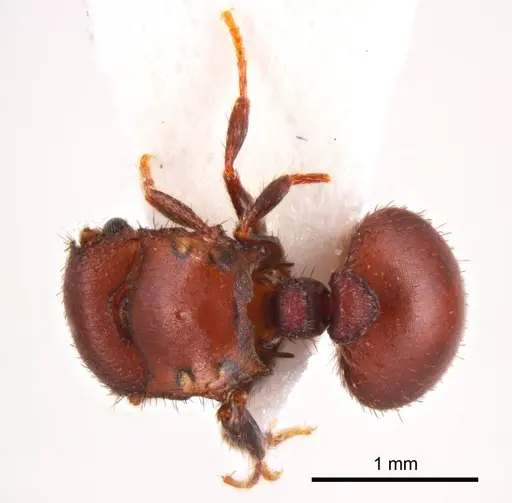
CASENT0902050
View on AntWeb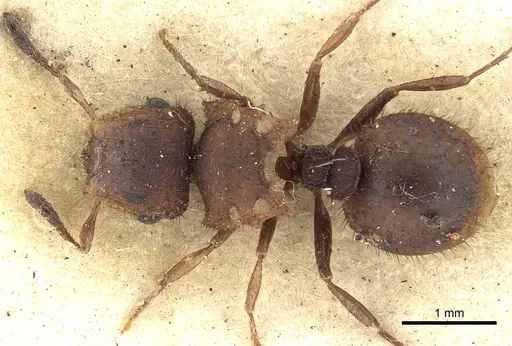
CASENT0908946
View on AntWeb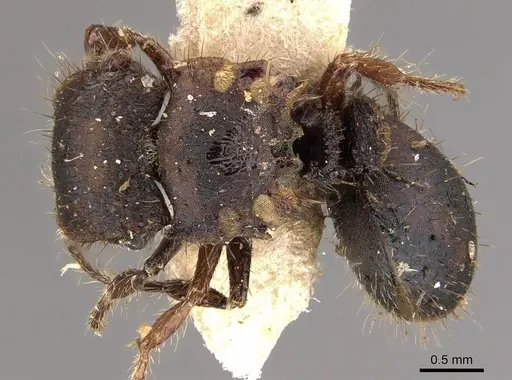
CASENT0922914
View on AntWeb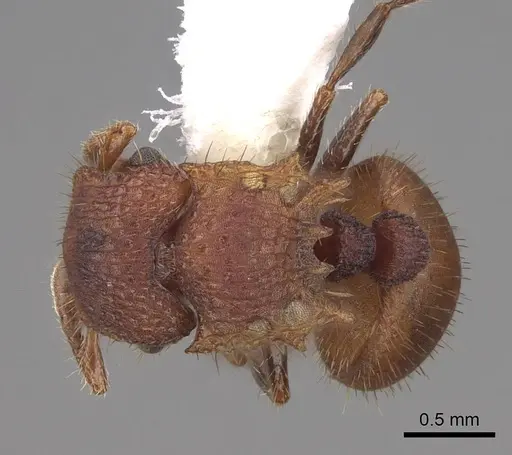
Literature
Loading...Loading products...