

Meranoplus dimidiatus
- Scientific Name
- Meranoplus dimidiatus
- Tribe
- Crematogastrini
- Subfamily
- Myrmicinae
- Author
- Smith, 1867
- Distribution
- Found in 1 countries
Meranoplus dimidiatus Overview
Meranoplus dimidiatus is an ant species of the genus Meranoplus. It is primarily documented in 1 countries , including Australia. Detailed taxonomic data and occurrence records can be further explored via authoritative databases such as AntWeb or the Global Biodiversity Information Facility (GBIF).
Meranoplus dimidiatus
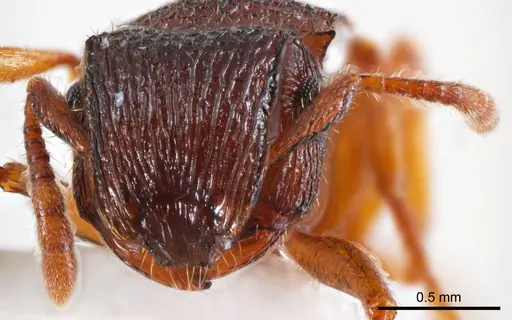
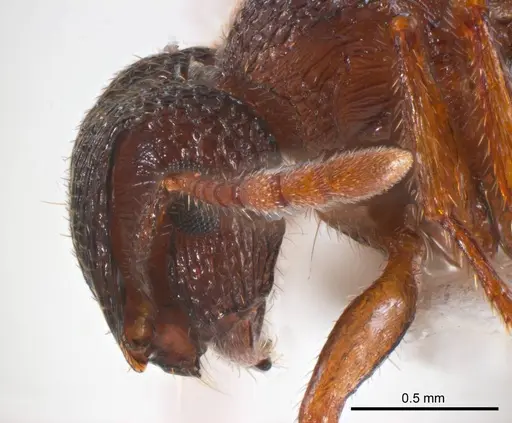
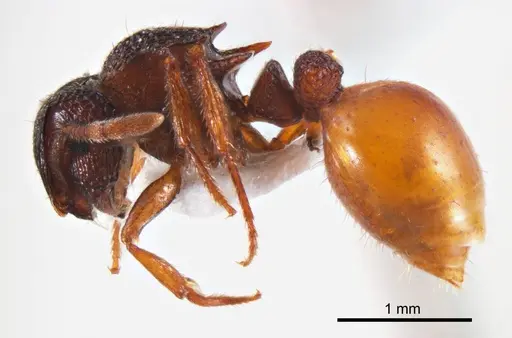
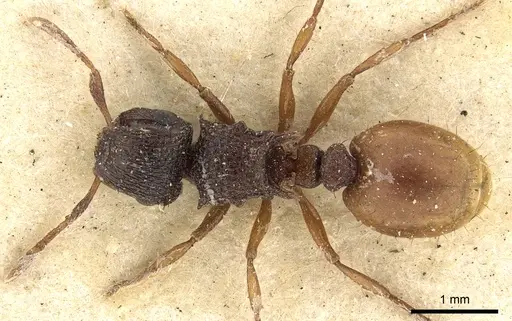
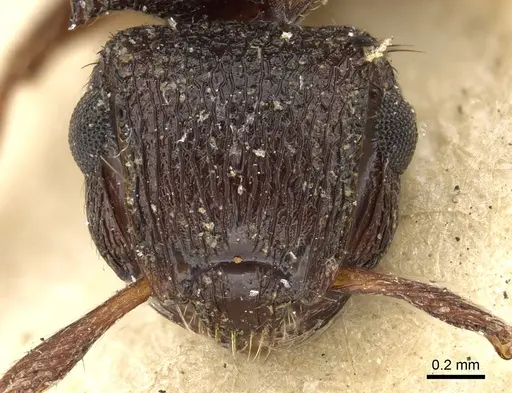
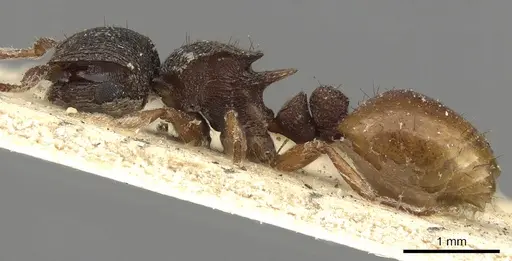
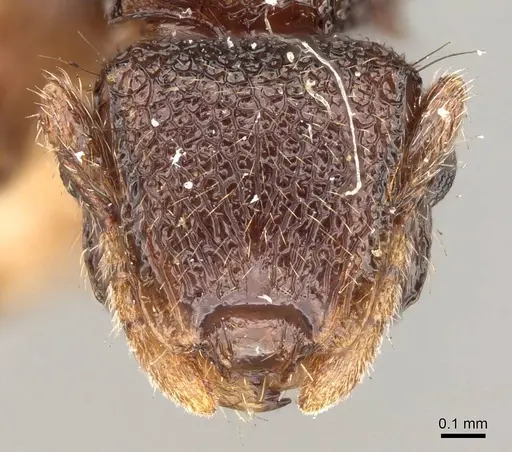
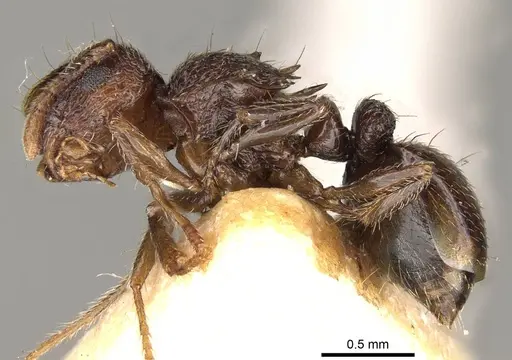
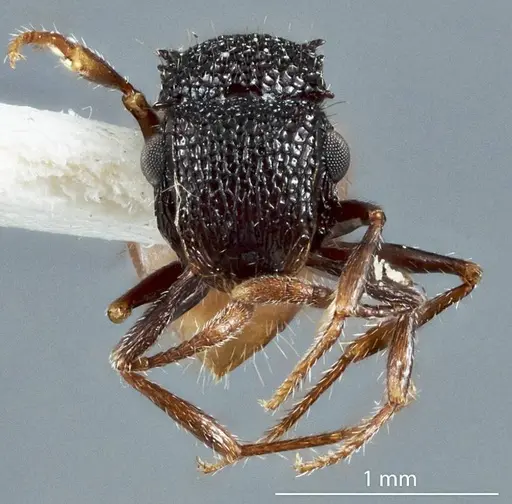
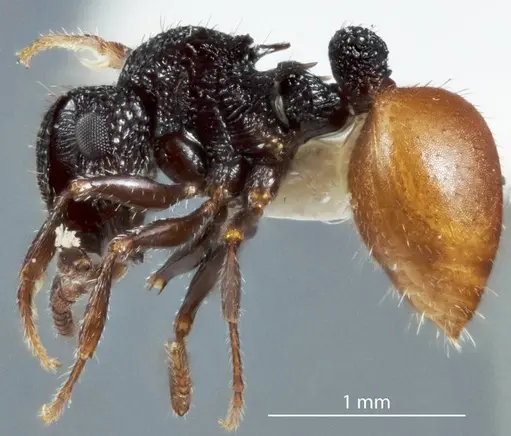
Meranoplus dimidiatus is a small to medium-sized myrmicine ant native to Australia, specifically Western Australia. Workers measure around 4-6mm and have a distinctive box-shaped mesosoma (the middle body section) with feebly developed dorsal flanges, giving them a compact, somewhat armored appearance [1][2]. The mesosoma is shining black to dark brown, and unlike many related species, this ant lacks the translucent fenestrae or prominent flanges on its back [3]. This species belongs to the Meranoplus dimidiatus species complex, which contains four Australian species characterized by their box-like trunk shape and absence of lateral projections [2].
This ant is an arid-region specialist found only in Australia's dry interior and semi-arid coastal areas. It was originally described by Frederick Smith in 1867 from specimens collected at Champion Bay in Western Australia [4]. Like other Meranoplus species, these ants are ground-nesters that forage for seeds and tend honeydew-producing insects, making them typical seed-harvesting ants adapted to harsh, dry conditions.
Quick Summary
- Difficulty: Medium
- Origin & Habitat: Western Australia, arid and semi-arid regions including Barrow Island and the Pilbara Bioregion [2][5][6]
- Colony Type: Likely single-queen (monogyne) colonies based on typical Meranoplus patterns, though colony structure is not directly documented for this species
- Size & Growth:
- Queen: Estimated 7-9mm based on genus Meranoplus patterns
- Worker: Estimated 4-6mm based on genus patterns [2]
- Colony: Unknown from available research, likely moderate colonies of several hundred workers based on related species
- Growth: Moderate, typical for arid-region ants
- Development: Estimated 6-10 weeks based on typical Myrmicinae development at optimal temperatures (Development time inferred from genus patterns, actual timeline unconfirmed for this species)
- Antkeeping:
- Temperature: Keep at 24-30°C, reflecting their arid Australian habitat. A heating cable on one side of the nest creates a gradient allowing workers to regulate their own temperature [2]
- Humidity: Low to moderate, these are arid-adapted ants. Keep nest substrate dry to slightly moist, with a small water tube for drinking. Avoid constant dampness [2]
- Diapause: Likely a mild winter rest period (diapause) during Australian winter months (June-August), though this is not directly documented. Reduce feeding and keep at room temperature (15-20°C) during this period if colony shows reduced activity
- Nesting: Naturalistic setup with dry substrate works well. In captivity, they do well in Y-tong nests, acrylic formicaria, or test tube setups with minimal water reservoirs. They prefer tight, enclosed chambers scaled to their worker size [2]
- Behavior: Meranoplus dimidiatus is a docile, non-aggressive species that tends to avoid conflict. Workers are active foragers that collect seeds and will also tend aphids for honeydew. They are not known to sting and pose no danger to keepers. Their small size (4-6mm workers) means escape prevention should be moderate, they can squeeze through small gaps but are not as tiny as some Myrmicinae. Workers are primarily ground-dwellers and do not climb well, making standard barrier methods effective. They are moderately active and will establish visible foraging trails when food is available.
- Common Issues: Arid-adapted ants are sensitive to excess moisture, overwatering or overly humid conditions can cause colony decline and fungal growth, Colony growth may be slow compared to tropical species, which can frustrate beginners expecting rapid development, Wild-caught colonies may have parasites or diseases acquired in their natural habitat that manifest in captivity, Test tube setups with large water reservoirs can create overly damp conditions, use minimal water chambers or small water tubes, Limited availability in the antkeeping hobby means this species is rarely available from breeders
Natural History and Distribution
Meranoplus dimidiatus is endemic to Western Australia, where it inhabits arid and semi-arid regions [2]. The species has been recorded from multiple locations including Barrow Island off the Pilbara coast, where it was found in both ground pitfall (GP) and nested invertebrate sampling (NIS) surveys [5]. The type locality is Champion Bay in Western Australia, and the species is part of a complex of four closely related Australian species characterized by their box-shaped mesosoma without lateral projections [2]. This ant is one of only two species in the South-Western Australian bioregion that have shining black or dark-brown mesosomas lacking translucent fenestrae or flanges [3]. The promesonotal shield lacks spines or flanges on its posterior margin when viewed from above, distinguishing it from many related species [6].
Housing and Nest Preferences
In captivity, Meranoplus dimidiatus does well in a variety of nest types. Y-tong (AAC) nests work excellently because they provide the dark, enclosed chambers these ants prefer while allowing you to observe colony activity. Acrylic formicaria with narrow chambers scaled to their 4-6mm worker size are also suitable. Test tube setups can work but require careful water management, use small water reservoirs or cotton plugs rather than large water chambers to prevent excessive humidity that can harm these arid-adapted ants. The nest substrate should be dry to slightly moist, never waterlogged. A naturalistic setup with a dry soil/sand mixture also works well if you provide a shallow water dish for drinking. Avoid nests with large open spaces, these ants prefer tight, enclosed chambers. [2]
Feeding and Diet
Like other Meranoplus species, M. dimidiatus is likely omnivorous with a preference for seeds and protein. In captivity, offer a varied diet including: small seeds (millet, sesame, flax seeds that have been cracked or soaked), protein sources like small insects (fruit flies, small mealworms, crickets), and sugar sources (honey water, sugar water) for energy. They will also tend aphids if given the opportunity, so a small aphid colony on a plant cutting can provide ongoing honeydew. Feed protein 2-3 times per week and keep sugar water available at all times. Remove uneaten food after 24-48 hours to prevent mold. Fresh water should always be available. [2]
Temperature and Seasonal Care
As an arid-region species from Western Australia, Meranoplus dimidiatus prefers warmer temperatures in the range of 24-30°C. This reflects their natural habitat where temperatures regularly exceed 30°C during summer months. Provide a temperature gradient using a heating cable placed on one side or top of the nest, allowing workers to move between warmer and cooler areas as needed. Room temperature (around 22-24°C) is acceptable, but colony activity and growth will be enhanced with gentle warming. During the Australian winter (roughly June-August), you may observe reduced activity. If your colony shows signs of slowing down, reduce temperatures to 15-20°C for 2-3 months and reduce feeding frequency. This winter rest period mimics their natural seasonal cycle. [2]
Behavior and Colony Dynamics
Meranoplus dimidiatus workers are docile and non-aggressive, making them a peaceful addition to an ant collection. They are active foragers that will establish trails to food sources. Unlike some Myrmicinae, they do not possess a painful sting and pose no danger to keepers. Workers are primarily ground-dwelling and do not climb smooth surfaces well, which makes standard escape prevention methods effective. Colonies grow at a moderate pace, don't expect the rapid expansion you might see with tropical species. The queen is likely claustral (seals herself in to raise first workers on stored fat reserves), which is typical for the genus. First workers (nanitics) will be smaller than mature workers and may take 6-10 weeks to emerge depending on temperature. [2]
Frequently Asked Questions
How long does it take for Meranoplus dimidiatus to produce first workers?
Based on typical Meranoplus and Myrmicinae development, expect 6-10 weeks from egg to first worker at optimal temperatures (around 26-28°C). This timeline is estimated as specific development data for this species is not available.
What do Meranoplus dimidiatus ants eat?
They are omnivorous with a preference for seeds and protein. Offer cracked seeds, small insects like fruit flies or mealworms, and sugar water or honey. They will also accept honeydew if they encounter aphids.
Are Meranoplus dimidiatus ants aggressive or do they sting?
No, they are docile and non-aggressive. They do not possess a painful sting and pose no danger to keepers. They are peaceful colony members that prefer to flee rather than fight.
What temperature do Meranoplus dimidiatus ants need?
Keep them warm at 24-30°C. This reflects their arid Australian habitat. A heating cable on one side of the nest creates a gradient they can use to regulate their temperature.
Do Meranoplus dimidiatus ants need hibernation?
They likely benefit from a mild winter rest period during Australian winter months (June-August). If your colony shows reduced activity, reduce temperatures to 15-20°C and reduce feeding for 2-3 months.
How big do Meranoplus dimidiatus colonies get?
Colony size is not documented for this specific species, but based on related Meranoplus species, expect moderate colonies of several hundred workers. Growth is moderate, not as fast as tropical species.
Can I keep multiple Meranoplus dimidiatus queens together?
This is not recommended. While colony structure is unconfirmed for this species, Meranoplus are typically single-queen (monogyne) colonies. Combining unrelated queens has not been documented and likely results in fighting.
What type of nest is best for Meranoplus dimidiatus?
Y-tong (AAC) nests work well because they provide dark, enclosed chambers. Acrylic formicaria with narrow chambers or test tubes with small water reservoirs are also suitable. Avoid overly humid setups, these are arid-adapted ants.
Are Meranoplus dimidiatus ants good for beginners?
They are intermediate in difficulty. They are docile and don't require extreme conditions, but their arid habitat requirements mean they are sensitive to overwatering and excess humidity. They are also rarely available in the hobby.
Why is my Meranoplus dimidiatus colony declining?
The most common causes are excess humidity (keep nesting area dry), poor nutrition (offer varied diet), or temperatures outside their 24-30°C range. Also check for parasites which can affect wild-caught colonies.
References

This caresheet is licensed under CC BY-SA 4.0 .
ANTWEB1008667
View on AntWeb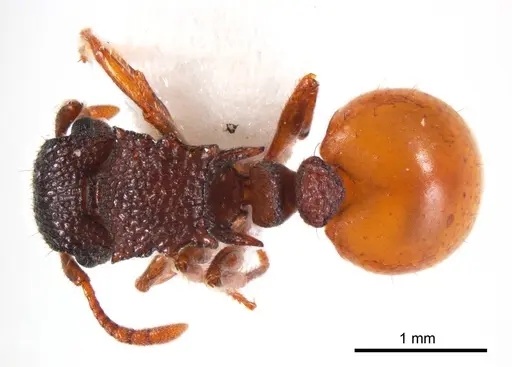
CASENT0902043
View on AntWeb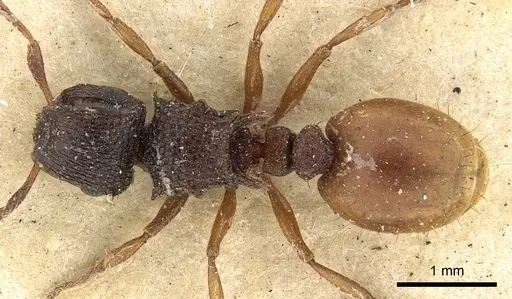
CASENT0914053
View on AntWeb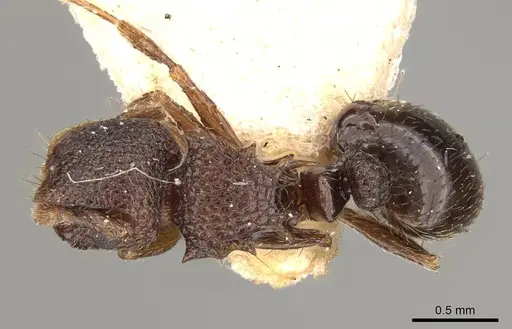
JDM32-003298
View on AntWeb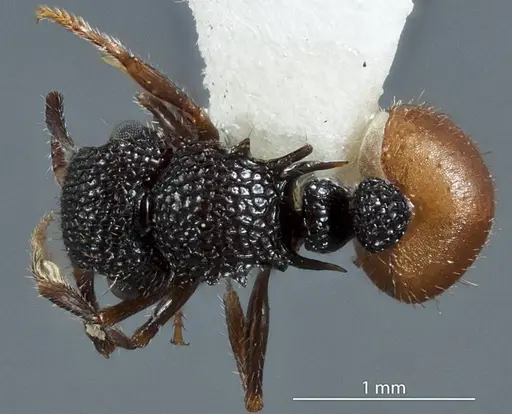
Literature
Loading...Loading products...