

Meranoplus cryptomys
- Scientific Name
- Meranoplus cryptomys
- Tribe
- Crematogastrini
- Subfamily
- Myrmicinae
- Author
- Boudinot & Fisher, 2013
- Distribution
- Found in 1 countries
Meranoplus cryptomys Overview
Meranoplus cryptomys is an ant species of the genus Meranoplus. It is primarily documented in 1 countries , including Madagascar. Detailed taxonomic data and occurrence records can be further explored via authoritative databases such as AntWeb or the Global Biodiversity Information Facility (GBIF).
Meranoplus cryptomys
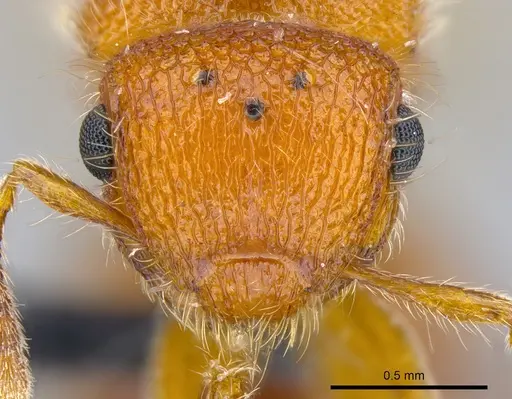
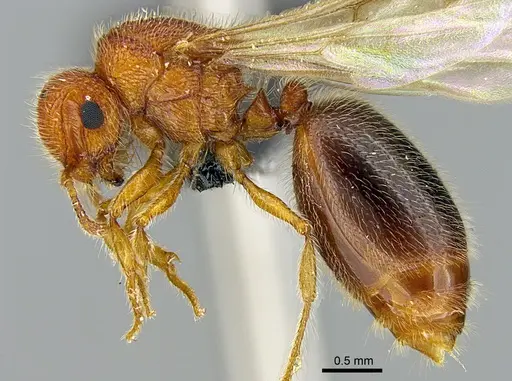
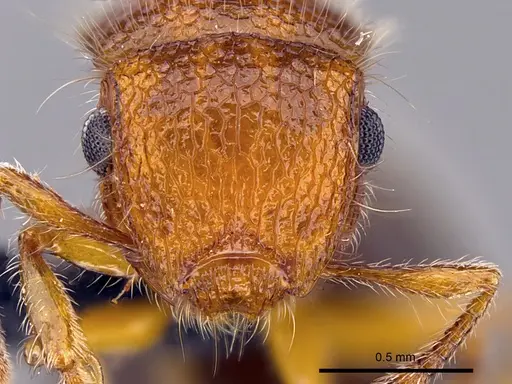
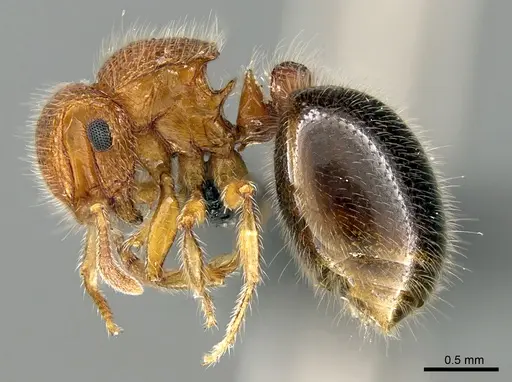
Meranoplus cryptomys is a small to medium-sized Myrmicine ant native to Madagascar. Workers measure approximately 1mm in body length with a distinctive bicolored appearance, the head, mesosoma, petiole, and postpetiole are orange while the abdomen (segments IV-VII) is dark brown [1]. This species is recognized by its uniquely fingerlike subpetiolar process, a diagnostic feature found nowhere else in the Malagasy ant fauna [1][2]. Queens are slightly larger at 1.4-1.5mm in body length and share the same orange and brown coloration pattern [1]. Both workers and queens have notably large eyes relative to their body size, which inspired the species name 'cryptomys' (meaning 'mouse hider'), a reference to the image of a small mammal hiding [1]. This is a rarely collected species known only from spiny forest and savanna woodland habitats in southern Madagascar [1][2].
Quick Summary
- Difficulty: Expert
- Origin & Habitat: Madagascar, specifically spiny forest/thickets and savanna woodland habitats in the southern region. Known from Tsimanampetsotsa, Isalo and Andohahela National Parks, and the Beza Mahafaly Reserve [1].
- Colony Type: Unknown. Colony structure has never been documented, all known specimens come from trap collections with no observed colonies or nests [1].
- Size & Growth:
- Queen: 1.01-1.12mm head length,1.39-1.49mm mesosoma length [1]
- Worker: 0.95-0.99mm head length,0.98-1.01mm mesosoma length [1]
- Colony: Unknown, only two workers and a handful of queens have ever been collected [1]
- Growth: Unknown
- Development: Unknown, no colony development has ever been observed. Based on typical Myrmicinae patterns from similar Malagasy species, estimate 6-10 weeks at optimal temperature. (Development timeline is entirely unconfirmed. This is a rough estimate based on genus-level patterns.)
- Antkeeping:
- Temperature: Likely 22-28°C based on Madagascar spiny forest habitat. Start in the mid-20s and observe colony activity
- Humidity: Likely moderate to dry, spiny forest environments in southern Madagascar are relatively arid. Aim for 50-70% humidity with some dry areas available.
- Diapause: Unknown, no seasonal data exists for this species. Madagascar does have a cool dry season, so a brief winter rest period may be beneficial.
- Nesting: Unknown. Based on related Meranoplus species and Malagasy Myrmicinae patterns, they likely nest in soil or under stones. A naturalistic setup with soil substrate and flat stones or a Y-tong/plaster nest would be appropriate starting points.
- Behavior: Behavior is unobserved in captivity. In the wild, they have never been hand-collected, all specimens come from Malaise and pitfall traps, suggesting they are ground-nesting and relatively cryptic [1]. Their large eyes suggest they may be more visually-oriented than many ants. Escape risk is moderate given their small size, standard barrier methods should suffice.
- Common Issues: no captive colonies exist, this species has never been kept in captivity, so all care recommendations are speculative, extremely rare in the hobby, virtually no specimens available for antkeepers, no nesting or founding behavior has been documented, making it impossible to provide specific guidance, no diet preferences are known, related Meranoplus species are generalist foragers, collection data suggests ground-nesting habits but exact nest location preferences remain unknown
Why This Species Is Extremely Challenging
Meranoplus cryptomys represents one of the most difficult ants to keep in captivity simply because no one has ever done it. Every specimen ever collected, just two workers and a handful of queens, came from passive traps like Malaise and pitfall traps, not from observed colonies or nests [1]. This means we have zero direct information about how they nest, how their colonies function, what they eat, or how they develop. The entire genus Meranoplus is rarely kept in captivity, and this particular species has never been available in the antkeeping hobby. Before considering keeping this species, you would need to obtain live specimens, which is extremely difficult given their rarity and the lack of established breeding populations.
Natural Habitat and Distribution
This species inhabits the spiny forest and savanna woodland habitats of southern Madagascar, one of the most unique and threatened ecosystems on Earth. Spiny forests are characterized by dense, thorny vegetation adapted to extreme aridity. The species has been recorded from Tsimanampetsotsa National Park, Isalo National Park, Andohahela National Park, and the Beza Mahafaly Reserve [1]. Despite its relatively broad geographic range for a Meranoplus species, it remains presumed rare due to infrequent collection [1]. The elevation ranges from 60-90 meters above sea level, and the region experiences a hot, dry climate with seasonal rainfall patterns.
Identification and Distinctive Features
- and a bicolored pattern with orange head, mesosoma, petiole and postpetiole contrasting against dark brown abdominal segments [1]. The head is slightly longer than broad (CI 92-95), and the promesonotal shield is notably broad. Queens are similarly bicolored with short triangular propodeal spines and relatively short scapes (SI 60-62) [1]. The large eyes and short body hairs gave this species its name, 'cryptomys' means 'mouse hider' in reference to the imagined appearance of a small mammal hiding [1].
Starting Care Parameters (Highly Speculative)
Since no captive care information exists, any recommendations must be treated as educated guesses. Based on the species' Madagascar spiny forest habitat and related Meranoplus biology, start with temperatures in the 22-28°C range. Humidity should likely be moderate, spiny forests are arid environments, so aim for 50-70% rather than high humidity. For nesting, a naturalistic setup with soil substrate and flat stones would mimic their likely natural environment, though this is entirely inferential. For feeding, offer standard ant foods like sugar water, honey, and small protein sources (fruit flies, small mealworms) but monitor closely for acceptance. The key point is that this species requires experimental care, you will be learning alongside virtually no existing knowledge base.
Legal and Ethical Considerations
Meranoplus cryptomys is endemic to Madagascar and protected within national parks including Tsimanampetsotsa, Isalo, and Andohahela [1]. Any collection would require proper permits and authorization from Malagasy authorities. For antkeepers outside Madagascar, this species is not commonly available in the hobby, and any specimens would need to come from established captive colonies, which do not currently exist. If you somehow obtain specimens, do not release them in non-native locations as this could cause ecological problems. The primary ethical approach is to appreciate this species through published research rather than attempting to collect from the wild.
Frequently Asked Questions
Can I keep Meranoplus cryptomys in a test tube?
Possibly, but we don't know. Test tubes work well for many Myrmicinae, but since no one has ever kept this species in captivity, we cannot confirm whether test tube setups are appropriate. Given their likely ground-nesting habits, a naturalistic setup with soil may be better if you ever obtain specimens.
How long until first workers with Meranoplus cryptomys?
Unknown, no colony development has ever been observed. Based on typical Myrmicinae development patterns, expect roughly 6-10 weeks from egg to worker at optimal temperature, but this is entirely speculative.
Are Meranoplus cryptomys good for beginners?
No. This species is firmly in the 'expert only' category, not because it's difficult per se, but because we have zero information about how to keep it alive. There are no established care protocols, no captive colonies to learn from, and specimens are virtually unavailable.
Do Meranoplus cryptomys ants sting?
Unknown. Most small Myrmicinae can sting but are too small to penetrate human skin effectively. No sting records exist for this species.
What do Meranoplus cryptomys eat?
Unknown, no feeding observations exist. Related Meranoplus species are generalist foragers. In captivity, you could offer sugar water, honey, and small protein sources like fruit flies or pinhead crickets, but acceptance is entirely unconfirmed.
Do Meranoplus cryptomys need hibernation?
Unknown. Madagascar has a cooler dry season, so a brief winter rest period may be natural, but no diapause behavior has been documented.
Can I keep multiple queens together?
Unknown. No colony structure information exists for this species. Without data, pleometrosis (multiple queens founding together) cannot be confirmed or recommended.
How big do Meranoplus cryptomys colonies get?
Unknown. Only two workers have ever been collected in the wild [1]. Colony size estimates are impossible without any colony observations.
Where can I get Meranoplus cryptomys?
Almost nowhere. This is one of the rarest ant species in the hobby, likely because only a handful of specimens have ever been collected and no captive breeding populations exist. If you want this species, you would need to either collect it yourself in Madagascar (with permits) or find an extremely rare source.
Are Meranoplus cryptomys aggressive?
Unknown. No behavioral observations exist for this species. Related Meranoplus are not known for extreme aggression, but temperament cannot be confirmed.
References

This caresheet is licensed under CC BY-SA 4.0 .
CASENT0132374
View on AntWeb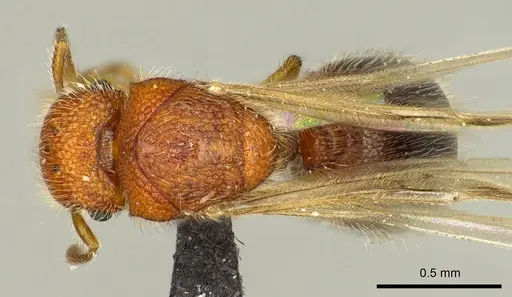
CASENT0440939
View on AntWeb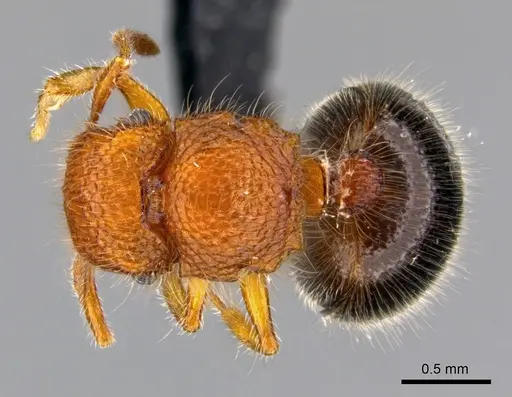
Literature
Loading...Loading products...