

Melophorus pusillus
- Scientific Name
- Melophorus pusillus
- Tribe
- Melophorini
- Subfamily
- Formicinae
- Author
- Heterick <i>et al.</i>, 2017
- Distribution
- Found in 1 countries
Melophorus pusillus Overview
Melophorus pusillus is an ant species of the genus Melophorus. It is primarily documented in 1 countries , including Australia. Detailed taxonomic data and occurrence records can be further explored via authoritative databases such as AntWeb or the Global Biodiversity Information Facility (GBIF).
Melophorus pusillus
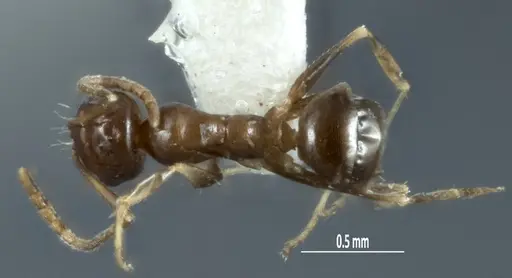
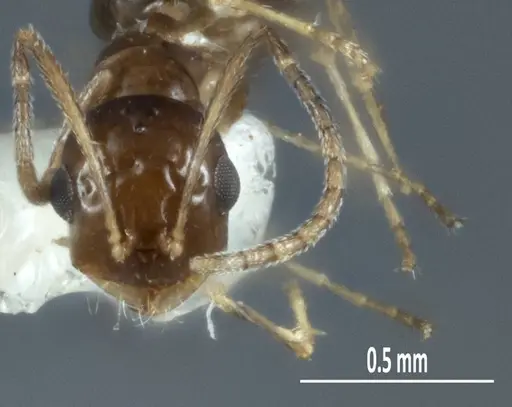
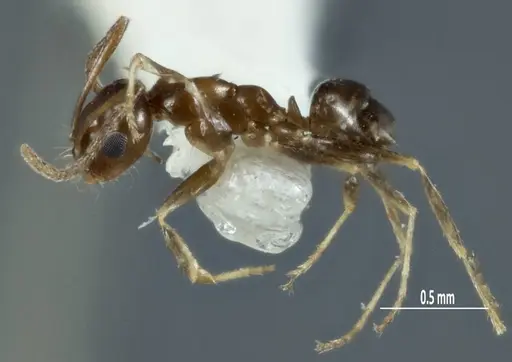
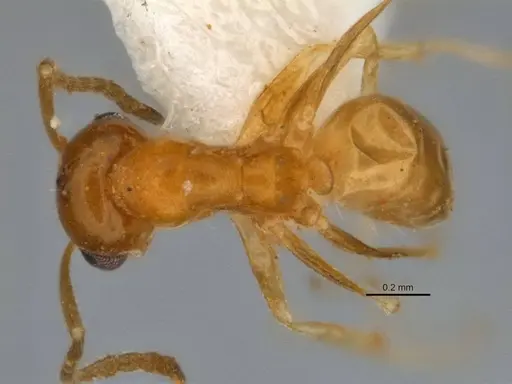
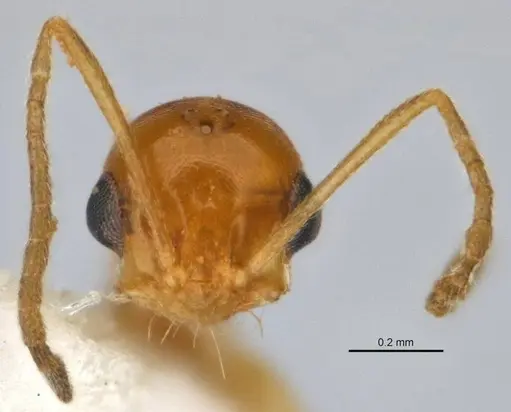
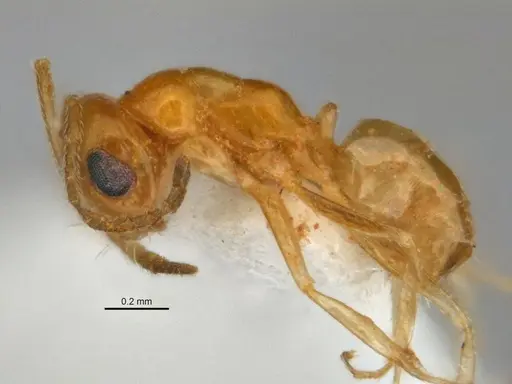
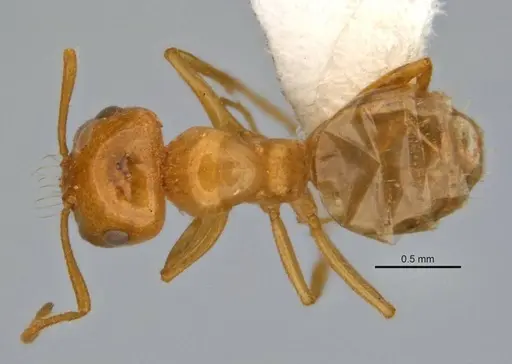
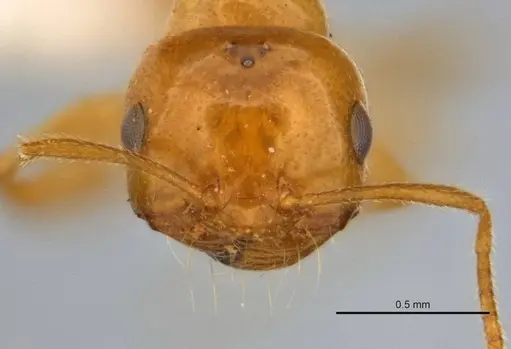
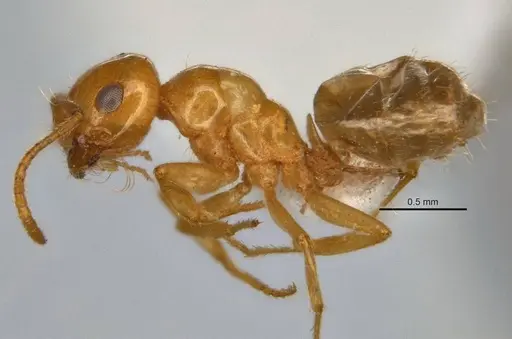
Melophorus pusillus is a tiny Australian ant species first described in 2017. Workers are remarkably small, with minor workers measuring just 0.36-0.68mm in head width. The species gets its name 'pusillus' from Latin, meaning 'puny', a fitting reference to their diminutive size. Coloration ranges from pale yellow-orange to bright brown in minor workers, while majors are yellow ochre with brownish-yellow gasters. They have relatively large eyes compared to other Melophorus species, and both majors and minors possess five mandibular teeth. This species belongs to the M. ludius species group and is found across mainland Australia, primarily in arid regions.
Quick Summary
- Difficulty: Medium
- Origin & Habitat: Melophorus pusillus is native to Australia, specifically found in arid and semi-arid regions across mainland Australia including Western Australia, Northern Territory, South Australia, and Queensland. They have been collected in dune environments and open habitats. [1][2]
- Colony Type: Colony structure is unconfirmed. Based on typical Melophorus genus patterns, likely single-queen (monogyne) colonies, though this has not been directly documented for this species.
- Size & Growth:
- Queen: Undescribed, queens have not been documented in scientific literature [1]
- Worker: Minor workers: 0.36-0.68mm HW, Major workers: up to 0.68mm HW [1]
- Colony: Unknown, no colony size data available for this species
- Growth: Unknown, no development data available
- Development: Unknown, no direct measurements available. Based on typical Formicinae patterns and small worker size, estimate 6-10 weeks at optimal temperature. (Development timeline is unconfirmed. Small ant species in the Formicinae subfamily typically develop faster than larger relatives, but specific data for M. pusillus is lacking.)
- Antkeeping:
- Temperature: Based on arid Australian habitat, keep warm in the low-to-mid 20s°C range (approximately 22-26°C). Provide a gentle temperature gradient so ants can self-regulate. This is an estimate based on habitat inference rather than direct thermal studies.
- Humidity: Arid-adapted species, keep relatively dry. Aim for low-to-moderate humidity (roughly 40-60%). Allow the nest substrate to dry out partially between waterings. Avoid overly damp conditions.
- Diapause: Unknown for this species. Many Australian ants reduce activity during cooler months but may not require true hibernation. Monitor colony behavior and reduce feeding if activity decreases significantly.
- Nesting: In the wild, they have been found in dunes and open ground habitats. For captivity, a small test tube setup or Y-tong nest with narrow chambers scaled to their tiny size works well. Avoid large, open spaces, these are very small ants that need appropriately sized accommodations.
- Behavior: Melophorus pusillus is a small, non-aggressive species. They are unlikely to sting given their minute size. They are ground-nesting ants that likely forage individually for small prey and honeydew. Their large eyes suggest they may rely more on visual cues than some other ants. Escape prevention is critical, their tiny size means they can squeeze through the smallest gaps. Use fine mesh and tight-fitting barriers.
- Common Issues: escape prevention is critical due to their very small size, they can squeeze through gaps that larger ants cannot, limited available care information makes it difficult to optimize conditions, be prepared to experiment, wild-caught colonies may have unknown parasites or health issues, their small size makes them difficult to observe and monitor regularly, overfeeding can lead to mold problems in small enclosures
Housing and Nest Setup
Because Melophorus pusillus is an exceptionally small ant species, housing must be appropriately scaled. Test tube setups work well for founding colonies, use a small test tube with a cotton ball separating the water reservoir from the ants. The water section should be small to prevent flooding. For established colonies, a Y-tong (acrylic) nest with narrow chambers or a small plaster nest works better than larger formicarium setups. These ants are too small for standard formicarium designs with large chambers. Ensure all connections between the nest and outworld are narrow and use fine mesh (at least 0.5mm) on all ventilation and access points. A small outworld area prevents prey items from escaping and makes feeding easier to monitor.
Feeding and Diet
Based on typical Melophorus genus behavior and their small size, these ants are likely omnivorous with a preference for small prey items. Offer small live prey such as fruit flies, pinhead crickets, and small mealworms. They will likely accept sugar sources like honey water or sugar water, though the small colony size means portions should be tiny. Feed small amounts every 2-3 days and remove any uneaten prey within 24 hours to prevent mold. Given their arid origin, they may have lower moisture requirements than tropical species. Always provide a small water source, a damp cotton ball or small water tube works well.
Temperature and Seasonal Care
Melophorus pusillus comes from arid regions of Australia, so they prefer warmer conditions. Maintain temperatures in the range of 22-26°C, with a slight gradient if possible so workers can choose their preferred temperature. A small heating cable on one side of the nest can help maintain warmth, but avoid direct heat that could dry them out too quickly. During cooler months, reduce feeding frequency and expect slower activity, this species may not require true hibernation but will likely become less active. Monitor water levels in test tube setups more frequently in warm conditions as evaporation happens faster.
Behavior and Observation
These ants are small and relatively docile, making them interesting but challenging to observe. Their large eyes suggest they may be more visually-oriented than some ant species. Workers likely forage individually rather than in groups. The major workers (larger individuals) will be larger than minors but still quite small, around 0.68mm head width. Watch for workers carrying small prey items back to the nest. Because of their tiny size, detailed observation requires good lighting and potentially magnification. Their small size also means they are quick-moving and can easily escape if given the chance.
Frequently Asked Questions
How long does it take for Melophorus pusillus to produce first workers?
The exact development timeline is unknown for this species. Based on typical Formicinae development patterns and their small size, expect approximately 6-10 weeks from egg to first worker at optimal temperature (around 24°C). This is an estimate, actual timing may vary.
Can I keep Melophorus pusillus in a test tube?
Yes, test tubes work well for this species. Use a small test tube with an appropriately sized water reservoir, not too large to prevent flooding. The tiny size of these ants means you may need to use cotton with tighter fibers to prevent escape through standard cotton gaps.
What do Melophorus pusillus eat?
Based on typical Melophorus behavior, they likely eat small insects and honeydew. Offer small live prey like fruit flies, tiny crickets, and small mealworms. They will probably accept sugar water or honey diluted with water. Feed small amounts every 2-3 days.
Are Melophorus pusillus good for beginners?
This species is rated as Medium difficulty. While they are docile and small, the limited available care information makes them more challenging than well-studied species. Their tiny size also requires extra attention to escape prevention. Experienced antkeepers will have better success with this species.
How big do Melophorus pusillus colonies get?
Colony size is unknown, no data is available on maximum colony size for this species. Based on their small worker size and typical Melophorus patterns, colonies are likely to remain relatively small (likely under a few hundred workers).
Do Melophorus pusillus need hibernation?
Diapause requirements are unconfirmed for this species. Based on their arid Australian origin, they likely do not require true hibernation but may reduce activity during cooler months. Monitor your colony and reduce feeding if activity decreases significantly.
When should I move Melophorus pusillus to a formicarium?
Move them when the test tube setup becomes too crowded or the water reservoir needs frequent refilling. For this small species, a small Y-tong or plaster nest with appropriately sized chambers works better than large formicariums. Wait until you have at least 20-30 workers before considering a move.
Why are my Melophorus pusillus escaping?
Their tiny size means they can squeeze through incredibly small gaps. Check all connections, lids, and ventilation points. Use fine mesh (0.5mm or smaller) and ensure all gaps are sealed. Even standard ant keeping barriers may not work, these ants are significantly smaller than most commonly kept species.
Can I keep multiple queens together?
Colony structure is unconfirmed for this species. Combining unrelated queens has not been documented and is not recommended. Most Melophorus species establish single-queen colonies.
References

This caresheet is licensed under CC BY-SA 4.0 .
Literature
Loading...Loading products...