

Melissotarsus emeryi
- Scientific Name
- Melissotarsus emeryi
- Tribe
- Crematogastrini
- Subfamily
- Myrmicinae
- Author
- Forel, 1907
- Common Name
- Bee-legged Boring Ant
- Distribution
- Found in 8 countries
Melissotarsus emeryi Overview
Melissotarsus emeryi (commonly known as the Bee-legged Boring Ant) is an ant species of the genus Melissotarsus. It is primarily documented in 8 countries , including Angola, Central African Republic, Gabon. Detailed taxonomic data and occurrence records can be further explored via authoritative databases such as AntWeb or the Global Biodiversity Information Facility (GBIF).
Melissotarsus emeryi - "Bee-legged Boring Ant"
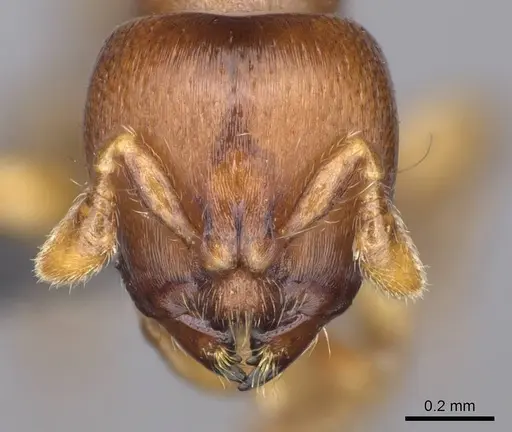
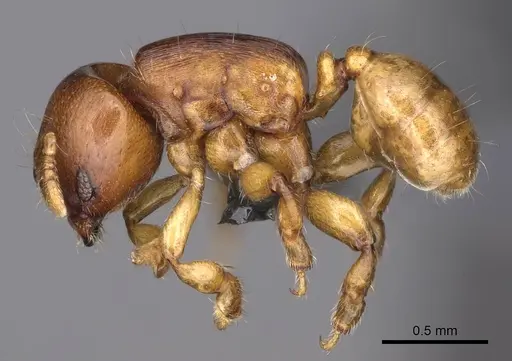
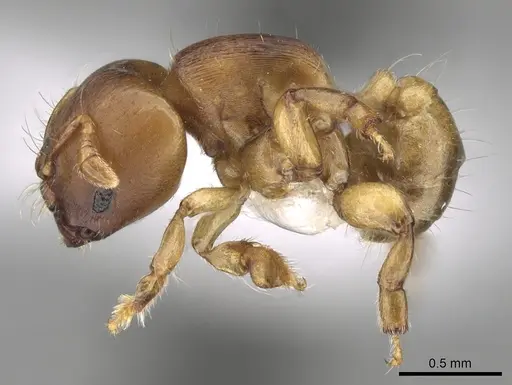
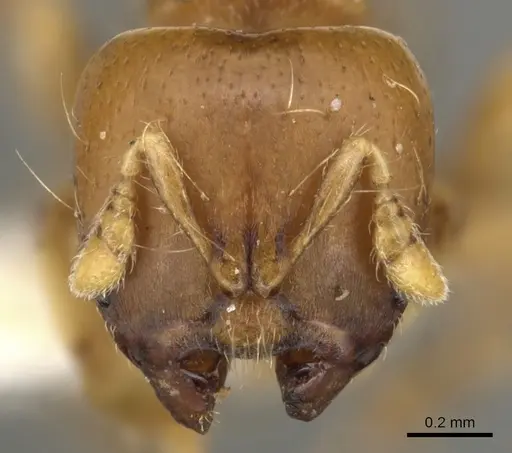
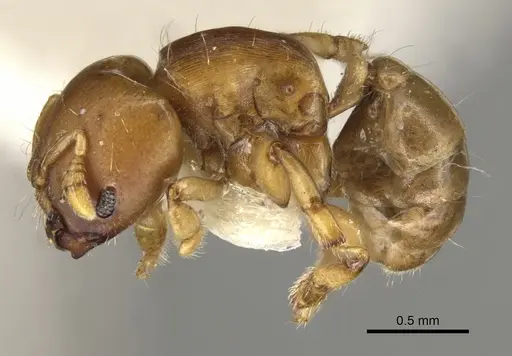
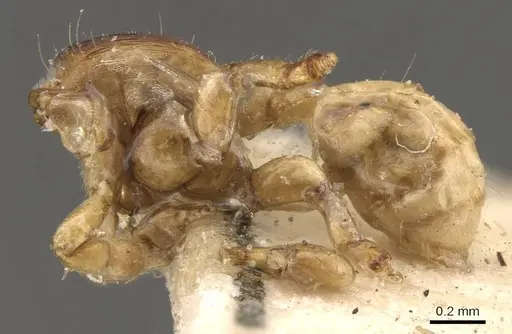
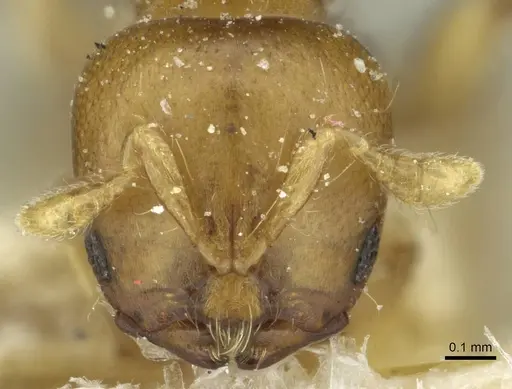
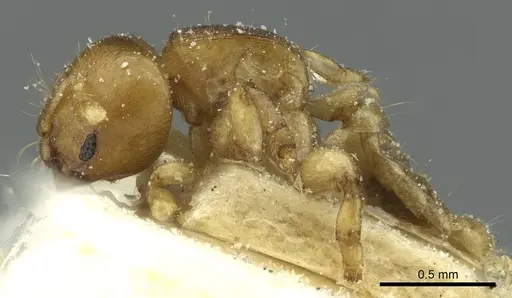
Melissotarsus emeryi is a remarkable African ant known for its completely subterranean lifestyle inside living trees. Workers are tiny at 2.5-3.4mm, pale yellow to light yellowish-brown, with relatively large heads and sturdy legs [1]. They tunnel galleries beneath tree bark in healthy wood, creating a network of 1-2mm diameter tunnels sealed with silk they produce, making them the only ants in the world where adult workers manufacture silk [1][2]. These ants live in large colonies with multiple queens and are found across sub-Saharan Africa from Ethiopia to South Africa [3].
What makes this species truly unique is their mutualism with armoured scale insects (Diaspididae). Unlike typical ant-coccid relationships where ants harvest honeydew, M. emeryi actually eats the scale insects for protein, they farm them as a meat source rather than for sugar secretions [4][2]. They rarely, if ever, leave their tunnels except during nuptial flights, and their bizarre walking style (on front and hind legs with middle legs pointing up to touch the tunnel ceiling) makes them completely helpless outside their galleries [1][2].
Quick Summary
- Difficulty: Expert
- Origin & Habitat: Afrotropical region, found in Central African Republic, Democratic Republic of Congo, Ethiopia, Ghana, Kenya, Mozambique, Namibia, Saudi Arabia, Senegal, South Africa, Sudan, and Zambia [3]. They nest in healthy wood of living trees, tunneling galleries beneath the bark [1][3].
- Colony Type: Polygyne (multiple queens) colonies with thousands of workers [3]. Multiple dealate queens are found within the same nest, and colonies can produce sexuals for colony reproduction.
- Colony: Polygyne
- Size & Growth:
- Queen: Estimated 4-5mm based on genus, queens are dealate when found in nests [3].
- Worker: 2.5-3.4mm [1].
- Colony: Thousands of workers [3].
- Growth: Unknown, likely slow to moderate given their long-lived, tree-dwelling lifestyle.
- Development: Unconfirmed, no direct development data exists for this species. (Development timeline has not been studied. Related tropical Myrmicinae suggest 4-8 weeks at optimal temperature, but this is purely speculative.)
- Antkeeping:
- Temperature: Keep around 24-26°C based on their Afrotropical distribution. A gentle gradient is ideal. Room temperature in most homes should work if within this range.
- Humidity: High humidity inside nest galleries, they require consistently moist (but not waterlogged) wood/substrate. Think damp tree interior, not wet swamp.
- Diapause: Likely no true diapause, these are tropical ants living in stable tree environments year-round. However, slight seasonal slowdowns may occur.
- Nesting: This is the critical challenge. They MUST have access to live wood or a wood-based substrate to tunnel through. Standard test tubes and acrylic nests are completely unsuitable. You would need a custom naturalistic setup with bark sections or dead wood branches that can be kept humid. Even then, replicating their exact conditions is extremely difficult.
- Behavior: Completely subterranean, workers never forage outside their tunnels except during nuptial flights [1]. They walk using only front and hind legs, with middle legs held upward to touch the tunnel roof [2]. Workers are clumsy outside their galleries and often cannot right themselves if flipped over [1]. The sting is highly reduced and not a concern [1]. They are not aggressive and rarely encountered, making escape prevention straightforward in the sense that they won't actively explore your formicarium, but their tiny size means any gap in their wood setup could allow escapes into the wood itself.
- Common Issues: Impossible diet requirements, they eat live armoured scale insects (Diaspididae), which are extremely difficult to culture and maintain in captivity [4][2]., Nesting is nearly impossible to replicate, they require access to live tree bark/wood to tunnel through, not conventional formicarium setups., They never leave the nest to forage, so you cannot offer conventional ant foods, they will not accept sugar water, honey, or standard protein sources., Their entire lifecycle depends on their scale insect mutualists, without these, the colony cannot survive., Extremely rare in the antkeeping hobby and almost never available, wild colonies cannot be collected without destroying the host tree.
The Silk-Producing Ant
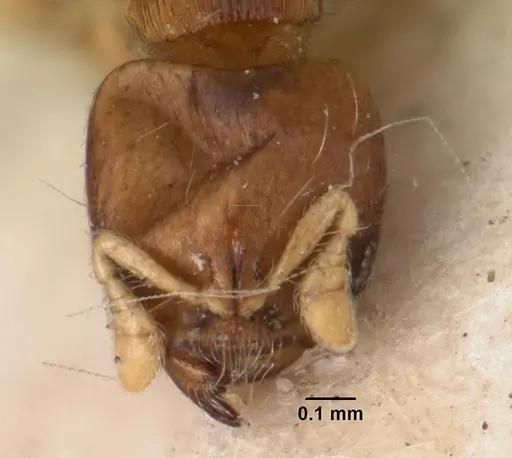
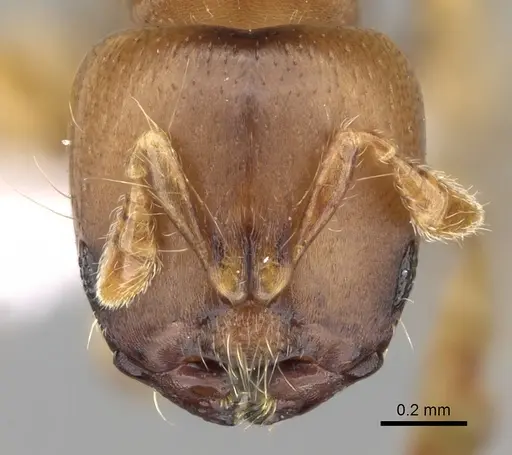
Melissotarsus emeryi holds a unique title in the ant world: it is the ONLY ant species where adult workers produce silk [1][2]. Most ants that use silk (like weaver ants in the genus Polyrhachis) rely on larvae to spin silk for nest construction. M. emeryi workers have specialized hypostomal silk glands located in their head, with ducts opening along the anterior margin of the ventral hypostoma [2]. They use a remarkable 'silk brush' on their forelegs, the basitarsal segments are greatly swollen and flattened with numerous short, stiff hairs that can capture silk fibers from the glands [1]. Workers apply silk using a kneading motion, drawing the silk brush beneath their head and then to the tunnel walls. This silk is used to seal exit holes, close cracks in their galleries, and reinforce tunnel walls [1]. The entire foraging area of workers is sealed with this silk network.
The Scale Insect Mutualism
This species maintains a truly unique relationship with armoured scale insects (family Diaspididae) [1][2]. Unlike typical ant-coccid mutualisms where ants harvest honeydew (the sugar-rich waste product from plant sap feeding), M. emeryi gets actual nutrition from the scale insects themselves, they eat them for protein [4]. The ants cultivate these scale insects inside their galleries, and the scales exist in a 'scale-less' form within the nest, lacking the protective waxy covering that normally covers females and larval instars [1]. Workers cultivate phloem sap-sucking coccids of the family Diaspididae for meat rather than honeydew [2]. This 'mutualism without honeydew' is extremely rare in the ant world. The colony abandons galleries periodically, leaving behind shed scale insect exuviae (molted skins) [4]. This specialized diet means M. emeryi cannot be kept with conventional ant foods, they absolutely require live scale insects to survive.
Subterranean Lifestyle
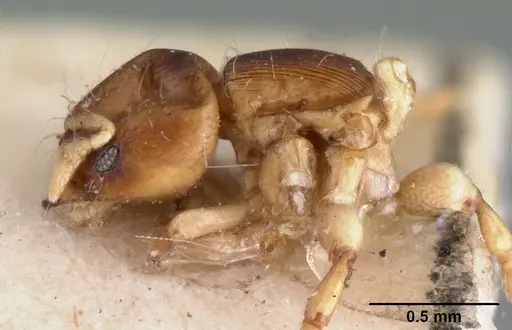
M. emeryi spends its entire life inside tunnels excavated in the bark and wood of living trees [1][2]. Workers are never observed foraging outside their tunnels, including at extrafloral nectaries on leaves [1]. Their leg structure reflects this lifestyle: the second and third coxae are massively developed, appearing to restrict leg movement outside galleries [1]. Workers move awkwardly outside their tunnels and often cannot right themselves when turned over [1]. They walk in a distinctive manner, using only front and hind legs while holding the middle pair upward, presumably in contact with the gallery roof [2]. The nest structure consists of 1-2mm diameter tunnels running just under the bark, with occasional extensions into the center of the trunk or branch. Exit holes to the exterior are small and circular (about 2mm diameter), sealed with silk and wood particles when not in use [1].
Distribution and Habitat
This species is found across the Afrotropical region, with documented records in Central African Republic, Democratic Republic of Congo, Ethiopia, Ghana, Kenya, Mozambique, Namibia, Saudi Arabia, Senegal, South Africa, Sudan, and Zambia [3]. They inhabit various tree species, with studies in South Africa finding them in Leucospermum praemorsum (Proteaceae) growing in mountain fynbos on nutrient-poor acidic sandy soils [1]. In Yemen, they were found in low-lying branches of Tamarisk and other trees [3]. Their presence in the wood is usually not detectable from the surface, making them rarely encountered by collectors, most specimens are obtained more by luck than by intent [3]. They are considered widespread but uncommon throughout their range.
Why This Species Is Not Suitable for Most Antkeepers
Honesty requires stating that Melissotarsus emeryi is essentially impossible to keep in captivity with current knowledge and available equipment. The fundamental problem is their absolute dietary requirement for live armoured scale insects (Diaspididae) [4][2]. Unlike ants that can switch between protein sources, M. emeryi specifically cultivates and consumes these scale insects, they do not accept conventional ant foods like sugar water, honey, mealworms, or other typical feeds. Additionally, they require access to live tree bark/wood to tunnel through, standard formicariums, test tubes, and Y-tong nests are completely unsuitable. They never leave the nest to forage, so you cannot offer food from outside. The species is also extremely rare in the hobby and almost never available for purchase. For these reasons, this species remains a species for observation in the wild or study in research settings, not a species for captive husbandry.
Frequently Asked Questions
Can I keep Melissotarsus emeryi in a formicarium?
No. Standard formicariums, test tubes, and acrylic nests are completely unsuitable. These ants tunnel through live tree bark and require wood substrate to create their galleries. They would not survive in any conventional ant keeping setup.
What do Melissotarsus emeryi eat?
They eat armoured scale insects (Diaspididae), live ones. This is their sole protein source. Unlike typical ants, they do not harvest honeydew from coccids, they actually consume the scale insects themselves for meat. They will not accept conventional ant foods like sugar water, honey, or insects.
Why do they produce silk?
They are the only ant species where adult workers produce silk. Workers use it to seal exit holes, close cracks in their tunnels, and reinforce gallery walls. The silk is produced from glands in their head (hypostomal glands) and applied using a specialized 'silk brush' on their forelegs.
Do Melissotarsus emeryi ants sting?
No. Their sting is highly reduced and not functional [1]. They are not a threat to humans.
Are Melissotarsus emeryi good for beginners?
Absolutely not. This species is one of the most difficult (likely impossible) ants to keep in captivity due to their requirement for live scale insects as food and their need for wood/bark nesting substrate. They are not available in the antkeeping hobby and are considered a species for research rather than captivity.
How big do colonies get?
Colonies contain thousands of workers with multiple queens [3]. However, the exact maximum size is not well-documented in scientific literature.
Where do they live in the wild?
They tunnel through healthy wood beneath the bark of living trees across sub-Saharan Africa. They are found in various tree species, from Proteaceae in South African fynbos to Tamarisk in Yemen. Their tunnels are completely sealed from the outside except for small exit holes.
Can I collect a colony from the wild?
This would be extremely difficult and destructive. Their presence in trees is not detectable from the surface, and collecting them would require cutting into live wood. Additionally, they are rare and their specialized mutualism with scale insects would likely be disrupted during collection, making captive survival unlikely.
Do they need hibernation?
No. As tropical ants living in the stable environment of tree interiors, they do not require hibernation or diapause. They are active year-round in their tunnels.
How do they walk?
They have a very unusual walking style. They progress on their front and hind legs only, with the middle pair held upward, presumably in contact with the tunnel roof [2]. This is why they move so awkwardly outside their galleries, their legs are adapted for moving along tunnel ceilings, not flat surfaces.
References

This caresheet is licensed under CC BY-SA 4.0 .
CASENT0101465
View on AntWeb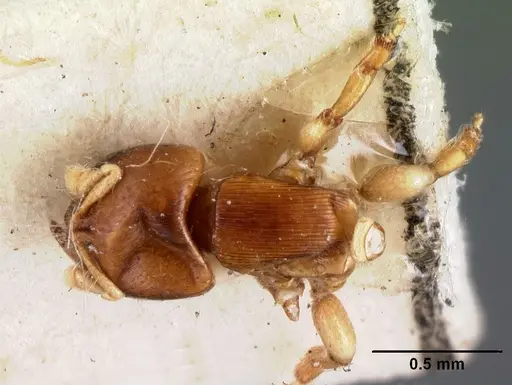
CASENT0362244
View on AntWeb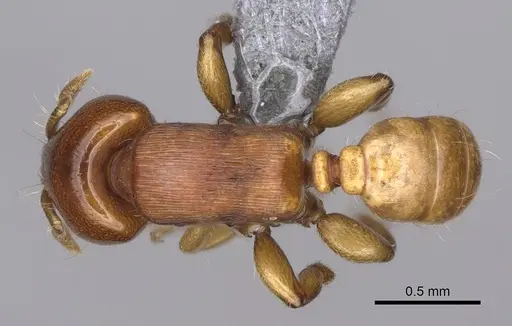
CASENT0426618
View on AntWeb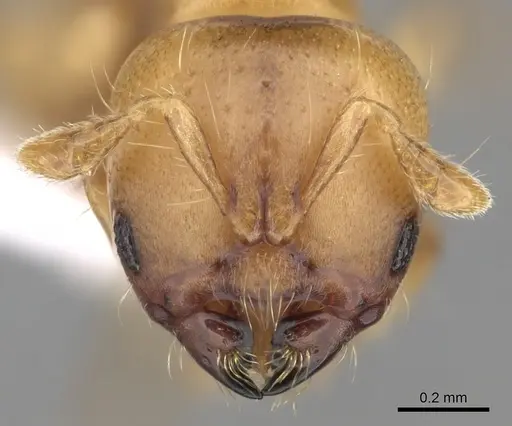
CASENT0426763
View on AntWeb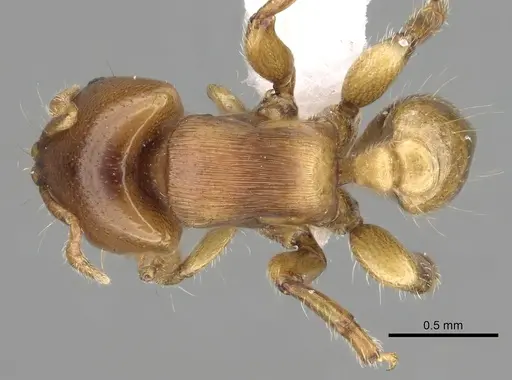
CASENT0775846
View on AntWeb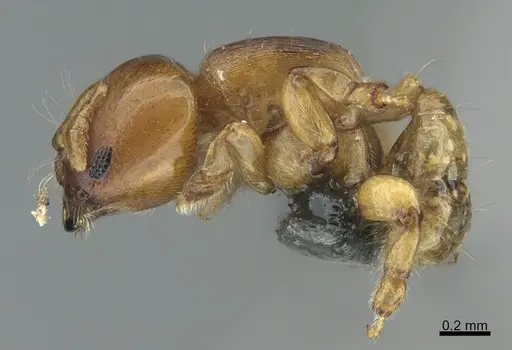
CASENT0900311
View on AntWeb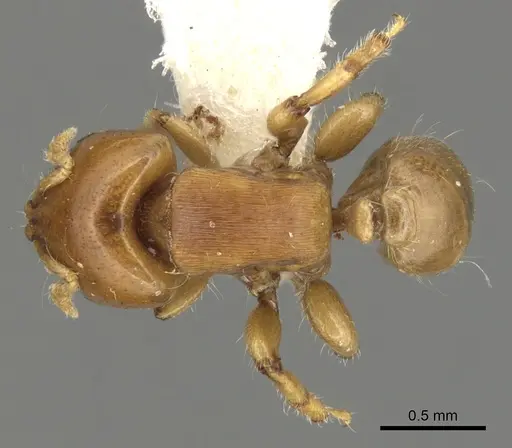
CASENT0908324
View on AntWeb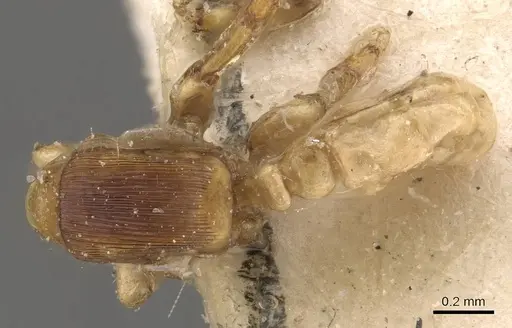
CASENT0913016
View on AntWeb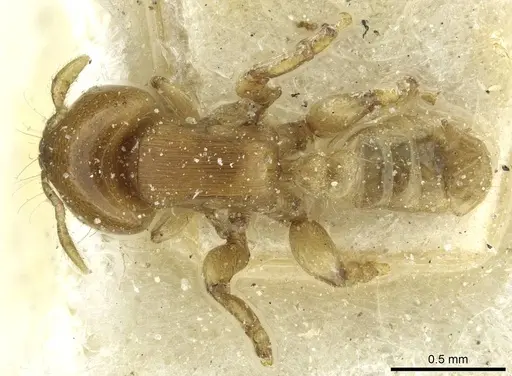
Literature
Loading...Loading products...