

Megalomyrmex timbira
- Scientific Name
- Megalomyrmex timbira
- Tribe
- Solenopsidini
- Subfamily
- Myrmicinae
- Author
- Brandão, 1990
- Distribution
- Found in 1 countries
Megalomyrmex timbira Overview
Megalomyrmex timbira is an ant species of the genus Megalomyrmex. It is primarily documented in 1 countries , including Venezuela, Bolivarian Republic of. Detailed taxonomic data and occurrence records can be further explored via authoritative databases such as AntWeb or the Global Biodiversity Information Facility (GBIF).
Megalomyrmex timbira
Megalomyrmex timbira is a small, dark reddish-brown ant belonging to the leoninus species group within the genus Megalomyrmex. Workers measure approximately 3-4mm and feature distinctive morphological traits including a propodeum that meets at a 120° angle in side view, and a petiole that is nearly twice as wide as the postpetiole [1]. The species was originally described from workers collected in Venezuela's Táchira province and has since been recorded in Colombia's Nariño region [2]. The name 'timbira' comes from the Tupi word for 'orphan, ' referring to the remarkable absence of true queens in the entire leoninus group, these ants rely on reproductive workers called gamergates instead [3]. This makes them one of the few ant species where the colony is led not by a queen but by fertile workers.
Quick Summary
- Difficulty: Unknown, limited data available
- Origin & Habitat: Found in the Táchira region of Venezuela and Nariño, Colombia at altitudes of 1000-1260m. They inhabit tropical humid forests and rainforest, typically nesting in forest litter [4][2].
- Colony Type: Unique, gamergate system (reproductive workers instead of true queens). This is a rare trait where workers can mate and lay eggs, replacing the typical queen-led colony structure found in most ants.
- Special: Gamergates
- Size & Growth:
- Queen: Not applicable, this species has no true queens. Reproduction occurs through gamergates (reproductive workers) [3].
- Worker: Approximately 3-4mm (estimated based on genus typical size) [1].
- Colony: Unknown, no colony size data available.
- Growth: Unknown, no development data available.
- Development: Unknown, development timeline has not been studied for this species. (No direct data on egg-to-worker development. Related Megalomyrmex species typically develop in 6-10 weeks, but this is an estimate for the genus rather than confirmed for M. timbira.)
- Antkeeping:
- Temperature: Unknown, no specific temperature studies exist. Based on their tropical forest habitat in the Venezuelan and Colombian Andes, aim for warm, stable conditions around 22-26°C. Monitor colony activity and adjust accordingly.
- Humidity: Based on their humid tropical forest habitat, they likely prefer moderate to high humidity (60-80%). Keep the nest substrate consistently moist but not waterlogged.
- Diapause: Unknown, no studies on overwintering requirements. The Táchira region has mild temperatures year-round, so they may not require a true diapause. Consider a slight reduction in temperature during winter months if the colony shows reduced activity.
- Nesting: No specific nesting data exists. Based on forest litter collection records, they likely prefer humid, enclosed spaces. A Y-tong or plaster nest with small chambers works as a starting point. Keep substrate consistently moist.
- Behavior: Limited behavioral data exists for this species. Workers are ground-foragers, collected from forest floor litter [4]. The leoninus group is known for unique social structure with gamergates rather than queens. Exercise standard escape prevention, their small size means they can slip through small gaps. Treat them as potentially defensive, as many Megalomyrmex species will bite when threatened.
- Common Issues: lack of data makes care recommendations uncertain, this species is very rarely kept, gamergate reproduction may be fragile, colony health depends on reproductive worker(s), no established husbandry guidelines exist in the antkeeping hobby, humidity control is critical given their forest litter origin, escape prevention needed due to small worker size
Unique Social Structure: The Gamergate System
Megalomyrmex timbira belongs to the leoninus species group, which is remarkable for the complete absence of true queens. Instead, reproduction is handled by gamergates, specialized workers that can mate and lay eggs. This is an extremely rare trait in ants, making M. timbira and its relatives fascinating subjects for studying alternative social organization [3]. In practical terms, this means your colony will not produce a large queen caste. Instead, one or more workers will become reproductive, developing the ability to mate and produce offspring. This system is thought to be more fragile than typical queen-led colonies, as the loss of reproductive workers cannot be replaced by raising new queens. When keeping this species, pay close attention to worker behavior, if a colony suddenly stops producing brood, the gamergate may have been lost.
Distribution and Natural Habitat
Megalomyrmex timbira is known from the Táchira region of western Venezuela and the Nariño department of southern Colombia, with unconfirmed reports from Ecuador. They occur at moderate elevations of 1000-1260m in the Andes foothills [2]. The type locality in Venezuela's Táchira province (La Flautera, near Palmira) sits at approximately 1200m elevation in tropical forest habitat [1]. Colombian specimens were collected in the Kofán Territory at 1000m in a forest setting [2]. These locations are characterized by humid tropical conditions with consistent year-round temperatures. In the wild, they appear to be ground-dwelling foragers, collected from forest litter rather than from elevated nest sites [4]. This suggests they prefer humid, shaded microhabitats similar to many other forest-floor ant species.
Identification and Distinguishing Features
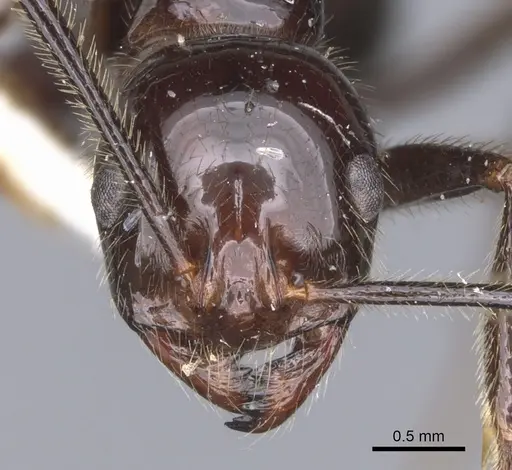
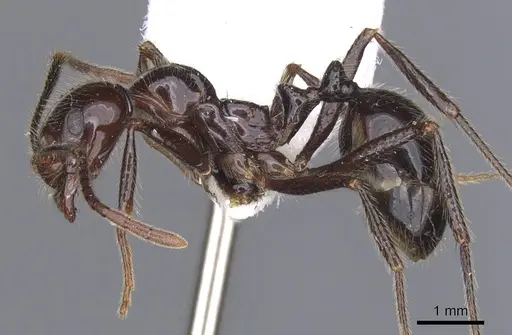
Megalomyrmex timbira can be identified by several distinctive morphological features. The propodeum (the rear portion of the mesosoma) meets the dorsal face at approximately 120° in side view, forming a nonsharp angle rather than a distinct tooth [1]. The petiole is notably wide, nearly twice the width of the postpetiole, which helps distinguish it from the similar M. staudingeri where these structures are similar width [1]. The postpetiole has an evenly rounded dorsal profile. Workers are dark reddish-brown, appearing almost black. Some specimens show more abundant body hair than typical for the group [1]. The antennae have a 3-segmented club, and the epipetiolar carina is complete around the foramen, though it may be faint in some individuals. These are small ants, approximately 3-4mm in total length.
Feeding and Diet
No specific dietary studies exist for Megalomyrmex timbira. The genus Megalomyrmex is generally known to be omnivorous, with a diet that includes small invertebrates, honeydew, and nectar. As ground-foraging ants from forest litter, they likely prey on small soft-bodied invertebrates and accept sugar sources. Based on related species in the genus, offer a varied diet including small live prey (fruit flies, pinhead crickets, mealworms), protein sources, and sugar water or honey. Start with modest offerings and observe acceptance. Given their small size, prey items should be appropriately sized. Remove uneaten food promptly to prevent mold in the humid conditions they require.
Housing and Nesting
No captive nesting data exists for this species. Based on their collection from forest litter and their tropical forest origin, they likely prefer humid, enclosed spaces with stable conditions. A Y-tong (acrylic) nest or plaster nest with small chambers would be appropriate starting points. The nest should maintain consistent humidity without becoming waterlogged. Provide a water tube for humidity and consider misting the outworld occasionally. Given their small size, ensure escape prevention is adequate, even tiny gaps can allow escape. The outworld should be simple and easy to maintain in humid conditions. Avoid overly large spaces as these small ants may feel exposed.
Frequently Asked Questions
Does Megalomyrmex timbira have a queen?
No. M. timbira belongs to the leoninus group, which lacks true queens entirely. Reproduction is handled by gamergates, specialized workers that can mate and lay eggs. This is one of the few ant genera with this unusual social structure.
What is a gamergate?
A gamergate is a reproductive worker, a worker ant that has developed the ability to mate and lay eggs. In Megalomyrmex timbira and related species, there are no morphologically distinct queens. Instead, one or more workers become reproductive and take over the egg-laying role typically performed by a queen.
How do I start a Megalomyrmex timbira colony?
Due to their unique gamergate system, colony founding is different from typical ants. You will need to locate an established colony with a reproductive worker (gamergate). There is no claustral founding phase. Expect very slow growth and limited availability since this species is rarely collected or kept.
What do Megalomyrmex timbira ants eat?
No specific diet studies exist, but based on related Megalomyrmex species, they likely accept small live prey, protein sources, and sugar water. Feed small appropriately-sized prey items and sugar sources. Remove uneaten food to prevent mold.
What temperature do they need?
Temperature requirements are unconfirmed. Based on their tropical forest habitat in Venezuela and Colombia, aim for warm conditions around 22-26°C. Monitor your colony's activity and adjust accordingly.
Do they need hibernation or diapause?
Unknown. The Táchira region has mild year-round temperatures, so they may not require a true diapause. Consider slightly reducing temperatures in winter if the colony shows reduced activity, but this is speculative.
Are Megalomyrmex timbira good for beginners?
No. This species is not recommended for beginners. There is virtually no established husbandry information, they have an unusual gamergate reproductive system, and they are extremely rare in the antkeeping hobby. They are best suited for advanced antkeepers interested in keeping rare species.
How big do Megalomyrmex timbira colonies get?
Unknown. No colony size data exists for this species. Given their small size and ground-foraging habits, colonies are likely modest in size compared to more common ant species.
Where is Megalomyrmex timbira found?
They are known from western Venezuela (Táchira province) and southern Colombia (Nariño department), with unconfirmed reports from Ecuador. They live at elevations of 1000-1260m in humid tropical forests.
How do I identify Megalomyrmex timbira?
Look for the distinctive propodeal shape (approximately 120° angle in side view), very wide petiole (nearly twice the postpetiole width), and dark reddish-brown to black coloration. They are small ants around 3-4mm.
Can I keep multiple queens together?
This question does not apply to M. timbira, there are no true queens. If you encounter multiple gamergates in a colony, they coexist through the normal social structure of the species. Combining unrelated colonies is not recommended as aggression may occur.
References

This caresheet is licensed under CC BY-SA 4.0 .
CASENT0902331
View on AntWeb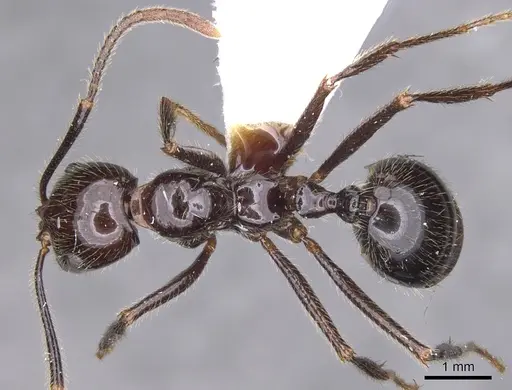
Literature
Loading...Loading products...