

Megalomyrmex caete
- Scientific Name
- Megalomyrmex caete
- Tribe
- Solenopsidini
- Subfamily
- Myrmicinae
- Author
- Brandão, 1990
- Distribution
- Found in 2 countries
Megalomyrmex caete Overview
Megalomyrmex caete is an ant species of the genus Megalomyrmex. It is primarily documented in 2 countries , including Colombia, Ecuador. Detailed taxonomic data and occurrence records can be further explored via authoritative databases such as AntWeb or the Global Biodiversity Information Facility (GBIF).
Megalomyrmex caete
Megalomyrmex caete is a small, pale yellowish ant species from the Neotropical region of Ecuador. Workers are characterized by smooth mandibles, a 3-segmented antenna club, and distinctive long erect hairs across their body. The species name 'caete' comes from the Tupi word for forest, reflecting its origin from the lowland forest habitats of coastal Ecuador. This species belongs to the tribe Solenopsidini within the Myrmicinae subfamily. Queens are slightly larger than workers and possess fully developed ocelli and parapsidal sutures. Both castes share the uniform bright light-yellow coloration that makes this species distinctive among Neotropical ants.
Quick Summary
- Difficulty: Unknown, no captive care data available
- Origin & Habitat: Ecuador, specifically the lowland forest areas near Bucay in Guayas Province [1]. The type series was collected from 'mt. base. Forest' at approximately 02°10'S,79°06'W [2]. This is a tropical forest environment with high humidity and warm temperatures year-round.
- Colony Type: Colony structure is unconfirmed. No data on queen number or colony size in the wild.
- Size & Growth:
- Queen: Unconfirmed, estimated based on genus patterns around 5-6mm
- Worker: Approximately 3-4mm based on worker measurements in original description [2]
- Colony: Unknown, no colony size data available
- Growth: Unknown
- Development: Unconfirmed, typical Solenopsidini development suggests 4-8 weeks at tropical temperatures (No direct development data exists for this species. Estimates based on related genera within Solenopsidini.)
- Antkeeping:
- Temperature: Keep at warm tropical temperatures around 24-28°C, consistent with their Ecuadorian forest origin. A gentle gradient allows workers to self-regulate.
- Humidity: High humidity preferred, aim for 70-80% relative humidity. These forest-floor ants need moist substrate conditions.
- Diapause: Unknown, as a tropical species, they likely do not require hibernation, but this has not been confirmed.
- Nesting: In nature they likely nest in soil or rotting wood within forest habitats. In captivity, a test tube setup or small acrylic/plaster nest with moist substrate works well. Avoid overly dry conditions.
- Behavior: Behavior is unconfirmed, but Megalomyrmex species are generally not aggressive and are moderate foragers. Their small size means escape prevention is important, use fine mesh barriers. They are likely omnivorous based on genus patterns, accepting both sugar sources and small protein prey.
- Common Issues: no captive care data exists, difficulty level cannot be determined, escape prevention is important due to small worker size, humidity requirements may be easily met incorrectly, avoid drying out the nest, without confirmed diet information, offering varied foods is experimental
Species Identification and Appearance
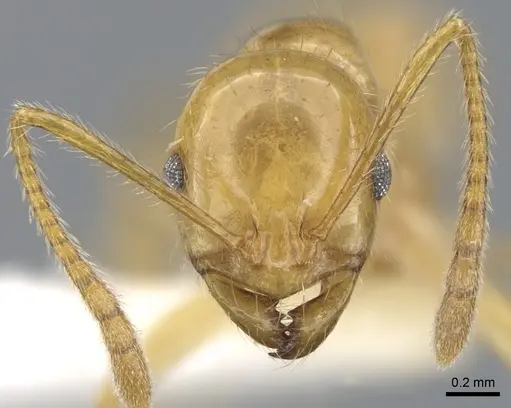
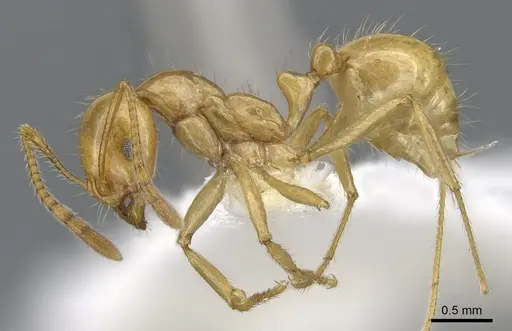
Megalomyrmex caete workers are small ants measuring approximately 3-4mm with a distinctive uniform bright light-yellow coloration. They have smooth mandibles and a 3-segmented antenna club, which is a key diagnostic feature within the Solenopsidini tribe. The anterior border of the clypeus features a median denticle, and the flat median area of the clypeus is limited by carinae visible under magnification. Their eyes have 10-12 ocular facets at their largest diameter. The dorsal profile of the promesonotum is continuous, with the promesonotum suture impressed laterally. A notable characteristic is the presence of long erect hairs, workers have 6 such hairs on the pronotum,4-6 at the apex of the petiole and postpetiole, and 15-16 on the gaster segments and anterior face of the fore coxae. Queens are slightly larger and possess fully developed ocelli and parapsidal sutures impressed on the mesonotum. [2]
Distribution and Natural Habitat
This species is known only from Ecuador, specifically from the Guayas Province region near Bucay. The type series was collected at an elevation near the base of mountains in forest habitat at coordinates approximately 02°10'S,79°06'W [1]. The species name 'caete' was chosen by the describer Carlos R.F. Brandão, derived from the Tupi language word for forest, directly referencing the forest habitat where the type series was collected [2]. This indicates a preference for forested microhabitats in the Neotropical lowlands of Ecuador.
Housing and Nesting
Since no captive care data exists for this species, housing recommendations must be based on genus-level patterns and the known natural habitat. Megalomyrmex caete originates from humid tropical forests in Ecuador, so captivity should replicate these conditions. A test tube setup with a water reservoir works well for founding colonies, providing consistent humidity. For established colonies, a small acrylic or plaster nest with moist substrate maintains appropriate humidity levels. The nest should be kept in a dark or low-light area, as forest-floor ants prefer subdued lighting. Escape prevention is important given their small worker size, use fine mesh barriers on any outworld connections.
Feeding and Diet
Feeding requirements for Megalomyrmex caete are not documented, so recommendations must be inferred from genus patterns. Solenopsidini ants are typically omnivorous, accepting both sugar sources (honey water, sugar water) and protein sources (small insects). Offer a varied diet including small live or frozen prey items such as fruit flies, pinhead crickets, or mealworm pieces. Sugar water should be available at all times. Start with small quantities and observe acceptance. Remove uneaten prey after 24-48 hours to prevent mold issues. The experimental nature of diet recommendations should be noted, this species may have specific dietary preferences not yet documented.
Temperature and Environmental Conditions
As a species from coastal Ecuador in the Neotropical region, Megalomyrmex caete requires warm, stable temperatures typical of tropical environments. Target temperatures in the range of 24-28°C, which aligns with their natural lowland forest habitat. Temperature gradients are beneficial, allowing the colony to self-regulate by moving between warmer and cooler areas of the nest. Room temperature within this range is acceptable, if your environment is cooler, use a heating cable on one side of the nest to create a gentle gradient. Avoid temperature drops below 22°C or sudden fluctuations. High humidity of 70-80% is important, mist the outworld occasionally and ensure the nest substrate remains moist but not waterlogged.
Colony Development and Growth
No specific development timeline data exists for Megalomyrmex caete. Based on typical Solenopsidini patterns at tropical temperatures, egg-to-worker development likely takes 4-8 weeks under optimal conditions. Queens are likely claustral (seal themselves in to raise first workers alone on stored body reserves), though this has not been directly documented for this species. The first workers (nanitics) will typically be smaller than mature workers. Colony growth rate is unknown but is likely moderate for a small tropical ant species. Patience is essential, small colonies of this species may take many months to reach significant numbers.
Frequently Asked Questions
How difficult is Megalomyrmex caete to keep?
Difficulty level cannot be determined, this species has no documented captive care history. There is no information on successful husbandry methods, making it an experimental species even for experienced antkeepers.
What temperature do Megalomyrmex caete ants need?
Keep them warm at 24-28°C based on their Ecuadorian tropical forest origin. A temperature gradient allowing self-regulation is beneficial.
What do Megalomyrmex caete ants eat?
Diet is unconfirmed. Based on genus patterns, they likely accept sugar sources (honey water, sugar water) and small protein prey (fruit flies, small insects). Offer varied foods and observe acceptance.
How big do Megalomyrmex caete colonies get?
Colony size is unknown, no wild colony size data has been documented for this species.
What humidity do Megalomyrmex caete ants need?
High humidity around 70-80% is recommended, matching their forest floor habitat in Ecuador. Keep the nest substrate consistently moist.
How long does it take for Megalomyrmex caete to raise first workers?
Development time is unconfirmed. Based on typical Solenopsidini patterns at tropical temperatures, expect approximately 4-8 weeks from egg to first worker.
Can I keep multiple Megalomyrmex caete queens together?
Colony structure is unconfirmed, no data exists on whether this species is monogyne (single queen) or polygyne (multiple queens). Combining unrelated queens is not recommended without documentation.
Where is Megalomyrmex caete found in the wild?
This species is known only from Ecuador, specifically from the Guayas Province near Bucay. The type series was collected from forest habitat at the base of mountains.
Do Megalomyrmex caete ants need hibernation?
Hibernation requirements are unknown. As a tropical species from Ecuador, they likely do not require a diapause period, but this has not been confirmed.
References

This caresheet is licensed under CC BY-SA 4.0 .
CASENT0902328
View on AntWeb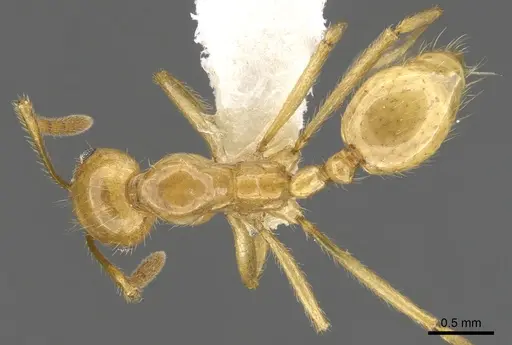
Literature
Loading...Loading products...